


Construction bid proposal template powerpoint presentation slides
The bidding process is an incredibly important part of any construction process. This enables firms and organizations to hire contractors. However, the owner always has great control over the design and construction with high ease of implementation. The cost of construction can also be easily determined as the architect often provides a design before awarding the contract. After the plans are approved the owner bids the work to general contractors either through invitation or advertising the bid and then selects the lowest bidder despite the qualification. Submit a tender to undertake and manage the undertaking of a construction project with our Construction Bid Proposal Template PowerPoint Presentation Slides. This bidding PPT template outlines the challenges faced by the client and value proposition after implementing your company’s proposed solutions. Highlight the construction phases presenting work statement as per the exhaustive evaluation of blueprints, material take-off list, bill of quantities, and numerous site visits. Use the contract model PPT design to provide the work schedule giving prior notice mentioning the start date and the completion date of the project. Illustrate the estimated cost of the bid proposal segregating all the activities to create transparency with the client’s company. The PowerPoint slideshow helps to establish a competitive advantage by showcasing the company overview, employee strength, mission, vision, core values and client testimonials. Culminate the solutions laid for the success of past projects to gain the trust of the client. The presentation proposal also includes the additional services rendered like the company will provide sufficient opportunities to review work and provide feedback, build mutual cooperation by levying our best efforts, and reimbursement of expenses incurred in case of a change in instructions. Download the project delivery PowerPoint template and help your client to efficiently complete the phases of construction by approaching objections as opportunities.
The bidding process is an incredibly important part of any construction process. This enables firms and organizations to hi..







-

- Google Slides is a new FREE Presentation software from Google.
- All our content is 100% compatible with Google Slides.
- Just download our designs, and upload them to Google Slides and they will work automatically.
- Amaze your audience with SlideTeam and Google Slides.
-

Want Changes to This PPT Slide? Check out our Presentation Design Services
-

- WideScreen Aspect ratio is becoming a very popular format. When you download this product, the downloaded ZIP will contain this product in both standard and widescreen format.
-

- Some older products that we have may only be in standard format, but they can easily be converted to widescreen.
- To do this, please open the SlideTeam product in Powerpoint, and go to
- Design ( On the top bar) -> Page Setup -> and select "On-screen Show (16:9)” in the drop down for "Slides Sized for".
- The slide or theme will change to widescreen, and all graphics will adjust automatically. You can similarly convert our content to any other desired screen aspect ratio.
Compatible With Google Slides

Get This In WideScreen
You must be logged in to download this presentation.


Do you want to remove this product from your favourites?
PowerPoint presentation slides
Presenting our Construction Bid Proposal Template PowerPoint Presentation Slides that are sure to impress your potential client and achieve the bidding contract. The content has been well researched by our excellent team of researchers. You can change the colour, fonts, texts, images without any hassle to suit your business needs. It can be saved and opened in various formats like PDF, JPG, and PNG. The template is easily compatible with Google Slides that makes it easily accessible. It is readily available in both standard screen 4:3 and widescreen 16:9 aspect ratios. Download the presentation, enter your content in the placeholders, and propose it with confidence!

People who downloaded this PowerPoint presentation also viewed the following :
Content of this Powerpoint Presentation
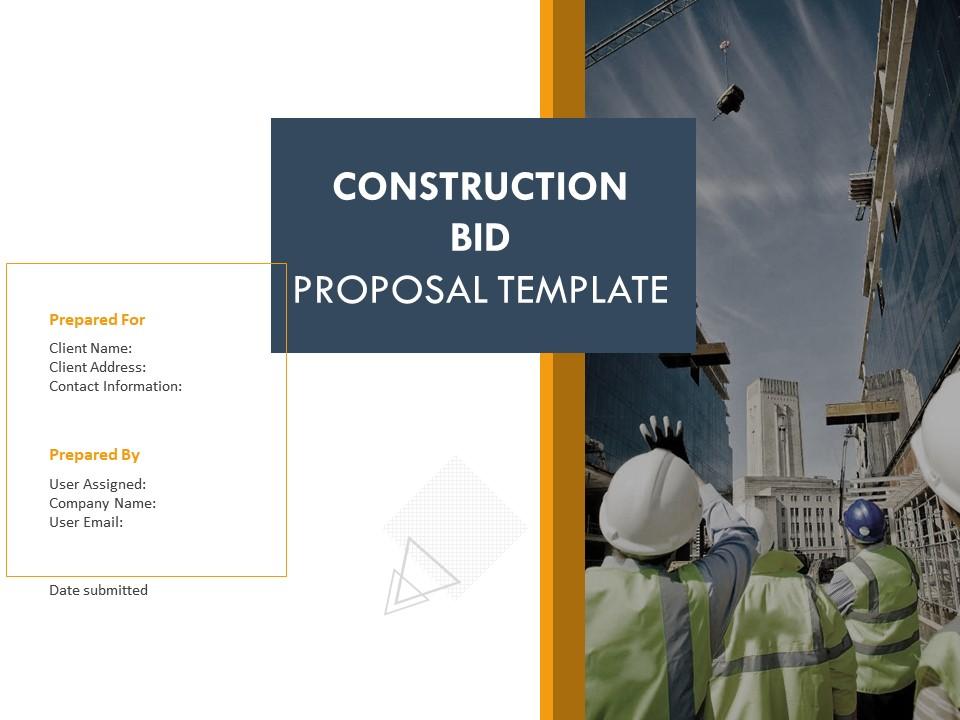
Slide 1: This slide introduces Construction Bid Proposal PowerPoint presentation.
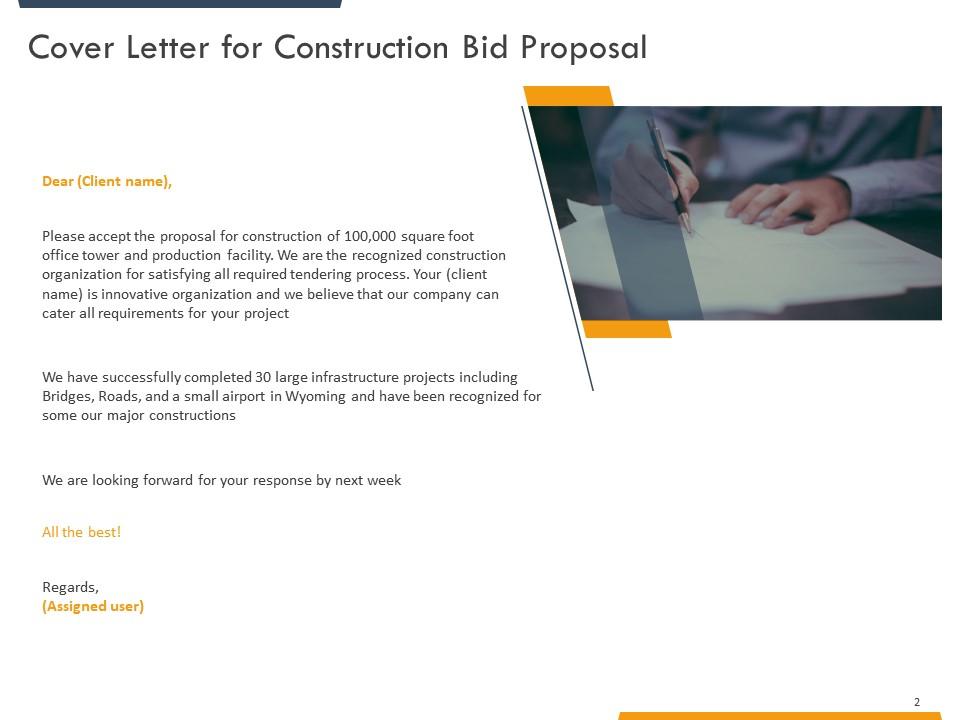
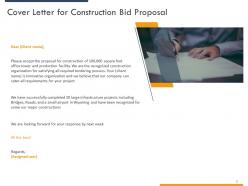
Slide 2: This slide displays Cover Letter for Construction Bid Proposal.
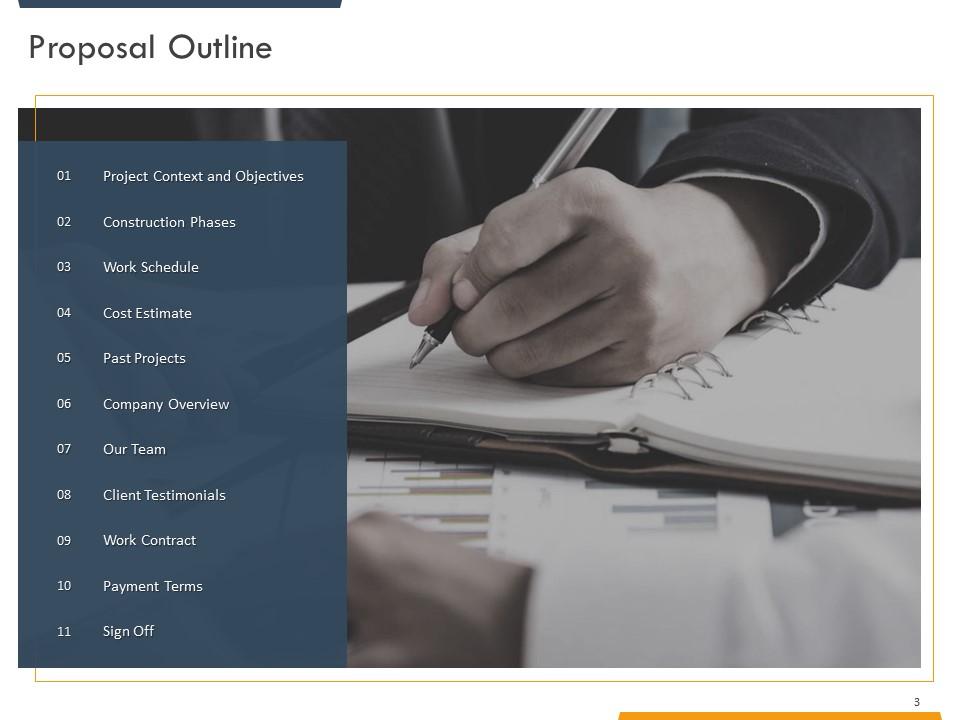
Slide 3: This slide showcases Proposal Outline.
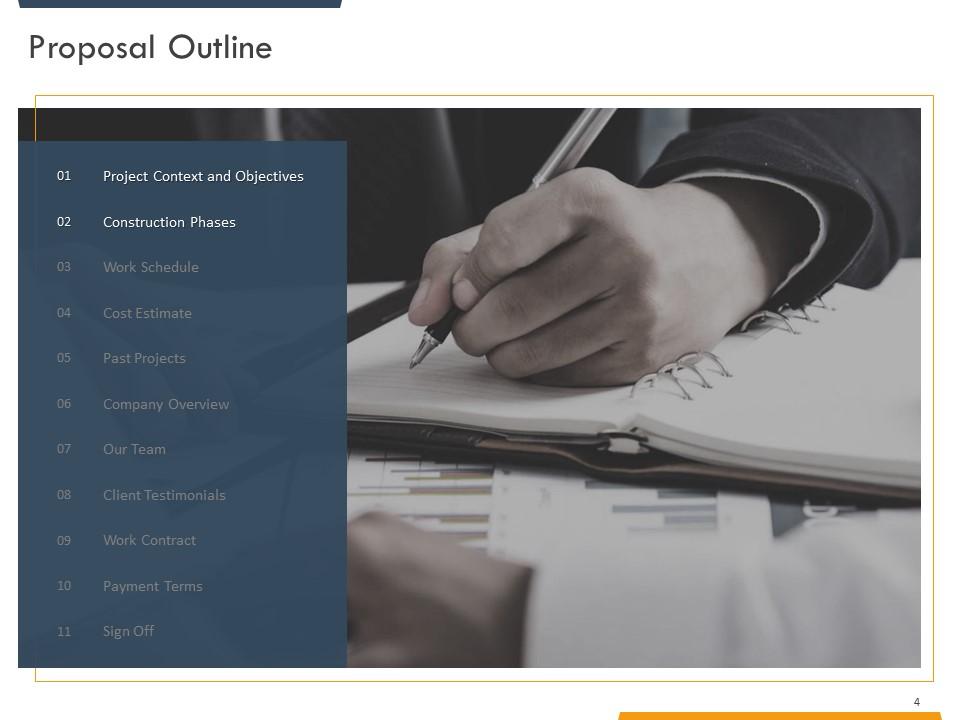
Slide 4: This slide displays Proposal Outline
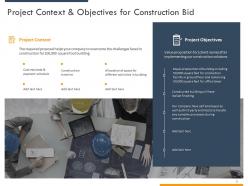
Slide 5: This slide showcases Project Context & Objectives for Construction Bid.
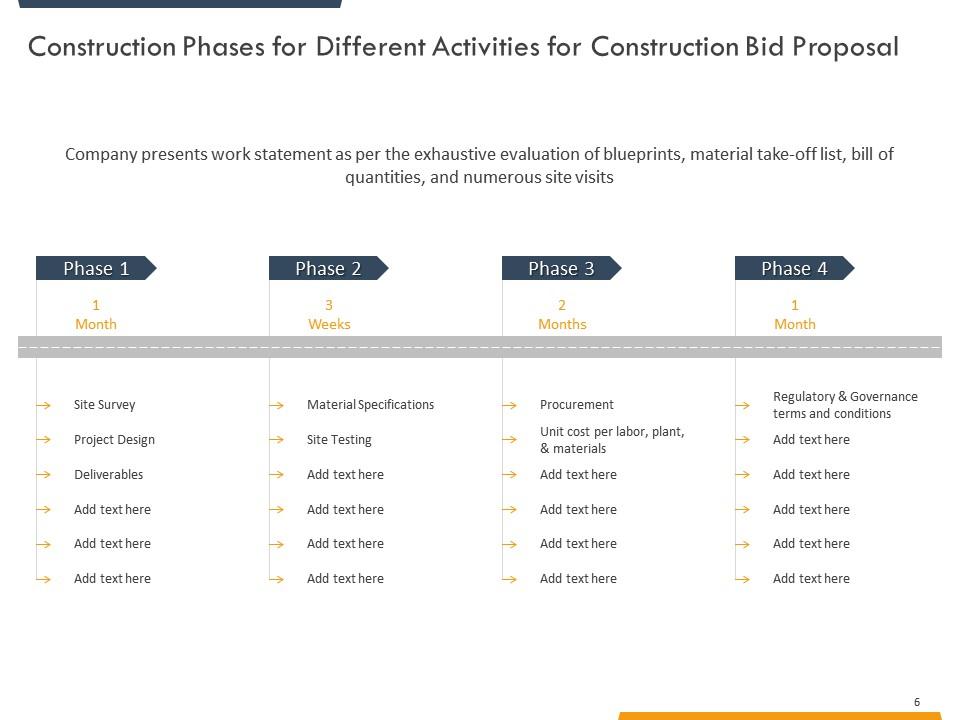
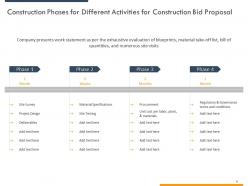
Slide 6: This slide showcases Construction Phases for Different Activities for Construction Bid Proposal.
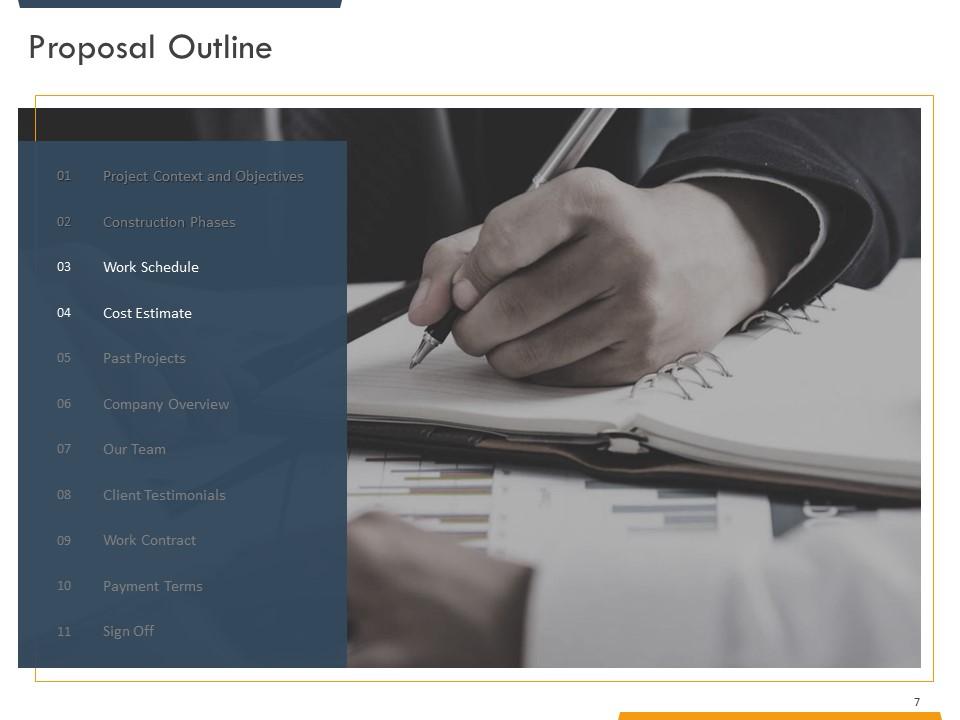
Slide 7: This slide depicts Proposal Outline.
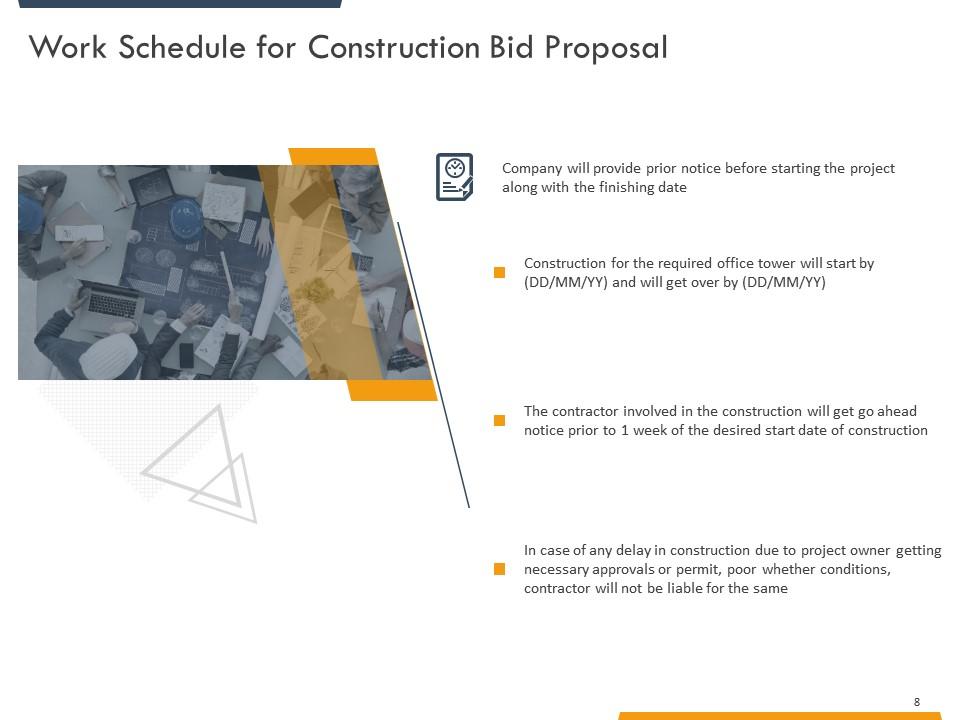
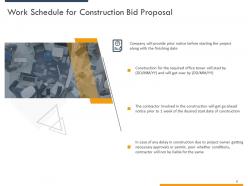
Slide 8: This slide shows Work Schedule for Construction Bid Proposal.
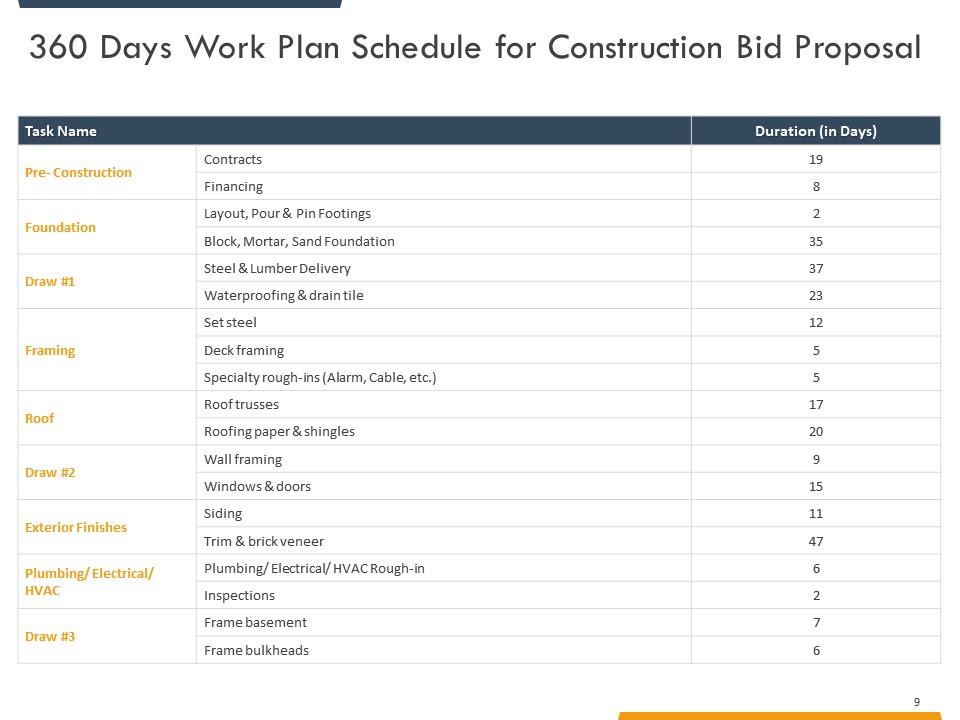
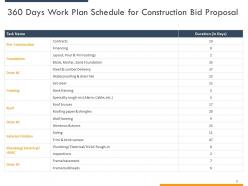
Slide 9: This slide describes 360 Days Work Plan Schedule for Construction Bid Proposal.
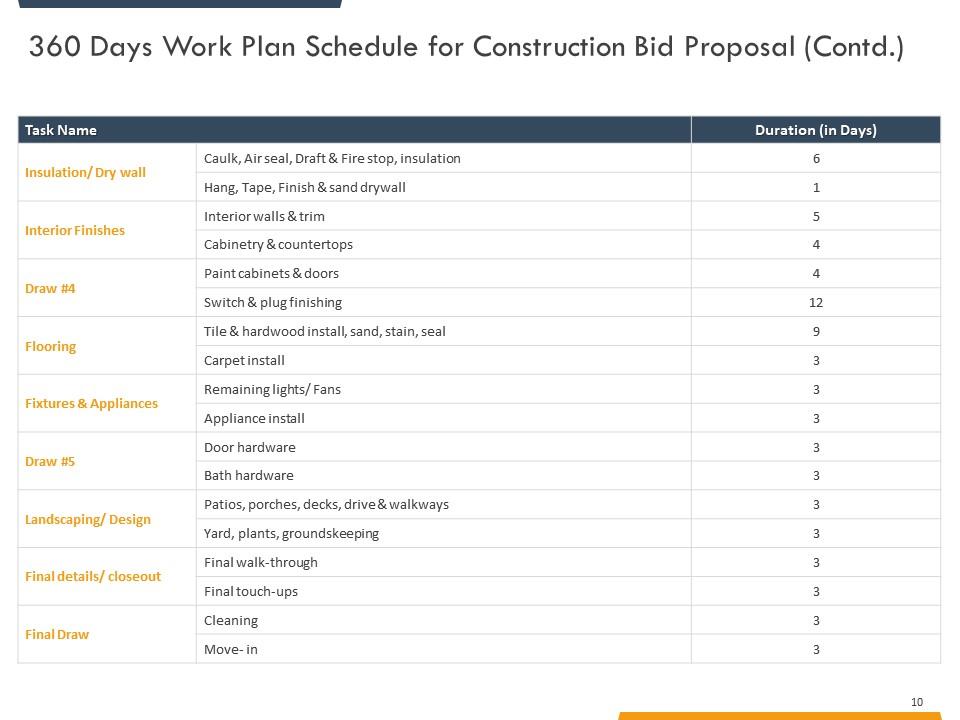
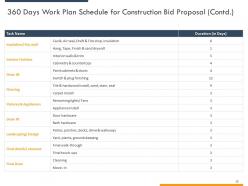
Slide 10: This slide displays 360 Days Work Plan Schedule for Construction Bid Proposal.
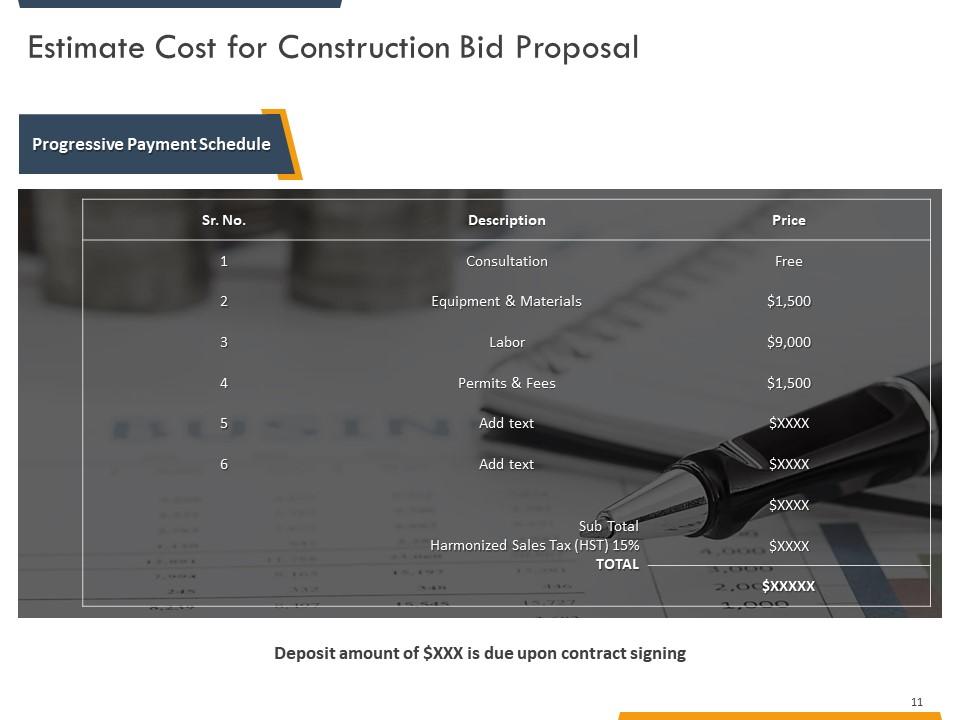
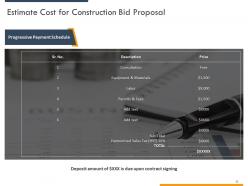
Slide 11: This slide showcases Estimate Cost for Construction Bid Proposal.
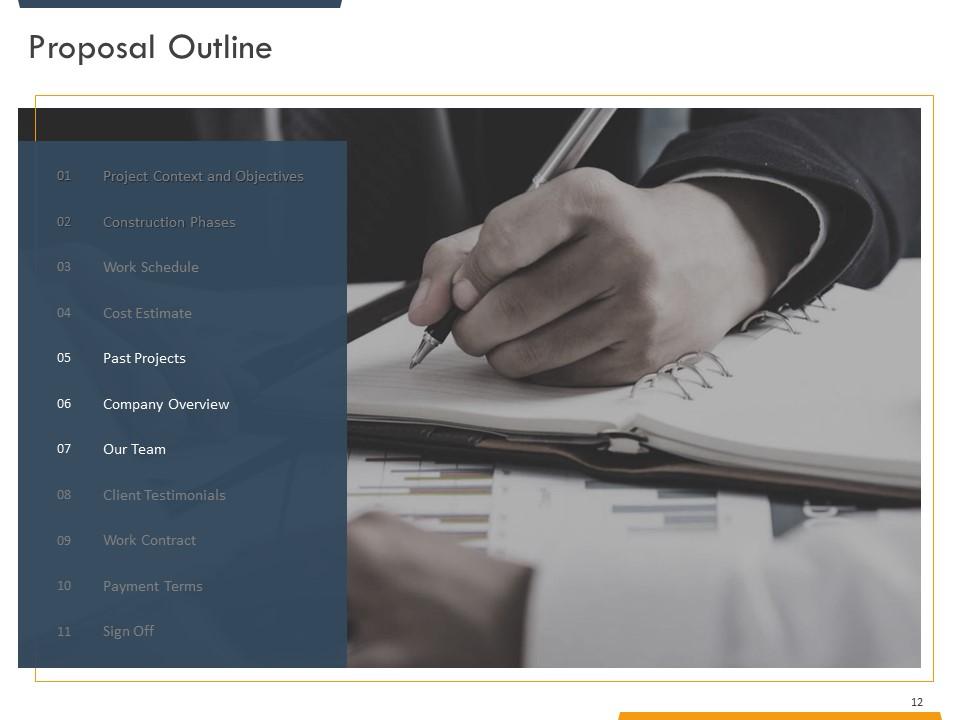
Slide 12: This slide shows Proposal Outline.
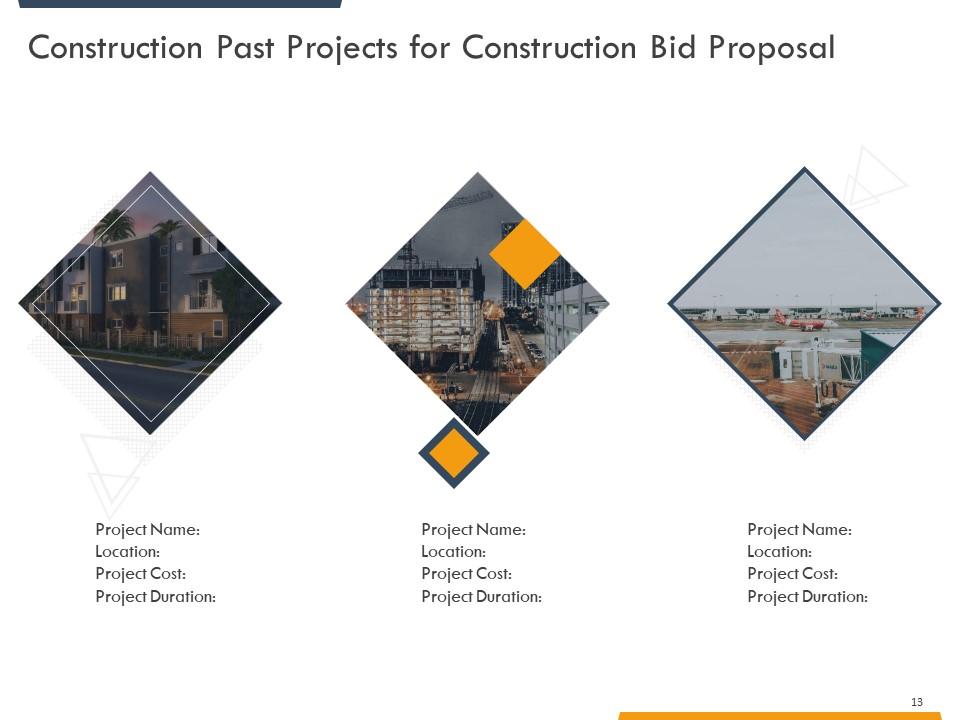
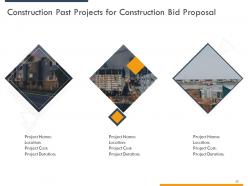
Slide 13: This slide showcases Construction Past Projects for Construction Bid Proposal.
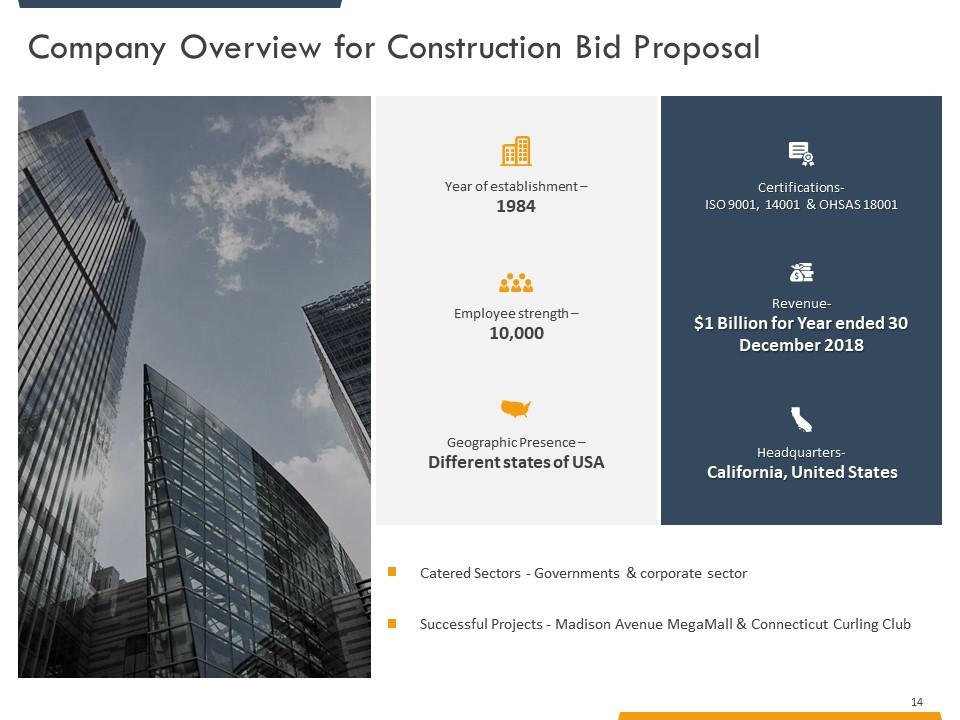
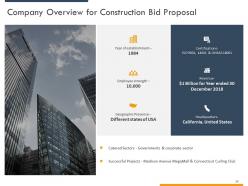
Slide 14: This slide presents Company Overview for Construction Bid Proposal.
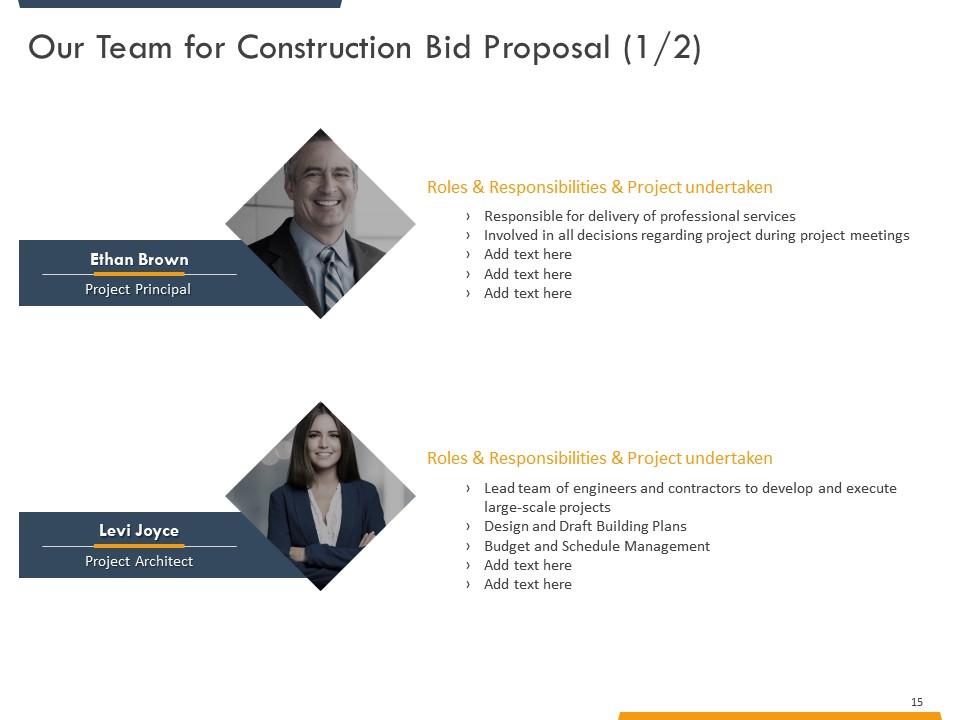
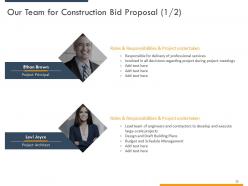
Slide 15: This is Our Team slide with Names and Designations.
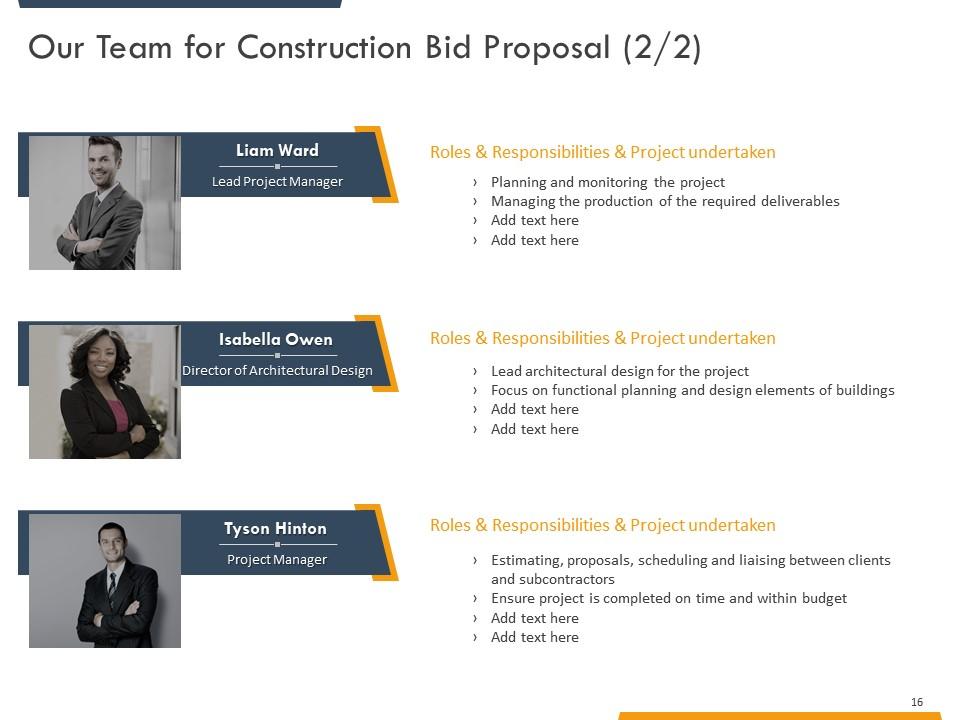
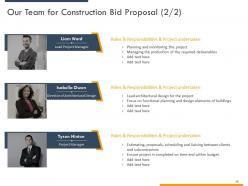
Slide 16: This is Our Team slide with Names and Designations.
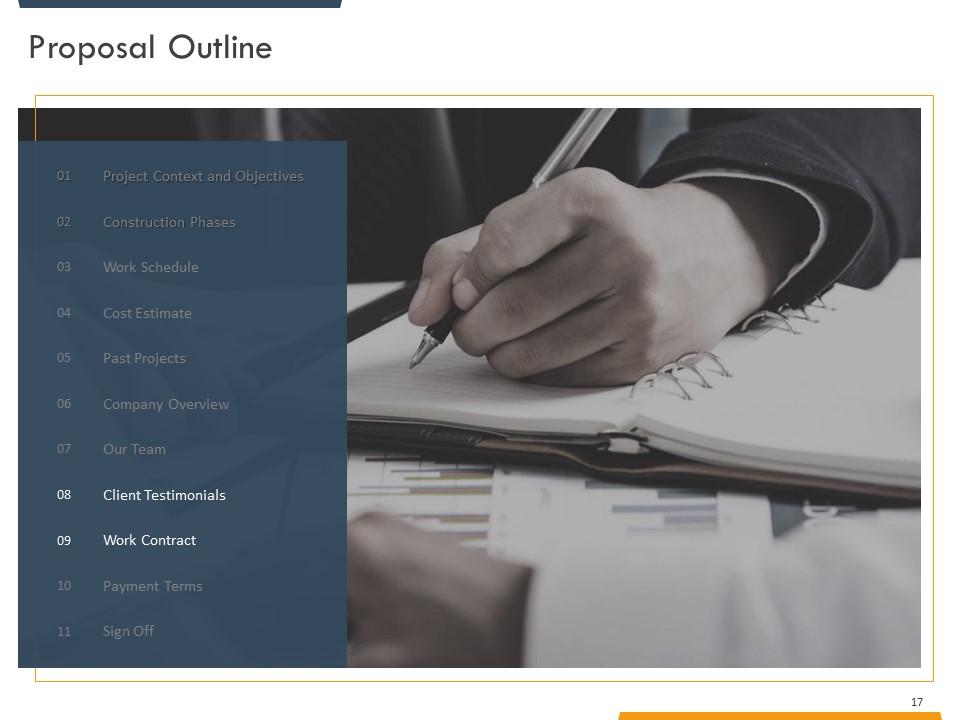
Slide 17: This slide showcases Proposal Outline.
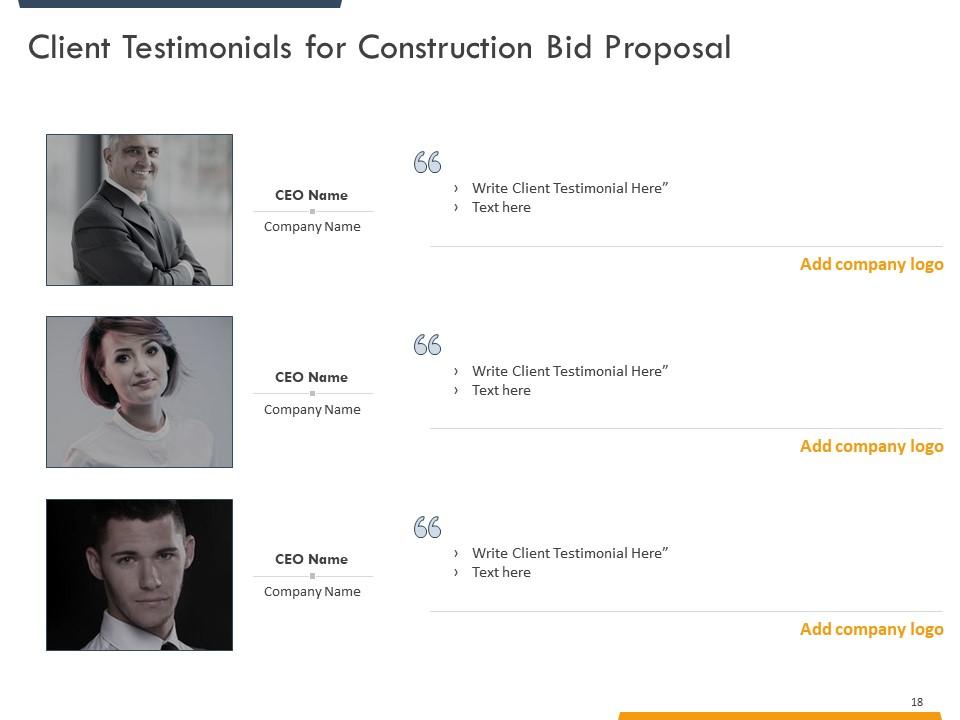
Slide 18: This slide depicts Client Testimonials for Construction Bid Proposal
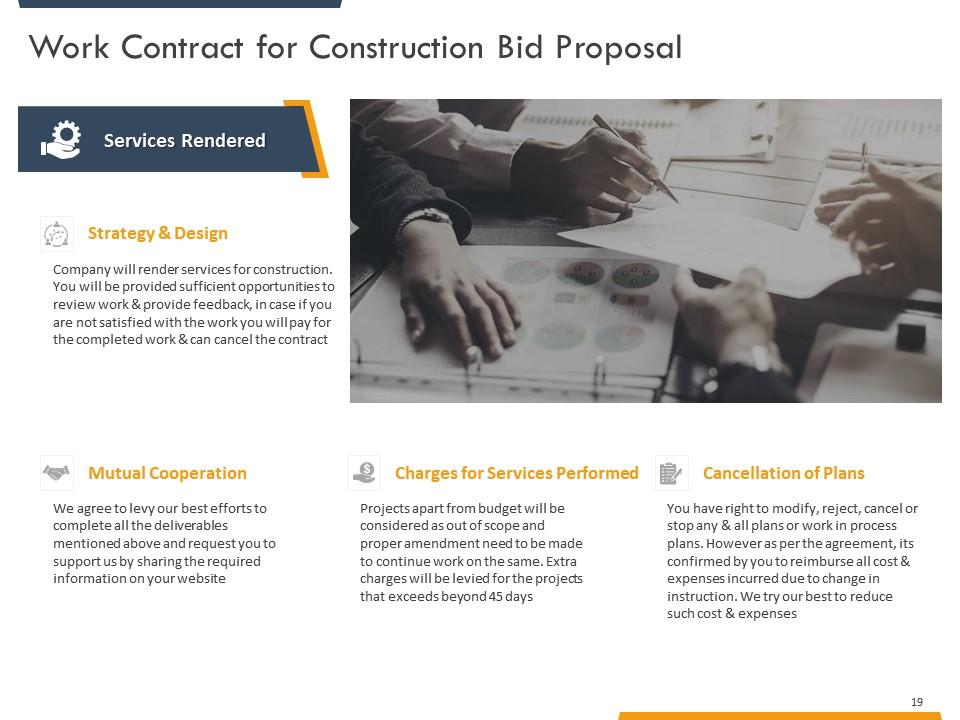
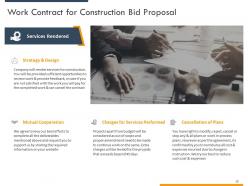
Slide 19: This slide talks about Work Contract for Construction Bid Proposal.
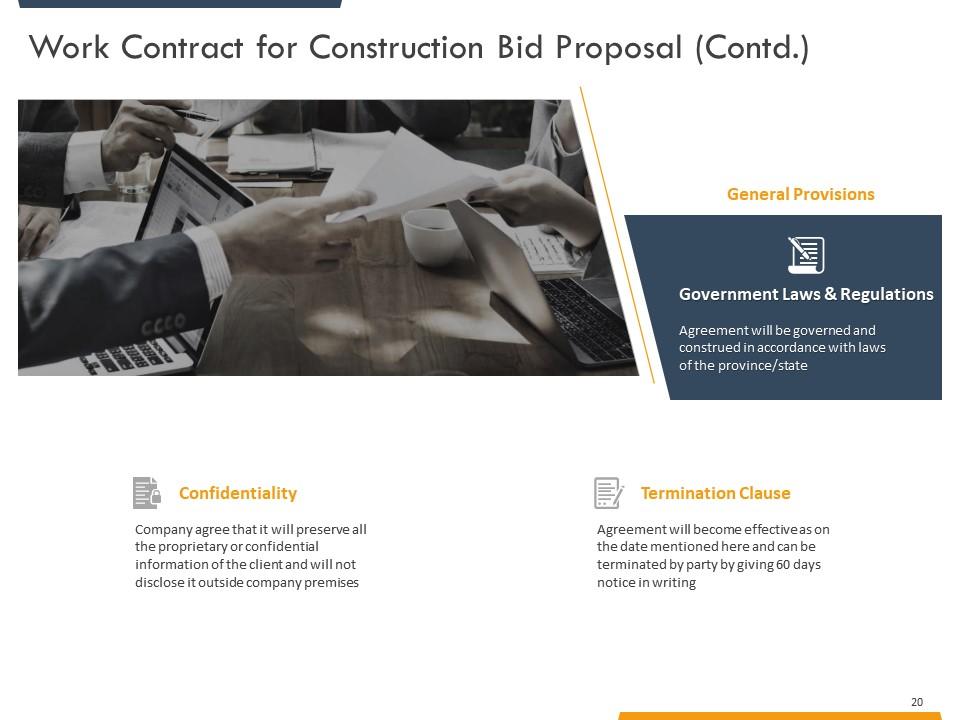
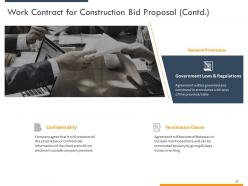
Slide 20: This slide is continued Work Contract for Construction Bid Proposal.
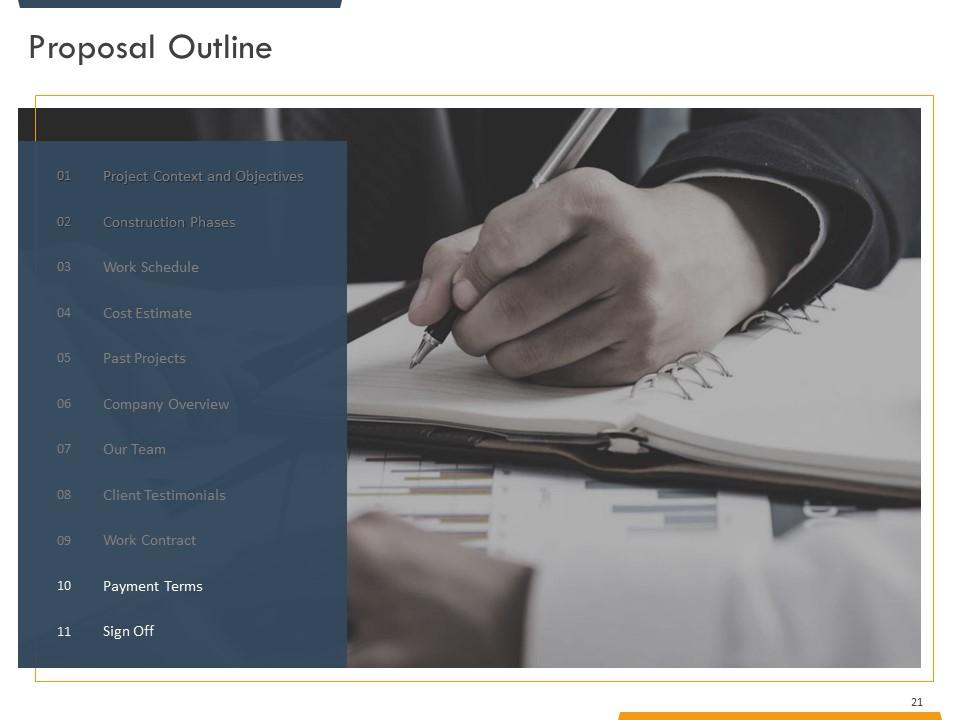
Slide 21: This slide displays Proposal Outline.
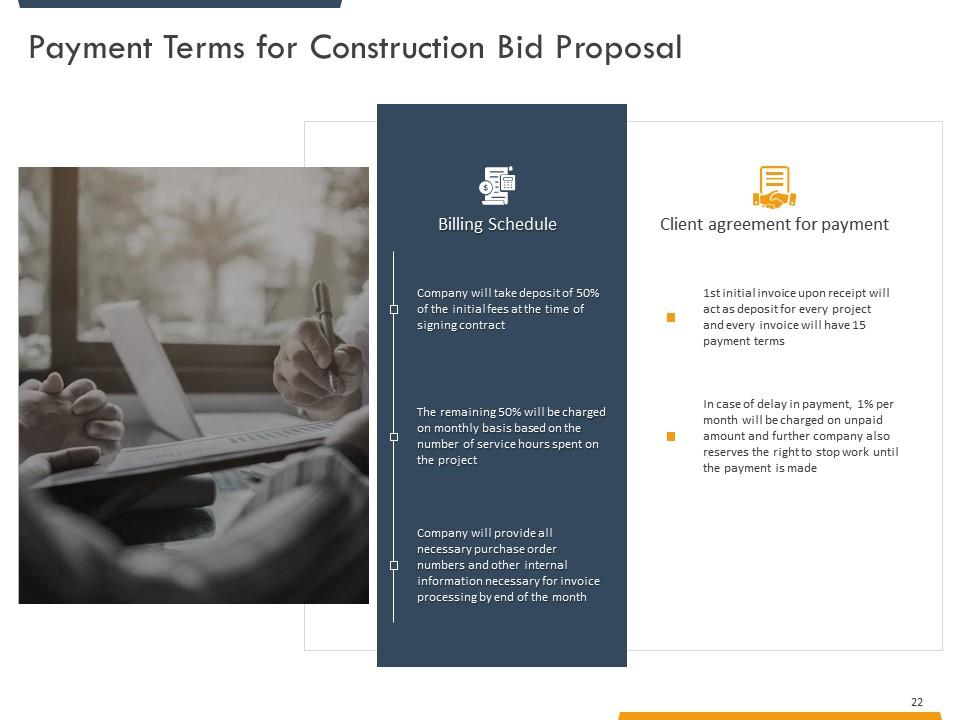
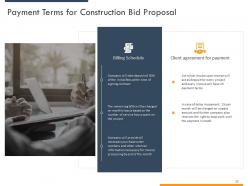
Slide 22: This slide showcases Payment Terms for Construction Bid Proposal.
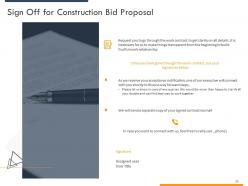
Slide 23: This is Sign Off slide.
Slide 24: This is Contact Us slide with Company Address, Email address and Contact number.
Slide 25: This is Icons Slide for Construction Bid Proposal.
Slide 26: This slide is titled as Additional Slides for moving forward.
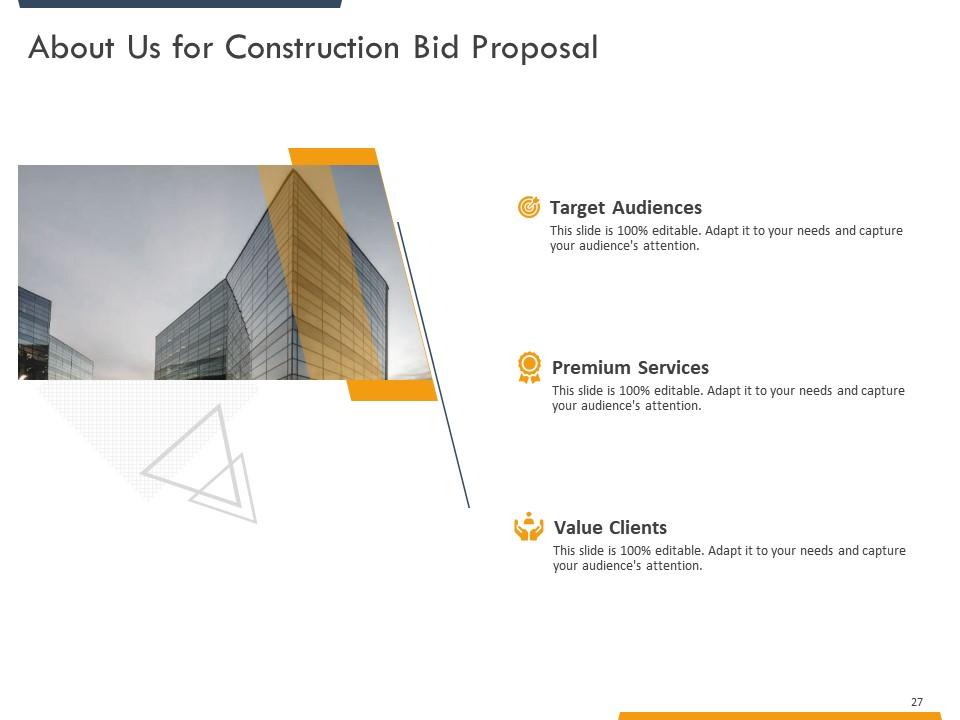
Slide 27: This is About Us slide with Target Audience, Premium Services, Value clients.
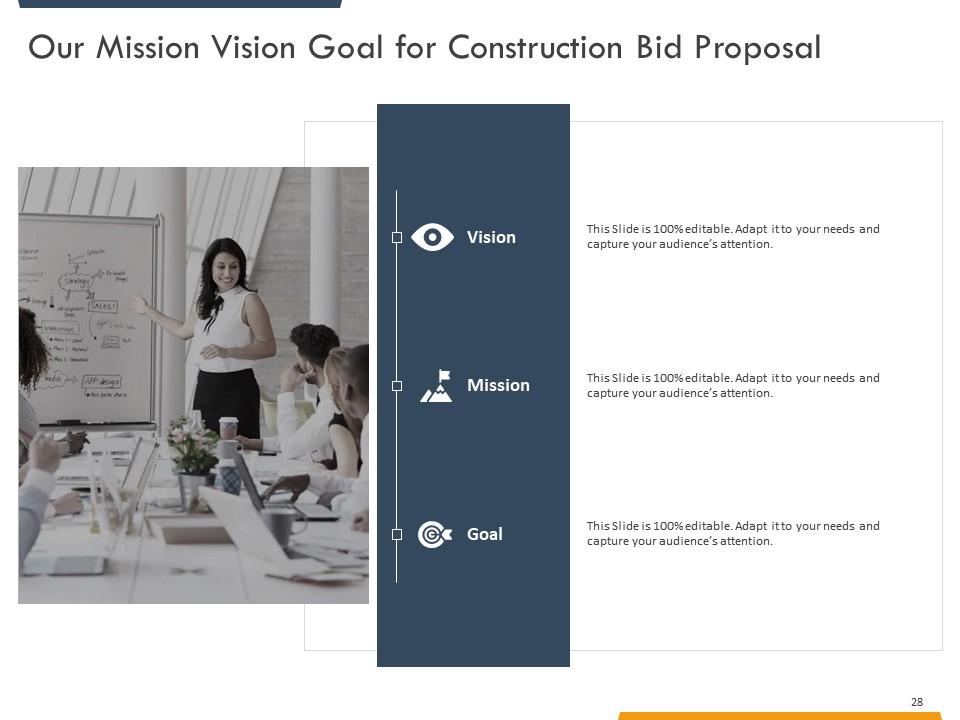
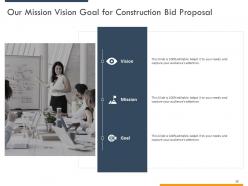
Slide 28: This slide displays Our Mission Vision Goal for Construction Bid Proposal.
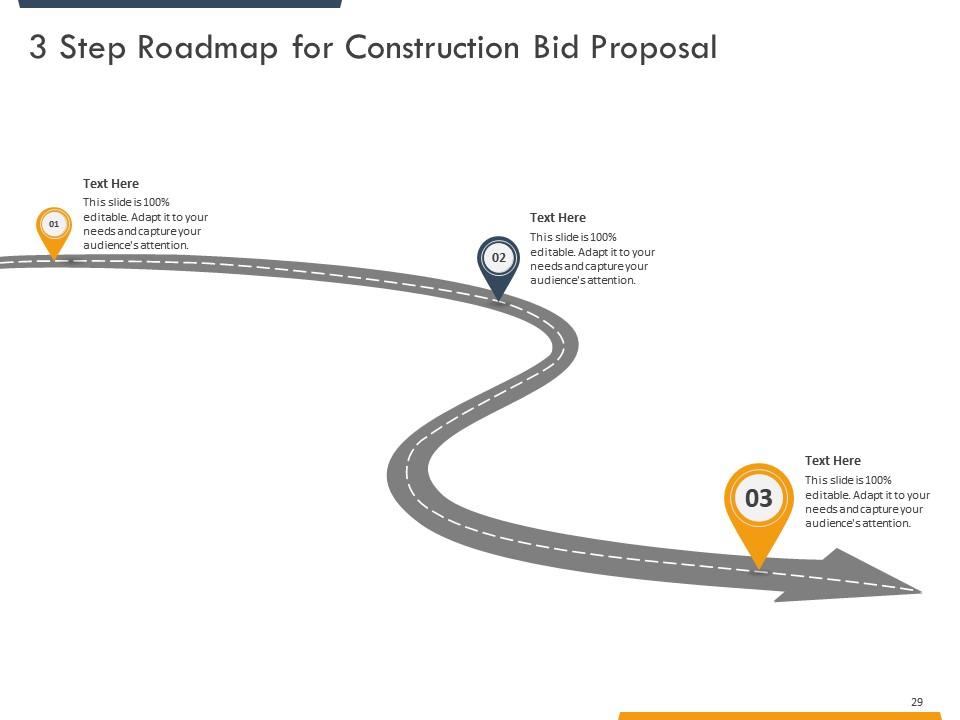
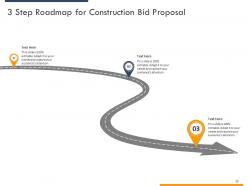
Slide 29: This slide describes 3 Step Roadmap process.
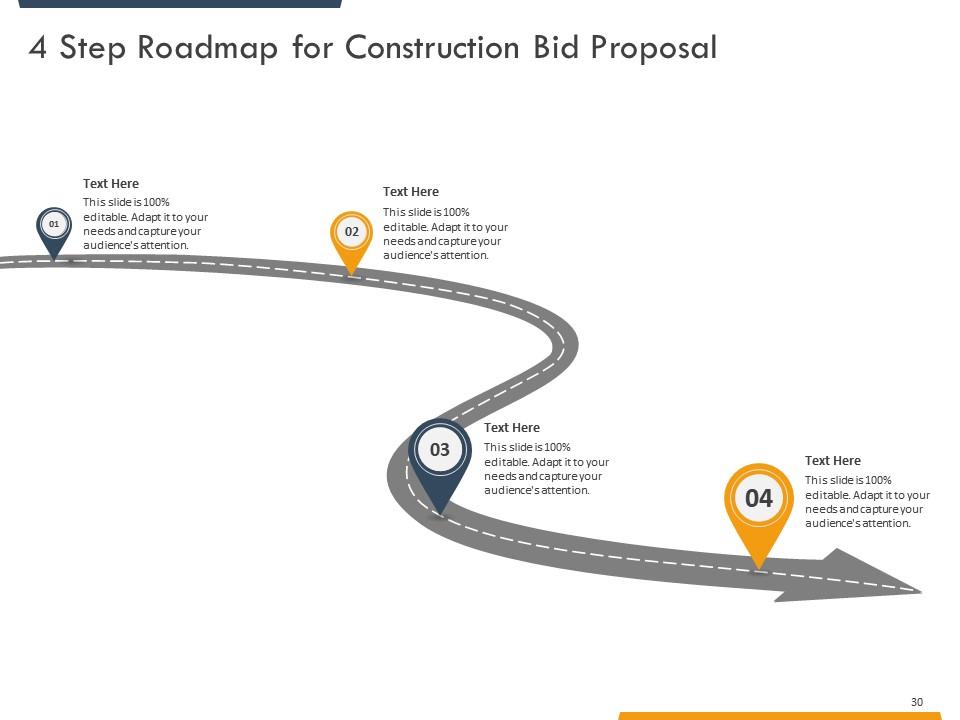
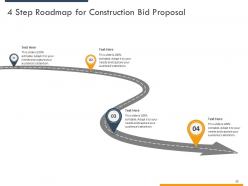
Slide 30: This slide displays 4 Step Roadmap process.
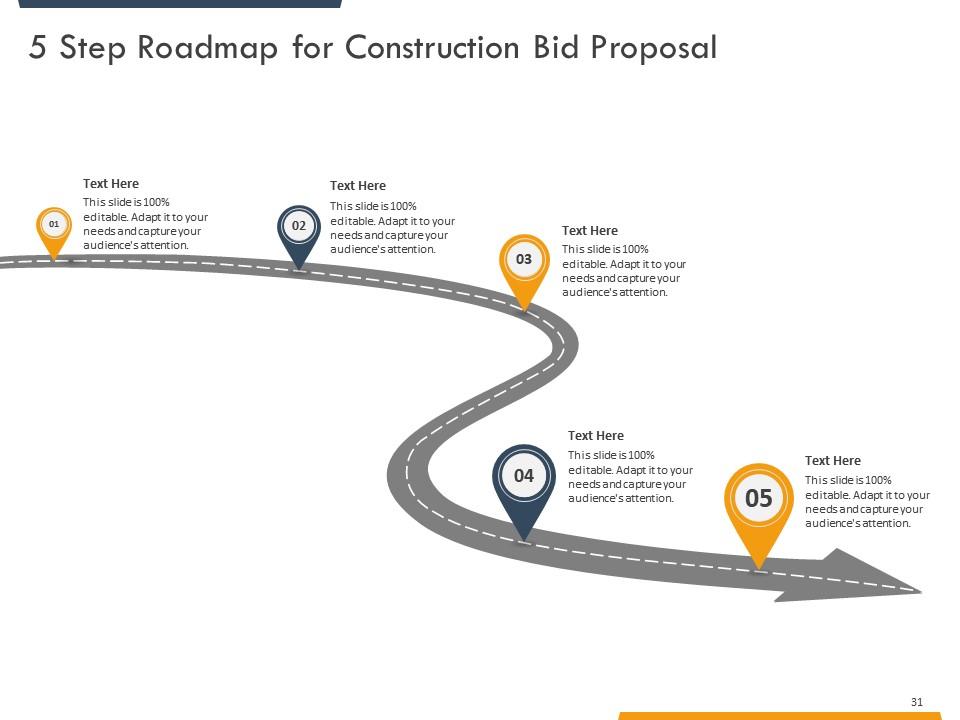
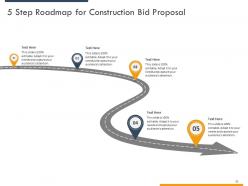
Slide 31: This slide showcases 5 Step Roadmap process for Construction Bid Proposal
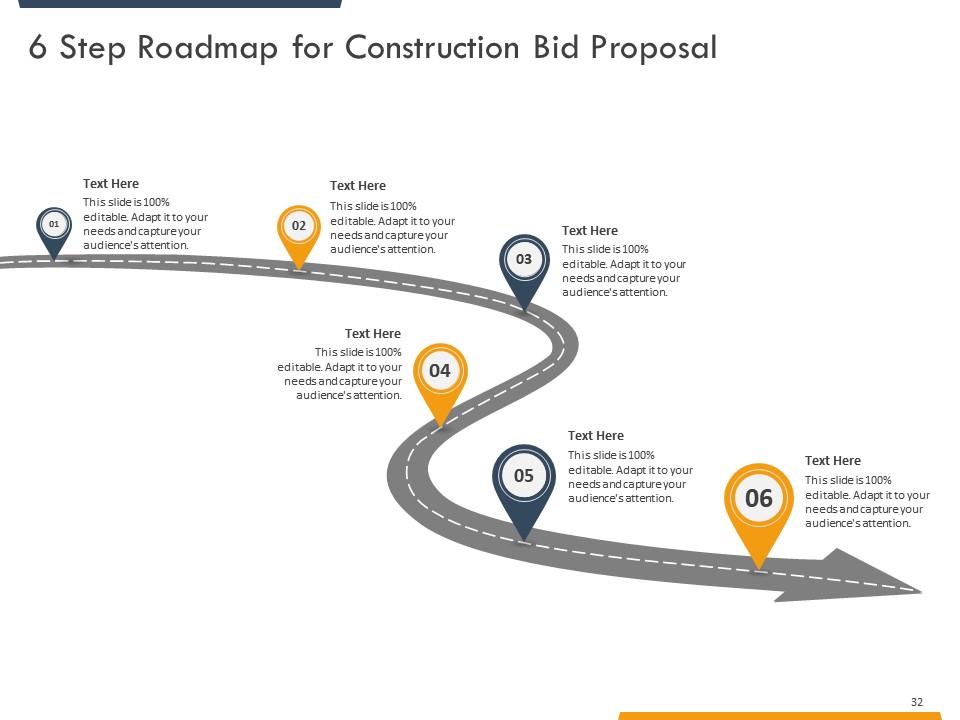
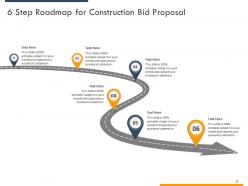
Slide 32: This slide depicts 6 Step Roadmap for Construction Bid Proposal
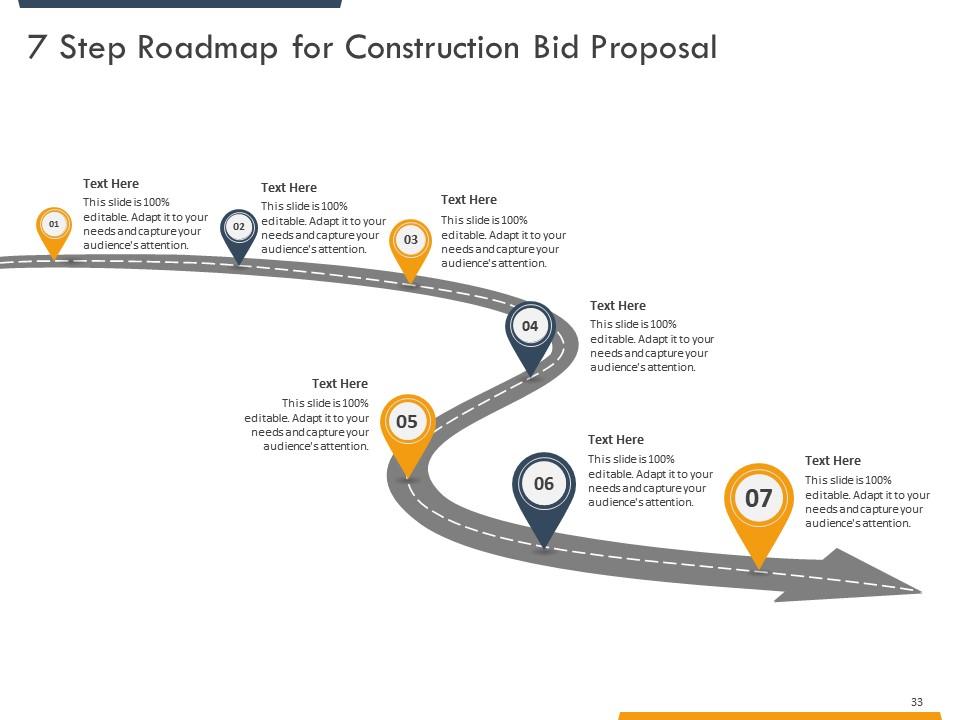
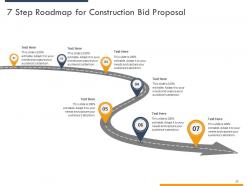
Slide 33: This slide showcases 7 Step Roadmap for Construction Bid Proposal
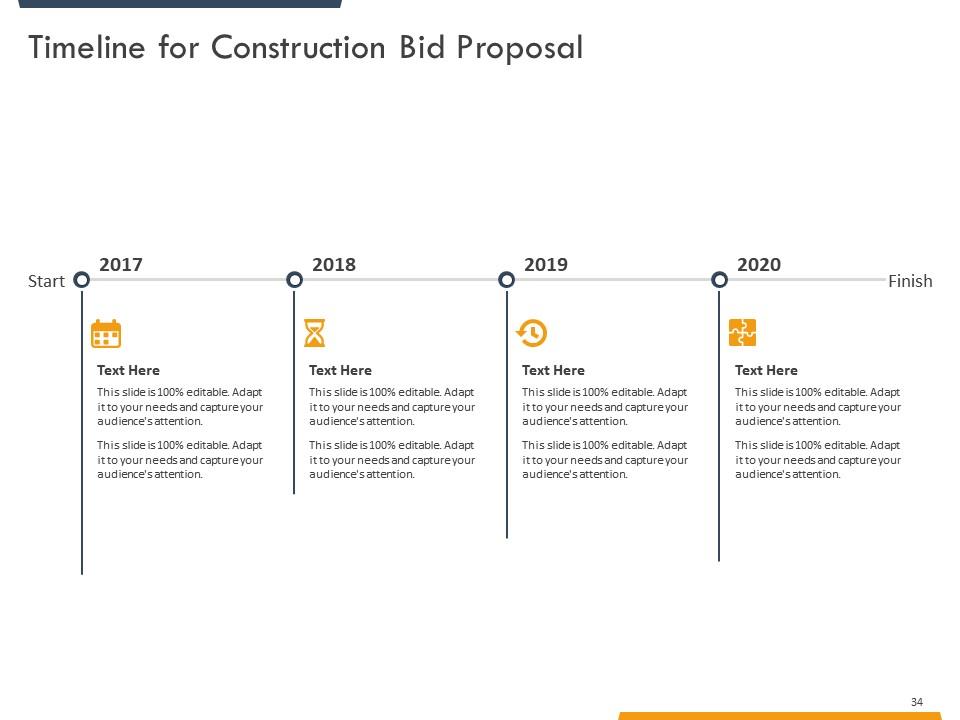
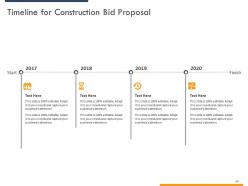
Slide 34: This slide depicts Timeline for Construction Bid Proposal.
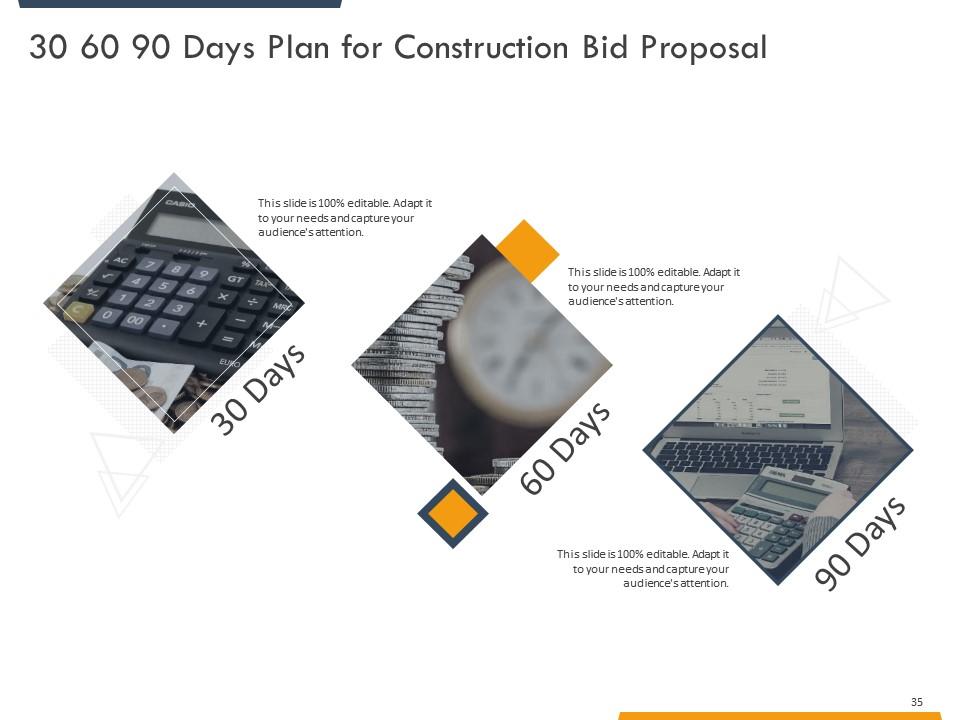
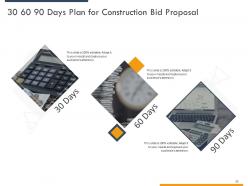
Slide 35: This is 30 60 90 Days Plan slide.
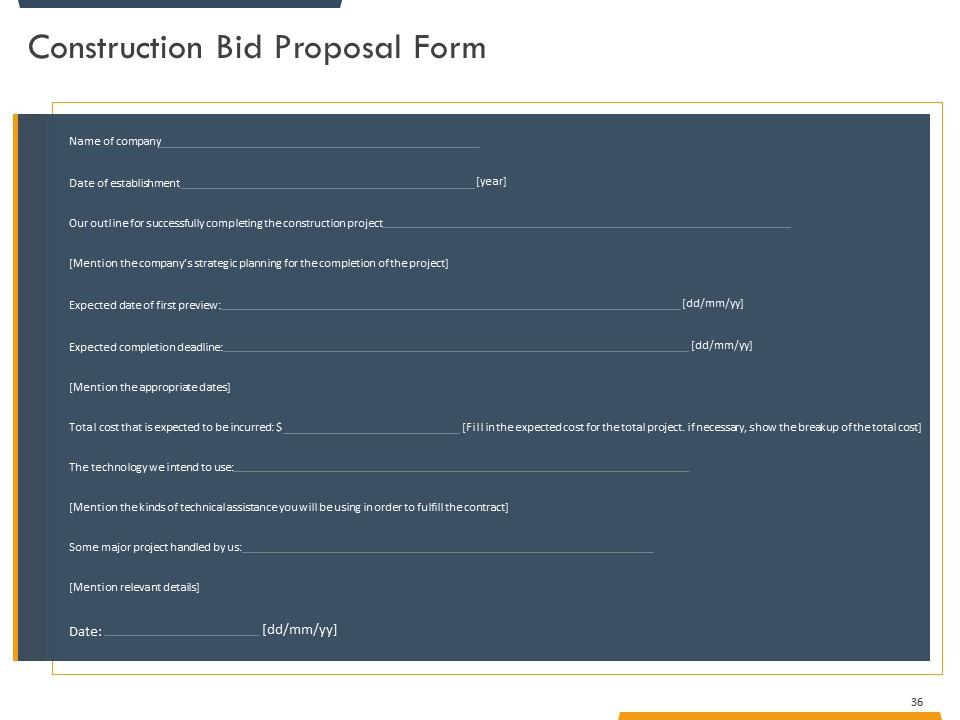
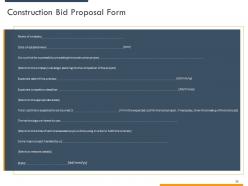
Slide 36: This slide showcases Construction Bid Proposal Form. Mention the company’s strategic planning for the completion of the project.
Construction bid proposal template powerpoint presentation slides with all 36 slides:
No Reviews
