


0115 red target and arrow with five stages for target selection powerpoint template




Try Before you Buy Download Free Sample Product
 Impress Your
 Audience
 100%
100% Editable
 Save Hours
 of Time


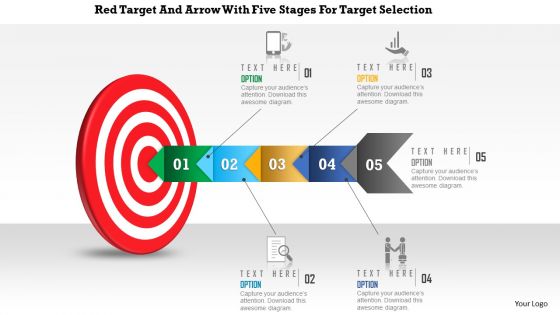
If you really want to make a success of your business, it's important to define your business goals and targets, especially before you get started. So, use our red target and arrow with five stages for target selection PPT template design. Concept of target selection and achievement has been displayed in this PPT slide. The slide contains the graphic of red target dart and arrows with five stages which can help to build quality presentation for your viewers. Having clearly defined goals allows employees to align and relate what they are doing to company goals, which in turn creates synergy, motivation, and sense of purpose. When everyone in your company understands both the broad corporate objectives and specific team goals, it makes it very easy for them to make decisions, initiate tasks, and work with little supervision. Our slide is fully modifiable, so you can also add more stages if you want to highlight more objectives in the slide. Just press the download button for making your business presentations more interesting. Get bright ideas about conducting business with our 0115 Red Target And Arrow With Five Stages For Target Selection Powerpoint Template. Come up with commercial brainwaves.
People who downloaded this PowerPoint presentation also viewed the following :
0115 red target and arrow with five stages for target selection powerpoint template with all 5 slides:
Get your act going with your ideas. Our 0115 Red Target And Arrow With Five Stages For Target Selection Powerpoint Template will be your growth engine.


FAQs for 0115 red target and arrow with five stages for target
Key criteria include demographic characteristics, professional roles, decision-making authority, existing knowledge levels, and specific business challenges or goals. These factors enable presenters to tailor content depth, messaging approach, and supporting examples strategically, with many organizations finding that audience-aligned presentations deliver significantly higher engagement rates, clearer communication outcomes, and more actionable results.
Demographic information influences target selection by identifying age groups, income levels, education backgrounds, geographic locations, and lifestyle preferences that align with communication objectives. Through demographic analysis, organizations streamline messaging strategies, enhance audience relevance, and optimize resource allocation across different market segments, ultimately delivering higher engagement rates and more cost-effective campaigns.
Psychographics enhance target selection by revealing audience values, attitudes, lifestyle preferences, personality traits, and motivations beyond basic demographics. This deeper understanding enables presenters to craft messaging that resonates emotionally, select relevant examples from specific industries, and structure content flow strategically, ultimately delivering more persuasive presentations and stronger audience engagement across diverse organizational settings.
Market research enables presenters to identify audience demographics, preferences, pain points, and decision-making criteria, ensuring presentations address specific stakeholder needs effectively. Through surveys, industry analysis, and competitive intelligence, organizations can tailor messaging, select relevant case studies, and anticipate objections, ultimately delivering more persuasive presentations that resonate with target segments and drive better engagement outcomes.
Data analytics improves target audience understanding by analyzing demographic patterns, behavioral trends, purchase histories, engagement metrics, and preference data across multiple touchpoints. Through advanced segmentation and predictive modeling, businesses can identify customer pain points, optimize messaging strategies, and personalize experiences, with many organizations finding that data-driven insights ultimately deliver higher conversion rates and stronger customer relationships.
Niche target audience identification techniques include demographic micro-segmentation, psychographic profiling, behavioral pattern analysis, social media listening, and competitor audience research. These methods enable organizations to uncover underserved market segments by analyzing purchasing behaviors, engagement preferences, and unmet needs, with many businesses finding that strategic niche targeting delivers higher conversion rates and reduced acquisition costs.
Cultural awareness is critically important in target selection, influencing consumer behavior, market acceptance, regulatory compliance, and operational integration strategies. Understanding cultural nuances enables organizations to assess market readiness, avoid costly missteps, and identify synergies that enhance post-acquisition success, with many multinational companies finding that cultural compatibility often determines long-term strategic value.
Common pitfalls include targeting overly broad audiences, relying on assumptions rather than data, ignoring customer feedback, focusing solely on demographics while overlooking psychographics, and failing to test messaging effectiveness. These missteps often result in wasted marketing budgets, poor engagement rates, and missed opportunities, with many organizations finding that strategic audience research and continuous refinement ultimately deliver stronger ROI and competitive positioning.
Feedback from previous presentations informs future target selection by identifying which audience segments responded most positively, revealing content preferences, engagement patterns, and decision-making factors. This data enables presenters to refine demographic targeting, adjust messaging strategies, and prioritize high-conversion prospects, with many sales teams finding that feedback-driven selection improves presentation success rates significantly.
Audience segmentation methods include demographic analysis, psychographic profiling, behavioral data assessment, geographic targeting, and needs-based categorization. These approaches enable presenters to tailor content by identifying decision-making patterns, communication preferences, and specific pain points, with many organizations finding that segmented presentations deliver significantly higher engagement rates and more effective outcomes.
The presentation type fundamentally shapes target selection by determining audience expertise level, decision-making authority, and engagement objectives, with pitch presentations targeting executives and stakeholders, educational formats focusing on implementers and technical teams, and informational presentations addressing broader organizational audiences. This strategic alignment ensures content resonates appropriately, with many organizations finding that matching presentation style to audience role significantly enhances engagement and achieves desired outcomes more effectively.
**INPUT**: What tools or software can assist in the target selection process for presentations? **OUTPUT**: Target selection tools include audience analysis platforms, CRM systems, survey software, social media analytics, and presentation design platforms like SlideTeam. These technologies streamline audience research by gathering demographic data, tracking engagement patterns, and identifying key stakeholders, with many organizations finding that strategic audience mapping ultimately delivers more focused messaging and higher presentation success rates.
Social media insights refine target audience understanding by revealing demographic patterns, engagement preferences, content consumption habits, and behavioral trends across platforms. Through analytics tools, businesses can identify which messaging resonates most effectively, optimize posting schedules, and discover emerging customer segments, ultimately enabling more precise targeting strategies and significantly improving campaign performance and customer acquisition costs.
Stakeholder interests significantly influence target selection by determining strategic priorities, risk tolerance, financial expectations, and operational synergies that guide acquisition criteria. Different stakeholders, including investors, management teams, and board members, bring varying perspectives on market expansion, competitive positioning, and integration capabilities, with successful organizations finding that aligning these diverse interests ultimately delivers more strategic acquisitions and sustainable growth outcomes.
Understanding customer pain points significantly influences target audience selection by identifying segments with the most urgent, addressable problems that align with your solution's strengths. Through detailed pain point analysis, businesses can prioritize audiences facing critical challenges in areas like operational efficiency, cost management, or customer satisfaction, ultimately enabling more strategic resource allocation and higher conversion rates across targeted segments.
-
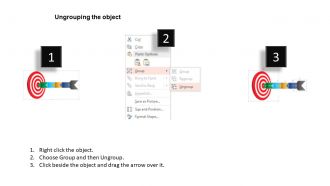
Enough space for editing and adding your own content.
-
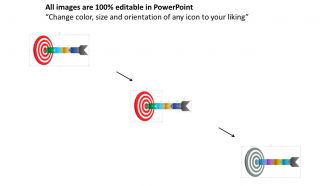
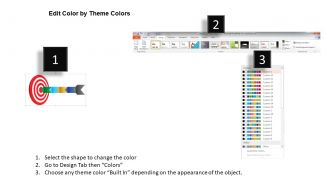
Colors used are bright and distinctive.