


0614 glycolysis medical images for powerpoint




Try Before you Buy Download Free Sample Product
 Impress Your
 Audience
 100%
100% Editable
 Save Hours
 of Time


The global approach of our 0614 Glycolysis Medical Images For PowerPoint ensures you get the best. They contain a confluence of cultures.
People who downloaded this PowerPoint presentation also viewed the following :
0614 glycolysis medical images for powerpoint with all 9 slides:
Put your thoughts in the correct frame. Our 0614 Glycolysis Medical Images For PowerPoint give them the best appearance.


FAQs for 0614 glycolysis medical
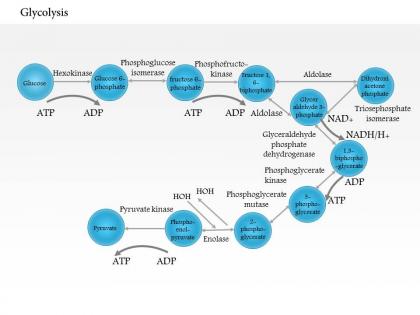
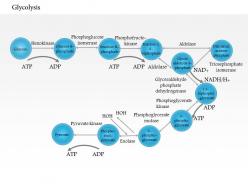
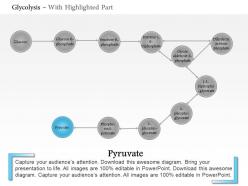
**INPUT**: What are the key steps involved in the glycolysis pathway? **OUTPUT**: Glycolysis involves ten sequential enzymatic steps that convert glucose into pyruvate, including glucose phosphorylation, isomerization, secondary phosphorylation, aldolase cleavage, and substrate-level phosphorylation reactions. These biochemical processes enable cellular energy production by generating ATP and NADH, while providing metabolic intermediates for biosynthesis, ultimately delivering efficient glucose utilization across diverse cellular environments.
Glycolysis contributes to cellular respiration by breaking down glucose into pyruvate molecules, generating initial ATP energy and NADH electron carriers in the cytoplasm. This process provides essential substrates for subsequent aerobic respiration stages, with the pyruvate entering mitochondria for the citric acid cycle, ultimately enabling cells to maximize energy production efficiency.
Enzymes serve as biological catalysts that regulate each step of glycolysis, including hexokinase, phosphofructokinase, and pyruvate kinase, which control glucose breakdown and ATP production. These regulatory proteins enable cells to efficiently convert glucose into energy while maintaining metabolic balance, with many organisms finding that enzyme optimization enhances cellular efficiency and energy output across various physiological conditions.
ATP production during glycolysis is regulated through feedback inhibition, allosteric control, and enzyme phosphorylation at key control points including hexokinase, phosphofructokinase, and pyruvate kinase. These regulatory mechanisms enable cells to adjust glucose metabolism based on energy demands, ultimately maintaining optimal ATP levels while preventing wasteful overproduction in energy-rich conditions.
NAD+ serves as a crucial electron acceptor in glycolysis, being reduced to NADH during the glyceraldehyde-3-phosphate dehydrogenase reaction, enabling continued glucose breakdown for ATP production. This reduction-oxidation cycle facilitates cellular energy metabolism by capturing high-energy electrons, with the resulting NADH ultimately delivering electrons to the electron transport chain, ensuring sustained energy production for cellular processes.
Glycolysis operates identically in both conditions, breaking glucose into pyruvate through ten enzymatic steps, but diverges at pyruvate processing. Under aerobic conditions, pyruvate enters mitochondrial respiration for maximum ATP yield, while anaerobic conditions trigger fermentation pathways, producing lactate or ethanol with significantly reduced energy output but enabling continued glucose metabolism.
Glycolysis produces pyruvate, ATP, and NADH as primary end products, with pyruvate serving as the central metabolite for further energy pathways. These products enable cellular respiration through mitochondrial processing, anaerobic fermentation during oxygen limitation, and biosynthetic pathways for amino acids and lipids, ultimately delivering efficient energy conversion and metabolic flexibility across diverse biological systems.
Hexokinase and glucokinase differ primarily in their glucose affinity, tissue distribution, and regulatory mechanisms within glycolytic pathways. Hexokinase operates with high glucose affinity across most tissues, while glucokinase functions specifically in liver and pancreatic cells with lower affinity, enabling glucose sensing and metabolic regulation that ultimately delivers tissue-specific glycolytic control and optimal energy production.
Glycolytic pathway dysregulation presents significant clinical implications including cancer progression, metabolic disorders, neurological dysfunction, cardiovascular disease, and immune system impairment. These disruptions enable tumor growth through enhanced glucose metabolism, contribute to diabetes complications, and affect cellular energy production in critical organs, with many healthcare institutions finding that targeted glycolytic interventions deliver improved patient outcomes and treatment efficacy.
Glycolysis connects to other metabolic pathways through its end product pyruvate, which enters the citric acid cycle under aerobic conditions, while also linking to fatty acid synthesis, amino acid metabolism, and the pentose phosphate pathway. These interconnected pathways enable cells to efficiently balance energy production with biosynthetic needs, ultimately delivering metabolic flexibility and optimized resource utilization across diverse cellular functions.
Glycolysis in prokaryotic and eukaryotic cells differs primarily in location, regulation complexity, and integration with cellular processes. In prokaryotes, glycolysis occurs in the cytoplasm with simpler regulatory mechanisms, while eukaryotes compartmentalize the process with more sophisticated allosteric control, ultimately enabling both cell types to efficiently convert glucose to pyruvate for energy production.
Glycolysis can be targeted for cancer treatment through inhibiting key enzymes like hexokinase, phosphofructokinase, and pyruvate kinase, blocking glucose transporters, or disrupting lactate production pathways. These therapeutic approaches enable oncologists to selectively starve cancer cells of their preferred energy source while preserving normal cellular function, ultimately delivering enhanced treatment efficacy and improved patient outcomes.
Exercise significantly increases glycolytic activity in muscle cells by enhancing glucose uptake, accelerating enzyme activity, and boosting ATP production to meet elevated energy demands. During high-intensity activities, muscles rely heavily on anaerobic glycolysis, with athletes and fitness professionals finding that regular training optimizes this metabolic pathway, ultimately delivering improved performance and enhanced energy efficiency.
Glycolysis involves an energy investment phase requiring two ATP molecules to phosphorylate glucose and fructose-6-phosphate, followed by a payoff phase that generates four ATP molecules and two NADH through substrate-level phosphorylation. This metabolic pathway ultimately delivers a net gain of two ATP and two NADH per glucose molecule, with cells finding this process essential for immediate energy production and metabolic flexibility.
Cellular conditions significantly influence glycolysis through enzyme activity regulation, with pH affecting enzyme conformation and active sites, while temperature impacts reaction rates and protein stability. Optimal conditions around pH 7.4 and 37°C in human cells maximize enzymatic efficiency, though extreme variations can inhibit key enzymes like phosphofructokinase, ultimately disrupting glucose metabolism and cellular energy production.
-
Commendable slides with attractive designs. Extremely pleased with the fact that they are easy to modify. Great work!
-
Great experience, I would definitely use your services further.