


0614 cardiac muscle medical images for powerpoint




Try Before you Buy Download Free Sample Product
 Impress Your
 Audience
 100%
100% Editable
 Save Hours
 of Time


Our 0614 Cardiac Muscle Medical Images For Powerpoint are fit for any forum. They have the capacity to adapt.
People who downloaded this PowerPoint presentation also viewed the following :
0614 cardiac muscle medical images for powerpoint with all 9 slides:
Our 0614 Cardiac Muscle Medical Images For Powerpoint help calm apprehensions. They will always find cause for cheer.
FAQs for 0614 cardiac muscle medical
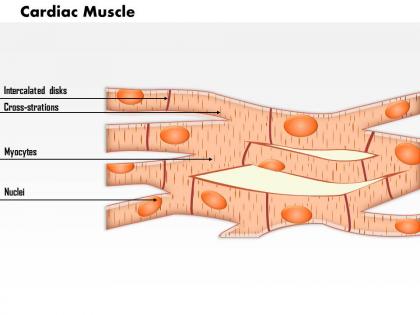
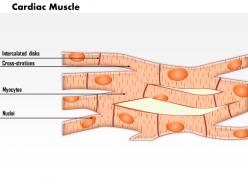
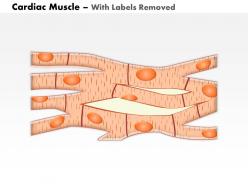
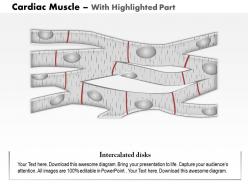
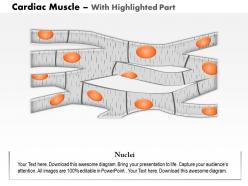
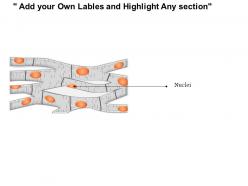
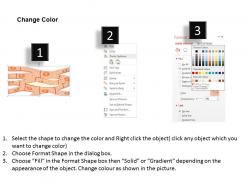
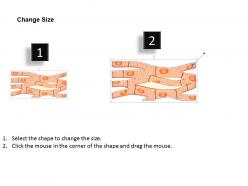
So the big thing to look for is intercalated discs - they're basically these special connections between cardiac muscle cells that you won't see in other muscle types. They've got gap junctions and desmosomes that let electrical signals zip between cells super fast, which is how your heart beats as one coordinated unit. The cells themselves are shorter and branched compared to skeletal muscle, usually with just one nucleus in the center. They're striated but much smaller. Honestly, once you spot those intercalated discs under the microscope, you'll know immediately it's cardiac muscle - they're like the signature feature.
So intercalated discs are like the heart's electrical wiring system. Gap junctions in these discs let ions zip between cardiac cells, which synchronizes contractions. Without them, your heart would just be a mess of random twitching instead of one coordinated pump. They've also got desmosomes that keep cells from tearing apart during contractions - yeah, that'd be bad. The gap junctions do most of the heavy lifting though. When you're studying cardiac histology, look for those stepped connections between cells. They're honestly pretty cool once you spot them.
So basically your heart has its own built-in pacemaker, but your nervous system is like having a gas pedal and brake. Sympathetic nerves dump norepinephrine on these beta-1 receptors - boom, faster heart rate and stronger beats. Perfect for when you're stressed or working out. The vagus nerve does the complete opposite though, releasing acetylcholine to chill everything out when you're relaxing. Honestly, it's pretty wild how precisely your body adjusts this stuff. Your heart doesn't need outside help to beat, but the autonomic system tweaks it constantly based on what's happening.
Your heart cells are straight-up oxygen junkies - they can't survive without constant air supply. Most of their energy (like 60-70%) comes from breaking down fats, then they'll use whatever glucose is floating around. Think of them as having these massive mitochondria factories inside. Unlike your regular muscles, heart cells can't really go without oxygen for long without getting cranky. They're pretty adaptable though and will switch fuels based on what's in your bloodstream. Bottom line? Don't mess around with clogged arteries - your heart literally depends on that steady flow.
Your heart literally can't afford to take breaks - imagine if you had to consciously remember to make it beat every second! That'd be a nightmare. Cardiac muscle has these special pacemaker cells that fire electrical signals automatically, so you get that steady rhythm pumping blood around your body. It's pretty amazing actually. The whole system adjusts to whatever you're doing without you thinking about it. Running? Heart speeds up. Sleeping? Slows down. This automatic function is what keeps you alive when you're unconscious or just living your life focused on other stuff.
So your heart's muscle fibers are arranged in this crazy spiral pattern - like figure-8s wrapped around the ventricles. Pretty wild when you think about it. When they all contract together, it creates this twisting motion that squeezes blood out from bottom to top, kind of like wringing a towel but obviously way more complex. This coordinated squeeze is why your heart's so efficient - you get way more blood pumped out per beat than if everything just contracted randomly. That's what all those synchronized electrical signals on an ECG are actually triggering.
So basically your heart muscle gets these crazy good adaptations when you do cardio regularly. More mitochondria pack into the cells, which means better energy production. Blood flow improves too since you get more capillaries forming around the muscle fibers. Your heart actually grows a bit (the good kind of growth, not scary stuff). Takes months to really see these changes though - no instant gratification here unfortunately. But here's the payoff: your resting heart rate drops and each heartbeat pumps way more blood. It's honestly pretty wild how efficient your heart becomes.
So basically, aging just wrecks your heart muscle over time. The muscle cells get bigger but you lose some, plus all this extra collagen builds up making everything stiff and fibrous. Contractility goes down, relaxation gets slower - honestly the whole process is pretty brutal. Your heart just can't pump as well, especially when you're stressed or exercising. Diastolic filling takes way longer too. Oh and here's the thing that trips people up - you can't use the same "normal" ranges for a 75-year-old that you'd use for someone who's 30. Their baseline is just different.
So the main culprits you'll run into are cardiomyopathy (heart muscle gets thick or stiff), heart attacks that trash the tissue, and myocarditis from infections. Heart failure's everywhere - basically the pump just gives up. Arrhythmias screw with the electrical system, plus you've got hypertensive disease from years of high BP. Most of this stuff connects somehow, which honestly makes diagnosis trickier. Anyone coming in with chest pain, can't catch their breath, or feels wiped out? Always think cardiac and grab that ECG or echo. Better safe than sorry with heart stuff.
So basically, your heart muscle needs calcium from outside the cell through these L-type channels during that plateau phase. Skeletal muscle? Totally different - it just dumps stored calcium from internal reservoirs. Your heart's got this cool two-step thing where external calcium triggers even more calcium release from storage. It's like a chain reaction that amplifies the signal. Skeletal muscle skips all that and goes straight for the massive calcium dump. That's exactly why calcium blockers work great for heart issues but won't affect your arm muscles at all. Pretty clever design, honestly.
So basically heart disease screws up how the muscle contracts in a few different ways. The fibers get stiff - especially with hypertrophy - which makes filling and pumping way harder. Blocked arteries are probably the worst though, because they create scar tissue that just sits there doing nothing while healthy parts have to compensate. That leads to irregular rhythms and weaker pumps. It's this annoying domino effect where one problem creates another. You'll want to catch contractile issues early, before patients even feel symptoms.
So basically, heart meds work by targeting different parts of how your heart functions. Beta-blockers slow things down by blocking those adrenergic receptors - think of it like putting the brakes on. ACE inhibitors make it easier for your heart to pump by reducing the pressure it's working against. Then you've got calcium channel blockers that mess with contraction strength and rhythm (calcium stuff gets weird fast, trust me). Digitalis actually makes the heart squeeze harder by messing with sodium-potassium pumps. Antiarrhythmics target ion channels to keep the electrical stuff steady. The trick is matching what's wrong - weak pumping, funky rhythm, or overworked heart.
So when your heart doesn't get enough oxygen, the muscle cells basically start dying off. They switch to this crappy backup energy system that creates toxic waste products - not good. Even brief episodes can throw off your heart rhythm and make it pump weaker. If it goes on too long, you're looking at permanent damage and scarring. That's how people end up with heart failure. My dad's cardiologist always said "time is muscle" which sounds cheesy but it's true - you've got to restore blood flow fast or you'll lose heart tissue for good. Pretty scary stuff honestly.
So basically when your heart gets injured, it tries to fix itself by thickening the walls and making the chambers bigger. Scar tissue starts forming too. At first this actually helps keep blood pumping normally - it's like your heart's way of working harder to compensate. But here's the thing, over time this backfires big time. The heart gets stiff and way less efficient at its job. Plus you're more likely to get weird heart rhythms. Honestly, this is why doctors push ACE inhibitors or ARBs early on - they can really slow down this whole process.
So basically, stem cell therapy might be able to fix dead heart muscle after heart attacks - which is pretty wild since hearts don't really heal themselves. You'd get new blood vessels growing, less scar tissue, and actual working heart muscle regenerating. Clinical trials are looking good so far with better heart function and fewer symptoms. It's still experimental though, not something doctors are doing routinely yet. My cousin's a cardiologist and she's constantly reading about new trials. Could be a total game changer in like 10 years if it keeps progressing this way.
-
Excellent work done on template design and graphics.
-
Great experience, I would definitely use your services further.