


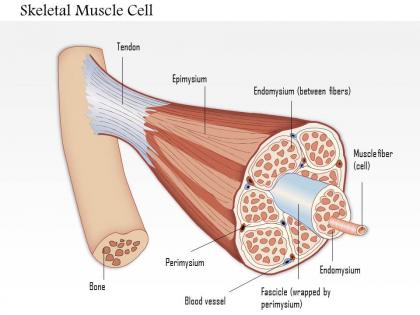
0614 skeletal muscle cell medical images for powerpoint




Try Before you Buy Download Free Sample Product
 Impress Your
 Audience
 100%
100% Editable
 Save Hours
 of Time


Apprise them of every angle with our 0614 Skeletal muscle cell Medical Images For PowerPoint. Give them a fair idea of it all.
People who downloaded this PowerPoint presentation also viewed the following :
0614 skeletal muscle cell medical images for powerpoint with all 10 slides:
Earn plaudits with our 0614 Skeletal muscle cell Medical Images For PowerPoint. Your audience will readily cheer you on.
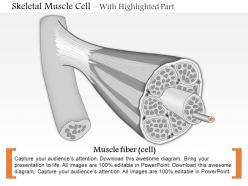
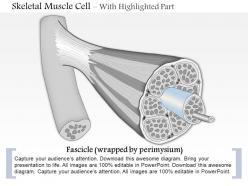
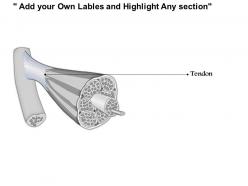
FAQs for 0614 skeletal muscle cell medical
So skeletal muscle cells contract to create force - that's literally how you move around. Walking, lifting stuff, even just standing up straight when your boss walks by. They stabilize joints too, which is pretty crucial if you think about it. When you exercise and get warm? That's partly these cells generating heat as they work. Oh, and they store glucose as glycogen for energy. If you're trying to understand movement disorders or why your legs feel like jello after leg day, you've gotta know how these contractile units function at the cellular level first.
Okay so skeletal muscle is super organized - you've got those striped bands and multiple nuclei per cell, plus you control it voluntarily. Cardiac muscle also has stripes but just one nucleus, and it beats automatically (which is honestly pretty wild when you think about it). Then smooth muscle is totally different - no stripes, one nucleus, and it's involuntary like in your intestines. The main thing is knowing which type you're looking at matters a ton for research since they contract differently and are structured completely differently. Makes a huge difference in whatever you're studying.
Oh myofibrils! Those are like the tiny engines inside your muscle cells that actually make contractions happen. Each one has these repeating sections called sarcomeres - they're packed with actin and myosin filaments. When calcium shows up, the filaments slide past each other (it's actually pretty cool to watch). This sliding makes each sarcomere shorter. Then the whole myofibril gets shorter, and boom - your muscle contracts. Those striped patterns you see under the microscope? That's just the myofibril organization showing off. Honestly makes me appreciate how much is happening when I flex my arm.
So those long cylindrical muscle cells with multiple nuclei? That shape lets them contract super forcefully along their length. Inside you've got myofibrils packed with actin and myosin that slide past each other - that's what creates the actual contraction. The striations are just that organized arrangement making everything work together. What's really cool is the sarcoplasmic reticulum can dump calcium crazy fast for quick on/off control. Honestly the whole setup is pretty brilliant when you think about it. Next time you're looking at muscle tissue, just focus on how that structure makes those rapid coordinated movements happen.
So basically you've got three types of muscle fibers. Type I are the marathon guys - slow but they just don't quit. Then there's Type IIa which is like the perfect middle ground, good for stuff that needs both power and some staying power. Type IIx fibers are straight-up explosive but they burn out super fast, like when you're sprinting or maxing out on deadlifts. Everyone's born with a different mix depending on genetics, which honestly explains why some people are just naturally better at certain sports. The cool part though? You can actually train some of your IIx fibers to act more like IIa with consistent work.
So basically, your motor neurons talk to muscle fibers through this spot called the neuromuscular junction. When a signal hits the nerve ending, calcium rushes in and dumps acetylcholine into the gap. That ACh binds to receptors on your muscle, opening sodium channels. The muscle membrane depolarizes and spreads the signal down these T-tubules - honestly took me forever to remember that name in class. This triggers calcium release from storage, which makes the muscle contract. Break this connection? Your muscles won't respond to voluntary commands at all.
So satellite cells are like your muscle's repair squad - they're stem cells that hang out dormant until you work out or get injured. Then boom, they wake up from mechanical stress and start multiplying into myoblasts that fuse with damaged fibers. Your muscles literally can't grow or recover without them, which is honestly pretty wild when you think about it. As you get older though, they don't work as well - that's part of why older people lose muscle mass. If you're tracking muscle research, satellite cell activity is definitely worth watching since it shows how well someone's adapting to training.
When you lift weights, you're literally stressing out your muscle cells - but in a good way. This activates these cool stem-like cells called satellite cells that basically donate extra nuclei to your existing muscle fibers. More nuclei means you can pump out way more protein. Your body also cranks up something called mTOR signaling, which is like flipping the "get swole" switch at the cellular level. Honestly, it's wild how picking up heavy things can reprogram your biology like that. But here's the thing - you've gotta keep upping the weight or your muscles will just get comfortable and stop growing.
So basically your muscles have three ways to make energy. There's this phosphocreatine thing that's like instant power but only lasts maybe 10 seconds - think sprinting out the gate. After that, glycolysis jumps in and breaks down glucose super fast without needing oxygen (that's where you get the burn from lactic acid). For longer stuff, oxidative phosphorylation uses oxygen to turn glucose and fats into ATP way more efficiently. Your body's actually pretty smart about switching between them based on how hard you're going. Oh and if you're coaching anyone, knowing this stuff helps you plan their training way better.
Yeah, so basically your muscle cells start shrinking around 30 - it's called sarcopenia. The fast-twitch fibers that give you power are hit the worst. Your mitochondria get lazier too, which is why you get tired faster. Kinda sucks, but here's the thing - resistance training actually slows this whole process down big time. Even people in their 80s can still build muscle, which honestly blows my mind. You don't need a fancy gym either. Bodyweight stuff works great. My neighbor started doing push-ups against her kitchen counter at 65 and she's way stronger now.
So basically your hormones run the show when it comes to muscle. Insulin and IGF-1 are like your best friends - they help build protein and grow cells. Growth hormone and testosterone jump in too, making you stronger. But then there's cortisol, which is honestly the worst because it literally eats your muscle when you're stressed out. Thyroid hormones handle the energy side of things. The trick is keeping everything balanced through decent sleep and eating right. Oh, and don't skip workouts obviously. It's crazy how much this stuff affects everything.
So when you mess up a muscle, these dormant stem cells called satellites basically wake up and go to work. Inflammation hits first to clear out the damaged stuff. Then those cells start multiplying and turn into myoblasts - they fuse together to fix your existing fibers or build new ones. Pretty cool how your body just handles it, right? Takes around 2-3 weeks for minor stuff. Oh and definitely keep your protein up during recovery. Light movement helps too, but don't overdo it or you'll just set yourself back.
Okay so calcium is literally what makes your muscles work. When you get an action potential, it dumps calcium from the sarcoplasmic reticulum (fancy name for calcium storage). That calcium binds to troponin, which moves tropomyosin out of the way. Now myosin can actually grab onto actin binding sites and boom - contraction happens. No calcium? No contraction, period. The binding sites stay blocked. Once the signal stops, calcium gets pumped back and you relax. Honestly this whole system is why I love physiology - it's so clean and logical. If you're looking at muscle disorders, calcium handling is always your starting point.
So basically, your muscle cells turn into these crazy efficient endurance machines when you train consistently. More mitochondria get packed in there, plus way better blood flow to deliver oxygen. The fibers actually shift toward those slow-twitch ones that don't get tired as easily. What's really cool is they get better at burning fat instead of just torching your glycogen stores - though honestly, the science behind fat metabolism still trips me up sometimes. Your clients won't see these changes right away though. Takes like 6-8 weeks for the real adaptations to kick in, so don't let them get discouraged early on.
So basically dystrophin mutations are the big ones - that's what causes Duchenne and Becker muscular dystrophy. But there's literally hundreds of other muscle genes that can mess things up too. Myosin, titin, actin, tropomyosin - when any of these go haywire you get muscle weakness, wasting, weird contractions, the whole deal. Don't even get me started on all the metabolic enzyme problems. If your patients have unexplained muscle stuff going on, the genetic testing panels now are actually pretty solid. Way more comprehensive than they used to be.
-
Excellent template with unique design.
-
Excellent products for quick understanding.