


0814 project program cycle management powerpoint presentation slide template




Try Before you Buy Download Free Sample Product
 Impress Your
 Audience
 100%
100% Editable
 Save Hours
 of Time


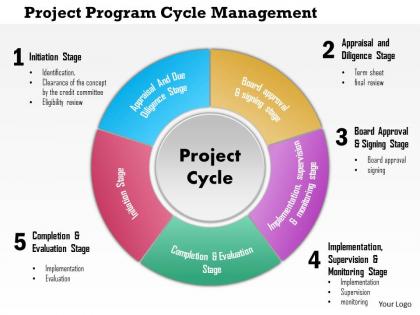
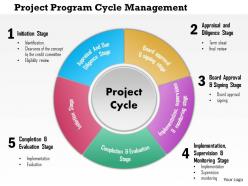
Demonstrate the concept of project management using project program cycle management PowerPoint presentation slide. Managing the business project is not an easy task as you are not only required to ensure the smooth functioning of the process but also needs to ensure that you are meeting the client deadlines. For this reason, we have designed this PPT infographic that innovatively showcasing the complete lifecycle of the project management in a corporate firm. There are five points highlighted in the process which are initiation stage, appraisal and diligence stage, board approval and signing stage, implementation, supervision and monitoring stage, completion and evaluating stage. All these can be demonstrated easily by using this presentation visual. The PowerPoint image is totally modifiable and you may modify and share it as per your industry requirement. Apart from this, you may add the company information in the slide. Thus download this amazing PPT design to convey your message to your viewers. You may also browse through our entire website to search the appropriate design for your next project. Deliver your appeal with our 0814 Project Program Cycle Management Powerpoint Presentation Slide Template. Convince them to believe in your charitable cause.
People who downloaded this PowerPoint presentation also viewed the following :
0814 project program cycle management powerpoint presentation slide template with all 5 slides:
Lay a firm base with our 0814 Project Program Cycle Management Powerpoint Presentation Slide Template. Your thoughts will tower over others.
FAQs for 0814 project program cycle management powerpoint
So there's five main phases: initiation, planning, execution, monitoring/control, and closure. First you define what you're actually trying to accomplish and why. Then comes planning - timelines, who's doing what, budgets, all that fun stuff. Execution is where shit gets real and you're basically putting out fires while trying to stay on track. Oh, and you're constantly checking if things are going sideways throughout the whole thing. Closure wraps everything up and figures out what went wrong (there's always something). Honestly though? Don't rush into the doing part without proper planning first - I've seen too many projects crash because of that.
Dude, stakeholder engagement can literally make or break your whole project. Get them involved early and you'll have way better requirements from the start. Communication is huge here - don't just check in once and ghost them. Different people bring different expertise, so you'll actually catch problems before they blow up. The ones who feel heard won't blindside you with random requests later (learned this the hard way). Map out who matters most at the beginning. Honestly, it's more work upfront but saves you so much drama down the road. Buy-in becomes automatic when people feel included.
Ugh, scope creep will kill you every time - people always want "just one tiny addition" that derails everything. Getting realistic timelines is brutal too since everyone underestimates how long stuff actually takes. Oh, and good luck getting all your stakeholders on the same page about what success looks like. I learned the hard way to document literally everything because people conveniently forget what they agreed to. Lock down your scope first, make stakeholders help set the timeline so they can't complain later, and honestly? Be that annoying person who writes everything down. You'll hate doing it but you'll thank yourself later when things go sideways.
Don't just do risk management once and call it done. Build it into your whole timeline from day one - identify what could go wrong during planning, then actually budget for fixes. Most teams mess up here because they create their risk list and never look at it again (guilty of this myself tbh). Check in on risks regularly during team meetings, not just quarterly reviews. Watch for warning signs as you go and pivot when new problems pop up. It's way better as an ongoing thing your team talks about rather than some formal document gathering dust.
Honestly, M&E is a game-changer because you're not just guessing anymore. When issues pop up, you'll catch them early and can pivot before everything goes sideways. The data also saves your butt when stakeholders start questioning your calls - numbers don't lie. What really surprised me though is how often you discover that stuff you thought was crushing it... actually isn't. Pick maybe 3-4 metrics that actually matter for your goals. Track those religiously. Oh, and it makes resource shifts way easier to justify too.
Honestly, Gantt charts are still your best bet for mapping out dependencies - Microsoft Project or Smartsheet if you want something robust, but I've seen teams crush it with just Excel too. Kanban boards work better when things change constantly (Jira, Trello, whatever). My biggest advice? Build buffer time from day one and do weekly check-ins with everyone. Oh, and pick something the whole team will actually use - doesn't matter how good the software is if Sarah keeps forgetting to update her tasks. The consistency thing is huge.
Honestly, resource allocation can make or break your whole project. Get the right people and budget when you need them? You'll cruise through milestones. Mess it up and you're dealing with missed deadlines and burned-out teammates - trust me on that one. Start mapping out what you need during planning, but always build in extra cushion because something will go sideways. I learned this the hard way on my last big project. Review everything weekly once you're running and don't hesitate to shuffle things around if priorities change. It's way better than watching everything fall apart later.
Dude, communication literally makes or breaks projects - I've seen way more fail from bad info flow than money problems. Map out who needs what updates and how often right when you start. During planning, keep everyone on the same page. Execution phase? Regular check-ins are everything. When stuff inevitably hits the fan, be super transparent about it. Don't wing the communication part - treat it like your timeline matters. Set up clear channels early and stick to them. Honestly, it's probably more important than people realize.
Honestly, catch those lessons while they're still fresh in everyone's head - right after milestones or when wrapping up. Make a basic template covering what worked, what bombed, and what you'd do differently. Here's the thing though - don't just throw it in some shared folder where it'll die a slow death. Actually pull up lessons from similar projects when you're starting new ones. Keep everything in bullet points (way easier to scan than paragraphs). Oh, and make sure it's searchable somehow. I've seen too many teams repeat the same mistakes because nobody bothered looking at past insights.
For early stage stuff, track scope clarity and whether stakeholders are actually aligned - plus how accurate your resource planning is. Once you're executing, budget variance and schedule adherence are obvious ones, but honestly velocity tells you way more about incoming disasters. Quality metrics matter too. Wrapping up? Focus on deliverable acceptance rates and stakeholder satisfaction. Oh, and did you actually fix what you set out to fix lol. Don't go crazy though - pick like 3-4 metrics per phase max. Simple dashboard, check it weekly with the team. You'll drown otherwise.
Oh man, cultural stuff totally changes how you plan projects. Some places have these crazy hierarchical approval chains that drag everything out. Others want everyone to agree on everything before moving forward - which honestly can be even slower sometimes. Communication is wild too - like in some cultures people give you direct feedback, but others are super indirect about criticism. I learned that lesson the hard way in Southeast Asia! Religious holidays mess with your timelines. Work-life balance expectations are different everywhere. Risk tolerance varies big time. Just map out these differences early or you'll get burned later.
Honestly, you need to get people locally invested from the start - like actually owning it, not just showing up to meetings. Money's the biggest headache though. Start hunting for funding sources way earlier than you think because that process drags on forever. Document literally everything and train your local team super thoroughly so they can run things solo. Oh, and here's what nobody tells you - plan your exit strategy on day one, not when you're scrambling because the grant money's about to dry up. Those three things will save you so much stress later.
So basically, the right tech can handle all that annoying busywork for you. Dashboards pull data automatically from your different tools - no more hunting people down for updates every single week (thank god). Tools like Monday or Asana are pretty solid because your team just updates stuff as they work, and it feeds straight into your stakeholder reports. Takes some setup time upfront but it's totally worth it once everything's talking to each other. I'd start small though - pick whatever's driving you most crazy right now and find one tool that actually fixes that specific problem.
So project management is pretty straightforward - you're handling one specific thing with a set timeline and budget. Like shipping that new app feature by March. Program management? Way bigger scope. You're juggling multiple projects that all tie into some major company goal. Think of it like... one orchestra vs running a whole music festival with different stages happening at once. Program managers stay zoomed out, watching how everything connects strategically. Project managers get into the weeds with execution stuff - honestly both can be stressful but in different ways. Really depends if you want tactical work or more big-picture coordination.
Try taking your big project phases and chopping them into 2-3 week chunks with regular check-ins. Mini-reviews become your friend here - you'll catch problems way earlier instead of waiting till the end of each phase. Keep your overall program structure (no need to blow everything up) but make the actual work more bite-sized and iterative. Honestly? Most teams I've seen do this love having structure but not feeling locked into these massive waterfall timelines. Start with just one workstream as a test run. Once people get the hang of it, roll it out wider.
-
Design layout is very impressive.
-
Attractive design and informative presentation.