


1114 how mobile network work connectivity works from cell tower to base station ppt slide




Try Before you Buy Download Free Sample Product
 Impress Your
 Audience
 100%
100% Editable
 Save Hours
 of Time


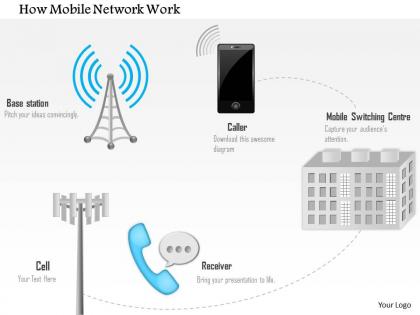
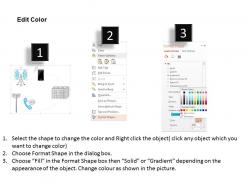
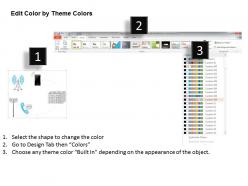
Analyze how mobile communication is the exchange of voice and data using a communication infrastructure in spite of of any physical connection with our 1114 how mobile network work connectivity works from cell tower to base station PPT slide. This PowerPoint slide of mobile communication technologies will show how this technology not only helping businesses to perform their functions more quickly and resourcefully but also increasing the standard of human lives. With the help of this PPT theme you can evaluate how a mobile phone with portable network which receives or makes calls through a base station or broadcast radio waves are used to share signals to and from the cell phone. This presentation is true representation how wireless system operates? How mobility is supported, the fundamental infrastructure and what communications components are required among the different functional mechanisms. This presentation theme is also helpful in examining how mobile interactions are evolving in order to meet the different needs of users. Feel confident about giving correct directions with our 1114 How Mobile Network Work Connectivity Works From Cell Tower To Base Station Ppt Slide. Be comfortable at the helm.
People who downloaded this PowerPoint presentation also viewed the following :
1114 how mobile network work connectivity works from cell tower to base station ppt slide with all 5 slides:
Our 1114 How Mobile Network Work Connectivity Works From Cell Tower To Base Station Ppt Slide bring out the genius in you. Your exceptional aspects come to the fore.
FAQs for 1114 how mobile network work connectivity works from cell tower to base
So basically, city areas have tons of cell towers which is great for signal strength, but then everyone's using data at the same time so it gets super slow during busy hours. Rural spots are the total opposite - way fewer towers so you get dead zones everywhere, especially if there's mountains or thick trees blocking stuff. Honestly, phone companies just don't want to spend the money building towers out there since not enough people live in those areas. Your best bet is checking your carrier's coverage map first, and maybe getting a signal booster if you're stuck in the middle of nowhere.
So basically each generation is a huge jump in what your phone can actually do. 2G was just calls and texts. 3G gave you super slow internet that barely worked. Then 4G finally made streaming and video calls decent. 5G though? It's insanely fast - like downloads happen instantly and gaming has zero lag. You go from "ugh this is painful" with 3G to basically console gaming on your phone. Only thing is coverage is all over the place. I'd check your carrier's map first because you'll probably drop back to 4G once you leave the city anyway.
So basically, if carriers don't upgrade their infrastructure, you're gonna get stuck with terrible service and those annoying dead zones. New cell towers and fiber cables make a huge difference - like when 5G came out, they had to install those little antennas literally everywhere. More investment means better capacity too, so your calls won't drop when everyone's using their phones at once. Honestly, I always check how much a carrier's spending on upgrades before switching. It's a pretty good way to figure out if their service will actually get better in your area or stay crappy.
Yeah, weather totally screws with cell service. Rain's the worst - water just sucks up radio waves. I've noticed fog and humidity mess things up too, plus cold weather makes tower equipment act weird sometimes. Wind can actually make towers sway enough to affect your signal, which is kinda wild when you think about it. The newer 5G stuff is super picky about weather conditions. Even solar flares can cause problems, though that's obviously rare. If you're doing something important that needs good signal, maybe check the forecast first? Learned that one the hard way.
So basically network providers deal with a bunch of annoying stuff that messes with your signal. Peak hours are the worst - like when everyone's binge-watching at night and the network just can't handle it. Rural areas are a nightmare too since putting towers in the middle of nowhere is expensive and complicated. Weather screws things up more than you'd think. Buildings block signals, other devices interfere, and they're constantly having to upgrade everything because tech changes so fast. Oh, and if your phone's being weird, check what time it is first - that usually tells you everything.
Dude, IoT devices are totally overwhelming cell networks right now. Millions of smart cars, sensors, and random home gadgets are constantly sending data - way more than networks were built to handle. The tricky part? Each device wants something different. Some need instant responses while others just ping tiny updates here and there. My neighbor's smart doorbell probably uses more data than my first smartphone did! Carriers are scrambling to roll out 5G towers everywhere just to keep up. Honestly, it's kind of impressive how quickly everything got connected.
Honestly, start by mapping where your dead zones actually are - might be an easier fix than you think. Signal boosters and repeaters work great for extending what you've already got. New cell towers or small cells are obviously the dream solution but good luck with that budget and timeline lol. Satellite backhaul is getting way better with those new low-orbit systems, though storms still screw with it sometimes. WiFi calling helps people get more out of whatever weak signal they're stuck with. Sometimes you can just move existing equipment around and call it a day.
Yeah so it's all about what users want, really. People started streaming Netflix constantly on phones, right? Carriers had to rush and upgrade speeds like crazy. Dead zones make everyone complain, so companies focus upgrades on those spots first. Your expectations for instant everything - video calls, loading times, staying connected - that's what pushes them toward 5G and better tech. Honestly feels like they're always playing catch-up though. User behavior basically shapes where the whole industry goes next, not some grand plan from the top.
Okay so basically you've got a few nasty things to worry about. Man-in-the-middle attacks are probably the worst - hackers literally intercept your data when you're on sketchy networks. Public WiFi is an obvious no, but even cell towers can be faked (they call them "stingrays" which sounds way cooler than it actually is). Your calls and texts can get listened in on too. Malware's another big one if you download random stuff. Honestly just get a VPN, keep your phone updated, and don't do banking on public networks.
Ugh, network congestion is the worst - basically happens when everyone's hitting the same cell tower at once. Your data crawls, calls drop, apps refuse to load. Think rush hour but for your phone. Streaming becomes a nightmare with all that buffering, and don't even get me started on video calls freezing mid-sentence. People lose their minds over this stuff since we're all addicted to instant everything now. Your best bet? Jump on WiFi when things get crazy, usually during peak hours. Some carriers have those priority plans too if you're really desperate.
So basically 5G kills it in crowded spots because it can handle way more devices at once. No more buffering when everyone's trying to stream at the same time - concerts, downtown areas, you know the drill. The network uses these smaller cell towers and some fancy beamforming tech that's honestly pretty cool. Your connection stays fast even during peak hours since there's way less congestion. Only downside? Companies have to drop serious cash on new infrastructure first. But if you're upgrading networks anywhere, dense areas should definitely be priority number one.
So basically your phone is constantly chatting with cell towers to find the best signal. It does this cool thing called carrier aggregation - combines different frequency bands for better speed. Plus it jumps between towers as you move around, and honestly most people don't even realize it's happening. Load balancing helps too when towers get crowded. The key thing though? Keep your phone updated. Carriers push out new connection algorithms all the time, and you'd be surprised how much difference those updates actually make for your data speeds.
So basically the government controls who gets what radio frequencies and throws money at rural internet projects. The FCC runs those big spectrum auctions you hear about. What really slows things down though? All the red tape around building towers - permits, environmental stuff, getting access to land. It's honestly pretty boring but affects whether you get decent service. Oh and those infrastructure bills that pass every few years usually have telecom money buried in there. That's why some random small town suddenly gets amazing 5G coverage.
Dude, AI is actually making a huge difference with mobile networks right now. Your phone automatically connects to the best cell tower based on real-time conditions, which is honestly pretty slick. It predicts when networks are gonna get jammed up, so you'll have way fewer dropped calls. Battery life gets better too since the AI manages power way more efficiently. Networks can even spot problems and fix them before you notice anything's wrong - though I still get random dead zones in my neighborhood sometimes. Check if your carrier has AI features turned on in your area, might help with those connectivity issues you mentioned.
Oh man, weak signal is the worst! First thing - turn on Wi-Fi calling in your settings, it's seriously a game changer when cellular sucks. Try getting near a window if you're inside, and close apps running in the background since they hog data. Peak hours are brutal for network congestion so avoid those if you can. Here's a weird trick that actually works: toggle airplane mode on/off to force your phone to grab the strongest tower nearby. Oh and restart your phone every week or so - I know it sounds basic but it helps. Keep your software updated too.
-
Great product with effective design. Helped a lot in our corporate presentations. Easy to edit and stunning visuals.
-
Presentation Design is very nice, good work with the content as well.