


1114 leaky bucket lead generation powerpoint presentation




Try Before you Buy Download Free Sample Product
 Impress Your
 Audience
 100%
100% Editable
 Save Hours
 of Time


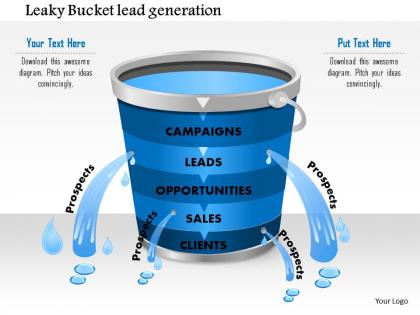
Capture the leads and don’t let your efforts go to waste by using our leaky bucket lead generation PowerPoint presentation. This presentation layout having a leaky bucket with water draining out has been designed by our professional team members to showcase right sales approach and the steps that needs to be taken to stop prospects sales from fizzling out. The leaky bucket PowerPoint slide model will help you and the target audience, so that marketers need to be very clear on who their target is before implementing any strategy. This leaky bucket power point template can be utilized to drive people and convert visitors into customers, resulting in sales. Check out our best designs of lead generation PowerPoint templates with this business lead generation PowerPoint presentation slide. This business slide showcases a visual leaky bucket diagram, use this leaky bucket diagram to describe the process of customer gain and loss. Weld your thoughts with our 1114 Leaky Bucket Lead Generation Powerpoint Presentation. They will form a strong connection.
People who downloaded this PowerPoint presentation also viewed the following :
1114 leaky bucket lead generation powerpoint presentation with all 5 slides:
Accelerate growth with our 1114 Leaky Bucket Lead Generation Powerpoint Presentation. Achieve your aims earlier than expected.

FAQs for 1114 leaky bucket lead
Honestly, you're probably bleeding leads because nobody's getting back to them fast enough. Like, waiting even a day is basically kissing them goodbye. Poor lead qualification is huge too - your team might be chasing the wrong people entirely. Then there's the whole mess between marketing and sales not talking to each other. Leads get passed off and just... disappear into the void. Your CRM's probably missing half the touchpoints anyway. I'd start by actually timing how long it takes to respond to leads, then track every single interaction. Oh, and make sure someone's actually following up consistently - that's where most people completely drop the ball.
Map out your whole lead funnel first - from when someone hits your site to closing the deal. Check conversion rates at every step. You'll find the big leaks fast, usually boring stuff like forms being too long or emails hitting spam folders (email deliverability is honestly the worst). Analytics will show you where people bounce off your site. Chat with your sales folks too - they'll tell you which leads feel dead on arrival. Oh, and set up proper tracking so you can tell which channels send you window shoppers versus people ready to buy.
Honestly, segmentation is what stops your leads from just... disappearing into the void. You're basically grouping people so you can actually talk to them properly instead of sending random stuff they don't care about. Like, someone who just found your site needs totally different follow-ups than a person who's been downloading your content for weeks. Makes sense, right? Without it, you're just throwing messages everywhere and hoping something sticks - which, spoiler alert, doesn't work great. I'd start simple with maybe 3 segments based on what people actually do on your site. You'll see way better results.
Look, data analytics is basically your cheat code for finding where leads are disappearing. Track which channels actually bring quality prospects (not just random traffic). You'll see exactly where people drop off and what messaging works for different groups. Honestly, the conversion insights alone will stop you from wasting time on stuff that feels productive but isn't moving the needle. Set up tracking first - I know it's boring but you need the foundation. Then dig into what's really driving results vs what you assume is working. Pretty eye-opening once you start connecting the dots.
Dude, speed is everything - hit those leads back within 5 minutes or you're toast. I've watched companies blow slam-dunk deals just because they waited half a day to respond (like, why??). Your follow-ups need to feel personal, not some generic template garbage. Break leads into groups based on what they actually care about. Oh, and don't just pitch meetings right away - give them something useful first. Education beats hard selling every time. Make sure someone owns each lead though, because otherwise stuff just disappears into the void.
Think of good content like glue for your leads - it stops them from wandering off to your competitors. When you actually help people instead of just trying to sell them stuff, they'll stick around way longer. I've watched companies absolutely tank because their follow-up emails were just boring sales pitches that missed the mark completely. Map out where your leads are in the buying process first. Then create content that actually speaks to their specific problems at each stage. Short answer? Cut the fluff and give people something useful, or they'll just disappear on you.
Honestly, get a solid CRM first - that's what'll save you from losing leads left and right. HubSpot or Marketo can handle the follow-up stuff automatically when you're buried in work (which, let's face it, is basically always). Lead scoring helps you figure out who's actually worth chasing. Zapier's pretty clutch for connecting everything so your data isn't scattered all over the place. Oh, and don't sleep on call tracking and live chat - they'll grab leads even when you're not paying attention. Build from the CRM up and you'll be good.
Honestly, you gotta close the loop with actual sales data - track those leads all the way through. Most teams totally skip this part and then can't figure out why they're stuck. Do monthly reviews where you dig into which sources actually convert, what messaging hits, and where people bail out. I pull reports on lead quality scores, conversion rates by channel, cost per acquisition - the usual stuff. Then test changes based on what you find and see if it moves the needle. Oh and make it a regular thing, not just when leadership's breathing down your neck about numbers. That's when you know you're already behind.
Honestly, the worst mistake is chasing quantity over quality. You'll burn through budget on junk leads that never buy anything. Sales and marketing teams not talking to each other is another disaster - like, why are they even separate conversations? Speed matters way more than people think too. Wait a day to follow up and your lead's already forgotten about you. The "set it and forget it" mentality kills me. Actually qualifying people upfront saves you tons of headaches later. Get your handoff process tight between teams or you're just throwing money away.
Honestly, personalized marketing is a game changer for keeping leads warm. Nobody wants to feel like they're just another name on your email list, you know? I track what industry they're in, company size, how they've engaged before - then use that to send stuff that actually matters to them. My CRM automatically triggers follow-ups based on where they are in their buying process. Short emails work better than long ones, by the way. When leads get content that speaks directly to their situation instead of generic sales pitches, they don't ghost you. It's really that simple.
Honestly, start with tracking your conversion rates between each stage - lead to MQL, MQL to SQL, then SQL to customer. Cost per lead and CAC are huge too because wow, expensive leads that go nowhere will kill your budget fast. Different channels perform totally differently, so definitely watch lead source performance. Time-to-conversion matters a lot - if prospects are stuck in stages forever, your process needs work. Weekly dashboards for these basics will save you. Then focus on wherever you're losing the most people. Oh and don't overthink it at first, just get the data flowing.
Dude, your landing page UX might be killing your leads before they even have a chance. When pages load slow or don't match what your ads promised, people just bounce immediately. Mobile issues are the worst culprit honestly - everyone's on their phone now. I've watched campaigns completely flip around just by fixing basic stuff like load times and making sure everything actually works on mobile. One client literally doubled their retention just from those changes. Test your page on your phone right now and see if it loads in under 3 seconds. If visitors have a crappy first experience, they won't stick around for your follow-ups either.
Dude, follow-up timing can make or break your whole sales game. Hot leads? Hit them every 3-5 days. Warm ones get weekly check-ins, and those cold prospects maybe bi-weekly. You don't want to be that annoying person blowing up their inbox, but you also can't just disappear for weeks. They'll literally forget you exist or worse - find your competitor. I always tell people to watch their open rates like a hawk. That's honestly the best way to figure out if you're being too pushy or not pushy enough. Each audience is different anyway.
Get your whole team together for a workshop - literally drag everyone into a room with sticky notes and map out your lead journey from start to finish. Train them to catch red flags: leads going quiet after first contact, huge gaps between follow-ups, prospects bouncing between reps without any context. Role-play scenarios so they'll actually know how to save dying leads. Weekly check-ins work great too - have everyone share one lead they almost lost and how they rescued it. Honestly, this stuff only works when it becomes everyone's habit, not just something managers worry about.
Pick one urgent problem your audience has and solve it fast. Skip the 50-page ebooks - nobody wants those anyway. Go for checklists, templates, stuff they can use today. Keep your opt-in super simple (just email, maybe name). Here's what actually works: send it immediately when they sign up, then hit them with more helpful stuff within 24 hours. Oh, and test the whole thing yourself first - you'd be surprised how many people mess up the delivery part. Quick wins beat comprehensive guides every time.
-
Very unique, user-friendly presentation interface.
-
Thanks for all your great templates they have saved me lots of time and accelerate my presentations. Great product, keep them up!