

4 Phases Of Strategy Strategy Implementation Strategy Evaluation Strategy Formulation Environmental Scanning






Try Before you Buy Download Free Sample Product
 Impress Your
Audience
 100%
Editable
 Save Hours
of Time


Our 4 Phases Of Strategy Strategy Implementation Strategy Evaluation Strategy Formulation Environmental Scanning are topically designed to provide an attractive backdrop to any subject. Use them to look like a presentation pro.
People who downloaded this PowerPoint presentation also viewed the following :
Content of this Powerpoint Presentation
Slide 1: This slide introduces 4 Phases of Strategy. State Your Company Name and begin.
Slide 2: This slide shows 4 Phases of Strategy Framework from Financial Planning.
Slide 3: This slide presents 4 Phases of Strategy Framework with General Idea.
Slide 4: This slide displays 4 Phases of Strategy Framework as- Strategy Formulation, Strategy Dev, Strategy Implementation, Strategy Evaluation.
Slide 5: This slide represents 4 Phases of Strategy Framework with- Strategic Evaluation, Implementation of Strategy, Formulation of Strategy, Establishment of Strategic Intent.
Slide 6: This slide showcases 4 Phases of Strategy Framework with- Environmental Scanning, Strategy Formulation, Strategy Implementation, Evaluation and Control.
Slide 7: This slide shows 4 Phases of Strategy Framework with Develop Process.
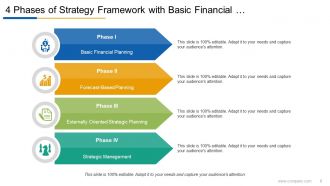
Slide 8: This slide presents 4 Phases of Strategy Framework with- Externally Oriented Strategic Planning, Forecast-Based Planning, Strategic Management, Basic Financial Planning.
Slide 9: This slide displays 4 Phases of Strategy Framework from Resource Allocation.
Slide 10: This is a Thank You slide with address, contact numbers and email address.
4 Phases Of Strategy Strategy Implementation Strategy Evaluation Strategy Formulation Environmental Scanning with all 10 slides:
Use our 4 Phases Of Strategy Strategy Implementation Strategy Evaluation Strategy Formulation Environmental Scanning to effectively help you save your valuable time. They are readymade to fit into any presentation structure.





FAQs for 4 Phases Of Strategy Strategy Implementation Strategy Evaluation Strategy
Look, strategic management breaks down into five main pieces. First, nail down your vision and mission - where you're going and why. Then do environmental analysis (internal strengths/weaknesses, external opportunities/threats). Most companies totally blow this off and pay for it later. After that, you'll formulate specific strategies and objectives based on what you found. Implementation comes next - assign people, allocate money, set deadlines. Oh, and monitor everything constantly because strategies change. Honestly though? Get your team bought into the vision first. Everything else is way easier once that's locked down.
Look, environmental scanning is basically your early warning system for business stuff. You're tracking what competitors are doing, new regulations, tech changes - all that external noise that could impact you. Honestly, most companies only do this during their yearly planning which is kinda dumb. You need regular check-ins, not just annual deep dives. Set up some Google alerts or whatever works for you. The whole point is catching opportunities and threats before they blindside you. Without it, you're just guessing based on old info when making big decisions. Way better than flying blind, trust me.
So stakeholder analysis is like mapping out who actually has a say in your decisions. List everyone who can mess with your plans or gets affected by them - employees, customers, investors, regulators, sometimes even competitors. Then rank them by how much power they have and how interested they are in what you're doing. I've seen so many good strategies crash because someone forgot about a key group. The whole point is figuring out who to focus on first and how to approach them. Honestly, it's one of those things that seems super basic until you miss someone important and they derail everything.
Honestly, you gotta track both sides of this. Leading indicators give you early warnings - stuff like employee engagement or market share trends. Lagging indicators are your final scorecards (revenue, profits, whatever). Most teams I've worked with just stare at the end results and completely miss red flags. Build dashboards with maybe 3-5 key metrics per initiative. Check them monthly, and seriously - if the data's screaming that you're going the wrong way, don't be stubborn about changing course. Oh, and define what "winning" actually means upfront or you'll be measuring random stuff forever.
SWOT analysis is your best starting point - map out their strengths, weaknesses, opportunities, threats. Porter's Five Forces helps you understand the whole competitive landscape too. For benchmarking, compare their revenue, market share, customer satisfaction against yours. Honestly? I spend way too much time scrolling through competitors' social feeds and press releases - you'd be amazed what they accidentally reveal. Industry reports give you the bigger picture, and don't sleep on customer feedback about them. Oh, and grab competitive intelligence wherever you can find it. Mix a few of these methods rather than going all-in on one.
Look, competitive advantage is like your North Star when you're planning strategy. First thing - figure out what makes you actually valuable to customers before making big moves. Don't just copy competitors (that's where most people mess up tbh). You've got to find your unique strengths and build around those in ways others can't easily copy. Could be cost leadership, differentiation, whatever - but it should guide where you spend money and what capabilities you invest in. Start with an honest audit of what you do better than everyone else, then protect and grow those strengths.
Okay so basically there's three levels to this stuff. Corporate strategy is the highest - like "should we even be in movies AND theme parks?" Disney-level decisions. Business strategy gets more specific - how do we actually beat Netflix at streaming? Then functional strategy is where the rubber meets the road. Marketing picks which shows to push, operations keeps rides from breaking down (super unglamorous but honestly makes or breaks the whole thing). I'd figure out which level you're dealing with first - saves a lot of headache later.
Honestly, you gotta weave risk stuff right into your planning from day one. When you're doing your SWOT analysis, ask what could totally screw things up before you even lock in your strategy. Build solutions into your plan and budget - I learned this the hard way when my old team kept treating risks like some sidebar discussion. Set up monitoring dashboards during rollout (alongside your regular metrics, obviously). The trick is making risk a permanent topic in every strategic meeting. Not just when fires start popping up everywhere.
Honestly, culture can totally make or break your strategy execution. People will naturally embrace new priorities when it feels aligned with how they already think and work. But here's the thing - if there's a disconnect? You're screwed, even with the most amazing plan on paper. I've watched some really smart strategies completely bomb because leadership thought they could just skip the cultural stuff. Short sentences work better sometimes. You'll want to figure out if your team's actually ready for change before you launch anything. Don't treat culture like something you can fix later.
Dude, you absolutely need flexibility in your strategy - like, rigid plans will kill your business faster than anything else. Markets change constantly. Your competitors pop up out of nowhere. Customer tastes shift every few months (honestly, sometimes I think people just get bored). Build quarterly check-ins where you can actually pivot, not just waste time in meetings talking about pivoting. Treat your strategy like it's alive - review it, tweak it, completely overhaul sections if you need to. The companies that survive aren't the ones with perfect plans. They're the ones that can adapt when everything goes sideways.
Here's what's worked for me - figure out your biggest priorities first and throw your resources there. Don't spread everything thin trying to fund every single project equally (that's where most companies mess up honestly). Look at actual ROI data instead of just going with your gut. I'd set up some kind of scoring system for deciding what gets resources and what doesn't. Also quarterly check-ins are clutch because things change fast. You might start the year thinking Project A is critical, but by summer something else becomes way more important. Balance your portfolio between safe bets and riskier stuff with bigger upside.
Don't just grab whatever tech looks cool - that's how you blow money on stuff that doesn't matter. Figure out your main business goals first, then work backwards to see which technologies actually help you hit those targets. So many companies I know are chasing AI or whatever's trending without thinking about ROI. Focus on tech that either saves you money, makes customers happier, or opens up new ways to make cash. Set up some kind of regular check-in (maybe quarterly?) where you review new tech against what you're actually trying to accomplish. It's boring but it works.
Honestly, leadership makes or breaks the whole thing. I've watched so many great strategies just die because nobody drove them forward - like, they literally just became expensive paperweights. You've got to be the one connecting your big picture ideas to what actually happens day-to-day. That means getting your team on board, making sure resources go where they need to, and keeping everyone focused when stuff inevitably goes sideways (and trust me, it will). Don't just disappear after the planning phase either. Stay involved and be ready to pivot when roadblocks show up.
Okay so you've gotta get everyone thinking strategically, not just the C-suite in their fancy quarterly retreats. Share the "why" behind decisions way more often - once people see how stuff connects to the big picture, they'll start thinking that way naturally. Cross-functional projects are honestly a game changer because people stop living in their little bubbles. Most employees actually want to think strategically but they're working blind half the time. Feed them market data, competitor intel, customer feedback - whatever you've got. Then create spaces where they can pitch ideas without getting their heads bitten off. Oh, and make it consistent. One-off initiatives are basically useless.
So break your big goals into smaller chunks - like yearly milestones, then quarterly stuff that feeds into those. Each short-term thing should answer "how's this getting us to our 3-5 year target?" Check in monthly minimum. Trust me, short-term fires will derail you otherwise (we've all been there). Build some simple system that shows how daily work connects to bigger outcomes. When people can actually see that link, they'll naturally stay aligned instead of you having to constantly redirect them. Makes your life way easier.
-
Design layout is very impressive.
-
Unique design & color.
-
Excellent design and quick turnaround.
-
Informative design.