

Strategy Planning Evolution Powerpoint Presentation Slides






Try Before you Buy Download Free Sample Product
 Impress Your
Audience
 100%
Editable
 Save Hours
of Time


Do not let your business fail when it comes to strategic planning. Get ahead in this game using Strategy Planning Evolution PowerPoint Presentation Slides. Create a plan to achieve overall long-term goals with the help of content-ready professionally designed stages of strategic planning PowerPoint slideshow. These thoroughly researched strategic planning process PPT slides will help you devise a roadmap showcasing where to put efforts and which initiatives will be less helpful to the business. Not just this, they will help you determine your company’ strategic position, develop a strategic plan, execute the plan, review and revise the plan. This ready-to-use strategic planning evolution PowerPoint presentation comprises of templates like phases in the evolution of strategic planning, framework for evolution of strategy, evolution of a strategy, evolution of innovation strategy, and more. Make progress towards achieving your company’s mission and vision by implementing strategic planning process. Get access to this ready-made strategic planning PPT templates to maintain a long-term perspective. Take a step on the path to success using relevant and ready-to-use strategic planning PowerPoint presentation. Experience the convenience of our Strategy Planning Evolution Powerpoint Presentation Slides. Their format allows you to function freely.
People who downloaded this PowerPoint presentation also viewed the following :
Content of this Powerpoint Presentation
Slide 1: This slide introduces Strategy Planning Evolution Framework. Type Your Company Name and begin with perfection.
Slide 2: This slide presents Phases in the Evolution of Strategic Planning showcasing- Effectiveness of formal Business Planning andValue System, Basic Financial Planning: Phase 1: Operational control- Functional focus, Meet Budget. Forecast Based Planning: Phase 2: More effective planning for growth- Annual budget, Environmental analysis, Multi-year forecasts. Predict The Future. Externally Oriented Planning: Phase 3: Increasing response to markets & competition- Evaluation of strategic alternatives, Dynamic allocation of resources. Think Strategically. Strategic Management: Phase 4: Orchestration of all resources to create competitive advantage- Creative, flexible planning processes, Supportive value system & climate. Create The Future.
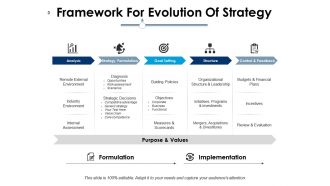
Slide 3: This slide presents Framework For Evolution Of Strategy showcasing five main headings- Structure: Organizational Structure & Leadership Initiatives, Programs & Investments Mergers, Acquisitions & Divestitures Analysis: Remote External Environment, Industry Environment, Internal Assessment. Control & Feedback: Budgets & Financial Plans, Incentives, Review & Evaluation. Strategy Formulation: Diagnosis, Opportunities, Risk assessment, Scenarios, Strategic Decisions, Competitive advantage, Generic strategy, Value chain, Core competence. Goal Setting: Guiding Policies, Objectives, Corporate, Business, Functional, Measures & Scorecards. as Purpose & Values, Formulation, Implementation
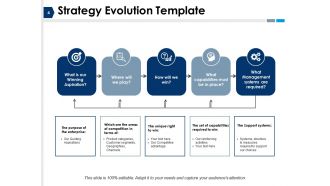
Slide 4: This slide showcases a Strategy Evolution Template displaying importnat questions like- Which are the areas of competition in terms of: Where will we play? How will we win? What capabilities must be in place? What Management systems are required? What is our Winning Aspiration?
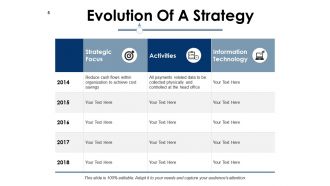
Slide 5: This slide displays Evolution Of A Strategy in tabular form.
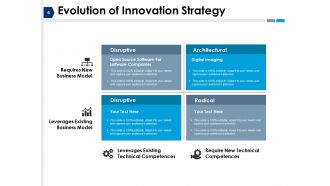
Slide 6: This slide displays Evolution Of Innovation Strategy showing- Requires New Business Model and Leverages Existing Business Model as Disruptive, Radical, and Architectural.
Slide 7: This is a Strategy Evolution Framework For Icon Slide. Use the icons as per need.
Slide 8: This slide is titled Additional Slides. You may alter/change the slide content as per need.
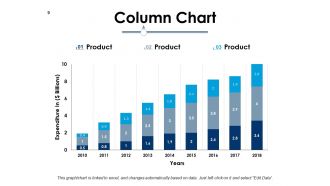
Slide 9: This is a Column Chart slide to show product/entity information, specifications etc.
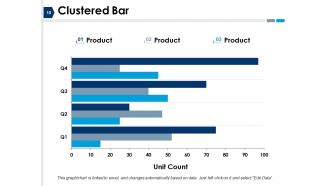
Slide 10: This is a Clustered Bar Chart slide to show product/entity information, specifications etc.
Slide 11: This slide contains Our Mission with Vision and Goals with icon imagery to go with. State them here.
Slide 12: This slide helps depict Our Team with text boxes to fill information for.
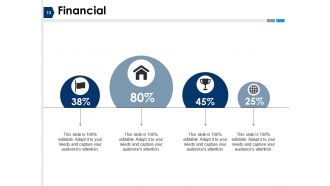
Slide 13: This slide shows Financial Score. State financial aspects here.
Slide 14: This slide showcases a Puzzle image to show information, specifications etc.
Slide 15: This is an Our Goal slide. State goals, targets, aspirations here.
Slide 16: This slide shows Lego image with text boxes. State information etc. here.
Slide 17: This slide shows a Venn diagram image with text boxes. State information etc. here.
Slide 18: This is a Thank You slide with Address# street number, city, state, Contact Numbers, Email Address.
Strategy Planning Evolution Powerpoint Presentation Slides with all 18 slides:
Our Strategy Planning Evolution Powerpoint Presentation Slides are a cheerful lot. You will soon have a happy and contented room.




FAQs for Strategy Planning Evolution
So you'll want to start with vision/mission stuff, then do environmental scanning to see what's happening around you. Goal development comes next. Honestly, most people skip the SWOT analysis but it's actually super helpful if you're new to this - gets everyone on the same page about strengths, weaknesses, opportunities, threats. After that, strategy formulation and implementation planning. Here's the thing though - implementation is where everything usually goes to hell. Build in accountability measures and regular check-ins or you'll just have a pretty document sitting in a drawer. Figure out where you want to go first, assess where you are now, then bridge that gap.
Honestly, SWOT analysis is like giving your business a reality check. You map out strengths, weaknesses, opportunities, and threats all in one spot. Really helps you see what you're actually working with before making big moves. Build strategies around what you do well. Address the stuff you suck at. Spot chances you'd probably miss otherwise - and brace for whatever might hit you. The trick is being brutally honest (harder than it sounds). I'd say run one with your team every quarter or so. Keeps your planning grounded instead of just wishful thinking.
Look, you absolutely need these people on your side or they'll torpedo everything. I learned that one the hard way when I tried to push through a plan without getting department heads involved first - what a mess. Map out who actually has power and who cares about this stuff. Get them talking early, not after you've already decided everything. They'll spot problems you missed and honestly, their buy-in is what makes or breaks implementation. Don't just present to them at the end expecting applause.
Get your team involved in planning from the start - seriously, this changes everything. Skip the top-down approach where leadership just drops a strategy and hopes it works. Pull input from different departments and levels instead. Your plan needs to actually fit how your company works, not some textbook version. Culture kills more strategies than bad ideas do, honestly. Look at your team's communication style and what they actually care about first. Build around those strengths instead of trying to force something that goes against the grain. I've watched too many solid plans crash because they ignored this basic stuff.
Oh man, biggest mistake? Setting super vague goals that mean nothing. Also, don't lock yourself in a room alone to plan - you'll miss everything important. I've seen so many companies waste months building these gorgeous strategy decks that literally no one ever looks at again. Such a waste of time, honestly. Get the actual doers involved early, not just the C-suite folks. Your goals need to be specific enough that you can actually track them. Check in regularly and be ready to change course when stuff isn't working. Good plans evolve - they're not some fancy presentation you make once.
Honestly, real-time data beats guessing every time. You'll catch trends as they're happening instead of finding out weeks later from some outdated report. Analytics help you run "what if" scenarios before you commit to anything big - super helpful when you're weighing different strategies. The tracking part alone saves so much headache. No more monthly spreadsheet wrestling matches (thank god). Live dashboards show you what's actually going on right now, not what happened last quarter. My advice? Don't overthink it. Just pick one decision you're currently making blind and find some data to back it up.
Pick financial stuff like revenue and profit margins, obviously. But those don't really tell you if you're screwing up until it's too late. Leading indicators are way better - customer acquisition, employee engagement, market share shifts, how you're hitting project milestones. I learned this the hard way at my last job tbh. Don't go crazy with like 20 metrics though. Stick to 5-7 that actually show if your strategy's working, not just if you're surviving. Monthly dashboard reviews keep you honest.
Once a year for the full strategic review, but honestly that's not nearly enough anymore. You should be looking at your key numbers quarterly minimum - things change way too fast to wait a whole year. In volatile industries? Maybe every few months for parts of it. There's a difference between tweaking day-to-day stuff (which you can do whenever) and completely changing your core strategy though. I'd start with quarterly check-ins, even if it's just a couple hours. Better than getting caught totally off guard when something shifts. The world's moving too fast for the old "annual planning retreat" approach.
So basically short-term planning is like your 1-2 year stuff - immediate goals, tactical moves, quick wins you can actually track. Long-term? That's your 3-10 year big picture vision and major strategic pivots. Here's the thing though - short-term gets super granular. We're talking specific budgets and quarterly numbers. Long-term stays broader because honestly, who knows what'll happen in 5 years, right? My advice? Start with where you want to be long-term, then reverse engineer what short-term actions will actually get you there. Makes way more sense that way.
Honestly, you've got to bake review cycles into your plan from the start - don't just tack them on later. Set up quarterly check-ins that actually matter, not those useless meetings where everyone just agrees with each other. I can't tell you how many strategic plans I've watched collect dust! Build trigger points for when you need to pivot hard - new competitors, market changes, whatever. Oh, and create space where people can admit stuff isn't working without getting their heads chopped off. Stay flexible on execution even when your goals are crystal clear.
So breakout groups are honestly a game-changer for this stuff - they stop the usual suspects from taking over every conversation. Design thinking workshops work really well too. I'd definitely try Miro or something similar if you're doing virtual brainstorming sessions. Oh, and rotating who facilitates is smart because different people bring totally different energy. The whole thing falls apart though if people don't feel safe throwing out random ideas. Start with ground rules about building on thoughts instead of shooting them down. Maybe do a quick icebreaker first? Sounds cheesy but it actually helps.
You need some kind of framework, otherwise you're just putting out fires all day. When you've got clear priorities mapped out, it's way easier to figure out which "urgent" thing actually deserves your attention. Think of it like having GPS when you're driving somewhere new - not foolproof, but beats guessing at every turn. Plus your team gets to think through the "what if" scenarios ahead of time instead of scrambling when stuff inevitably goes sideways. Honestly, half the benefit is just forcing everyone to sit down and hash out what really matters. Figure out your non-negotiables first, then build wiggle room around those.
You need mission and vision statements - they're like your GPS for big decisions. Mission is what you do and why you exist. Vision is where you want to end up. Honestly, I've seen companies skip this step and it's a nightmare. Everything becomes a priority, which means nothing actually is. These statements help you figure out what projects to focus on and where to spend your money. Your team stays on the same page too, especially when things get crazy. But here's the thing - get your leadership team to agree on both before you start planning anything tactical. Otherwise you'll just argue in circles later.
Yeah, so each industry totally shapes their planning around what actually matters to them. Tech moves fast - short sprints, quick pivots when something's not working. Manufacturing has to think way ahead about factory capacity and supply chains. Healthcare gets bogged down in regulations and patient safety stuff (which obviously makes sense). Banks and financial companies? Risk management is basically their whole world, plus they're constantly dealing with new regulations. For your situation, just figure out what your industry's biggest headaches are and plan around those. Don't try copying some other sector's playbook - it'll probably backfire.
Honestly, three things make or break strategic planning: vision, being decisive, and rolling with changes. The vision part is huge - you've got to see the bigger picture and actually get people excited about where you're going. Being decisive means making calls even when you don't have all the info (which is like, always). Adaptability is where most people mess up though - they fall in love with their perfect plan and can't pivot when stuff goes sideways. Balance is everything here. Stay locked on your vision but don't be stubborn about how you get there. Which one of these do you struggle with most?
No Reviews