

Strategy evolution framework powerpoint presentation slides





Try Before you Buy Download Free Sample Product
 Impress Your
 Audience
 100%
100% Editable
 Save Hours
 of Time


Download our Strategy Evolution Framework PowerPoint Presentation Slides for strategic focus and planning. The strategic management model PowerPoint presentation includes slides such as phases in the evolution of strategic management, strategy framework, strategy evolution template, the evolution of innovation strategy, etc. Explain the steps of strategy formulation and implementation like goal setting, structure, analysis, control, and feedback. This assists in the evaluation of strategic alternatives and the dynamic allocation of resources. Showcase the phases of business planning using this strategy planning evolution PPT slides. These ready to use strategy management PowerPoint templates are designed by our team of experts after an in-depth study of the topic. All slides of strategy planning presentation are easy to customize as per the specifications of the users. Users can combine text and graphics to create professional presentations. Download the evolution of business strategy presentation slides to present the effectiveness of business planning. Bring down the degree of ire with our Strategy Evolution Framework Powerpoint Presentation Slides. Assuage any inflamed emotions.
People who downloaded this PowerPoint presentation also viewed the following :
Content of this Powerpoint Presentation
Slide 1: This slide introduces Strategy Evolution Framework. Type Your Company Name and begin with perfection.
Slide 2: This slide presents Phases in the Evolution of Strategic Planning showcasing- Effectiveness of formal Business Planning andValue System, Basic Financial Planning: Phase 1: Operational control- Functional focus, Meet Budget. Forecast Based Planning: Phase 2: More effective planning for growth- Annual budget, Environmental analysis, Multi-year forecasts. Predict The Future. Externally Oriented Planning: Phase 3: Increasing response to markets & competition- Evaluation of strategic alternatives, Dynamic allocation of resources. Think Strategically. Strategic Management: Phase 4: Orchestration of all resources to create competitive advantage- Creative, flexible planning processes, Supportive value system & climate. Create The Future.
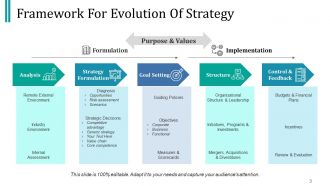
Slide 3: This slide presents Framework For Evolution Of Strategy showcasing five main headings- Structure: Organizational Structure & Leadership Initiatives, Programs & Investments Mergers, Acquisitions & Divestitures Analysis: Remote External Environment, Industry Environment, Internal Assessment. Control & Feedback: Budgets & Financial Plans, Incentives, Review & Evaluation. Strategy Formulation: Diagnosis, Opportunities, Risk assessment, Scenarios, Strategic Decisions, Competitive advantage, Generic strategy, Value chain, Core competence. Goal Setting: Guiding Policies, Objectives, Corporate, Business, Functional, Measures & Scorecards. as Purpose & Values, Formulation, Implementation
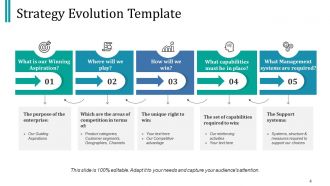
Slide 4: This slide showcases a Strategy Evolution Template displaying importnat questions like- Which are the areas of competition in terms of: Where will we play? How will we win? What capabilities must be in place? What Management systems are required? What is our Winning Aspiration?
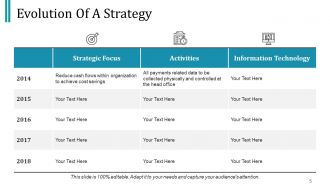
Slide 5: This slide displays Evolution Of A Strategy in tabular form.
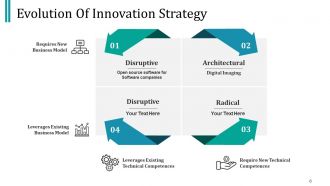
Slide 6: This slide displays Evolution Of Innovation Strategy showing- Requires New Business Model and Leverages Existing Business Model as Disruptive, Radical, and Architectural.
Slide 7: This is a Strategy Evolution Framework For Icon Slide. Use the icons as per need.
Slide 8: This slide is titled Additional Slides. You may alter/change the slide content as per need.
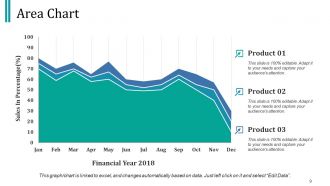
Slide 9: This is an Area Chart slide to show product/entity information, specifications etc.
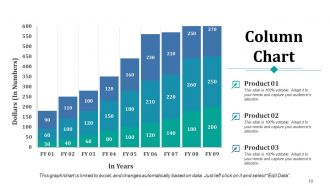
Slide 10: This is a Column Chart slide to show product/entity information, specifications etc.
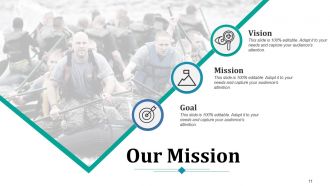
Slide 11: This slide contains Our Mission with text boxes and icon imagery to go with.
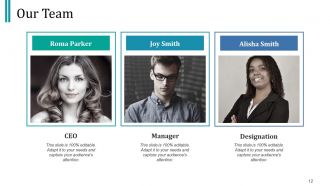
Slide 12: This slide helps depict Our Team with text boxes to fill information for.
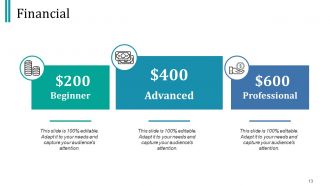
Slide 13: This slide shows Financial Score. State financial aspects here.
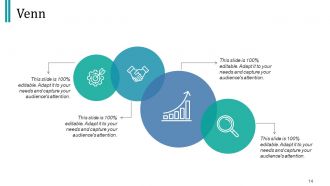
Slide 14: This slide shows a Venn diagram image with text boxes. State information etc. here.
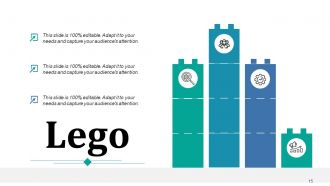
Slide 15: This slide shows Lego image with text boxes. State information etc. here.
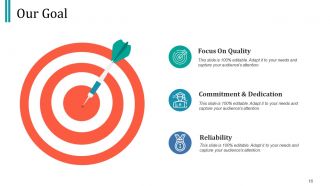
Slide 16: This is an Our Goals slide. State them here.
Slide 17: This slide showcases a Puzzle image to show information, specifications etc.
Slide 18: This is a Thank You slide with Address# street number, city, state, Contact Numbers, Email Address.
Strategy evolution framework powerpoint presentation slides with all 18 slides:
The coverage of our Strategy Evolution Framework Powerpoint Presentation Slides grows by the day. Keep adding extra capacity.
-
Strategy Evolution Framework
-

Phases in the Evolution of Strategic Planning
-
Framework for Evolution of Strategy
-
Strategy Evolution Template
-
Evolution Of A Strategy
-
Evolution Of Innovation Strategy
-
Strategy Evolution Framework for Icon Slide
-
Additional Slides
-
Area Chart
-
Column Chart
-
Our Mission
-
Our Team
-
Financial
-
Venn
-
Lego
-
Our Goal
-
Puzzle
-
Strategy Evolution Framework
FAQs for Strategy evolution framework
Okay so there are four main things you need to nail down. First is environmental scanning - basically just keeping tabs on what's changing around you and what your team can actually handle. Then you've got strategic assessment where you check if your current plan still makes sense (spoiler: it probably doesn't). Adaptive planning is the fun part - you're building wiggle room into your strategy so you can change direction without everything falling apart. The feedback loops are huge though. Most people totally forget this step and then act shocked when they repeat the same dumb mistakes over and over. I'd say do quarterly check-ins to see what's working.
Here's what I'd do - grab both your quick-win metrics and the big picture stuff. Track things like how engaged your team feels, what's in your innovation pipeline, customer sentiment. But honestly? The revenue changes will lag behind by months, which is super annoying when you want proof it's working. Baseline everything first or you'll have no clue if you're actually improving. Watch for behavior shifts and new skills your team's picking up. Market positioning changes matter too. The behavioral stuff usually shows up way before your financial numbers do.
Look, market analysis is basically how you avoid getting blindsided by stuff you should've seen coming. It shows you when customers are shifting, competitors are making moves, or new opportunities pop up. Without it? You're just guessing at what'll work instead of actually knowing. I'd honestly set up quarterly check-ins to catch trends early - sounds boring but it beats scrambling when things change overnight. Think of it as your reality check that keeps you from doubling down on tactics that aren't working anymore. Super basic but most people skip this step and wonder why their strategy feels off.
Look, culture can't be some afterthought you tack on later - it needs to be baked into your strategy from the start. First, figure out what's actually happening in your org right now (forget whatever's on those motivational posters). Then see where your real culture clashes with where you want to go. Here's the thing - if they don't align, your strategy's basically dead in the water. You've got two choices: tweak your strategy to fit your culture, or invest serious time shifting how people actually behave. Either way, make sure your hiring, metrics, and communication all point in the same direction.
Think of data analytics like GPS for your business strategy - shows you exactly where you stand and when to change course. You'll catch customer trends early, see what's actually working (vs. what you think is working), and fix issues before they blow up. Honestly, the real-time feedback beats the old "launch and pray" method by miles. Track 3-5 metrics that directly connect to your main goals - religiously. When the market shifts, you can pivot fast instead of flying blind. It validates your hunches and keeps you honest about progress.
Honestly, the biggest mistakes I see are rushing in without getting people on board first, and thinking this is just a one-time thing when it's really ongoing. Teams get obsessed with building these perfect frameworks that sit unused for months - such a waste of time. Communication is huge too. Your strategy might look amazing on paper, but if stakeholders don't get why you're changing things, they'll push back hard. My advice? Start with something small, test it out, then build from there. Way better than trying to flip everything at once.
Dude, those old-school 5-year strategic plans are basically dead now. AI can flip entire industries in like six months - remember what happened to taxi companies? You've gotta build way more flexibility into how you plan stuff. Monthly check-ins on tech trends instead of yearly reviews. Customer behavior changes so fast these days it's honestly kind of crazy. Companies I know got completely wrecked because they kept using the same playbook from 2019. Continuous planning cycles work better than those big annual strategy meetings where nothing really gets decided anyway. Stay agile or get left behind.
Look, you absolutely need those people on board or your strategy's dead in the water. Getting them involved early makes them feel like they own the changes instead of having stuff dumped on them. Plus they'll catch things you totally missed - they're the ones actually doing the work, right? Better feedback, smoother rollouts, less pushback when you need to pivot. Oh and don't wait until the end to loop them in. That's like asking for trouble. Keep checking in throughout the whole process.
Honestly, you need "bridge metrics" that connect your quarterly stuff to the bigger picture. Like measuring customer lifetime value growth instead of just this quarter's revenue hit. Think of it as a road trip - you need gas stops but can't forget where you're actually going, you know? Map your current quarterly goals against your long-term strategy first. See where the gaps are. The whole point is making sure your short-term wins actually build toward something meaningful rather than just being random moves. Otherwise you're just spinning your wheels every three months.
Quarterly reviews are your best friend here - use balanced scorecards to track the stuff that actually matters. Rolling forecasts beat annual planning every time (seriously, who knows what's happening 12 months out?). Set up competitor analysis sessions and get customer feedback flowing regularly so you're not blindsided by market changes. OKRs work great for keeping teams aligned without being too rigid. Oh, and scenario planning twice a year helps you figure out if your assumptions are completely wrong. Don't go crazy though - pick maybe 2 or 3 of these that actually fit how your team works.
So scenario planning is basically stress-testing your strategy against different futures that could happen. You're not just reacting anymore - you're building flexibility right into your approach from day one. Think of it like having multiple backup plans ready to go (which honestly sounds excessive but it's genius). When market conditions change, you won't get caught off guard because you've already thought through the "what ifs." Run your current strategy through maybe 3 or 4 realistic scenarios and you'll see exactly where you need more wiggle room. Early warning signals become way clearer too.
Dude, competitor analysis is like a reality check for your strategy stuff. Shows you where you're being dumb about assumptions and what gaps you missed. You'll find new opportunities and catch threats early. Honestly, most teams get way too caught up in their own bubble during reviews - I see it all the time. Map out what your competitors are actually doing different with pricing, positioning, tech stuff. Forces you to question if you're even going the right direction anymore. Start with your top 3 competitors and just audit their recent moves. Pretty eye-opening usually.
Look, strategy without solid leadership just sits there doing nothing - I've seen it happen so many times. You need leaders who actually notice when things are shifting in the market and aren't afraid to challenge what's always been done. The cultural piece is huge too. Getting people excited about change instead of resisting it? That's where leaders really earn their pay. Plus when your team feels safe speaking up, that's when you get the good ideas that actually matter. My advice? Build ways to spot changes early and make your team meetings places where people actually want to contribute.
Honestly, the whole "annual strategy meeting" thing is basically dead now. Companies are doing quarterly check-ins instead because markets move too fast. AI tools are huge for spotting trends before competitors do - like, why wouldn't you use that advantage? Real-time market sensing is replacing those old competitive analysis reports too. Oh, and sustainability isn't just PR anymore; it's becoming actual KPIs that matter. The smart companies are thinking ecosystems instead of just beating direct competitors. Continuous pivoting is the name of the game now. Start with quarterly reviews and maybe test some AI market monitoring tools.
Yeah, global changes totally mess with your local game plan. Like when inflation hit last year - suddenly everyone's spending habits shifted overnight. You've got to stay on top of what's happening both worldwide and in your own backyard. I'd set up some kind of regular check-in system where you're tracking economic trends and seeing how they're actually affecting your market. Then tweak your budget and priorities based on what you find. Honestly, the businesses that ignore this stuff are the ones that get blindsided when things go sideways.
No Reviews