


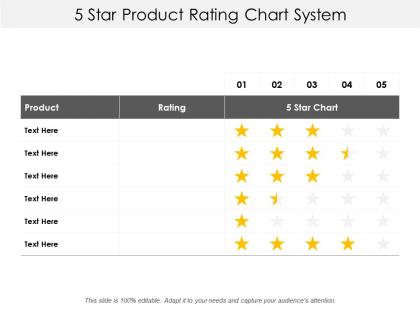
5 star product rating chart system




Try Before you Buy Download Free Sample Product
 Impress Your
 Audience
 100%
100% Editable
 Save Hours
 of Time


Empty out the jar with our 5 Star Product Rating Chart System. Give every individual access to all the information.
People who downloaded this PowerPoint presentation also viewed the following :
5 star product rating chart system with all 5 slides:
Cool off in the fabulous comfort of our 5 Star Product Rating Chart System. Feel the fatigue begin to ebb away.


FAQs for 5 star product
Honestly, it comes down to a few key things. Quality matters most - if your product sucks, you're toast. Price has to make sense for what you're offering. Fast shipping is huge because people get seriously annoyed waiting around. Your photos and description better match reality or you'll get roasted in reviews. Customer service can't be trash either - ignore someone's email and watch that 1-star roll in. Oh, and here's the thing about reviews - they're usually either amazing or terrible, rarely in between. So focus on being consistent with quality and don't oversell what you've got.
Look past those star averages - they don't tell the whole story. Start with your 1-3 star reviews since people actually explain what went wrong there. Then check if your 4-star ones keep mentioning the same "almost perfect, but..." stuff. Honestly, most 5-star reviews are just "amazing!!" with zero useful details anyway. Group the complaints by theme - shipping, quality, whatever. Track if problems get worse after you change something. The actual review text is where you'll find the good stuff, not just watching numbers go up and down.
Oh totally, the interface can make or break everything. Big clickable stars work way better than tiny buttons - learned that the hard way. Make it super fast too, like one click and done. I've watched systems completely fail when they forced people to write reviews just to rate something. Nobody has time for that. Show users how their rating stacks up against others, that's weirdly motivating. Visual feedback is huge - when someone clicks that fifth star, make it obvious something happened. And honestly? That little "thanks!" confirmation message actually matters more than you'd think.
Ratings are so weird culturally! In Japan and Germany, people are super stingy with 5 stars - if you get one there, you actually crushed it. But here in parts of the US? Anything under 4.5 stars basically feels like you failed. I swear the psychology behind this stuff is wild. Your best bet is normalizing ratings by region or at least knowing these baselines when you're checking performance. Maybe show region-specific benchmarks next to your overall rating? That way customers get the real context instead of just seeing numbers.
Yeah, the biggest issue is that 5-star ratings are super binary. Most people just hit 1, 4, or 5 stars - you're missing all that middle ground nuance. A 10-point scale would give you way better data. Also, there's major star inflation now. Anything under 4.5 stars looks like garbage even if it's totally fine. Cultural stuff matters too - some people are just stingy with perfect ratings while others throw around 5s like candy. Oh, and different cultures rate things differently which gets messy. Stars work okay but they're honestly way better when you pair them with tags or short comments.
Dude, plaster those 5-stars everywhere! Your homepage, Instagram stories, email sigs - basically anywhere people might second-guess buying from you. Specific quotes work way better than just the star ratings btw. People don't trust your marketing (shocking, I know) but they'll believe other customers. Product pages need those rating widgets for sure. Oh, and those "customer love" story highlights? Gold. Honestly, I'd grab your 10 best reviews right now and just start sticking them places this week. Make it impossible for someone to browse your stuff without seeing how much people love it.
Dude, you've gotta get those reviews fast - like within 1-2 weeks of delivery. Early ones basically control everything since they set the vibe for everyone else who's browsing. Happy customers will actually leave reviews when their experience is still fresh in their minds, but if you wait too long? Good luck fighting against whatever impression already exists. I learned this the hard way with my own stuff. Send multiple follow-up emails instead of just one - honestly, people forget the first one half the time anyway. Those first few ratings create this snowball effect that's crazy powerful.
Honestly, negative reviews are like getting free market research handed to you. When someone's pissed off, they're basically telling you exactly what needs fixing. Jump on those reviews fast - reply publicly so everyone sees you actually give a damn. Look for patterns too - if three people are complaining about the same thing, boom, there's your to-do list. I know it stings at first, but I'd rather have someone roast me honestly than leave me guessing what's broken. Fix the issues they mention, then circle back to those reviewers and show them what you've changed. Sometimes your biggest critics become your best customers once they see you actually listen and improve stuff.
So for the database, I'd go with PostgreSQL or MongoDB - both handle ratings data really well. React's probably your best bet for the frontend since those star animations are surprisingly addictive to users. Don't skip authentication though - OAuth or JWT tokens will save you from fake review headaches. Rate limiting your APIs stops spam bots, and Redis caching makes everything load faster. Honestly, the game-changer is only letting verified buyers leave ratings. I learned that one the hard way on my last project, but it makes such a difference for review quality.
So ratings are basically like having a crowd of people vouching for stuff - everyone gravitates toward the 4+ star products and avoids anything that's like 2-3 stars. People use them as shortcuts when there's too much to choose from, which honestly makes sense. Here's the weird part though: customers will pick a 4.5-star thing with tons of reviews over something rated 4.7 with barely any feedback. We're just wired to trust the wisdom of crowds, I guess? For your biz, don't stress about perfect scores right away. Getting a bunch of reviews first matters way more than having flawless ratings.
Dude, you're basically paying people to lie about your product quality. Future customers will trust those fake reviews and get burned when the actual thing sucks. Amazon will ban your account if they catch you doing this - and they're pretty good at spotting it. Honestly, it's like paying people to tell everyone you're popular... might work for a minute but then reality hits. Just ask for honest reviews instead of pushing for higher ratings specifically. You'll actually get useful feedback to improve your stuff, and you won't be screwing over other customers.
Dude, ratings placement is everything! People literally glance at those stars and review counts within seconds of hitting your page. Put them right by the product title and price - above the fold where they can't miss it. Show the total review number too, not just stars. Here's the thing though - don't only display perfect 5-star stuff because that actually looks sketchy. A mix of ratings builds way more trust. I've watched sites completely tank their conversions by hiding ratings in some random corner. It's brutal! Recent feedback works great too. That's basically where you win or lose the sale right there.
Okay so here's what works - wait about 5-7 days after they buy something. That gives them time to actually try it out. Don't send those boring "rate us!" emails everyone ignores. Instead, mention what they bought specifically and ask about their experience with it. Make it super easy with direct rating links. Oh, and this is key - filter first! Send a quick "how'd it go?" survey to figure out who's happy, then only ask those people for public reviews. Nobody wants angry customers blasting them online, obviously. Keep the whole thing short and sweet. You'll get way better results than those generic mass emails.
Oh dude, context is everything with star ratings! A 5-star budget hotel hits way different than a 5-star luxury place - customers grade on totally different curves based on what they paid. Same with kitchen gadgets... people expect way more from a $200 blender than a $20 one, obviously. I learned this the hard way when I was comparing product ratings across categories and got completely bogus insights. You really gotta segment by product type first, otherwise you're comparing apples to oranges and won't understand what customers actually think.
Honestly, start with basic user verification - require phone numbers or purchase history before people can review. That'll knock out most of the lazy fake stuff right away. Machine learning can catch patterns too, like when a bunch of reviews come from similar IP addresses or brand new accounts. The fake review game is getting crazy sophisticated though. You'll want to check how reviewers behave across different products and timeframes - that's where the weird patterns show up. Manual checks help for your big products or when ratings suddenly spike. But yeah, verification requirements are your best first move.
No Reviews