


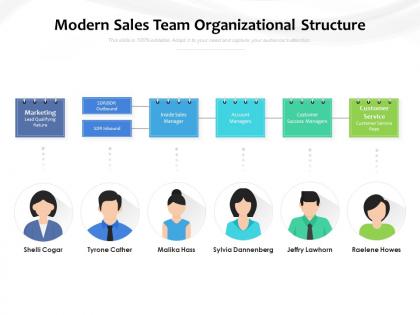
Modern sales team organizational structure




Try Before you Buy Download Free Sample Product
 Impress Your
 Audience
 100%
100% Editable
 Save Hours
 of Time


Win over critics with our Modern Sales Team Organizational Structure. Quell their criticism with your ideas.
People who downloaded this PowerPoint presentation also viewed the following :
Modern sales team organizational structure with all 2 slides:
Croon away with our Modern Sales Team Organizational Structure. Gently get your point across.

FAQs for Modern sales
You'll definitely need SDRs for lead gen and Account Executives to actually close the deals. Don't forget a Sales Manager for coaching - trust me, reps need that guidance way more than most people think. Customer Success is huge for retention too, probably one of the most overlooked roles honestly. Sales Ops handles all the data and process stuff (kind of boring but necessary). Account Managers take care of existing clients depending on what you're selling. Just make sure there's clear handoffs between roles so nothing gets dropped. Start basic with SDR, AE, and Manager, then add the other stuff as you grow.
Honestly, it all comes down to how many people you have. When you're small, everyone does everything - your sales guy is prospecting, closing deals, AND babysitting existing customers. Pretty chaotic but it works. Once you hit maybe 50-200 people, that's when the magic happens. You can finally split things up: SDRs handle prospecting, AEs close deals, customer success manages retention. Big companies? They go nuts with it - different teams for different industries, territories, the whole nine yards. My advice? Figure out where your team is drowning first, then specialize there.
Honestly, specialization is a game changer. You'll get way better results when your SDRs just focus on prospecting instead of trying to juggle everything. Account execs can actually close deals, customer success handles renewals - everyone gets really good at their one thing instead of being okay at five things. The metrics become so much clearer too since everyone owns their specific piece of the puzzle. I mean, it's night and day compared to the chaos of everyone doing everything. Start by figuring out where things are getting stuck right now. That's probably where you need your first specialized role.
Honestly, I'd ditch the territory thing and go skill-based instead. Geography doesn't matter much anymore anyway. Break into specialized pods - inbound team, outbound prospecting, maybe closers. The tricky part is nailing those handoffs since you can't just tap someone on the shoulder (god I miss that). CRM needs to be spotless and schedule regular check-ins religiously. Oh, and pair your junior people with senior mentors virtually - works better than you'd think. Start by mapping what you do now, then find every remote handoff point and make those bulletproof.
So revenue per rep and quota attainment are your bread and butter - start there. Sales cycle length matters too, plus lead conversion rates by team. Customer acquisition cost is actually huge but tons of companies ignore it for some reason. Territory coverage efficiency is worth tracking if you've got multiple regions. Don't sleep on the softer stuff either - how well teams work together, whether your reps are happy, how fast new people get up to speed. Honestly though? Pick like 4-5 max that actually match what you're trying to do. Otherwise you'll drown in data and nothing will get better.
Dude, your sales structure is everything. Territory vs product vs account size - however you slice it up affects whether your reps can actually focus and get good at their thing. I've watched so many deals just disappear into the void because nobody knew who owned what customer. Handoffs get messy, people step on each other's toes, customers get annoyed. Teams with clear ownership usually crush it 15-20% better than the chaotic ones. Map out what you've got now against where you want revenue to go - that's where you'll spot the holes.
Honestly, your sales team's gonna freak out first - territories, quotas, comp plans all up in the air. Can't really blame them though. Communication gets weird when nobody knows who their new boss is or where to escalate stuff. Territory overlaps turn into a total mess, plus your CRM data goes haywire during the switch. Performance always takes a hit temporarily too, which sucks but it's normal. Best thing you can do? Talk to everyone constantly about timelines and make their new roles super clear. Maybe run both structures for a bit while you figure things out - sounds inefficient but trust me, it helps.
Dude, this is huge for your sales setup. When marketing and sales actually talk to each other, your lead quality gets so much better. Your reps won't be walking into calls completely clueless anymore. I've watched companies where these teams never communicate and then they're confused why nothing converts. Marketing knows what content people actually care about. Sales knows every objection that keeps popping up - why wouldn't you connect those dots? Start with quick weekly check-ins between the team leads. Even 30 minutes makes a massive difference for your whole revenue thing.
Honestly, tech runs everything in sales now. CRM systems track your interactions, automation handles follow-ups, and analytics show which leads are actually hot. Crazy to think people used to keep client stuff in actual filing cabinets, right? These tools let you split up teams better - SDRs can focus on just prospecting while account managers go deep with relationships. The trick is choosing tech that connects your team instead of creating more headaches. Oh, and definitely audit what you're already paying for first. Most companies have tools they're barely even using.
Dude, you're literally the architect of your sales team setup. Territory, product lines, customer size - whatever makes sense for YOUR business. Map out how customers actually buy from you first, then build around that. Your management style plays into this too - hands-on leaders usually want smaller teams reporting up. I've watched so many people just copy their old company's structure without thinking... big mistake. Short version: align it with your revenue goals and go-to-market plan, not what worked somewhere else.
Honestly, role-playing is huge - I know it sounds cheesy but it actually works. Get your team solid training on product knowledge and sales methods first. Then pair newbies with your best performers for mentoring. Monthly skill sessions keep everyone from getting rusty. Oh, and don't underestimate how much bad CRM processes can mess with people's flow. Maybe bring in outside trainers sometimes for objection handling stuff? The whole thing needs to be ongoing though, not just some weekend workshop everyone forgets about.
So basically you're flipping everything around - instead of organizing by products or territories, you build teams around customer types. Think enterprise vs SMB teams, or maybe industry-focused groups like healthcare. Your reps become actual customer experts instead of just pitching products all day (way better job honestly). Marketing, sales, and customer success start working together instead of doing their own thing in separate corners. I'd probably start by looking at your current setup and seeing where it doesn't match how your customers actually buy. The gaps will be pretty obvious once you map it out.
Pair your new hires with seasoned reps for the first month - way more effective than letting them sink or swim. Be upfront about quotas and territory stuff from day one. The culture thing is actually massive for keeping people around (learned that the hard way). Give them easier accounts initially instead of your nightmare clients - nothing builds confidence like early wins. Oh, and don't skip those weekly check-ins during their first 90 days. You'll catch problems before they become real issues. It's honestly pretty straightforward once you stop overthinking it.
Dude, this stuff is so region-specific it's crazy. Japan and Latin America? You need relationship managers who can play the long game. Germans just want you to cut to the chase - no fluff. Some places expect your senior guys on big deals, others don't care if it's a newer rep. We totally face-planted in South Korea because we tried using our flat US approach there (whoops). Communication styles are night and day too - high-context vs low-context cultures handle things completely differently. Honestly? Chat with local HR and your best reps in each market before you change anything. They'll save you from making expensive mistakes.
Dude, everyone's going hybrid with remote-local setups now. Small specialized teams are replacing those huge departments too. Sales and customer success are basically joined at the hip these days - which honestly makes way more sense. RevOps is where the money's at though, seriously every company's scrambling to hire those people. AI's handling the boring qualification stuff so reps can actually build relationships. Oh, and forget territory-based anything. Companies are structuring around the customer journey instead. One-size-fits-all is dead. Your best bet? Think flexible and customer-focused when you're planning changes.
No Reviews