


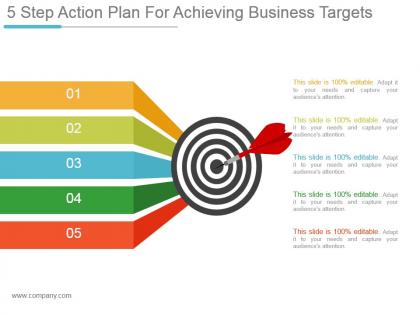
5 step action plan for achieving business targets ppt slide




Try Before you Buy Download Free Sample Product
 Impress Your
 Audience
 100%
100% Editable
 Save Hours
 of Time


Your ideas generate immense excitement due to our 5 Step Action Plan For Achieving Business Targets Ppt Slide. Folks begin to feel jolly eager.
People who downloaded this PowerPoint presentation also viewed the following :
5 step action plan for achieving business targets ppt slide with all 5 slides:
Our 5 Step Action Plan For Achieving Business Targets Ppt Slide contain an artistic element. They add a creativity factor.

FAQs for 5 step action plan for achieving business
Honestly, start with super specific goals - none of that wishy-washy "improve sales" stuff. Set realistic deadlines and figure out who's actually doing what (trust me, this prevents so much drama later). You'll want to track progress somehow, plus make sure you've got the budget/resources locked down upfront. I learned this the hard way when we ran out of money halfway through a project once. Build in check-ins too because things always go weird. Just don't make it so complicated that everyone gives up reading it.
SMART goals are like the skeleton of your whole action plan. You want each big milestone to be specific, measurable, achievable, relevant, and time-bound. So instead of "boost sales," you'd say "bump Q4 sales up 15% with email campaigns by Dec 31st." Break those bigger goals into bite-sized tasks with deadlines and assign someone to own each piece. I know it sounds boring as hell, but tracking progress weekly actually keeps you honest. Otherwise you're just crossing your fingers and hoping stuff works out - which, let's be real, rarely goes well.
Honestly, you can't skip this part - stakeholders will literally make or break everything you're trying to do. Get them involved early so you can figure out what they're actually thinking and spot problems before they blow up your plan. These people know what really works in practice, not just what sounds nice in meetings. I learned this the hard way on a project last year. Map out who matters most first. Then have real conversations with them before you lock anything down. Trust me, if they help build the plan, they'll actually fight for it when things get messy.
Dude, trust me on this - visual templates are so much better than walls of text. You can actually see what's going on without squinting through paragraphs. I like using simple tables or those kanban boards (they're pretty satisfying to update, not gonna lie). Your team will thank you because they can spot deadlines and who's doing what in like 2 seconds. Plus it forces you to stay organized instead of rambling. The whole thing just clicks better visually. Start basic and see how much clearer your action plans get.
Ugh, the vague goal thing gets me every time. Like writing "improve sales" instead of "boost Q4 sales by 15%" - what does that even mean? Don't cram 20 objectives into one plan either, you'll just stress yourself out. Here's the thing that really kills plans though: nobody owns the tasks. When everyone's supposedly responsible, it never gets done. Oh, and actually schedule check-ins! Plans that sit in a drawer are basically useless. I'd start with maybe 3-5 solid goals and figure out the steps backward from there.
Okay so first thing - work backwards from your deadline. I know it sounds weird but trust me on this one. Break everything into smaller pieces with actual dates, not just "sometime next week" nonsense. Buffer time is crucial because literally everything takes longer than you think it will. A Gantt chart helps if you're not allergic to spreadsheets, but even a simple list works. The key thing? Make sure someone owns each deadline. Otherwise you'll end up with this beautiful timeline that nobody follows and you're scrambling at the last minute anyway.
Honestly, I'd start with whatever feels easiest - maybe just a simple spreadsheet or something like Trello if you're fancy. Check in weekly or monthly (depends how long your timeline is). That traffic light thing works great too - red, yellow, green for each task. Super visual. Track your completion percentages obviously, but also jot down feedback from people involved. Oh and definitely note when stuff goes sideways or plans change, because they always do. I've learned that staying consistent with tracking matters way more than having the "perfect" system. Don't overthink it.
So basically, you've gotta match the detail level to whoever's reading it. Executives just want the big picture stuff - quarterly goals, major outcomes. They don't care about the nitty-gritty. Middle managers need more meat though, like resource details and tactical stuff since they're actually coordinating people. But front-line staff? That's where you get super granular. Step-by-step instructions, exact deadlines, which tools to use - the whole nine yards. Think of it like zoom levels on a map, honestly. The higher up someone sits, the more zoomed out their view needs to be.
Okay so first thing - open with your main goals and why they should actually care. Use visuals instead of text walls because honestly, nobody reads those anyway. I always throw in a "parking lot" slide for random questions so people don't interrupt every two minutes. Cover dependencies and risks early - way better than awkward surprises later. Be super clear about deadlines and who's doing what. Oh, and don't end with "any questions?" Ask something specific like what resources they need or what might block them. You'll get way more helpful responses that way. Trust me on this one.
So basically you take those big company goals and chop them into bite-sized tasks your team can actually handle. Most managers totally mess this up - they just throw the strategy at people without translating it first. Start by figuring out what the company wants, then turn that into specific team goals with real deadlines and clear owners. Each task should obviously tie back to the bigger picture somehow. Oh, and you'll want to check in regularly or people will just wander off track. The whole point is making that connection super obvious so nobody's confused about why they're doing what they're doing.
Dude, definitely check out Asana, Trello, or Monday.com for this stuff. You can break everything down into actual tasks, assign people, set deadlines - the whole nine yards. Honestly though? A basic Google Sheet might be all you need if you're just getting started. Don't overthink it. The main thing is finding something your team won't abandon after two weeks (we've all been there). Templates are clutch too since you're not building everything from zero each time. Just pick whatever doesn't make your brain hurt when you look at it.
Break down your complex work into manageable steps with deadlines and clear ownership - that's basically what an action plan does. It'll keep everyone on the same page about what needs to happen when. Trust me, I've watched way too many projects crash and burn because teams just winged it without proper planning. You can spot bottlenecks early and shuffle resources around before things get messy. Start by listing all your deliverables, then work backwards to figure out dependencies and timing. Short version: it prevents stuff from falling through the cracks and makes tracking progress actually doable.
Honestly, most people just charge ahead with their plans and wonder why everything goes sideways later. Don't be that person! Build regular check-ins right into your timeline from day one - like actual scheduled meetings, not just "oh we should probably talk about this sometime." Hit up your stakeholders at major milestones so you can pivot before you're too deep in the wrong direction. Surveys work great, or just grab coffee with people one-on-one. Team retrospectives are solid too, though sometimes they can drag on forever. The trick is making it systematic instead of hoping feedback magically appears.
Honestly, just go through your plan and ask "what could mess this up?" at every step. I always rate risks as high/medium/low - anything fancier is overkill IMO. For the bigger risks, figure out your backup plans ahead of time. Maybe that's extra time built in, or having alternative resources ready. Write it all down so your team knows what might go sideways. Trust me, spending 15 minutes on this now beats scrambling later when everything's on fire. Way better to think ahead than constantly put out fires.
Track three things: did you hit your main goal, are you staying on schedule/budget, and what early signs point to success or failure. The first one's straightforward - revenue, customer happiness, whatever you set out to do. Budget and timeline stuff keeps you from lying to yourself about how it's really going. But honestly? Those early warning signals are where the magic happens. They'll save your butt way before things go sideways. Don't just look at numbers either - grab some actual feedback from people. I'd set up something simple you can check weekly instead of waiting until the end to realize you're screwed.
-
Very unique and reliable designs.
-
Excellent design and quick turnaround.