


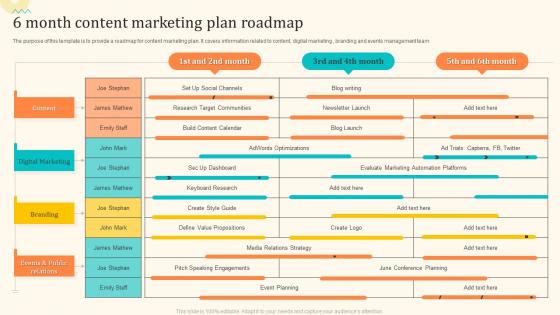
6 Month Content Marketing Plan Roadmap




Try Before you Buy Download Free Sample Product
 Impress Your
 Audience
 100%
100% Editable
 Save Hours
 of Time


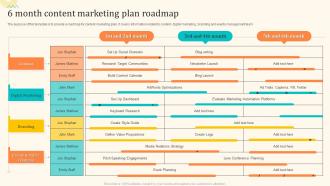
The purpose of this template is to provide a roadmap for content marketing plan. It covers information related to content, digital marketing , branding and events management team
People who downloaded this PowerPoint presentation also viewed the following :
6 Month Content Marketing Plan Roadmap with all 6 slides:
Use our 6 Month Content Marketing Plan Roadmap to effectively help you save your valuable time. They are readymade to fit into any presentation structure.





FAQs for 6 Month Content
Ok so you need five main things: audience personas (like who are you even talking to?), clear goals tied to your business, a content strategy that matches where people are in your buying journey, a publishing schedule you can actually stick to, and KPIs to track progress. Most people totally skip the persona research but trust me - it's game changing for creating stuff that hits. Figure out your brand voice too, plus which platforms your people actually use. Start small though. Pick maybe 2-3 content types and focus on one main channel first. I learned this the hard way by trying to be everywhere at once lol.
Honestly, just dig into who's already buying your stuff. Your website analytics and social media data will show you patterns - demographics, what they're into, how they behave online. I'd throw in a quick survey too, even though people hate those lol. Once you've got that info, build out detailed buyer personas. Don't just stick to basic age/location stuff though. What problems are they trying to solve? Where do they hang out online? The more specific you get, the better you can speak their language when you're creating content or ads.
So keyword research is basically figuring out what people are actually typing into Google - saves you from writing stuff nobody's looking for. You want to find topics with decent search volume that match what you know about. I always start by brainstorming what my audience might care about, then check Google Keyword Planner to see the actual phrases they use. It's pretty eye-opening how differently people search than how we think they do. Plus you'll spot gaps where competitors aren't really showing up but there's still demand. Just don't get obsessed with high-volume keywords if they don't fit your business.
Focus on metrics that actually matter for your business, not just pretty numbers. Website traffic and conversion rates are what count - are people signing up for your emails or requesting demos? Social shares feel good but they don't pay the bills, honestly. Lead generation is where you'll see real impact. If you've got the budget, throw in some brand awareness tracking through surveys. Google Analytics goals are your friend here - check them monthly so you can switch things up when stuff isn't working. Way better than obsessing over likes and follows.
Honestly, I'd start by looking at what content you already have - might save you some work. Mix things up with how-to guides, case studies, and stuff that shows you actually know what you're talking about. Blog posts are great, but videos and infographics work really well too depending on your crowd. Social media's obviously massive right now. Oh, and don't go overboard with the promotional stuff - maybe keep it under 20% so people don't think you're just trying to sell them constantly. Focus on the educational content first. That's what actually builds trust.
Honestly, quarterly reviews work pretty well for most people. But here's the thing - if your content is bombing hard, don't just sit there waiting for the next review cycle. That's just masochistic at that point. Big overhauls usually happen once a year when you're doing budgets anyway. The quarterly stuff is more for small tweaks - maybe your Instagram posts are crushing it but your blog is crickets, so you shift focus. I'd block out like 2-3 hours next quarter to actually look at your numbers and see what's working. Consistency matters, but not if you're consistently failing.
Honestly, just start with Canva for graphics - it's so much easier than trying to design stuff from scratch. Grammarly will catch your typos before you accidentally post something embarrassing (been there!). For scheduling posts, Buffer's pretty solid. I used to post everything manually like an idiot until I discovered these tools. If you're doing videos, Loom's great for screen recordings. Google Docs is clutch too since you can research stuff without switching tabs. Don't go crazy downloading every tool though. Pick maybe two and actually learn them first.
Here's what's worked for me - pick 2-3 platforms where your people actually are and focus there. Don't spread yourself too thin! Instagram Stories are perfect for behind-the-scenes stuff, LinkedIn's great for industry thoughts, Twitter loves quick tips. The game changer? Stop copy-pasting the same post everywhere. It's so obvious and honestly kind of lazy. Instead, take one piece of content and reshape it for each platform's vibe. Also, actually listen to what your audience talks about - not just posting into the void. Oh, and reply to comments! Sounds basic but most brands just ghost their own posts.
So basically a content calendar saves you from that panicked "what do we post today??" feeling. It's just a simple plan showing what goes out when and where. I'd start with a basic spreadsheet honestly - nothing fancy. List your dates, topics, channels. Game changer for staying organized around launches and seasonal stuff instead of constantly scrambling. Your team can actually see what's coming up too, which makes everything smoother. The best part? You'll finally have time to make decent content instead of throwing something together last minute. Trust me on this one.
Honestly, just ask your customers to post pics and tag you when they use your stuff. Most people love getting featured! I always tell people to start with their biggest fans first - they're usually down to help. You can repost their content everywhere... social media, emails, even your website for social proof. Branded hashtags work too, or run little contests if you're feeling fancy. It's basically free content that actually builds trust way better than anything you'd create yourself. Plus it fills up your content calendar without you having to think too hard about it. Win-win situation, really.
One blog post can become like 5 different pieces of content if you're smart about it. Pull the best stats for Twitter. Those main points? Perfect Instagram carousel slides. Record yourself talking through it for LinkedIn video - people love that stuff way more than text posts anyway. I swear you can milk one good article for weeks. Break longer stuff down too. That hour-long webinar becomes several YouTube clips or podcast episodes. Just match what works on each platform, you know? Instagram wants visual, Twitter wants quick hits, LinkedIn does better with longer-form video content.
Honestly, SEO and content marketing are like a package deal - you really can't do one without the other. I'd start with keyword research before writing anything (learned that the hard way). Weave those keywords naturally into your content, optimize headlines and meta descriptions, make sure it's structured so Google can actually read it. But here's the thing - don't go crazy stuffing keywords everywhere like it's 2010 or something. That stuff doesn't work anymore. Focus on answering real questions your audience has first. Then optimize it for search after. The content needs to be genuinely helpful, not just discoverable.
Honestly? Most people bite off way more than they can chew. Like jumping into 5 platforms at once - recipe for burnout. Pick maybe 2 max to start. Also huge mistake: creating stuff without knowing who you're even talking to. I've watched friends spend months making content literally nobody wanted because they never bothered checking what was actually landing. Analytics aren't sexy but they'll save you tons of wasted effort. Talk to your actual customers first - find out what they actually care about. Way better than just guessing and hoping something sticks.
Okay so here's the thing - people's brains are literally wired for stories, not boring feature lists. When you tell a story with a problem and solution, they'll actually stick around to see what happens next. Wild, right? Stories also stick in people's heads way longer than random facts. You can use this in case studies, social posts, even when describing products. Oh and here's what works really well - think of your customer as the hero of their own story. Your product? It's just the helpful guide that gets them where they need to go. Trust me, it makes everything more interesting.
Honestly, video's gonna wreck your budget compared to blog posts - learned that the hard way. First figure out if you're doing stuff in-house or hiring people. Then there's all the random costs like software subscriptions and promoting on social. I'd split it 70% creation, 30% promotion to start. Most people totally underestimate how much you need for amplification - it's kinda crazy actually. Track what each piece costs you for a couple months. That'll give you real numbers instead of just guessing what you'll need going forward.
-
Great product, helpful indeed!
-
Definitely a time saver! Predesigned and easy-to-use templates just helped me put together an amazing presentation.