Six months content calendar roadmap

Six months content calendar roadmap
Slide 1 of 5
Favourites Favourites

Try Before you Buy Download Free Sample Product

Audience Impress Your
Audience
Editable 100%
Editable
Time Save Hours
of Time
The Biggest Sale is ending soon in
0
0
:
0
0
:
0
0
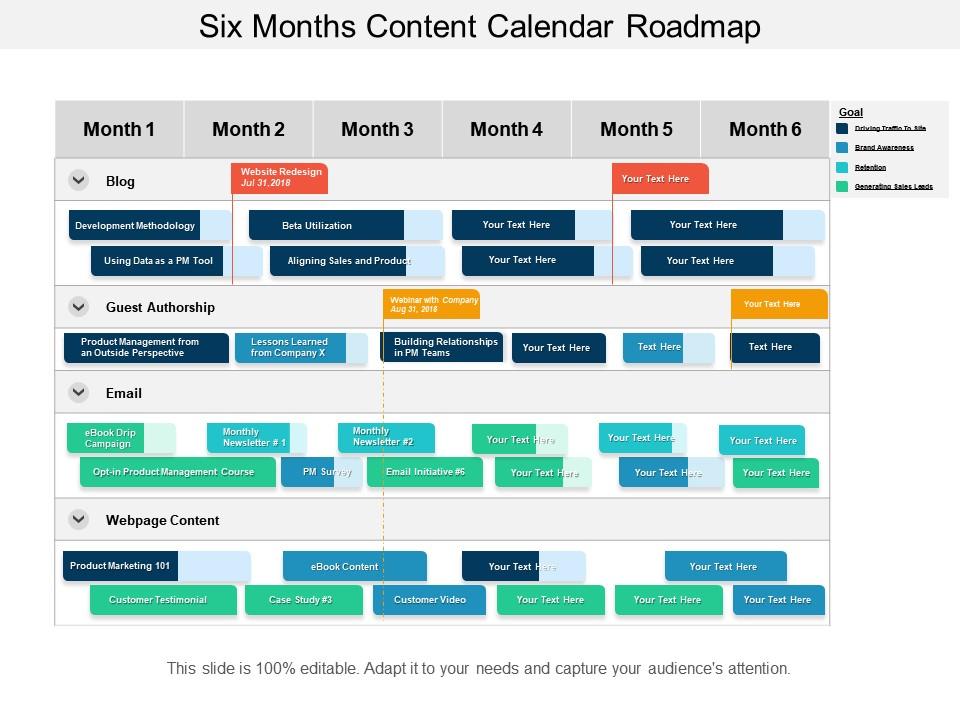
Presenting, six months content calendar roadmap PPT deck. This PowerPoint template is a modern way to represent business planning strategies for a period of six months. These PPT slides are also fit with Google Slides and available in the full-screen method. Prepared in 4:3 standard and full-screen version 16:9, you can simply change the text by editing it in PowerPoint software and incorporate your company logo. Convert it to PDF or JPEG format in few rounds.

FAQs for Six months

Okay so you need five main things locked down: content themes that actually match what your business wants, a posting schedule you can realistically stick to, and specific content types/formats. Also figure out who's responsible for what - seriously, this part matters more than people think. Don't skip the approval process either, it'll save you from so many annoying back-and-forth emails later. Your calendar should cover campaigns, seasonal stuff, plus extra time for when things inevitably change last minute. I always do quarterly planning first, then get into the monthly details. Make it detailed enough to actually help but not so rigid that you can't adapt when needed.

Okay so first thing - figure out what you're actually trying to achieve this quarter, then match your content to that. Like if you want people using your product more, focus on tutorials and real examples. I always work backwards from the goal because honestly it just makes way more sense that way. Time everything around your big moments too - launches, busy seasons, whatever matters for your industry. Oh and this is key: actually look at your data monthly to see what's working. If blog posts aren't doing anything but your videos are crushing it, shift your energy there. Don't just stick to a plan that isn't performing.

Honestly, Google Sheets is still my go-to for content calendars - it's just so damn flexible and everyone can access it. Excel works too if that's your thing. Notion's pretty sweet for team stuff, and Airtable has those database features that are actually useful for filtering content. Trello's good if you're into the whole visual board thing (I'm not, but some people swear by it). CoSchedule and Buffer are solid if you've got money to spend on the fancy tools. But real talk? Just pick whatever your team's already using. The best calendar is one you'll actually keep updated.

Honestly? 3-5 posts a week usually works best for most people. I mean, you could post daily if you've got the time and ideas, but I'd rather see you crush it with fewer posts than burn out trying to hit some arbitrary number every day. Quality beats quantity - that's just my take after seeing too many accounts post random stuff just to fill the calendar. Check what your analytics say about when people actually engage. Start with what feels manageable, maybe 3 posts, then bump it up once you find your groove. Your team's bandwidth matters way more than following some guru's posting schedule.

Honestly, just throw everything in a shared Google Sheet or Asana so nobody's hunting for info. Weekly 15-minute check-ins are a lifesaver - people can actually speak up before stuff goes sideways. I'm weirdly obsessed with color-coding everything by content type because it just makes sense visually. Always pad your timeline though. There's literally always someone who needs "just a tiny edit" at the last second. Oh, and make sure each piece has one clear owner - otherwise you get that awkward "wait, who's handling this?" moment in meetings.

Honestly, timing is everything with content. Your audience has predictable patterns - like nobody's checking LinkedIn during July 4th week, you know? Map out holidays, slow seasons, and industry busy periods about 3-4 months out. That way you're not posting random stuff that doesn't match what people actually care about right then. Mix seasonal content with evergreen pieces so you're covered either way. Look back at your analytics from last year first though - that'll show you exactly when your engagement tanks or spikes. Way easier than guessing.

First thing - go through your old content and find what actually worked. Your best blog posts, videos, whatever got good engagement. Now here's the thing: you can slice those up in so many ways. One blog post becomes like 4 social posts, maybe an infographic, email content. I mean, why reinvent the wheel every time? Space it out on your calendar so you're not hitting people with the same message twice in one week. Honestly, most creators just let their good stuff sit there collecting dust when they could be mining it for months of content.

Honestly, analytics are a game-changer for figuring out what's actually hitting vs. what you think is working. Pull your last 3 months of data and look for patterns in engagement, clicks, conversions - you'll probably be shocked at what flops and what crushes it. I always think my Monday posts are fire but they usually tank compared to mid-week stuff. Check which topics and formats perform best, then lean into those winners hard. Ditch the content that's consistently underperforming. Your gut feelings about this stuff? Yeah, they're probably wrong (mine definitely are).

Okay so audience segmentation is literally everything when it comes to your content calendar. First thing - figure out your top 3-4 segments. Your executives aren't gonna want the same stuff as your middle managers, obviously. Once you know who you're talking to, you can actually plan themes and topics that hit different for each group. I always block out separate calendar sections for each segment - makes it way easier to see if you're neglecting someone. Oh and timing matters too, like when each group is most likely to engage. It sounds like extra work but honestly saves you from creating random content that doesn't land with anyone.

Honestly, content calendars are a lifesaver because you're not just throwing stuff at the wall hoping it sticks. I used to do that and it was a mess. When you plan everything out beforehand, you can actually see if your posts make sense together or if you're accidentally contradicting yourself. The visual aspect is huge too - like you'll notice patterns you missed before. Maybe you're being too salesy three days in a row or whatever. My advice? Figure out your main brand pillars first (boring but necessary), then just use those as your guideposts when you're brainstorming content ideas.

Honestly, the worst thing you can do is plan out every single post months in advance. Like, what happens when breaking news hits or some trend explodes? You'll be scrambling. Also - and I can't stress this enough - actually look at your analytics before scheduling. If nobody's engaging on weekends, why force weekend posts just to fill your calendar? That's just wasted effort. Start small with posts you can actually nail, then build from there. Leave buffer time for edits and approvals too. Way better to do fewer posts well than burn out trying to hit some crazy posting schedule.

Dude, color-coding your content calendar is honestly a lifesaver. I use different colors for each platform and campaign status – makes it super easy to spot where you're missing posts or going overboard. Throw in some icons and thumbnails too, because who wants to stare at boring spreadsheet cells all day? Your team will actually know what needs attention first vs what can sit for a bit. The only thing that matters is staying consistent with whatever system you pick. Otherwise you'll end up with a rainbow mess that confuses everyone, including yourself lol.

Okay so basically you want to mark down all your big promotional moments ahead of time - Black Friday, product drops, whatever's huge for your business. Here's why it matters: your audience is already hyped during these times, so you don't want to be throwing together random content last minute. Map out maybe 5-10 key events for the year. Then you can actually build up excitement beforehand with teasers and stuff. Way better than scrambling when the date hits! Plus you won't accidentally double-book campaigns or miss deadlines. Honestly, it's such a game-changer for keeping everything coordinated across your channels.

So here's what I do - leave like 20-30% of your content calendar empty on purpose. Sounds weird but trust me on this one. When stuff happens (like that whole crypto mess last year, ugh), you'll have spots ready for quick pivots instead of scrambling to redo everything. Set up Google Alerts and social listening tools so you're not blindsided. Create some basic templates for common scenarios ahead of time. Having a clear approval process helps too - you don't want to be hunting down your boss when news breaks. Oh, and keep evergreen content handy as backup filler when you need it.

Look, I used to obsess over follower counts but honestly? That stuff's worthless if nobody's actually doing anything. Track the basics first - likes, shares, comments, click-through rates. See what gets people talking. Website traffic's huge too, especially how long they stick around on your pages. But here's what really matters: conversions. Are they signing up? Downloading your stuff? Actually buying? That's your real measure of success. Oh, and don't forget to track if you're actually posting consistently - I'm terrible at this. Set up some weekly dashboard so you can see what's bombing and what's working.

Ratings and Reviews

0% of 100
Review Form
Write a review
Most Relevant Reviews

No Reviews