


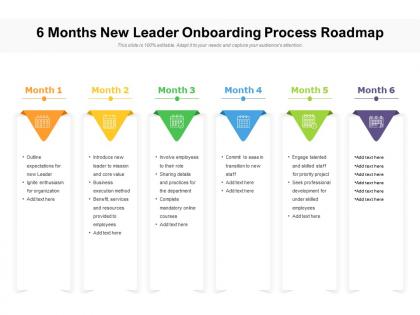
6 months new leader onboarding process roadmap




Try Before you Buy Download Free Sample Product
 Impress Your
 Audience
 100%
100% Editable
 Save Hours
 of Time


A cohesive work plan is essential for achieving the desired target. Communicate your vision and lay a firm ground in front of your audience with our PowerPoint layout. Align your project milestones, budgets, deliverables, deadlines, and all the requisite information for a dynamic presentation by employing this amazingly designed 6 Months New Leader Onboarding Process Roadmap. Maximize team efficiency and streamline a work plan efficiently by introducing our ready made roadmap PowerPoint theme. You can quickly establish coordination between different activities across the organization and present an insight to your colleagues by utilizing this useful business tool. Color code specific tasks, prioritize, and keep a close eye on the deadlines with the help of our eye catchy PowerPoint template. Download our 6 Months New Leader Onboarding Process Roadmap for excelling at productive management.
People who downloaded this PowerPoint presentation also viewed the following :
6 months new leader onboarding process roadmap with all 2 slides:
Use our 6 Months New Leader Onboarding Process Roadmap to effectively help you save your valuable time. They are readymade to fit into any presentation structure.
FAQs for 6 months new leader
Honestly, you need way more check-ins than feels normal at first - like daily calls with their manager the whole first week. Set up a buddy system with someone outside their direct team too. Get all your processes actually written down somewhere they can find them (this is where most companies screw up). Remote people can't just overhear stuff or tap someone on the shoulder, so start scheduling intro calls with key teammates before day one even hits. The structured communication thing is huge - don't assume they'll figure it out like office people do.
Honestly, templates are a game changer for onboarding. You'll save so much time not building presentations from scratch every single time. Just drop in the new person's details and you're basically done. The best part? You won't accidentally skip important stuff like benefits or team intros - happened to me once and it was awkward lol. New hires get something that actually looks professional instead of a rushed mess. I'd make maybe 2-3 different templates depending on the role. Then just tweak them as needed. Way easier than starting over each time.
Honestly, getting the culture piece right during onboarding makes or breaks everything. I've watched amazing people completely crash and burn because no one bothered explaining the actual vibe or unwritten rules. Don't just hand them a handbook - that's useless. Tell stories about your values instead. Let them shadow different team members so they see how things really work, not just the official version. The whole point is making them feel like they actually belong, not like some outsider pretending to fit in.
Honestly, mixing up your formats is key here. Visual people need infographics and diagrams. Interactive folks want polls or breakout rooms where they can actually participate. Don't forget to explain things out loud too - I swear people's brains shut off when it's just slides and someone droning on. Record the important parts so people can go back and listen again. Always send written summaries afterward (someone will definitely ask for them later). The trick isn't picking one style though. Layer everything together since most people learn through multiple ways anyway.
So I'd focus on the basics first - how long until new people actually hit their targets, and retention at 90 days plus one year. Survey scores from onboarding help too. Honestly, asking managers directly is underrated - they know if someone's really ready or just going through the motions. Track training completion rates and when people make their first real contribution. The retention thing is massive since replacing someone after 6 months costs a fortune. Oh, and set up some monthly dashboard so you catch issues early. Way better than realizing you have a problem when half your new hires quit.
Honestly, setting clear expectations right from the start is huge for keeping people around. New hires won't spend their first week wondering "what the hell am I supposed to be doing?" Instead, they'll actually know what success looks like and can focus on, you know, doing good work. Nobody wants that awful feeling of being completely lost at a new job. When people understand their goals and responsibilities upfront, they're way less likely to bounce after a few months because they weren't blindsided by random demands. Oh, and definitely write this stuff down - trust me on that one.
Oh man, the worst thing you can do is dump everything on them day one - like, their brain will just shut off. Make sure their desk and computer are actually set up too (learned that one the hard way). Don't just throw them into compliance training for hours either. Mix in some fun stuff! Also be super clear about what they're supposed to be doing because vague job descriptions are brutal. Introduce them around properly - nobody wants to eat lunch alone their first week. Check in with them regularly those first few weeks so they don't spiral in silence.
Honestly, going digital with onboarding is a game changer. Ditch the paper forms - nobody wants to deal with that mess anymore. Automated workflows keep everything flowing smoothly, and your new people can knock out training modules whenever works for them. VR training is actually getting really impressive (though maybe overkill for some companies). Chatbots handle those repetitive questions instantly. Video calls work great for remote introductions, plus mobile apps can walk someone through their entire first week. Don't go crazy though - just pick one thing that fixes your biggest headache first.
Just cover the big stuff that actually matters - how you started, major product launches, acquisitions, that kind of thing. Throw in some fun facts too so it doesn't sound corporate and boring. Skip all the detailed executive-level stuff nobody cares about. What you really want is helping people understand why things work the way they do now. Like, why do we have this weird approval process? Oh right, because of that disaster back in 2018. The whole point is making new people feel like they're jumping into an ongoing story instead of just... I dunno, showing up to collect a paycheck.
So I'd start with the basics everyone needs - company culture, policies, that stuff. Then build department modules on top. Sales needs CRM training and quota breakdowns. Engineering gets repo access and deployment workflows. HR's template is honestly a nightmare since they're managing everyone else's too (learned that the hard way). Marketing needs brand guidelines and campaign access. I usually keep about 60% the same across teams for consistency, then swap the other 40% for role-specific stuff. Oh, and don't forget to update these quarterly - processes change way more than you'd think!
Honestly, exit surveys work best - people leaving have nothing to lose so they'll tell you the truth. But also try pulse surveys at 30/60/90 days since you can actually fix stuff for people still there. One-on-ones with managers help too during those first few months. Don't forget to track the hard numbers like how long it takes new hires to get productive and whether they're sticking around. I'd probably start with just exit surveys though (easier to manage) and make sure you're not just collecting feedback to feel good about asking. Actually do something with what you learn or it's pointless.
Make those first days count by getting them a good buddy - someone who actually gives a damn, not whoever got stuck with it. Welcome package and schedule are obvious must-haves. But here's what really works: throw in casual coffee chats between the formal training stuff. Get them into team meetings right away so they don't feel like outsiders. Give them easy wins with small tasks they can actually handle. I swear, most managers just assume new people are fine if they're quiet - don't do that. Check in daily and book that 30-day feedback session immediately.
Dude, mentor pairing is everything for new hires. Seriously makes such a difference when someone has a go-to person for all those weird random questions that come up. I've watched people really struggle when they're just left to figure things out alone - it's brutal. Don't necessarily pair them with their direct boss though. Sometimes someone who started like 6-12 months ago works better since they actually remember what it's like being confused about everything. Oh and schedule actual check-ins, not just the whole "let me know if you need help" thing because honestly, most people won't reach out.
Diverse hires often struggle with the unwritten rules nobody talks about. International candidates might not get office dynamics, or underrepresented folks can feel pretty isolated at first. Your regular onboarding probably covers the basics, but these people need more relationship stuff. Mentors help a ton - pair them up early. Also, spell out those informal processes that everyone just "knows." Create spaces where they can ask about cultural weirdness without feeling dumb. Oh, and just ask them directly what support they'd want most. That's honestly the easiest starting point.
Don't make learning some big separate thing - just weave it into how you already work. Monthly check-ins with new people work great for spotting what they need help with. Most places literally abandon people after the first week (which is insane if you think about it). Mentorship programs are huge, plus online courses and letting people shadow other departments. I'd start scheduling those follow-up chats right now instead of waiting. The whole point is keeping things rolling continuously rather than just doing one-off training events. Trust me, it makes a massive difference for keeping people around.
No Reviews