


6 Step Property Management Process Flow




Try Before you Buy Download Free Sample Product
 Impress Your
 Audience
 100%
100% Editable
 Save Hours
 of Time


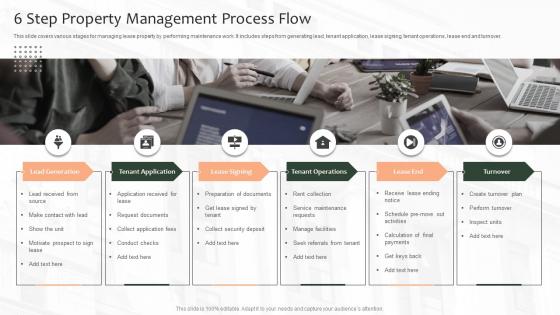
This slide covers various stages for managing lease property by performing maintenance work. It includes steps from generating lead, tenant application, lease signing, tenant operations, lease end and turnover.
People who downloaded this PowerPoint presentation also viewed the following :
6 Step Property Management Process Flow with all 6 slides:
Use our 6 Step Property Management Process Flow to effectively help you save your valuable time. They are readymade to fit into any presentation structure.





FAQs for 6 Step Property
Honestly? Communication breakdowns will drive you insane. Tenants hate when their maintenance requests just vanish, and unclear policies cause so much drama. You'll constantly walk this weird line between enforcing rules and not being the villain everyone complains about. Late rent talks are the worst part, no joke. But here's what actually works: respond fast even if it's just "got it, will update you Friday." Send regular updates. Document literally everything or you'll regret it later. Being proactive saves your sanity way more than scrambling to fix problems after they explode.
Dude, get some property management software - it'll change your life. Automated rent collection means no more chasing people down for payments. Tenants can submit maintenance requests through an app instead of calling you at 9pm about a leaky faucet (seriously, why is it always 9pm?). Virtual tours are clutch too, saves you from showing the same unit five times. Start with something basic that handles rent and maintenance tickets. I swear you'll cut your admin work in half. Digital lease signing is worth it too if you're doing a lot of turnover.
Honestly, tenant feedback is like having a crystal ball for your rentals. You'll catch maintenance stuff before it gets expensive, and figure out what people actually want (hint: working AC beats granite countertops every time). I just send a quick email every few months asking how things are going. The responses help me decide if rent hikes are realistic or if I should upgrade something first. Plus happy tenants stick around longer and tell their friends about your place. It's way easier than guessing what's broken or what they care about.
Honestly, just stick to the basics and you'll be fine. Run credit checks, verify their job, and get references from landlords. Pay stubs or bank statements are a must - they should make at least 3x the rent. Here's the thing though: don't just call their current landlord. Call the previous one too because sometimes current landlords will lie just to get rid of bad tenants. Background checks are worth it too. Oh, and write down your criteria beforehand so you're not making random decisions. Documentation saves your ass later if anyone complains about discrimination.
Look, get an online portal where tenants can submit requests with photos - way better than getting random texts at 10pm about broken toilets. Safety stuff comes first, obviously, then set response times and actually follow through. Document everything because you'll definitely need that later. Oh, and follow up after repairs to make sure they're happy. Honestly, tenants appreciate when you're organized about this stuff. Start with just the portal and timeframes - don't overwhelm yourself trying to do everything at once.
Dude, check your city/county websites regularly - codes change way more than you'd expect. Set up Google alerts for "tenant rights" plus your area name. Join the local property management group because they actually send useful updates. Building relationships with code enforcement people helps tons, even though those city council meetings are mind-numbing. Trust me on this one. Do a compliance check on your current places first. Then maybe review everything quarterly? Oh, and those code officers are usually pretty cool if you're not being sketchy about stuff.
Honestly, it's all about making their lives easier and actually giving a damn. Reply to maintenance stuff fast - like, same day if you can. Throw in some random check-ins too, not just "hey rent's due." Small upgrades work wonders... smart thermostats, nicer light fixtures, whatever. Most people just want to feel like you're not some slumlord, you know? Yeah, competitive rent matters, but I swear good relationships trump everything. Set up some basic system to track how fast you respond and what tenants are saying. You'll catch problems way before they're packing boxes and bailing on you.
Honestly, marketing can make or break your vacancy rates. Bad photos and lazy descriptions? Your units will sit empty forever - I've watched it happen way too many times. Good marketing fills places faster with tenants who actually pay rent and don't trash the property. Plus you can charge more when you showcase everything properly instead of posting blurry iPhone pics. Decent photography is worth every penny, and write listings that actually tell people what makes your place special. Trust me, it's the difference between 30 days vacant and 3 months.
Focus on the big three first: occupancy rates, rent collection, and turnover. Those tell you everything about your financial health. Maintenance response times matter too, plus cost per unit for repairs and tenant satisfaction. Marketing stuff like days to lease is useful but honestly? I went crazy tracking like 20 different things when I started - total waste of time. Keep it simple with maybe 6-7 key metrics max. Set up something you'll actually look at weekly, not some fancy spreadsheet that'll just collect digital dust. The simpler dashboard always wins.
Start reaching out 90-120 days before the lease ends - gives everyone time to figure things out. Check what similar places are renting for so you're not pricing yourself out of good tenants. Honestly, the decent ones usually want to stay anyway, which makes your life easier. Small rent bumps work better than shocking people with huge increases. Look at their payment history too - has this person been a pain or pretty solid? My neighbor learned this the hard way when she kept rent the same for amazing tenants rather than deal with finding new ones. Sometimes avoiding the vacancy mess is worth more than squeezing every dollar out.
Dude, it's seriously a lifesaver. Online rent collection means no more awkward texts about late payments - that alone is worth it. You can handle maintenance requests, tenant screening, all that stuff from one dashboard instead of juggling random emails and notes. Financial reports get generated automatically too, which is nice I guess if you're into that level of organization (I am lol). Tenants actually love having portals where they can submit stuff themselves. The time you'll save is insane. Just figure out what's driving you most crazy right now and find something that fixes those problems first.
Okay so first thing - stay neutral and write everything down from the start. I always listen to each person separately before doing any kind of group meeting, if that's even gonna help. Honestly? Half the time people just want someone to actually hear them out. Be upfront about what you can actually fix - noise complaints, sure, but Karen's curry smell complaints aren't really your problem. Document every single conversation because this stuff gets messy quick. Oh and whatever you do, don't pick sides even if one tenant seems way more reasonable. Stick to your lease rules consistently.
Dude, you absolutely need to do regular inspections - I can't stress this enough. Catching stuff early saves you SO much money later. Like, a small leak now vs. major water damage in six months? No contest. Plus you can check if your tenants are actually following the lease and not trashing the place. I've heard way too many horror stories from landlords who skipped this step. You'll also stay on top of safety codes and have documentation if insurance ever needs it. Do them every three months minimum. Just make sure you give tenants proper notice first - nobody likes surprise visits.
Honestly, market trends run the whole show when you're managing properties. High demand? You can be super picky about tenants and bump up rent. But when tenants have options, you're scrambling to keep people happy and maybe throwing in perks just to fill units. Oh, and everyone expects digital everything now - paper applications are basically dead. Economic stuff changes what people want too (suddenly everyone cares about home offices). I'd set up Google alerts for local market reports. Check them monthly so you don't get blindsided by changes.
First thing - dig through your last 3-5 years of income and expenses to find patterns. Fixed stuff like mortgage and insurance goes in one bucket, variables like maintenance in another. Trust me, always set aside 5-10% for repairs because your water heater will definitely die on Christmas Eve or something. Property management software helps track everything monthly so you can see where you're actually spending vs what you planned. Don't forget vacancy allowances and rent increases - usually around 5-8% depending on your area. Set up alerts when you're hitting budget limits so you can pivot fast.
-
Awesome presentation, really professional and easy to edit.
-
“I really like the convenient operation and professionalism I saw on the SlideTeam website. I want to express my regards and appreciation to the team.”