


Fixed Asset Management Process Flow Ppt Slides




Try Before you Buy Download Free Sample Product
 Impress Your
Audience
 100%
Editable
 Save Hours
of Time


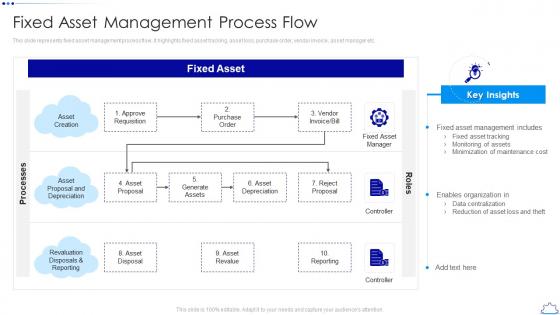
This slide represents fixed asset management process flow. It highlights fixed asset tracking, asset loss, purchase order, vendor invoice, asset manager etc.
People who downloaded this PowerPoint presentation also viewed the following :
Fixed Asset Management Process Flow Ppt Slides with all 6 slides:
Use our Fixed Asset Management Process Flow Ppt Slides to effectively help you save your valuable time. They are readymade to fit into any presentation structure.






FAQs for Fixed Asset Management Process
Look, you need four key things sorted out: track your assets properly, stick to maintenance schedules, handle depreciation accounting, and plan disposal ahead of time. Most companies totally botch the tracking part - they literally can't tell you what they own or where it sits. Maintenance keeps stuff working longer, obviously. The financial piece means calculating depreciation for taxes and reports. Oh, and planning disposal early gets you better recovery value when things finally kick the bucket. Start with an asset audit first though - I swear half the businesses I've seen don't even have that baseline figured out.
Look, you're probably drowning in spreadsheets right now - I get it. Barcode scanners or RFID tags can track everything instantly instead of manual entry. Cloud systems are clutch for real-time updates, especially if you've got multiple locations. Your team can update stuff through mobile apps while they're actually out there. Oh, and automated reminders for maintenance? Total lifesaver - no more scrambling when something breaks. I'd honestly start simple with whatever plays nice with your current accounting setup. The whole process becomes way less of a headache once you're not chasing paper trails.
Ugh, asset management is such a pain. You'll spend forever tracking stuff across different locations - equipment gets moved around and nobody updates the records. Manual processes are the worst time suck ever. Don't even get me started on physical audits... you're literally hunting down missing equipment that someone probably threw away months ago. Compliance gets messy too when your data's outdated. Most places still use crappy spreadsheets instead of real software, which honestly makes zero sense. Just bite the bullet and get proper asset management tools. Set up clear policies for moving/disposing stuff. Trust me, future you will thank you.
So depreciation spreads an asset's cost over however long you'll use it. Your balance sheet shows assets losing value while your income statement gets hit with depreciation expense each year. Think of it like your car - it's worth less every year, but accounting makes it official. The tax benefits are nice since you can usually deduct it. You need solid schedules to track everything or you'll end up with book values that are way off. Also helps you plan when to replace stuff before it totally craps out. Just match your depreciation method to how you actually use the asset and you're good.
Dude, staff training makes or breaks your whole asset system. Without it, people just wing the tagging and tracking stuff, then assets vanish or get labeled wrong. I've watched companies blow serious money because their team didn't know basic depreciation rules - honestly pretty painful to see. Your fancy software means nothing if nobody knows how to use it properly. Plus you've got compliance issues if people mess up the protocols. Start with hands-on workshops covering your actual processes. That's where you'll see real results fast. Short sentences work better than long boring presentations too.
So data analytics can predict when stuff breaks before it actually breaks - way better than scrambling when equipment dies. You'll spot patterns in how assets get used that you'd totally miss otherwise. Plus it shows which equipment is just sitting there wasting money. Honestly, the maintenance scheduling alone pays for itself pretty quick. Track depreciation better, make smarter buying choices based on real data instead of guessing. My advice? Don't go crazy at first. Pick maintenance scheduling and get that dialed in before adding more complexity.
So for auditing fixed assets, honestly just start by physically counting stuff - walk around and make sure what's on your books is actually there. Way better than doing one huge annual nightmare, break it into cycle counts throughout the year. Barcode scanners help tons if you have them. Third-party auditors are good for expensive equipment since they'll catch stuff you might miss. Oh, and focus on your priciest items first - no point spending hours counting staplers when your $50k machinery might be missing. RFID makes it even faster but that's probably overkill unless you're huge.
Oh man, regulatory changes will mess with your fixed asset policies big time. Depreciation methods, useful life estimates, reporting - everything shifts when new standards drop. Remember those lease accounting changes? Companies had to start capitalizing leases they'd been expensing for years. Total headache. Build flexibility into your policies from the start, and set up quarterly reviews to catch changes early. I'd definitely subscribe to accounting updates too - way better than panicking when something hits. Being ahead of it makes all the difference, trust me.
Yeah, so basically you want multiple layers working together. Physical locks on the good stuff, keycard access for sensitive areas. Use tamper-evident tags - that way you'll actually know if someone's been messing around. Cameras are pretty much a given at this point. But honestly? Regular audits are where you catch most issues because things just disappear when no one's watching. Oh, and make everyone sign off when they move equipment - creates a paper trail. That whole custody chain thing really does work when people know they're accountable for stuff.
Honestly, it's a game changer if you're drowning in spreadsheets right now. The software automates all that tedious tracking stuff - depreciation gets calculated automatically, compliance reports don't make you want to cry anymore. Barcode scanning is clutch for avoiding those "seriously, where the hell is that equipment?" panic moments. It'll handle maintenance schedules and warranty tracking too. My advice? Figure out what's driving you most crazy first - maybe it's the reporting nightmare or just basic asset tracking. Then find something that actually solves those specific problems instead of trying to boil the ocean.
A fixed asset register tracks all the valuable stuff your company owns - computers, equipment, furniture, whatever. You'll need purchase dates, costs, serial numbers, where everything's located, and how you're depreciating it all. Honestly, this thing saves your butt during audits and insurance claims. Plus it stops equipment from mysteriously vanishing (which totally happens). Don't forget maintenance schedules too. I'd do physical counts every quarter. Trust me, you don't want auditors finding out half your "assets" are just numbers on a spreadsheet. Been there, not fun.
Regular inspections are your best bet - quarterly or annual works for most places. Walk around, document what's breaking down, check functionality. Pretty straightforward stuff. For the financial tracking, just stick to whatever depreciation method you're already using (straight-line or accelerated) and watch how your book values shift over time. The inspection part is honestly where everyone screws up because it's boring as hell, but skipping it means surprise equipment failures and budget nightmares later. Trust me on this one. Make a basic checklist for your most critical stuff first. Schedule those reviews ASAP before you forget about it completely.
Track your actual usage rates first - you'll probably be surprised how much equipment just sits there. Share assets between departments when possible. Schedule maintenance during slow periods, and honestly? Lease seasonal stuff instead of buying it outright. Monthly reports help you spot what's working and what's dead weight. Get rid of outdated equipment faster than you think you should - it's just dragging down your returns. Regular audits sound boring but they'll show you where you're wasting money on redundant purchases.
Look, good asset management saves you from financial headaches down the road. You'll want to track depreciation and maintenance schedules so your books don't get messy. Auditors are obsessed with organized records - learned that the hard way. The real win though? You can actually plan equipment replacements before stuff breaks and screws over your whole operation. I'd honestly just set up regular audits and find a solid tracking system. Makes budget planning way less stressful when you're not flying blind about what needs replacing.
Honestly, IoT sensors are where it's at right now - you get actual real-time data instead of crossing your fingers and hoping stuff doesn't break. Predictive analytics goes hand in hand with that. Cloud platforms have made everything so much easier since you're not stuck with some ancient server setup. Mobile apps are probably the biggest game-changer though, your guys can just update everything right there in the field. AI's getting scary good at finding patterns we'd never catch. Oh, and start with mobile first - it's usually the quickest win and you'll see results fast.
-
“Easy to use. I always wanted to have a quick search for products and SlideTeam has helped me have it.”
-
Loved the templates on SlideTeam, I believe I have found the go to place for my presentation needs!