


Fixed Asset Expenditure Powerpoint Presentation Slides




Try Before you Buy Download Free Sample Product
 Impress Your
 Audience
 100%
100% Editable
 Save Hours
 of Time


The Fixed Asset Expenditure PowerPoint Presentation Slides are designed to represent financial planning and performance management. Capital expenditure PowerPoint complete deck covers all the PPT slides which are necessary for financial presentations such as capex summary, capital expenditure details, and valuation methods, discounted payback period, valuation summary, net present value method, NPV advantages and disadvantages, internal rate of return, valuation methods comparison, etc. Each component given in slides can be easily modified to meet specific needs. Capital Investment PowerPoint layout is ideal for finance and accounting presentations. Furthermore, fixed investment PowerPoint templates are useful for cash flow analysis, capital asset management, operating expenses, balance sheet, income statement, corporate finance, capital cost management, accounting reports, financial planning and forecasting, capital and revenue expenditure and many more. Download PowerPoint presentation of financial statements for financial analysis and business valuation. Our Fixed Asset Expenditure Powerpoint Presentation Slides are great confidence builders. Convince everyone they are capable of achieving.
People who downloaded this PowerPoint presentation also viewed the following :
Content of this Powerpoint Presentation
Slide 1: This slide introduces Fixed Asset Expenditure. State Your Company Name and begin
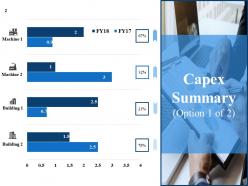
Slide 2: This slide presents Capex Summary (Option 1 of 2). You can add the summary as per your requirement.
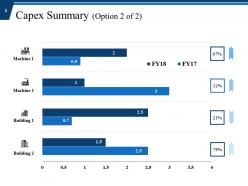
Slide 3: This slide showcases Capex Summary (Option 2 of 2). You can use as per your requirement.
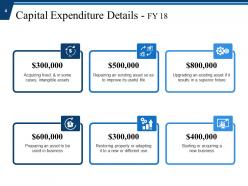
Slide 4: This slide presents Capital Expenditure Details. Add or edit as you need.
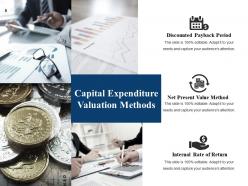
Slide 5: This slide showcases Capital Expenditure Valuation Methods with these of the three parameters- Discounted Payback Period, Net Present Value Method, Internal Rate of Return.
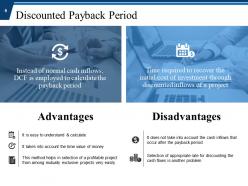
Slide 6: This slide shows Discounted Payback Period with the advantages and disadvantages.
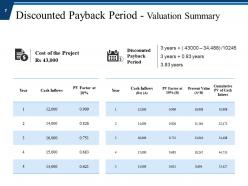
Slide 7: This slide displays Discounted Payback Period - Valuation Summary.
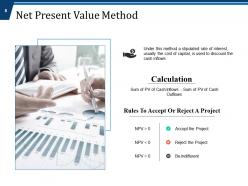
Slide 8: This slide showcases Net Present Value Method.
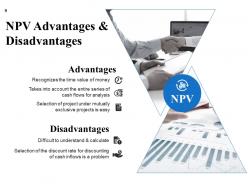
Slide 9: This slide shows NPV Advantages & Disadvantages.
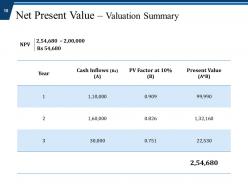
Slide 10: This slide presents Net Present Value – Valuation Summary.
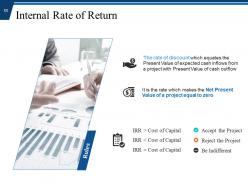
Slide 11: This slide shows Internal Rate of Return. Add the data/information and use it.
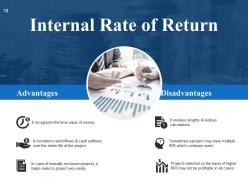
Slide 12: This slide showcases Internal Rate of Return.
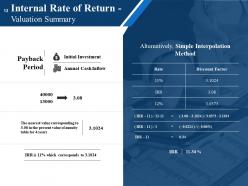
Slide 13: This slide shows Internal Rate of Return - Valuation Summary.
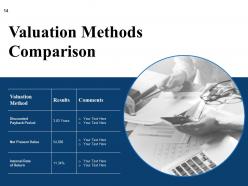
Slide 14: This slide shows Valuation Methods Comparison with table.
Slide 15: This slide presents Fixed Asset Expenditure Icon Slide.
Slide 16: This slide is a Coffee Break image for a halt.
Slide 17: This slide forwards to Charts & Graphs.
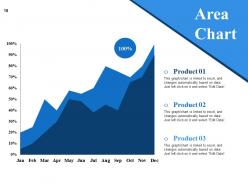
Slide 18: This is an Area Chart slide for product/entity comparison.
Slide 19: This is a Line Chart slide for product/entity comparison
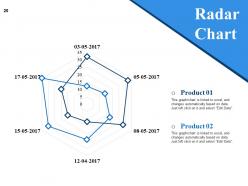
Slide 20: This is a Radar Chart slide for product/entity comparison.
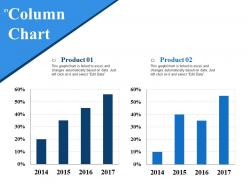
Slide 21: This is a Column Chart slide for product/entity comparison.
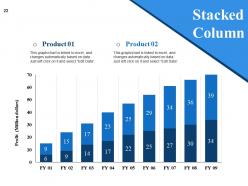
Slide 22: This slide showcases Stacked Column for comparing the products.
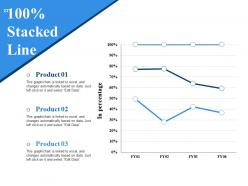
Slide 23: This slide shows a Stacked Line graph in terms of percentage and years for comparison of Product 01, Product 02, Product 03 etc.
Slide 24: This slide is titled Additional Slides.
Slide 25: This slide represents Our Mission. State your mission, goals etc.
Slide 26: This is an About Us slide. State company or team specifications here.
Slide 27: This is Our team slide with names and designation.
Slide 28: This is an Our Goal slide. State your important goals here.
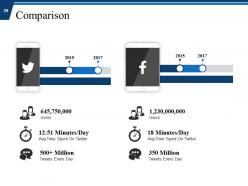
Slide 29: This slide shows Comparison of Positive Factors v/s Negative Factors with thumbsup and thumb down imagery.
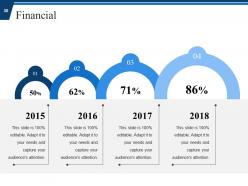
Slide 30: This is a Financial Score slide to show financial aspects here.
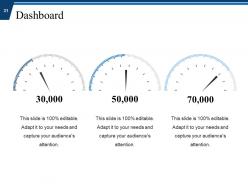
Slide 31: This is a Dashboard slide to show- Strategic System, Success, Goal Process, Sales Review, Communication Study.
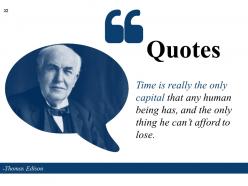
Slide 32: This is a Quotes slide to highlight, or state anything specific
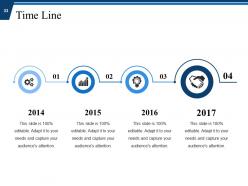
Slide 33: This slide shows Project Events Timeline with icons and text boxes.
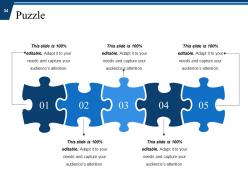
Slide 34: This slide presents a PUZZLE slide with the following subheadings- Integrity and Judgment, Critical and Decision Making, Leadership, Agility.
Slide 35: This is a Target slide. State your targets here.
Slide 36: This is a Location slide of World map to show global presence, growth etc.
Slide 37: This slide shows a Mind map for representing entities
Slide 38: This is a Post it slide to mark reminders, events etc.
Slide 39: This is a Venn diagram image slide to show information, specifications etc.
Slide 40: This is a Bulb Or Idea image slide to show information, innovative aspects etc.
Slide 41: This is a Thank You slide for acknowledgement.
Fixed Asset Expenditure Powerpoint Presentation Slides with all 41 slides:
Describe events as they actually happened with our Fixed Asset Expenditure Powerpoint Presentation Slides. It helps furnish the facts.









FAQs for Fixed Asset Expenditure
So fixed assets are basically the big physical stuff your business owns long-term - buildings, machinery, vehicles, computers, whatever. They're super important because honestly, how else would you actually operate? Like a manufacturing company is pretty useless without equipment. These show up on your balance sheet and depreciate over time, which affects your taxes and financial reporting. You'll definitely want to keep tabs on their value and condition since they're huge investments. Oh and they directly impact how much money you can actually make, so there's that too.
So basically, fixed assets are the big stuff you'll keep around for years - buildings, equipment, that sort of thing. Current assets? That's your cash and anything you can turn into cash pretty quickly, like inventory. The whole point is about timing. Your office printer isn't going anywhere (hopefully), but inventory moves fast. This split actually matters on your balance sheet because it shows how liquid you are. Banks love looking at your current ratio for this reason. Just classify based on how you're planning to use it, not what it technically is.
So there's basically three main ways to do depreciation. Straight-line is what most people use - you take the cost minus what you think it'll be worth later, then divide by how many years you'll use it. Same amount every year, pretty boring but easy. Declining balance front-loads more depreciation in the first few years, which honestly makes sense for things like computers that lose value fast. Then there's units of production that's based on actual usage. Your accounting software probably has templates for this stuff already - mine does at least. Just pick whatever makes sense for what you're depreciating.
So basically, whatever you pay becomes the book value on your balance sheet - that's your starting point for depreciation. Don't forget to include ALL the extras like shipping and installation, because honestly, you can't go back and add stuff later (learned that one the hard way). Once you've got your total cost, you'll depreciate it over the asset's useful life. This shows up as an expense each year and chips away at the carrying value. Just make sure accounting doesn't miss anything during the purchase - keep decent records of every little cost that goes into getting it operational.
So impairment is basically when you have to write down your assets because their actual recoverable value dropped below what's on your books. You test for it when there's obvious red flags - like obsolescence, market shifts, or physical damage. Honestly, this stuff can totally wreck your financials if you're not paying attention. The loss hits immediately and tanks both your asset value and current earnings. I'd say check your assets regularly for warning signs, especially when markets get crazy or - wait, what industry are you in again? Either way, tech changes can screw you over fast.
So when you buy stuff like equipment or buildings, that shows up in the investing section of your cash flow statement as money going out. Selling assets does the opposite - brings cash in. Here's where it gets weird though: depreciation lowers your profit but doesn't actually cost you cash, so they add it back in the operating section. I always tell people to watch their capex spending like a hawk because buying a bunch of assets can make your cash flow look terrible even when you're profitable. It's honestly one of those things that trips up way more business owners than it should.
Start with actually figuring out what assets you have - sounds basic but you'd be shocked how many companies don't know. Get a decent tracking system going, whether that's software or just really good spreadsheets with purchase dates and maintenance logs. Do regular check-ups to catch stuff that's not pulling its weight. Preventive maintenance saves you from those awful surprise breakdowns that always happen at the worst time. Also worth tracking how much your equipment actually gets used - if something's sitting around most of the time, maybe you don't need it.
So here's the deal with fixed assets and taxes - depreciation is your friend because you get to deduct it every year, which lowers what you owe. Pretty nice for keeping cash in your pocket. When you sell stuff though, that's where it gets tricky. You'll pay capital gains (or get losses) based on sale price vs what's left on your books. Each type of asset has its own depreciation timeline that the IRS sets. Oh, and definitely keep good records of when you bought things and how much - trust me, you don't want to scramble for receipts later. Your future self will thank you.
So fixed assets are basically all your company's expensive long-term stuff - buildings, equipment, vehicles, whatever. They sit on your balance sheet as non-current assets. Here's the thing though: you record them at original cost minus depreciation, so their value drops over time on paper. More fixed assets = more capital-intensive business, which isn't necessarily bad but affects your ratios like return on assets. Oh and don't forget the depreciation hits your income statement too, not just the balance sheet. Honestly the accounting gets messy but that's the gist of how they work.
RFID tags and IoT sensors are probably your biggest wins right now. Smart tags track location and usage automatically - saves tons of manual work. Computer vision stuff is getting crazy good too, like you can just snap photos to identify equipment. Temperature and vibration sensors will actually tell you when something's about to crap out, which is honestly game-changing for maintenance. Oh, and AI analytics platforms tie it all together. I'd start with RFID on your most expensive gear first. Don't go overboard initially - see what kind of time you're actually saving before expanding.
Ugh, tracking depreciation is such a pain - that's probably your biggest nightmare right there. Then you've got maintenance schedules to juggle while trying not to mess up daily operations. Regulatory stuff changes constantly too, which is super annoying. The whole "capitalize vs expense" thing for repairs? Total minefield. I've seen people with 20 years experience still second-guess themselves on that one. Manual tracking will kill you once you scale up, so get a decent asset management system. Set up automated alerts for maintenance and depreciation - seriously, it'll save your sanity. Oh, and don't forget about predicting replacement timelines... that's a fun guessing game.
Honestly, fixed asset audits are a lifesaver for catching when your books don't match reality. You'll spot missing stuff, depreciation that's totally wrong, and assets you should've written off years ago. Also weirdly common - finding equipment that never got recorded in the first place. I'd start with your expensive items quarterly, then tackle the smaller stuff. Your asset values need to reflect what things are actually worth now, not what you paid forever ago. It's tedious but saves you from looking like an idiot during tax season.
Oh man, disposal accounting is honestly one of those things that'll bite you if you're not careful. You've got to pull out the asset cost and all that accumulated depreciation, then figure out if you made or lost money on the deal. Auditors are like hawks with this stuff - they catch disposal errors constantly. Document everything: when you sold it, for how much, who bought it. Update your asset register right away and definitely loop in your tax people since depreciation recapture might be a thing. I'd make a checklist honestly, there's just too many moving pieces to wing it.
Ugh, lease accounting is such a pain now. Most of those leases you used to just expense monthly? Now they're sitting on your balance sheet as right-of-use assets with matching liabilities. Your fixed asset register just exploded overnight - way more complex to track everything. You've got depreciation calculations, lease modifications, term tracking... honestly it's a mess compared to the old way. My advice? Get your lease agreements sorted ASAP and make sure whatever system you're using can actually handle all this extra stuff. Trust me, you don't want to scramble later.
Start with a maintenance schedule based on what the manufacturer says and how much you actually use the stuff. Document everything - seriously, future you will thank you when something breaks or auditors show up asking questions. Get your team trained on handling procedures properly. Random inspections help catch things early too, not just the scheduled stuff. Oh and make sure people report problems right away instead of ignoring them. Set calendar reminders or someone will definitely forget. Being ahead of problems beats scrambling to fix them later.
-
Very unique and reliable designs.
-
Really like the color and design of the presentation.