


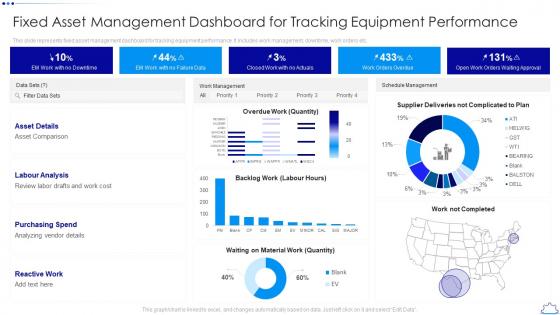
Fixed Asset Management Dashboard For Tracking Equipment Performance




Try Before you Buy Download Free Sample Product
 Impress Your
 Audience
 100%
100% Editable
 Save Hours
 of Time


This slide represents fixed asset management dashboard for tracking equipment performance. It includes work management, downtime, work orders etc.
People who downloaded this PowerPoint presentation also viewed the following :
Fixed Asset Management Dashboard For Tracking Equipment Performance with all 7 slides:
Use our Fixed Asset Management Dashboard For Tracking Equipment Performance to effectively help you save your valuable time. They are readymade to fit into any presentation structure.






FAQs for Fixed Asset Management Dashboard For
You need three main things: asset tracking, lifecycle management, and audits. First, clean up your asset register - that's your foundation. Spreadsheets are fine at the start but they'll drive you crazy once you grow. Get a proper system that shows what you own, where everything lives, and what condition it's in. Plan your maintenance schedules and track depreciation early or you'll hate yourself during financial reporting season. Don't skip the physical audits either - stuff disappears or gets shoved in random storage rooms and forgotten about. Build your processes around these basics and you'll be solid.
Honestly, you gotta ditch those Excel sheets - they're killing you. Barcode scanners and RFID tags will change your life. Cloud software handles all the depreciation math automatically, plus you get real-time updates on where everything is. GPS is clutch for vehicles or equipment that moves around (we learned that the hard way). The compliance reports generate themselves, which is amazing during audit season. I'd start with barcode scanning your expensive stuff first. Quick win and you'll see results immediately.
So depreciation is just spreading out what you paid for equipment/assets over however many years they'll actually be useful, instead of getting slammed with the whole cost right away. Straight-line method is the easiest - just take cost minus what you could sell it for later, then divide by useful years. There's also accelerated methods if you want bigger expenses upfront. Honestly sounds dry but it actually makes a huge difference for your financial statements and taxes. Just pick realistic useful life estimates for different stuff and update your schedules regularly. Oh and don't stress too much about being perfect with the estimates.
Okay so regulatory stuff basically controls how you track and report your fixed assets - no wiggle room there. GAAP or IFRS rules apply for financial reporting, plus whatever industry regulations hit your business. Tax laws are huge too since they set your depreciation methods. Here's the annoying part: tax depreciation almost never matches your book depreciation, so you're basically keeping two sets of records. Build your processes around these requirements right from the start. Your system needs to spit out whatever reports the regulators want and keep solid documentation trails. Trust me, it's way easier than trying to retrofit compliance later.
Okay so basically you need three things - regular physical counts, proper tagging, and decent tracking software. Do quarterly walk-throughs where you actually check each asset against your records. Boring as hell but catches tons of errors. Every asset needs a unique barcode or RFID tag, and honestly train your people to update the system right away when stuff gets moved or tossed. The worst thing is when updates pile up for months - total nightmare to sort out later. Set up automated reminders for depreciation too. Oh and start with a completely clean baseline inventory first, then just stay on top of it from there.
Honestly, just track everything from when you buy it to when you toss it. Set up clear buying rules first, then nail down maintenance schedules and keep tabs on how things are performing. The real challenge? Actually following through - I can't tell you how many perfect plans I've seen just sit there unused. Track your costs and condition constantly, with alerts for maintenance and replacements. Oh, and assign specific people to own this stuff or it'll get forgotten. My advice is start with your most critical assets. Don't try to do everything at once.
Honestly, the worst part is you just can't see what's happening across all your sites. Different locations track stuff however they want - or don't track it at all. Maintenance gets skipped constantly. Then there's the compliance mess since every location has different rules and tax stuff to deal with. Don't even get me started on transferring equipment between sites - half the time things just disappear into some warehouse somewhere. You really need a centralized system that shows you everything in real time. Trust me, once you can actually see what you have and where it is, everything else becomes way more manageable.
Look, fixed asset management is honestly a game-changer for your financials. You get real-time data on asset values, depreciation, disposal records - all feeding into way more reliable statements. Audits become so much easier when everything's tracked systematically instead of that last-minute panic we've all been through. The automated depreciation calculations save a crazy amount of time and cut down on errors too. When regulators show up, you can actually back up what's sitting on your balance sheet. My advice? Start simple - dump all your current assets into one centralized system first, then mess with the fancy reporting stuff later.
Honestly, I'd start with ROA - it tells you if your fixed assets are actually making money or just eating up space. Asset turnover ratio is clutch too since it shows how well you're converting assets into sales. For equipment, utilization rates are huge. Like, what's the point of expensive machinery if it's sitting there half the time? Also track maintenance costs as a percentage of asset value, and compare your depreciation rates to real performance drops. ROA plus utilization rates will give you the clearest picture right off the bat.
Honestly, cloud-based asset management is a game changer. Everything's centralized so you can track stuff from anywhere and depreciation gets calculated automatically. No more spreadsheet hell! Your team can all see the same current info, which fixes those annoying "wait, which version are we using?" moments. The automatic backups are clutch too - I learned that the hard way once. If you're still doing this manually, check out Asset Panda or ServiceNow. The time you'll save is ridiculous, plus you'll actually know where your assets are for once.
Dude, get a good asset management system - it's a game changer. You'll actually know where your stuff is and when it needs maintenance instead of playing hide and seek with equipment. No more surprise breakdowns ruining your day. The best part? It shows you whether to fix something or just replace it. Trust me, that decision alone will save you so much money and stress. Your team stops doing boring manual tracking too (which honestly nobody wants to do anyway) and can focus on real work instead.
Okay so first thing - you gotta do regular physical audits and reconcile everything. I know it sounds boring but trust me on this. Set up automated rules to catch stupid mistakes like duplicate tags or weird depreciation dates. Barcode scanning feels like overkill at first, but honestly? Total game changer for accuracy. Lock down who can update records - approval workflows for big changes are clutch. Think of your asset data like bank statements basically, since that's what it is financially. If full audits seem crazy overwhelming right now, just start with quarterly spot checks.
Dude, start with training your team on the fixed asset software - that's like step one. They need to get depreciation methods, capitalization thresholds, disposal stuff. I swear, teams that skip this create such a mess later. Get them certified in whatever ERP you're using too. Physical inventory and tagging? Super important. Oh and do hands-on workshops instead of just dumping manuals on them - way better for actually learning this stuff. Asset lifecycle training can't be skipped either, trust me on that one.
Ugh, okay so first thing - get your asset register totally current. Check where everything actually is, what condition it's in, depreciation schedules, all that fun stuff. Run reconciliations between your fixed asset system and GL way before they arrive. Trust me on this one - it always takes forever! Have all your backup docs ready to go. Purchase invoices, disposal records, impairment stuff. Pick one person to handle their questions so you're not all running around like chickens. Being prepared beats panic mode every time.
Honestly, IoT sensors are everywhere now - they track your stuff automatically so you can ditch those clipboards. Cloud platforms give you real-time updates across all your locations, which is pretty sweet. AI's getting crazy good at predicting when equipment will fail before it actually does. Your team can update everything through mobile apps right on the floor. Oh, and companies are obsessed with tracking environmental impact these days - sustainability metrics are becoming mandatory. I'd figure out what's causing you the most pain right now and tackle that first. Predictive maintenance probably saves the most money if your equipment's always breaking down.
-
The quality of the templates is as fine as it could get. It was a purchase well made!
-
SlideTeam is my one-stop destination for templates. Highly recommended!