


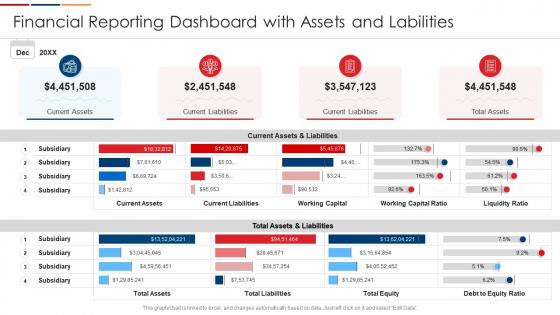
Financial reporting dashboard snapshot with assets and labilities




Try Before you Buy Download Free Sample Product
 Impress Your
 Audience
 100%
100% Editable
 Save Hours
 of Time


Our Financial Reporting Dashboard With Assets And Labilities are topically designed to provide an attractive backdrop to any subject. Use them to look like a presentation pro.
People who downloaded this PowerPoint presentation also viewed the following :
Financial reporting dashboard snapshot with assets and labilities with all 7 slides:
Use our Financial Reporting Dashboard Snapshot With Assets And Labilities to effectively help you save your valuable time. They are readymade to fit into any presentation structure.





FAQs for Financial reporting dashboard snapshot with
So you need the four main statements - balance sheet, income statement, cash flow, and equity changes. The notes are actually super important though, that's where all the juicy details hide about your accounting methods and big transactions. Don't forget to include some management discussion so people understand what the hell the numbers actually mean. Oh, and definitely show comparative periods from previous years so stakeholders can spot trends. Honestly, nail those four core statements first, then worry about all the extra documentation later. Makes the whole process way less overwhelming.
So GAAP and IFRS can totally mess with your financials in different ways. GAAP's super rule-heavy while IFRS is more about principles - sounds boring but it actually changes when revenue shows up on your books. Lease accounting gets weird too. Oh and here's something that always catches people - LIFO inventory is fine under GAAP but IFRS won't touch it. Gets really annoying when you're trying to compare your numbers to international competitors. Honestly, just double-check which standard you're using because it's not some tiny detail. Your bottom line actually shifts.
Look, investors basically want to know where their money's going - pretty reasonable ask, right? Clear financial reports show them exactly that. Regular updates build trust over time, and detailed breakdowns let them spot real risks vs opportunities. Here's the thing though: don't wait for them to find problems themselves. Call out any weird trends upfront. I always think of it like explaining your business to that one friend who's actually good with money. They're smart enough to get it, but they need the real story. Honest reporting = confident investors. Simple as that.
Dude, financial reporting tech has gotten SO much better lately. Real-time reports instead of waiting forever, AI catching weird stuff in your data, automated collection so you're not manually entering everything. Cloud platforms actually let teams work together without the usual chaos. Short sentences work. Excel nightmare days are pretty much over (finally!). The analytics side helps you catch problems early too. Just make sure whatever you pick plays nice with what you already have - nobody needs another system that doesn't talk to anything else.
Honestly, you've gotta nail down your internal controls first - that's where most people mess up. Get clear approval processes going and make sure nobody's handling everything alone. Monthly account reconciliations are non-negotiable, maybe weekly if you're doing high volume stuff. Documentation will literally save you when things go sideways later. I'd also spring for independent audits even if you don't technically need them yet. Train your team on whatever accounting policies you pick, then actually stick to them (shocking concept, right?). Start by figuring out where your current process breaks down - that'll show you what needs fixing first.
Look, don't mess with the numbers to make things look prettier - that's how companies end up in massive scandals. Be transparent about stuff that could affect decisions, even when it sucks. I know there's always pressure to make the financials look better than they actually are. Stay independent from personal interests though. Following accounting standards protects you and everyone else involved, not just for compliance reasons but because it's the right thing to do. Oh, and when you're unsure? Go with transparency every time.
Look, your financial reports are basically your company's report card to investors. Beat those quarterly numbers? Stock goes up. Miss them? It drops - sometimes hard. But here's the thing that gets overlooked: presentation matters almost as much as the actual numbers. Investors get spooked by messy or confusing reports, even when your business is doing fine. Clean, straightforward communication keeps analysts happy and builds trust with the big institutional players. Honestly, I'd approach your financial reporting like you're selling something - because you kind of are.
Honestly, just stick to the basics they'll actually get. Revenue growth, profit margins, cash flow - that's what shows if you're winning or not. Skip all the fancy accounting stuff unless you want blank stares. Throw in some operational metrics that tie back to money, like how much it costs to get new customers. Keep ratios dead simple - debt-to-equity, ROI, stuff like that. The whole point is making numbers mean something to them. Oh, and connect everything back to actual business decisions they can make.
Track your cash flow every week and compare it to what you projected monthly - that's seriously where you'll catch problems early. Don't just stare at profit/loss like most people do. Your balance sheet and cash flow statements? That's the real deal. I almost went broke once despite being "profitable" because I wasn't watching actual cash movement - learned that lesson fast! These reports help you figure out which products actually make you money and when your busy times really are. Set up something simple in QuickBooks so you're not drowning in random spreadsheets every time you need to check numbers.
Ugh, data migration is the absolute worst part. Your current systems probably can't handle the new reporting format, so you're looking at major overhauls. Staff training takes forever too - IFRS 17 feels like learning Mandarin sometimes. Plus you've got that fun parallel reporting period where you're doing everything twice. Honestly, the timeline crunch gets everyone panicked. Oh, and budget way more for training than you think - I've seen companies get burned on that. Start planning like 6 months earlier than seems reasonable. Trust me on this one.
So basically, when the economy tanks, your financial reports get messy fast. Bad debt goes up, assets lose value, revenue drops - the usual nightmare. Market swings also screw with how you value investments and derivatives. Here's the annoying part: you've got to figure out what's just economic chaos versus actual problems with the business. Gets super tricky when you're trying to forecast anything meaningful. Honestly? I'd always look at your numbers alongside what's happening economically. Maybe throw in some scenario planning too - helps when everything's unpredictable.
Dude, the SEC will absolutely destroy you if you mess up financial reporting. Fines can be massive, and executives sometimes face criminal charges - no joke. Your credibility gets trashed with investors and lenders, which tanks your stock price. Getting delisted is a real possibility too. The worst part? Future funding becomes nearly impossible once you're on their radar. I've seen companies never recover from this stuff. Make sure your finance team knows what they're doing and stays on top of requirements. Way better than dealing with that nightmare later.
Charts and graphs are honestly a game-changer for financial presentations. Nobody wants to stare at spreadsheet hell when you can show the same info visually. Bar charts work perfect for quarterly comparisons. Pie charts? Great for breaking down where your revenue's coming from. I learned this the hard way after watching people's eyes glaze over during a budget meeting last year - brutal. Your board will actually pay attention instead of checking their phones. Seriously, swap out like a third of those data tables for visuals next time.
Don't rush your month-end close - that's where mistakes happen. Inconsistent coding will bite you later, trust me. Reconcile accounts regularly instead of letting stuff pile up. Document everything properly because future you will hate past you if you don't. Templates for recurring entries are a lifesaver. Standardize your chart of accounts early on. Manual processes are honestly the worst - automate whatever you can. Build review checkpoints before you finalize anything. Create a closing checklist and actually use it. Oh, and tackle discrepancies monthly - waiting until year-end is pure chaos.
So audit requirements basically make companies stay honest with their financials. Companies know auditors will dig through everything, so they're way more careful about recording stuff properly. It's like when you know someone's gonna check your work - you actually double-check things! Plus audits catch mistakes and sketchy behavior that might slide by otherwise. Investors love this because they can actually trust the numbers they're seeing. The whole point is creating accountability. Companies can't just throw together financial statements and hope for the best since they know everything's getting verified later.
-
Excellent work done on template design and graphics.
-
The Designed Graphic are very professional and classic.
-
It saves your time and decrease your efforts in half.