


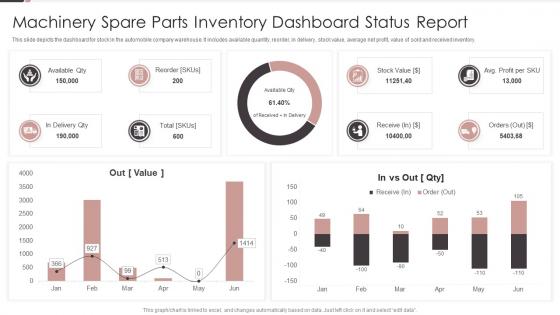
Machinery Spare Parts Inventory Dashboard Status Report




Try Before you Buy Download Free Sample Product
 Impress Your
 Audience
 100%
100% Editable
 Save Hours
 of Time


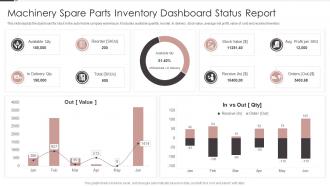
This slide depicts the dashboard for stock in the automobile company warehouse. It includes available quantity, reorder, in delivery, stock value, average net profit, value of sold and received inventory.
People who downloaded this PowerPoint presentation also viewed the following :
Machinery Spare Parts Inventory Dashboard Status Report with all 7 slides:
Use our Machinery Spare Parts Inventory Dashboard Status Report to effectively help you save your valuable time. They are readymade to fit into any presentation structure.





FAQs for Machinery Spare Parts Inventory
Honestly, it's all about not tying up your cash in stuff that just sits there. I'd start by figuring out which parts actually matter - like the ones that'll shut down your whole operation if they break. Those need bigger stock levels obviously. Pull up your maintenance records to see what you actually use instead of just winging it. ABC analysis is pretty solid for this - watch your A-level items like a hawk, but don't stress as much about the small stuff. Oh, and definitely do inventory audits because you'll be shocked at the random parts hiding in corners. Set up reorder alerts so you're not panicking when something dies on a weekend.
Look, faster inventory turnover is basically your friend here. You're moving parts quicker, so less cash gets stuck in random junk sitting on shelves forever. Quick turnover usually means you're stocking stuff your techs actually use - which is half the battle, honestly. It also keeps you aware of what's breaking when, though let's be real, equipment timing is still pretty unpredictable. The trick? Stock enough critical parts without going overboard on slow movers. I'd track turnover by category and tweak your reorder points from there. Gets way easier once you find that balance.
Honestly, tech is a game-changer for parts inventory. Predictive analytics shows you what'll break before it actually does - saved my butt so many times. IoT sensors are clutch too, they literally ping you when components start wearing down. RFID tracking is amazing because you'll never lose expensive parts in the warehouse again (we've all been there). The software handles reordering automatically when you're running low. Plus it flags those random parts collecting dust that you bought once and never needed again. I'd start with whatever plays nice with your current system though.
Honestly, start with your historical data - past usage patterns, equipment age, maintenance schedules. That's your foundation. Then factor in production changes, seasonal stuff, and any planned upgrades. Most CMMS systems can automate the heavy lifting, which is nice because who has time for endless spreadsheets? Set your reorder points based on lead times plus some safety stock for critical parts. Here's what I'd do differently though - treat a cheap gasket totally different from an expensive motor. Critical parts need tighter forecasting. Non-critical ones? Just don't run out.
Look at your demand patterns first - figure out which parts just sit there collecting dust and tweak those reorder points. ABC analysis works great for focusing on your expensive stuff where you really need tight controls. Honestly, consignment deals are a game changer if you can swing them. Suppliers keep the inventory, you only pay when you actually use it. Way less cash tied up. Get alerts set up for anything that hasn't moved in 6+ months so you can return or repurpose it. Your maintenance guys are gold here - they'll tell you what's actually critical versus what someone *thinks* might be needed someday.
So basically, your classification system is what determines your whole stocking strategy. Critical stuff that shuts everything down? Stock those heavily - motor bearings, control components, that kind of thing. Essential parts get medium stock since they hurt but won't kill you. Non-essential items you can just order when needed, honestly. The real pain is getting everyone on the maintenance team to actually agree on what goes where - good luck with that! I'd start by figuring out what each part failure actually costs you in downtime, then work backwards from there.
Start with inventory turnover ratio - tracks how fast parts are actually moving. Then stockout frequency and fill rate percentage. Service level matters too, basically whether you can fulfill requests right away. Your CFO will love seeing carrying costs as a percentage of inventory value. Lead time and forecast accuracy catch supply chain problems early. Oh, and obsolete inventory percentage is crucial - learned that the hard way when we found $30K in parts for old equipment nobody uses anymore. Those metrics should get you started, then you can add more once you're comfortable with the data flow.
Honestly, the worst part is never knowing when demand will spike or tank. Lead times are insane for specialty parts too. You're always stuck choosing between tying up cash in inventory or risking expensive downtime when something breaks. Don't even get me started on obsolescence - machines get upgraded and boom, you've got worthless stock sitting there. Emergency orders constantly wreck your planning, and tracking everything across sites is a nightmare. Here's what actually works though: figure out which parts are absolutely critical first. Then set your safety stock using real failure data instead of just guessing.
Honestly, start with the critical stuff first and get tight with your suppliers for quick deliveries. Have them manage your inventory - they watch stock levels and refill before you're out. Data analytics help predict when things might fail, so you can do maintenance during planned downtime instead of scrambling. The real trick is not getting burned by emergencies - trust me, you don't want production stopped for days over some cheap part! I'd test it with non-critical components first. See how reliable your suppliers actually are, then slowly move to the important stuff.
Your spare parts game lives or dies by supplier relationships, no joke. Good partners will tip you off about shortages before they hit and bump your urgent orders to the front of the line. Real-time stock updates become automatic when they actually like working with you. Consignment deals are where it gets interesting though - they'll literally manage inventory accuracy for you if the relationship's solid enough. I'd focus on maybe 3-5 key suppliers first. Set up regular calls with them, not just when you need something. Trust me, it's worth the time investment.
Look at your historical data - usage patterns, equipment age, maintenance schedules. That stuff actually tells you when parts will break instead of just winging it. ML algorithms catch trends you'd totally miss, like how certain components always crap out during busy seasons or right after maintenance (weird but true). Start with your 20% most critical parts first. Build models around utilization rates and failure patterns. Honestly, the data beats guessing every time, plus you won't have excess inventory just sitting there forever. Way better than dealing with surprise stockouts when everything breaks at once.
Oh man, spare parts and environment stuff is such a headache! You're trying not to waste money on parts that'll just sit there and go bad, but then your equipment breaks and you're scrambling with overnight shipping - which is terrible for carbon footprint btw. I'd focus on decent storage so things last longer, rotate anything with expiration dates, and honestly? Refurbished parts work great most of the time. The real game-changer is getting your forecasting down so you're not always in panic mode ordering stuff. Way less stressful that way.
Training your team is huge - honestly the difference between success and total chaos. Proper cataloging and storage procedures prevent so many headaches down the road. Your inventory tracking gets way more accurate when people know what they're doing. I've watched places fall apart because untrained staff created duplicate entries for identical parts (absolute procurement nightmare btw). Good training means fewer misplaced components and better stock rotation. People catch problems early too - like obsolete junk hogging space or running low on critical stuff. Yeah, it costs upfront but saves you through less downtime.
Check out CMMS software like Fiix or UpKeep - they're made for spare parts tracking and handle all the weird maintenance stuff way better than regular inventory systems. SAP and Oracle exist but they're honestly massive overkill unless you're running like a huge operation. Maintenance Connection is solid too. These track your usage patterns and figure out reorder points automatically, plus they sync with maintenance schedules which is pretty sweet. For smaller shops, Fishbowl might work fine. I'd make a list of what features you actually need first, then demo maybe 2-3 options before deciding.
Get your reorder points dialed in first - base them on lead times and how fast you actually use stuff. Track consumption for 6-12 months minimum to get real data, not guesses. ABC analysis is clutch for figuring out which parts will kill your production line. Spreadsheets work fine when you're starting out, but honestly? Inventory software will save your sanity later. Usage changes constantly, so review quarterly. Oh, and set monthly reminders to check your top 20 parts - future you will thank present you.
-
Top Quality presentations that are easily editable.
-
These stunning templates can help you create a presentation like a pro.