


Fixed Asset Management Process Flowchart




Try Before you Buy Download Free Sample Product
 Impress Your
 Audience
 100%
100% Editable
 Save Hours
 of Time


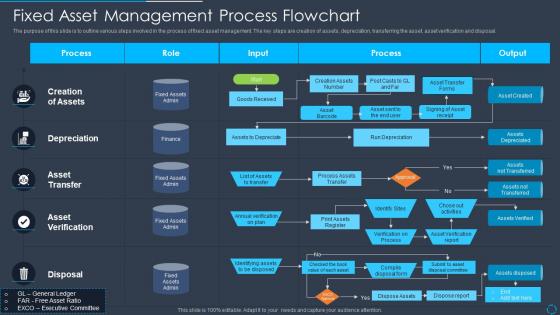
The purpose of this slide is to outline various steps involved in the process of fixed asset management. The key steps are creation of assets, depreciation, transferring the asset, asset verification and disposal.
People who downloaded this PowerPoint presentation also viewed the following :
Content of this Powerpoint Presentation
Have you ever wondered how organizations monitor and manage their important assets to ensure peak performance and financial stability? It is the Fixed Asset Management Process, which includes the acquisition, monitoring, maintenance, and disposal of long-term physical assets such as buildings and equipment. It ensures optimal use, reduces costs, and maintains compliance. Key tasks include purchase, tracking, maintenance, depreciation, and disposal, all to increase operational efficiency and effectiveness.
Improve your business efficiency with the 3-Phase Fixed Asset Management Process. Click here to enhance your asset management strategy!
The Fixed Asset Management Process Flowchart PowerPoint Presentation by SlideTeam is a fantastic resource for delivering data-driven asset management insights. It allows firms to efficiently visualize and explain complicated information. This PPT Deck will help ensure correct paperwork, approval procedures, and accurate financial reporting.
Grab this must-have for companies to keep detailed records, maximize the use of their assets, and make their finances more transparent and accountable.
Seeking to revolutionize asset management? Click here to transform your process!
Template 1: Fixed Asset Management Process Flowchart
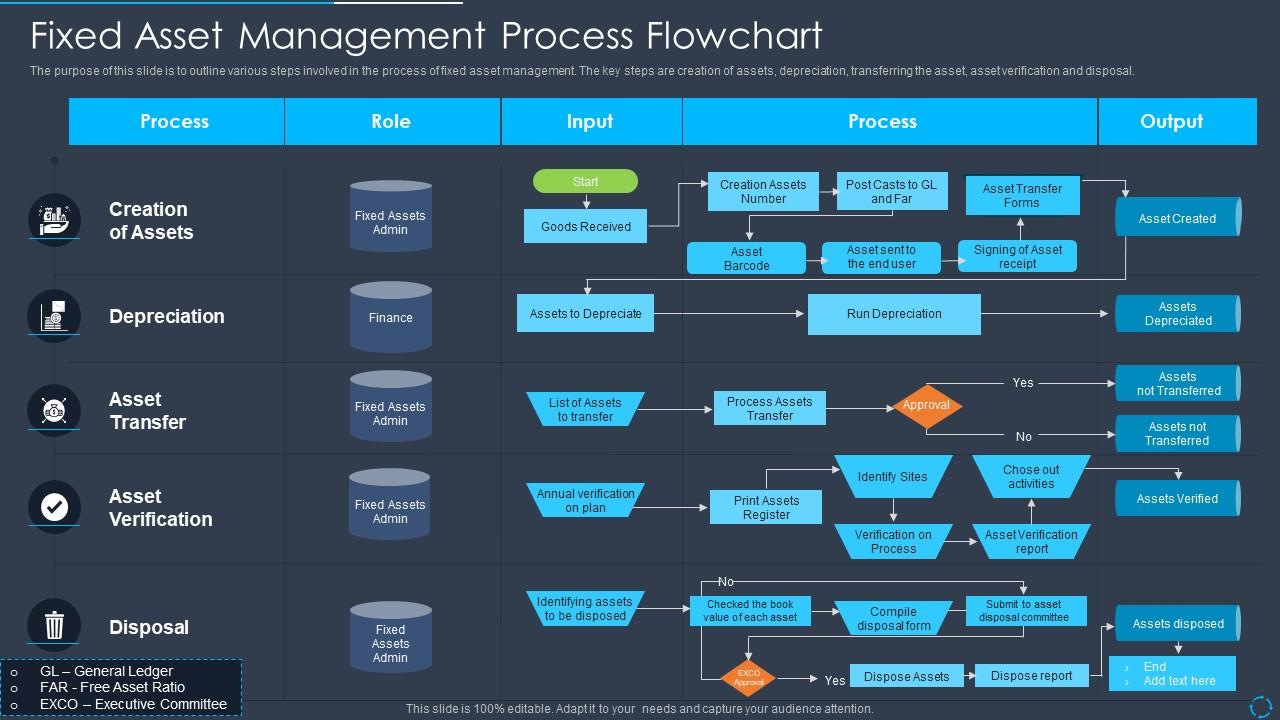
This PPT Layout explains the essential processes of fixed asset management, including asset production, depreciation, transfers, verification, and disposal. This presents an organized approach to asset management. Use this presentation to describe the process from beginning to end: from receiving assets to disposal, with important duties like depreciation and verification in between. Download today and lead your company to success.
Conclusion
Use SlideTeam's PPT Templates to walk through each stage of asset management, from creation to disposal. Understand how Fixed Assets Administration, Finance, and other departments work to keep things in order. Don't wait; download now and modify your approach to fixed asset management.
Interested in refining your asset management skills? Explore the Training Plan for Implementing Fixed Asset Management to boost your operations.
Fixed Asset Management Process Flowchart with all 6 slides:
Use our Fixed Asset Management Process Flowchart to effectively help you save your valuable time. They are readymade to fit into any presentation structure.





FAQs for Fixed Asset
So you'll need four main things to get this working right: asset tracking with tags or barcodes, depreciation calculations, regular physical audits, and disposal procedures. The tracking part is honestly make-or-break because if you don't know what you have or where it is, the rest is pointless. Also - and this might sound obvious but I've seen it go wrong - pick something your accounting people can actually stand using. Nobody wants to deal with cranky accountants! Start with documenting what you currently have, then add the other pieces. Getting that foundation solid first will save you tons of headaches later.
RFID tags and barcode systems are your best bet for tracking assets automatically. Cloud software syncs everything in real-time so you're not stuck with spreadsheets. GPS works amazing for vehicles and equipment that moves around - honestly can't believe more companies don't use it. Your phone becomes your dashboard for checking locations, maintenance schedules, all that stuff. Manual tracking is such a time sink and you'll mess up the data anyway. Pick whatever solves your worst problem first, then add more tech later. Way better than chasing down missing equipment constantly.
Honestly, asset tracking is a total pain - stuff just vanishes into thin air. Manual processes are the worst culprit here, creating ghost assets and compliance headaches. First thing I'd do? Audit what you actually have vs what's in your system. That gap will tell you everything. Then get some barcode or RFID tags going with decent tracking software for real-time updates. Regular physical audits help too, even though they're tedious. Automate maintenance schedules if you can, and drill proper check-in/check-out procedures into everyone's heads. Trust me, standardize your processes first before buying fancy tech - learned that one the hard way.
So depreciation messes with three parts of your financials. Your income statement takes a hit because it counts as an expense - but weirdly, no actual cash leaves your account. Then your balance sheet shows your assets losing value through accumulated depreciation. The cash flow statement is where it gets interesting though - you add depreciation back since you never actually spent that money. I always found that part counterintuitive at first. Just keep tabs on it because your company might look less profitable on paper while you're still generating decent cash.
Asset auditing is honestly just a sanity check for your inventory records. You'd be shocked how often what's on paper doesn't match reality - stuff gets moved, breaks, or mysteriously vanishes. These checks help you figure out what's actually working versus what's dead weight taking up space. Plus you can plan replacements better and avoid budgeting for equipment that died three years ago. I'd start with quarterly reviews of your most important stuff rather than overwhelming yourself with everything at once. Way more manageable that way.
Honestly, you've got to get your tracking and documentation game together first. Set up solid classification and capitalization policies that match GAAP or IFRS standards. Physical counts are a pain but auditors eat that stuff up - they want to see your records actually match what's sitting there. Depreciation schedules need to stay on point, and keep detailed records for taxes (obviously). A good asset management system will save your sanity - it'll spit out compliance reports automatically and ping you when something needs attention like disposals. Trust me, the upfront work pays off when audit season rolls around.
Dude, you're basically throwing money away without proper asset tracking. You won't buy duplicate equipment when you already know what you have. Catching maintenance problems early beats paying for major repairs later - trust me on this one. Better depreciation records = tax savings, and you can spot which assets aren't pulling their weight. Honestly, most companies have no clue where half their stuff even is. An asset audit sounds boring but you'll find equipment you forgot you owned. Insurance costs drop when you actually know what needs coverage. It's unsexy work that saves serious cash.
Look, I'd do full valuations once a year minimum, but quarterly makes more sense if you've got expensive stuff or things that lose value fast. Market comparison is usually your best bet when you can find similar sales data. Cost approach works well for weird specialized equipment where there's not much market info. Oh, and income approach is solid for anything that actually makes you money. Honestly depends on what kind of assets you're dealing with though - there's no magic formula. I'd start with whatever method gives you the most reliable data, and maybe get outside appraisals for your biggest items.
Look at three big things: economic life, physical condition, and how outdated the tech is getting. When maintenance costs start eating into what the asset actually produces for you - that's when you know it's time. Physical wear is pretty obvious, but honestly? Tech obsolescence will blindside you if you're not careful (I swear our old server setup taught me that lesson the hard way). Check your real usage patterns vs what the manufacturer says. Any regulatory stuff you need to worry about? See if newer models actually give you better efficiency. Run the numbers - current maintenance vs replacement benefits. That'll tell you everything.
So manufacturing companies own crazy expensive stuff - like those million-dollar machines that stamp car parts. They're obsessed with maintenance schedules because downtime = disaster. Retail's totally different though. Store fixtures, cash registers, tablets that break every few years. They just swap things out fast and keep everything standard across locations. The depreciation gets weird too - manufacturing equipment lasts decades while retail tech becomes obsolete super quick. I learned this the hard way helping my cousin's shop. Bottom line: your accounting needs to match what you actually own and how long it'll last.
Dude, bad asset management will totally screw your cash flow. Companies buy equipment they don't need and tie up money that could go elsewhere. Then there's the flip side - skipping maintenance on important stuff until it breaks down. Emergency repairs are expensive as hell! Also, most people mess up depreciation tracking which means you're losing tax breaks and don't know when to replace things. Honestly, I'd start with just figuring out what assets you actually own and checking if they're falling apart. Sounds boring but it'll save you headaches later.
Start by mapping your fixed asset data to match your GL chart of accounts - sounds boring but it's crucial. Most ERPs have integration modules built in, though the initial setup is honestly kind of a nightmare. I'd focus on getting the main stuff automated first: asset additions, depreciation postings, disposals. They should sync automatically with your financial system once it's dialed in. Set up solid data validation rules from day one or you'll hate yourself later when things don't match up. Oh, and definitely run parallel reports for a few months before you trust it completely - learned that one the hard way.
So first thing - actually review your asset register regularly to catch outdated stuff. Most places are horrible at this and literally have warehouses of useless junk sitting around. Document your maintenance and inspections properly so you can make smart disposal calls later. Before tossing anything, check if it has resale value - sometimes you'd be shocked what people will buy or what you can donate for tax benefits. Remove disposed items from your books right away and keep those disposal records. Oh, and set up quarterly reviews or you'll forget about this completely.
Look, your staff are the ones touching these assets every single day. Good training means they'll actually tag things right and follow tracking procedures - plus they'll understand why it matters instead of just checking boxes. Honestly, I've watched teams slash their missing asset problems by 60% just from decent training. People give a damn when they get why they're doing something. The trick is connecting it to their actual work, not making it feel like another pointless meeting they have to endure.
Honestly, AI asset tracking is where it's at right now - the predictive maintenance stuff can save you from those nightmare breakdowns. IoT sensors are dirt cheap now too, so you can monitor vibration, temperature, whatever in real-time. Most companies are ditching those awful on-premise systems for cloud platforms (finally!). Oh, and heads up - sustainability reporting is becoming mandatory for a lot of businesses. Your asset management will need to track carbon footprints and disposal impacts. I'd start looking into this stuff soon before you're scrambling to catch up later.
-
Amazing variety of PowerPoint slides. Really helpful in designing professional presentations.
-
SlideTeam’s readymade presentations have landed my unique images with my bosses in the past and it continues to reward me.