


Fixed Asset Management Process Flow Implementing Fixed Asset Management




Try Before you Buy Download Free Sample Product
 Impress Your
 Audience
 100%
100% Editable
 Save Hours
 of Time


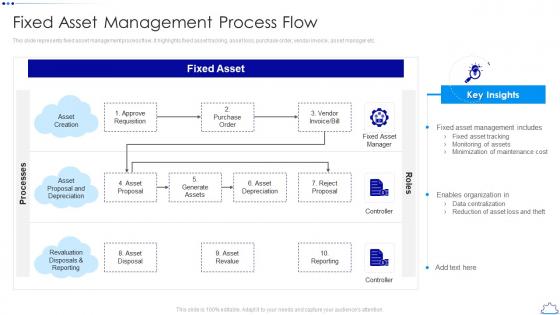
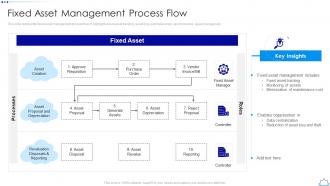
This slide represents fixed asset management process flow. It highlights fixed asset tracking, asset loss, purchase order, vendor invoice, asset manager etc.
People who downloaded this PowerPoint presentation also viewed the following :
Fixed Asset Management Process Flow Implementing Fixed Asset Management with all 6 slides:
Use our Fixed Asset Management Process Flow Implementing Fixed Asset Management to effectively help you save your valuable time. They are readymade to fit into any presentation structure.





FAQs for Fixed Asset Management Process Flow Implementing
Look, you've got four must-haves for this to actually work: asset tracking (seriously, know what you own and where it lives), lifecycle management from purchase to disposal, solid valuation/depreciation math, and regular physical audits. Most companies totally bomb the tracking part - can't manage what you can't find, right? Don't forget maintenance scheduling and compliance stuff too. Without all these pieces talking to each other, you're gambling with millions in equipment. Oh, and start with getting your asset registry locked down first. Everything else builds from there.
Most companies use fixed asset software or their ERP system to handle this automatically. You just plug in the asset cost, how long it'll last, and salvage value - then it calculates monthly depreciation using straight-line, declining balance, whatever method you pick. NetSuite and SAP are popular, though honestly smaller companies do fine with detailed Excel spreadsheets. Keep good records of purchase dates and where everything's located. The real trick is setting up those automated monthly entries so you're not doing everything manually at year-end. Trust me, your future self will thank you.
Honestly, tech just handles all the boring crap you don't want to do - like tracking when stuff depreciates or scheduling maintenance. RFID tags are game-changers. No more walking around with clipboards like some kind of caveman. Asset management software shows you everything in real-time: purchase dates, condition, the works. It'll even ping you when inspections are due. Here's the thing - you catch problems early instead of dealing with expensive disasters later. My buddy swears by even basic barcode scanners. Way better than Excel hell.
Track everything for each asset - when you bought it, what it cost, how you're depreciating it, disposal dates if applicable. Consistency is huge with depreciation calcs, and stick to whatever standards you need (GAAP or IFRS). Most compliance disasters I've witnessed? Sloppy records, not rule confusion. Do monthly reconciliations between your asset register and GL. Document impairment tests and any changes to useful life estimates - auditors love that stuff. Honestly, just start by cleaning up your current asset records first. Fix the mess now before it bites you later.
Manual tracking is where things go sideways fast - you're gonna lose stuff and mess up data entry constantly. Once you hit like 50+ assets, spreadsheets turn into pure chaos. Barcode or RFID tags are game changers here, pair them with mobile apps for scanning. Do regular physical counts to catch problems early. I'd assign assets to specific departments so someone's actually responsible for them. Oh, and set up alerts for maintenance stuff so you don't forget about equipment until it breaks. Start with your expensive gear first, then work down.
Look, audits catch all the mess that builds up - missing equipment, stuff you wrote off but people still use, junk collecting dust. It's wild how much random crap piles up when nobody's watching. You'll stay on top of compliance too, plus get solid numbers for budgeting. I mean, bad data makes for terrible decisions, right? Annual audits work fine, but quarterly is way better if you can manage it. Trust me, the time investment pays off when you're not scrambling to find where half your assets went.
Honestly, automated asset management is a game changer - saves so much time and keeps you compliant without the stress. Real-time tracking of everything, automatic depreciation calc, way better than those error-prone spreadsheets we all know and hate. Lost equipment becomes way less of an issue, audits don't suck anymore, and your finance people will actually thank you for once. The reporting features alone make it worth it. Oh, and before you dive into shopping around - figure out what's driving you most crazy right now. That'll help you focus on the features that actually matter instead of getting distracted by all the bells and whistles.
Look, tracking your assets properly is a game changer for your finances. You get accurate depreciation numbers, which means your books stay clean and you maximize those tax write-offs. Catching maintenance issues early saves you tons - way better than scrambling when something completely dies on you. Honestly, I learned this the hard way with our old equipment. When you actually know what you own and what it's worth, buying decisions become so much clearer. Repair or replace? Easy call when you have the data. Plus insurance claims go smoother. Do a walkthrough of your major stuff this quarter and get it all documented.
Your fixed asset management is basically controlling your tax bill through depreciation choices and timing. Purchase timing matters - buy stuff at the right time to max out this year's deductions. Then you've got different depreciation methods to pick from (straight-line vs accelerated), plus bonus depreciation and Section 179 deductions can seriously slash what you owe. Honestly, Section 179 is probably underused by most people. Good tracking means you won't miss deductions or mess up by double-counting expenses. Start by checking your asset register - make sure you're actually using the best depreciation methods available.
Definitely make that inventory list first - saves so much hassle later. I'd go location by location with your phone or scanner for barcodes. The scanning gets weirdly addictive after a while lol. Take pics of anything sketchy you find. Missing stuff, damage, things that migrated to random places - write it all down right then and there. Your memory will fail you, trust me. Oh and loop in the department heads! They actually know where Bob from accounting stashed that extra monitor. Don't try doing this solo or you'll miss half the stuff.
So basically, companies look at manufacturer specs and industry benchmarks to figure this out. Your accounting folks probably check IRS guidelines too since they give standard timeframes for different stuff. But honestly? It's kinda subjective - like that delivery truck might die in 5 years if it's doing city runs all day, but last 8 years on easier suburban routes. We always used historical data from similar equipment we'd owned before. Just stay consistent with whatever method you pick and write down your reasoning. Trust me, auditors will grill you about it later and you don't want to be scrambling for answers.
So IFRS totally changes how you deal with fixed assets versus local GAAP. You'll hit different depreciation methods, more frequent impairment testing, and new ways to value stuff after you first record it. The component depreciation thing is honestly a pain - breaking down equipment into separate parts with different lifespans. Creates way more paperwork but yeah, it's more accurate I guess. Short sentences hit different than longer ones that actually flow naturally when you're explaining complex accounting stuff. Don't wait if you're going international though. Getting your asset processes aligned early saves you from nightmare reconciliations down the road.
Honestly, start by figuring out your top 3 most underused assets - that's where you'll see the biggest wins. Track stuff like how often things actually get used, downtime, and what you're spending on maintenance. Regular check-ins help you spot equipment that's just collecting dust (maybe move it somewhere useful or sell it). Good data tracking is everything here - otherwise you're just guessing. Set up maintenance schedules so things don't randomly break on you. Oh, and see if departments can share expensive equipment that sits around a lot. Makes a huge difference once you get the hang of it.
So basically, internal controls are like having a good security system for your fixed assets. You'll want to separate who can buy stuff from who records it - prevents sketchy situations. Physical counts are huge too, gotta match what's actually there with what's on paper. And don't let just anyone authorize selling equipment, that needs proper approval levels. Honestly, I've seen companies get burned when assets just vanish because nobody was paying attention. Document what you're doing now first. Then figure out where things could slip through the cracks.
Timing is everything when you're selling off old equipment. First check if anyone else in your company could actually use it - saves you the hassle. Then shop around instead of taking the first offer. Auction houses, online marketplaces, specialized resellers who actually know your stuff. For tech gear, spend the money on proper data wiping - trust me, it's worth it for better prices. Keep all your paperwork for taxes since you'll have gains or losses to report. Oh, and start this whole process way earlier than you think you need to. Being desperate never gets you top dollar.
-
The best collection of PPT templates!! Totally worth the money.
-
Keep doing the good work guys. Surpass the needs and expectations always!!