

Expenditure Powerpoint Presentation Slides





Try Before you Buy Download Free Sample Product
 Impress Your
Audience
 100%
Editable
 Save Hours
of Time


Our Expenditure Powerpoint Presentation Slides keep you fresh as a daisy. Fatigue will never ever hamper you.
People who downloaded this PowerPoint presentation also viewed the following :
Content of this Powerpoint Presentation
Slide 1: This slide introduces Expenditure. State the name of your company and proceed.
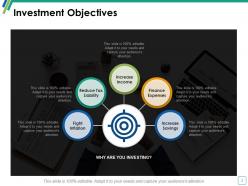
Slide 2: This slide shows Investment Objectives such as- Increase Income, Finance Expenses, Increase Savings, Fight Inflation, Reduce Tax Liability.
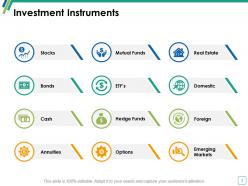
Slide 3: This slide shows Investment Instruments- Stocks, Bonds, Cash, Annuities, Mutual Funds, ETF’s, Hedge Funds, Options, Real Estate, Domestic, Foreign, Emerging Markets.
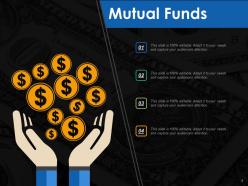
Slide 4: This slide shows Mutual Funds with imagery and text boxes.
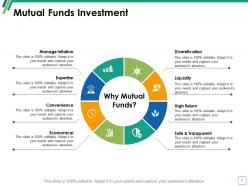
Slide 5: This slide shows Mutual Funds Investment with the following components- Manage Inflation, Expertise, Convenience, Economical, Diversification, Liquidity, High Return, Safe & Transparent.
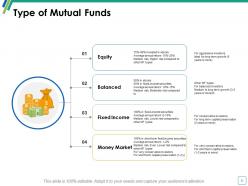
Slide 6: This slide shows five Type of Mutual Funds- Balanced, Fixed Income, Money Market, Equity.
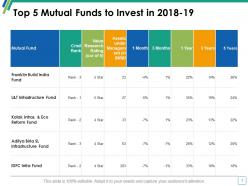
Slide 7: This slide shows Top 5 Mutual Funds to Invest in 2018-19 in a tabular form. Use as per your requirement.
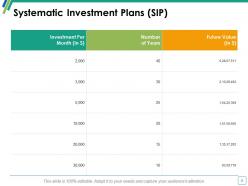
Slide 8: This slide shows Systematic Investment Plans (SIP) table.
Slide 9: This slide shows Exchange Traded Funds with imagery and text boxes. Add in your own as per your requirement.
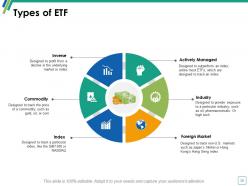
Slide 10: This slide shows Types of ETF stated as- Commodity, Inverse, Index, Actively Managed, Industry, Foreign Market.
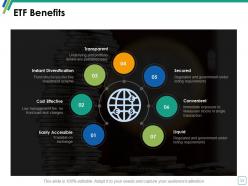
Slide 11: This slide shows ETF Benefits which include- Easily Accessible, Cost Effective, Instant Diversification, Transparent, Secured, Convenient, Liquid.
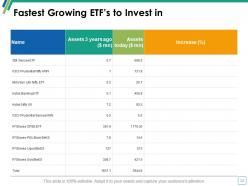
Slide 12: This slide presents the stats of Fastest growing ETF’s to invest in a tabular form.
Slide 13: This slide is titled as Bonds.
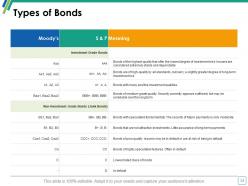
Slide 14: This slide shows Types of Bonds.
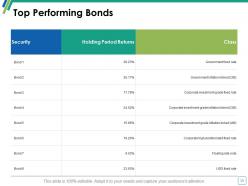
Slide 15: This slide shows Top Performing Bonds as per the following parameters to be used for analysis- Security, Holding Period Returns, Class.
Slide 16: This slide displays Stocks with imagery and text boxes. Add relevant data in the given text boxes.
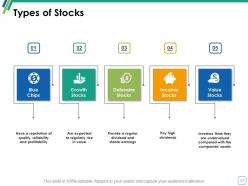
Slide 17: This slide shows Types of Stocks- Value Stocks, Blue Chips, Growth Stocks, Defensive Stocks, Income Stocks.
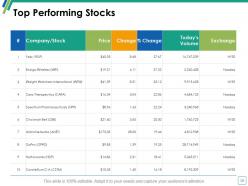
Slide 18: This slide presents Top Performing Stocks data in a tabular form.
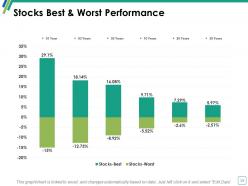
Slide 19 This slide displays Stocks Best & Worst Performance graphically. Use it to showcase your own stock performance.
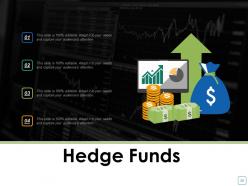
Slide 20: This slide shows Hedge Funds with imagery and text boxes.
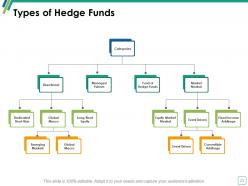
Slide 21: This slide shows Types of Hedge Funds flow chart. We have mentioned a few of its categories which you can make use of according to your need.
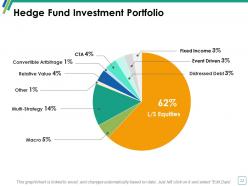
Slide 22: This slide shows Hedge Fund Investment Portfolio pie chart.
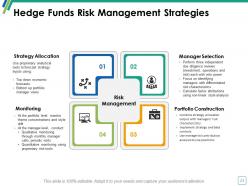
Slide 23: This slide presents Hedge Funds Risk Management Strategies with Risk Management which further shows- Strategy Allocation, Monitoring, Manager Selection, Portfolio Construction.
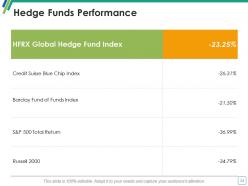
Slide 24: This slide shows Hedge Funds Performance in a tabular form.
Slide 25: This is an Expenditure Icon Slide. Alter these icons as per your requirement as use it.
Slide 26: This is a Coffee Break slide to halt. You may change it as per requirement.
Slide 27: This is an Additional Slides to proceed further. You may change the slide content as per need.
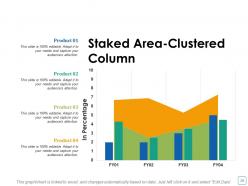
Slide 28: This is a Stacked Area- Clustered Column slide to present product/ entity comparison, specifications etc.
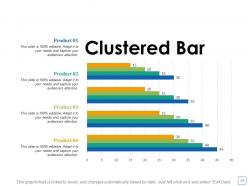
Slide 29: This slide shows a Clustered Bar for product/ entity comparison.
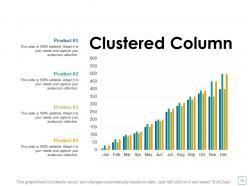
Slide 30: This is a Clustered Column chart slide to present product/ entity comparison, specifications etc.
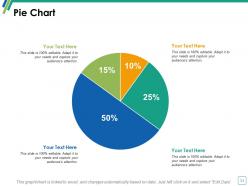
Slide 31: This is a Pie Chart slide to present product/ entity comparison, specifications etc.
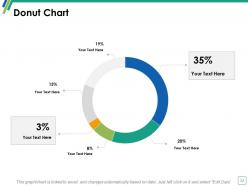
Slide 32: This is a Donut Chart slide to present product or entity comparison, information etc.
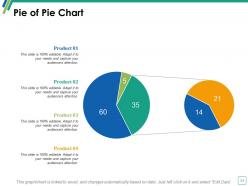
Slide 33: This is a Pie of Pie Chart slide to show product/ entity comparison, specifications etc.
Slide 34: This is Post It Notes slide to be displayed. Show events, important piece of information, events etc. here.
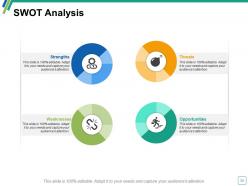
Slide 35: This slide puts forth the SWOT Analysis comprising of- Threats, Strengths, Weaknesses, Opportunities.
Slide 36: This is a News Paper slide to flash company event, news or anything to highlight.
Slide 37: This is a Puzzle pieces image slide to show information, specifications etc.
Slide 38: This is a Target image slide. State targets, etc. here.
Slide 39: This is a Circular image slide to show information etc.
Slide 40: This is a creative Venn diagram slide to show information etc.
Slide 41: This is a Matrix slide to show information, specifications etc.
Slide 42: This is a Mind Map image slide to show behavioral segmentation, information or anything relative.
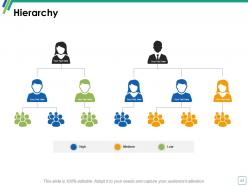
Slide 43: This is a Hierarchy slide to show information, organization structural specifications etc.
Slide 44: This slide shows a Magnifying glass image with text boxes. State information etc. here.
Slide 45: This is a Thank You slide with Address# street number, city, state, Contact Numbers, Email Address.
Expenditure Powerpoint Presentation Slides with all 45 slides:
End the dispute in an amicable fashion with our Expenditure Powerpoint Presentation Slides. Bring the controversy to a close.



FAQs for Expenditure
Honestly, there are like 4 main categories. Fixed stuff that never changes - rent, insurance, car payments, whatever. Groceries, gas, and utilities are necessary but the amounts bounce around. Then you've got the spending that makes life worth living... dining out, entertainment, random purchases. Oh and those annoying things that hit you out of nowhere - car repairs, birthday gifts, yearly subscriptions you forgot about. I swear those are budget killers! Track everything for a couple months though. You'll probably be shocked where your money actually disappears to versus where you think it's going.
Honestly, just start with the basics - operating expenses, capital expenditures, cost of goods sold, admin stuff. Don't overthink it. I've watched so many businesses create these elaborate category systems that nobody uses after like three weeks because they're a total pain. Pick consistent names and make sure your team actually knows what goes where. Five to seven categories max at first. You can always add more later once you're not constantly second-guessing yourself. The whole point is being able to glance at your monthly spending and actually understand it. Simple beats perfect every time.
When inflation hits, people start cutting back on the fun stuff first - restaurants, movies, whatever. Food and rent still gotta get paid, so those eat up more of your paycheck. You'll notice everyone switching to store brands and putting off buying that new car or whatever. Rich people don't feel it as much since they're not spending most of their income on basics anyway. The real problem is when it drags on for months - that's when people actually change their habits long-term, not just temporary belt-tightening.
So fixed expenses are things like rent, insurance, car payments - stuff that's the same every month no matter what. Variable ones change based on what you do - groceries, going out, your electric bill if you blast the AC all summer (guilty). Here's the thing: you can't really mess with fixed costs quickly, but variables? That's where you can cut back fast. I always figure out my fixed stuff first since those have to get paid regardless. Then whatever's left is what I work with for everything else. Variables are honestly your best friend when you need to tighten up spending.
Dude, expense management tech is a total game-changer. Your phone can literally scan receipts now, and everything syncs with your credit cards automatically. No more drowning in spreadsheets! It categorizes stuff instantly and shows you exactly where your money's going in real time. You can set budget alerts so you don't accidentally blow through limits. The receipt scanning thing still feels like magic to me honestly. Reports that used to take hours? Done in seconds. Just make sure whatever you pick plays nice with your accounting software - and good luck getting everyone to actually use it consistently lol.
Track your spending for a week first - you'll be shocked where money goes. I always forget about random subscriptions eating my budget. Cut frequency instead of eliminating stuff completely. So takeout becomes twice monthly instead of weekly. Try the 24-hour rule before buying non-essentials, that one actually works. Call your phone/internet company to negotiate lower bills. Find free alternatives to paid activities when possible. Honestly, small changes feel way less painful than going cold turkey on everything you enjoy.
Learning to manage your money early saves you from so much stress down the road. Track your spending for a week first - you'll be shocked where it all goes. Once you see your patterns, you can figure out needs vs wants and actually stick to a budget. Honestly, avoiding those credit card debt spirals in your twenties is huge. The impulse control stuff you learn now? It'll help you for years when you're saving for big things like your own place or a decent car. Even my friend who's terrible with money wished she'd started tracking expenses sooner.
Oh totally! Money habits are so different across cultures. Japan's all about spending on family and group stuff, while Americans are more "treat yourself" with personal purchases. Religious factors matter too - Islamic countries have completely different banking rules because of sharia law. Debt tolerance varies like crazy between societies. The whole social pressure thing exists everywhere but looks totally different - like what impresses people in one country might seem weird in another. Honestly if you're thinking business expansion, definitely dig into local spending habits first because you could totally whiff on what actually motivates people there.
Honestly, most people totally blow it on irregular stuff - car repairs, random medical bills, that season when literally everyone gets married. Also those yearly payments like insurance that hit you out of nowhere when you're only thinking monthly. Plus all those tiny subscriptions add up crazy fast. I swear everyone has like 12 streaming services they forgot about. What works for me: add a 10-15% buffer for random expenses. Oh, and go through three months of bank statements - you'll be shocked at what recurring charges you'll find lurking in there.
Track literally everything - even that random coffee or box of pens. Seriously helped me catch so much waste. Big wins first though: renegotiate rent, ditch expensive software for cheaper alternatives, cancel unused subscriptions. We were stupidly paying for three project management tools at once! Automate the boring repetitive stuff to cut labor costs. Monthly expense reviews are a game changer - you'd be shocked how fast tiny expenses snowball. Oh, and outsource non-essential work instead of hiring full-time if you can swing it. Saves tons.
So basically, when the government spends money on stuff like roads and bridges, it creates jobs and gets people spending again. That money cycles through the economy - workers buy groceries, pay rent, whatever. Pretty straightforward multiplier effect. Timing's everything though. Recession? Yeah, spend away to stabilize things. But if the economy's already hot, you might just drive up inflation. The tricky part is balancing it all - too much deficit spending today means we're screwed down the road with debt payments. It's like using a credit card to boost your lifestyle, works short-term but...
Honestly, the smartest companies I've seen just question everything from zero - like, why are we even spending this money? Zero-based budgeting is huge. Automate the boring stuff too, those savings are crazy when they stack up. Monthly expense reviews with different teams help catch waste before it spirals. Also renegotiate vendor deals way more than you probably do now. Real-time spending dashboards are clutch. But here's what I'd actually do - find one spending category that makes you go "hmm, that seems high" and just dive deep into those numbers this week. Start there.
Check your program spending ratio first - you want 70-85% going straight to actual programs, not admin stuff. Everyone gets obsessed with fundraising totals, but honestly? Track your outcomes per dollar instead. Way more telling. Try zero-based budgeting each year so you're questioning everything from scratch. Multi-year grants are your friend - gives you actual planning time vs constantly chasing one-off donations. Oh, and definitely look into sharing costs with other orgs for things like office space or back-office functions. Start by going through last quarter's expenses and ask yourself: did this actually move our mission forward?
Honestly, those finance apps are total lifesavers for spending tracking. They automatically sort your transactions and give you actual visual breakdowns - like pie charts showing where your cash went. Way better than squinting at bank statements, trust me. The real-time syncing means you'll catch yourself before blowing too much on takeout or whatever. But here's the thing that really gets you - seeing "$200 on coffee" spelled out just hits different than vaguely knowing you overspend. I'd start with something free like Mint or your bank's app first.
Dude, high debt is like quicksand for your finances. It tanks your credit score, so future loans cost way more. Instead of building wealth, you're just hemorrhaging money on interest payments for years. Banks look at your debt-to-income ratio when you want a mortgage or whatever, and high debt screws that up badly. The stress honestly makes you make even worse money decisions - it's this vicious cycle. What feels manageable now snowballs into something crazy later. Attack your highest-interest stuff first and don't add new debt while you're digging out.
No Reviews