


Capital Expenditure Proposal Powerpoint Presentation Slides





Try Before you Buy Download Free Sample Product
 Impress Your
 Audience
 100%
100% Editable
 Save Hours
 of Time


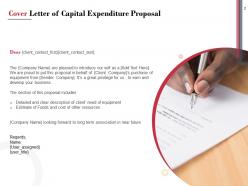
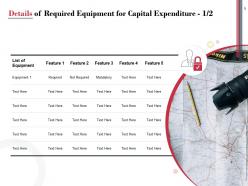
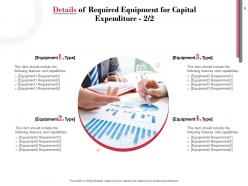
Capital expenditure is used by organizations when they have to estimate the outgoing expenses and incoming revenues frequently. It is just like the financial planning and allocation where the company strategizes and focuses on its economic activities while executing a project. As the expenditure of the business keeps on varying, it is important to record the cost spent on resources and other project-related activities. Creating a proper budget plan for these activities gives an organization an idea of how to save their money and get rid of unnecessary expenditure. Capital expenditure plan makes it easy for the business to organize their upcoming projects as per their expectations. With the help of readymade proposals, most of the organizations can choose their partner who deals with their requirements effectively. Introducing our professionally designed Capital Expenditure Proposal PowerPoint Presentation Slides that helps you to design a winning proposal in less than a minute. Clients generally concentrate on the cover letter of the proposal. So, make sure to make it simple yet informative that holds their interest at first. With the aid of this outwardly engaging capital expenditure proposal PPT layout, you can explain your goals and objectives clearly that helps the client’s organization to grow in the market. Employ our professionally designed capital expenditure proposal presentation template and talk about the process of market research you do while preparing a budget for the client’s business. Describe the details of the required equipment for capital expenditures along with its features and benefits. Bring the client’s attention to your optional extended maintenance coverage for all the purchased equipment. Included here are high-quality icons and visuals with which you can make your proposal even more interesting. Design an astounding proposal from scratch and leave a lasting impression on your client by downloading our easy-to-customize capital expenditure proposal PowerPoint presentation template.
People who downloaded this PowerPoint presentation also viewed the following :
Capital Expenditure Proposal Powerpoint Presentation Slides with all 33 slides:
Use our Capital Expenditure Proposal Powerpoint Presentation Slides to effectively help you save your valuable time. They are readymade to fit into any presentation structure.





FAQs for Capital Expenditure Proposal
You'll want to hit five key things: project description (what you're actually buying/building), detailed costs with all the hidden stuff like installation and training, financial benefits or ROI, timeline, and risks. Honestly, the money part usually makes or breaks these proposals. Why do you need this now instead of waiting? Show them alternatives you looked at too. Oh, and tie everything back to business goals - that's huge. Start collecting quotes early because I swear the numbers always take way longer to figure out than you think they will.
Okay so first thing - map out every single cost you can think of. Equipment, setup, training, permits, all that stuff. The sneaky ones always bite you though, like when systems are down during the switch or you need temp workers. Get quotes from a few different vendors and see what similar companies actually spent. I always tack on like 15% extra because honestly? Something always costs more than you planned. Then just do the math - how long until this thing pays for itself? If the ROI looks sketchy, maybe go smaller or find a different approach entirely.
So you'll want to look at NPV first - that's the actual dollar value you're adding after factoring in time value of money. IRR is honestly my go-to though, gives you that percentage return that's super easy to compare with other investments. Then there's payback period which shows when you'll break even (crucial for cash flow stuff). Oh, and definitely run some sensitivity analysis to see what happens if your numbers are wrong - learned that one the hard way lol. These four will give you a rock-solid framework to work with.
Dude, public sector is a nightmare compared to private. You're looking at committee approvals, public disclosure stuff, board meetings where random citizens can show up and complain. Private companies? Finance team says yes, leadership approves, you're good to go. Public organizations also have these insane procurement rules - like competitive bidding that drags on forever. I swear some projects take months just because of red tape. If you're dealing with government stuff, start your proposal process way sooner than feels reasonable. Trust me on that one.
Honestly, risk assessment can make or break your capex proposal. You've gotta identify what could tank your project - market shifts, operational hiccups, regulatory changes, tech becoming obsolete. I've watched so many "guaranteed" projects crash because nobody considered the worst-case scenarios. Run some sensitivity analysis to show how different factors mess with your NPV. Monte Carlo simulations help too if you want to get fancy. Present three scenarios: best case, worst case, and realistic. That way the decision-makers know exactly what they're getting into instead of being blindsided later.
Start with figuring out what you're actually trying to accomplish as a company - growth, efficiency, whatever. Then when people pitch capital requests, make them show exactly how their project connects to those goals. I can't tell you how many times I've watched companies blow money on "sounds cool" projects that don't move the needle. Build some kind of scoring system that rates proposals against your real priorities. Get different departments involved in reviewing stuff too - prevents that tunnel vision thing where marketing only cares about marketing projects. Cross-functional reviews usually catch way more issues upfront.
Okay so three things really matter here. First, you gotta show them real numbers - payback periods, actual ROI, how much risk you're avoiding. But here's the trick: tailor it to whoever you're talking to. Finance people want those hard numbers, operations cares about making their job easier, executives just want to beat the competition. The biggest thing though? Get them involved in building the proposal instead of just dumping a finished plan on them. People will actually support stuff they helped create - it's like basic psychology or whatever. Way fewer objections when they feel ownership.
Honestly, tech can save you so much headache with capex approvals. Digital workflows automatically route proposals and show you exactly where things stand - no more chasing people down. Predictive analytics helps model different scenarios way better than those nightmare spreadsheets we've all dealt with. Real-time ROI projections are clutch too. You'll get way better visibility into spending patterns and can actually benchmark against historical data. My advice? Start with a digital platform that plugs into your current financial systems. The automation alone will make routine evaluations so much faster, plus you can spot bottlenecks before they become problems.
So here's what worked for me - throw in sustainability metrics right next to your financial stuff. Energy savings, waste cuts, carbon reductions. Finance people eat up those efficiency cost savings, trust me. Also build in compliance costs and future environmental risks (nobody wants surprise liabilities down the road). Green certs and tax breaks are huge wins if you qualify. The whole thing is basically showing how being eco-friendly makes money. Oh and definitely use real numbers, not just "saves the planet" fluff - they'll see right through that.
Honestly, the worst thing you can do is get too optimistic with your numbers - finance teams spot that BS from miles away. Also don't lowball your costs or forget about stuff like training time and system downtime (learned that one the hard way). Include a risk section even though it feels counterproductive. Compare a few different options instead of just pitching your favorite. Oh, and talk to other departments before you submit it, not after. Nobody likes surprises. Keep your projections realistic and you'll be fine.
Build a scoring matrix with the stuff that actually matters to your business - ROI, how well it fits your strategy, risk, urgency. First define what "strategic" means (half the companies I've seen skip this step and regret it later). Score each project against your criteria, then rank by total points. Cash flow timing matters too - don't blow your budget in Q1. I'd throw it all in a basic spreadsheet so everyone can see how you're making decisions. Makes those budget meetings way less painful.
Ugh, inflation is such a pain but you gotta account for it. So like, your revenue projections look awesome now, but if you're not adding 3-4% inflation yearly, your actual buying power tanks over time. Costs creep up too - labor, materials, all that stuff gets pricier. I totally got burned on this last year, had to explain why we went over budget. Most teams I know now bake inflation into both sides of their models. Don't skip this step or you'll be having some really awkward conversations with leadership later!
I'd check those quarterly at least, but honestly monthly makes more sense now. Everything changes so damn fast. For the big stuff over $100K? Yeah, watch those closer - construction costs are all over the place lately. Your finance people will actually appreciate not getting blindsided by stale numbers from three months ago. Just set a recurring reminder and treat it like your other important reviews. Trust me, old capex data will wreck your budget timing when you're trying to get approvals. Better to stay ahead of it than scramble later.
Lead with ROI and payback period - that's literally all they want to see first. Tell it like a story: here's what's broken, here's my fix, here's the money we'll make, here's when we start. Seriously, I've watched so many good ideas crash because people hid the financials on slide 47. Make your cash flow visual and spell out every assumption since finance teams love poking holes in those. Throw in some risk planning and backup scenarios too. Connect it all back to whatever goals leadership's already obsessing over. Oh, and nail your elevator pitch version first - two minutes max or you're cooked.
Honestly, benchmarks are like your sanity check when pitching capex stuff. Compare what you're asking for against what similar companies spend - things like capex as percentage of revenue, ROI targets, payback periods. Pretty much shows you're not going crazy with the numbers. When you present to leadership, having that competitor data backing you up makes a huge difference. I've seen proposals get shot down just because they seemed way off from industry standards. Just don't compare yourself to some random company that's totally different - stick to actual peers and recent data.
-
Easy to edit slides with easy to understand instructions.
-
Out of the box and creative design.
-
Great product with effective design. Helped a lot in our corporate presentations. Easy to edit and stunning visuals.
-
Great quality slides in rapid time.