


Capex Approval Process Flow Diagram




Try Before you Buy Download Free Sample Product
 Impress Your
 Audience
 100%
100% Editable
 Save Hours
 of Time


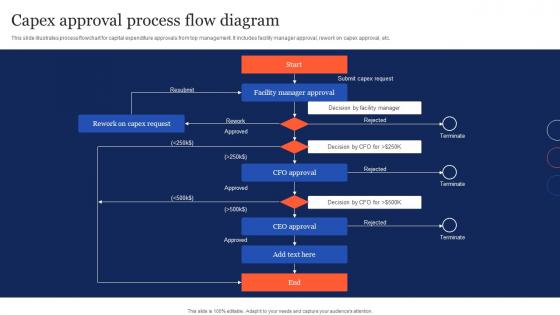
This slide illustrates process flowchart for capital expenditure approvals from top management. It includes facility manager approval, rework on capex approval, etc.
People who downloaded this PowerPoint presentation also viewed the following :
Capex Approval Process Flow Diagram with all 6 slides:
Use our Capex Approval Process Flow Diagram to effectively help you save your valuable time. They are readymade to fit into any presentation structure.





FAQs for Capex Approval
Honestly, start with clear spending thresholds and who approves what amount - saves so much confusion later. You need standardized templates that make people actually justify their ROI instead of just throwing numbers around. Set deadlines too because projects will literally sit there forever otherwise. Documentation is boring but necessary for tracking what you approved. The tricky part? Moving fast enough that you don't kill momentum on stuff that actually matters. I'd map out where things get stuck in your current process first - those bottlenecks are probably worse than you think.
Build your approval process around what actually matters to your company - growth, expansion, efficiency, whatever your big goals are. Every project proposal should spell out which strategic priority it's hitting and how you'll measure success. The ROI math might look great, but honestly, I've watched so many projects get funded that didn't budge the needle on anything important. Get your finance and strategy people reviewing together instead of passing proposals back and forth. Short version: no clear strategic tie? No money. It's that simple, even though companies mess this up constantly.
Dude, risk assessment is literally what makes or breaks your Capex proposal. You've gotta map out all the operational, financial, and strategic risks, then explain how you'll handle them. I've watched solid projects die because someone half-assed this part or missed obvious scenarios. The committee wants to know what could go sideways and if the returns are worth it. Don't sugarcoat the risks either - being too rosy just kills your credibility. Oh, and make sure you're realistic about both how likely bad stuff is and how much damage it'd actually do.
Look, financial projections will make or break your capex proposal. Leadership needs to see solid ROI numbers, payback periods, and NPV analysis - basically proof this won't be a money pit. I've watched perfectly good projects die because someone half-assed the financial story. Don't forget sensitivity analysis either. Executives always want the worst-case scenario spelled out. Oh, and be realistic with your numbers - overly optimistic projections are a dead giveaway you haven't thought it through. Spend the extra time getting your financial case rock-solid before you submit anything.
Honestly, the biggest mistake is submitting half-baked documentation. Missing ROI numbers or vague timelines? They'll bounce it right back. Don't lowball your costs either - finance will spot that immediately and you'll lose all credibility. Getting stakeholder buy-in is huge, especially from teams who'll actually use whatever you're proposing. I learned this the hard way once. Also, people always wait until the deadline then freak out when approval takes forever. Start early, build relationships with whoever's signing off, and triple-check your paperwork before hitting send.
Honestly, automating your capex workflow is a game changer. Set up digital routing so requests automatically go to the right people based on dollar amounts - no more hunting down your boss for signatures. Real-time tracking means everyone can see exactly where things are stuck. The automated budget checks are pretty sweet too since sketchy requests get flagged before they become headaches. I'd map out your current process first (probably messier than you think), then find workflow software that matches those steps. Way better than the email chains from hell we're all used to.
Track your ROI against what you originally projected - that's the big one. Also watch your timeline and whether you actually got the benefits you promised. Budget variance matters too, though honestly most capex goes over anyway so don't stress too much about that. Really depends what kind of project though. Cost-saving stuff? Measure actual savings. Revenue projects? New income or market share. Oh and don't skip the soft stuff like employee satisfaction - that matters more than people think. I'd do quarterly check-ins for the first year to catch problems early.
Dude, get people on your side BEFORE you submit anything. Finance wants to see solid ROI numbers. Operations hates when stuff disrupts their flow. Compliance will find issues with everything - it's like their job or something. But when these folks feel like you actually listened to their concerns? They'll fight for your project instead of against it. Map out who has real decision-making power first. Then grab coffee with them early and pick their brains. Trust me, those casual conversations make all the difference when approval time comes around.
Basically capex stuff takes forever because you're spending serious money on long-term investments. They want detailed business cases, ROI numbers, multiple approval levels - the whole nine yards. Opex is way easier since it's just regular expenses within your budget. Honestly the lease vs buy thing throws people off sometimes and makes it confusing. Each company has different thresholds too. My old job needed CEO approval for anything over 50K, but some places it's way higher. You should probably just grab your company's approval matrix and see what hoops you'll need to jump through.
Here's what's worked for me - create a simple scoring system for ROI, strategy fit, and risk. Don't be the company that picks projects based on who has the flashiest presentation (we've all been there). Set clear dollar amounts for different approval levels. Cash flow timing matters way more than people think. Be upfront about how you score things so teams aren't left wondering why their "amazing" idea got shot down. Oh, and definitely review quarterly - business moves too fast to stick with January's priorities all year. Short bursts work better than these marathon planning sessions anyway.
Watch out for conflicts of interest - don't play favorites with vendors you know personally, that always blows up eventually. Environmental stuff is huge too, especially if you're doing big infrastructure that'll piss off the neighbors or mess with local ecosystems. Labor practices of your contractors matter more than people think. Document everything so there's a clear paper trail of why you picked project A over project B. Oh, and here's the real test - would you feel good explaining your approval process to a room full of stakeholders? If not, you're probably cutting corners somewhere.
Look, a good capex process stops you from making dumb spending decisions when everything looks shiny and promising. You'll actually have real criteria instead of just winging it. Someone has to justify the ROI and sign off on big purchases - no more surprise budget disasters later. The best part? When money's tight (and honestly, when isn't it), you can actually rank projects against each other instead of just hoping for the best. I'd start by figuring out where your current approval process gets stuck or where people rush through decisions. That's usually where the problems are hiding.
Honestly, set your criteria upfront and don't budge on them. Document the hell out of everything - business case, why you approved/denied it, conditions, whatever. People get pissed when they can't see what's happening, so maybe do a dashboard or send updates regularly. Cross-functional committees work way better than just having finance decide everything (they can be brutal lol). The biggest thing though? Be consistent. Don't approve one person's request then deny the exact same thing from someone else. Always explain your reasoning clearly. I've watched so many of these processes crash and burn because leadership got wishy-washy with their standards.
Ugh, regulatory stuff is such a pain but you can't skip it. Permits, environmental checks, safety reviews - they all slow down your Capex approvals big time. The spending amount matters too. Like a $50K project? Probably fine. But hit $500K and you're looking at months of reviews. Some industries even need public consultations which is... fun. I learned the hard way to bake compliance into my timeline upfront instead of scrambling later. Way less stressful that way. Just assume it'll take longer than you think.
Ugh, market volatility makes capex planning such a pain. Your forecasts go out the window, and suddenly every committee wants like three different scenarios before approving anything. Finance will be all over you for sensitivity analysis - I swear they live for that stuff. Projects that aren't absolutely critical? They're getting paused or need way higher returns to get the green light. Approval cycles drag on forever because leadership wants to cover every possible risk. Build multiple scenarios right from the start and have a backup plan ready. Trust me, it'll save you so many headaches later.
-
They helped us design the pamphlets for our church’s food drive! The people loved the design, and I’m happy to say it was successful. Thank you, SlideTeam!
-
Extensive range of templates! Highly impressed with the quality of the designs.