


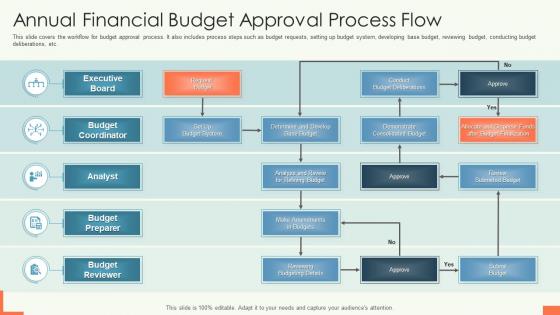
Annual Financial Budget Approval Process Flow




Try Before you Buy Download Free Sample Product
 Impress Your
 Audience
 100%
100% Editable
 Save Hours
 of Time


This slide covers the workflow for budget approval process. It also includes process steps such as budget requests, setting up budget system, developing base budget, reviewing budget, conducting budget deliberations, etc.
People who downloaded this PowerPoint presentation also viewed the following :
Annual Financial Budget Approval Process Flow with all 6 slides:
Use our Annual Financial Budget Approval Process Flow to effectively help you save your valuable time. They are readymade to fit into any presentation structure.





FAQs for Annual Financial Budget
So it's basically four main steps: budget prep, department review, executive approval, then final sign-off. First you'll draft everything with line items and justifications. Your department head reviews it next - honestly this is where most arguments happen lol. Executive team looks at the bigger picture after that, then finance or the board gives final approval. Takes about 2-4 weeks usually, depends on company size though. Oh and definitely pad your timeline for revisions because trust me, there's always something they want changed. I learned that one the hard way.
Oh man, I feel you on this one! Start with spending thresholds - under $1K hits your manager, $1K-$10K goes to department head, etc. Digital approval tools will literally save your sanity (no more hunting people down). Map out where things get stuck first though. That's your biggest win right there. Standard templates help tons, but honestly? Build in extra time because Dave from accounting is always mysteriously unavailable when you need him. Set clear deadlines upfront so everyone knows what's expected. Trust me, it'll cut your approval time in half once you get the system down.
Honestly, you're gonna deal with three main headaches: crappy incomplete data, people expecting miracles, and those annoying last-minute changes. Start collecting your numbers way early - like, earlier than you think you need to. Document all your assumptions because someone will definitely question your math later (they always do). Buffer time is crucial since stakeholders love tweaking stuff at the worst moments. I learned this the hard way, but try doing a casual pre-meeting with the big decision-makers first. Catches the major disasters before they become actual disasters. Oh, and be upfront about potential problems from day one instead of crossing your fingers and hoping.
So here's the deal - get stakeholders involved early or watch your budget get torn apart later. Bring the key players into planning (figure out who actually matters, not just who complains the most) and they'll back you when it counts. Honestly, people just want to feel heard. Spring a surprise budget request on them? Good luck with that headache. You'll get pushback, delays, the whole mess. I learned this one the hard way last year. Get their input while you're still building the thing, not when you need signatures.
Honestly, tech makes budget approvals way less painful. You submit everything through online portals instead of emailing spreadsheets around like it's 2005. Real-time tracking shows exactly where your request is stuck - usually with that one manager who takes forever to respond. Notifications ping you when there's movement, so no more awkward follow-up emails. The systems keep all your old submissions too, which is clutch for seeing what actually gets approved. My biggest tip? Master whatever platform your company uses. Seriously, spend an hour learning all the features upfront and you'll save yourself so much frustration later.
Honestly, just get everything out in the open from day one. Send your budget proposals to everyone who matters early on, then have actual meetings where people can grill you with questions. Yeah, it's annoying but way better than dealing with drama later. Document all your decisions - like why you picked option A over B. Oh, and definitely publish your timeline so people aren't constantly bugging you about when stuff gets decided. Then circle back with summaries of what got approved. Basically keep everyone in the loop constantly or they'll assume the worst.
Track cycle time first - that's how long budgets sit waiting for approval. Approval rates are huge too since constant rejections usually mean your guidelines suck or expectations are totally unrealistic. Count how many revisions each budget needs (revision hell is real and nobody wants that). Quick stakeholder surveys help, though honestly people rarely fill those out. Compare approved budgets to actual spending later for accuracy. Oh, and start with just cycle time and approval rates - those two will show you the most without drowning in data.
Oh man, this is where most budgets go to die honestly. Add review checkpoints at each approval stage - but make stakeholders actually give feedback, not just sign off. Regular check-ins with department heads help catch issues early too. I'd set up written feedback requirements with deadlines so people can't just ghost you. The trick is having a final meeting before approval where everyone reconciles their concerns. Trust me, you'll save yourself so many headaches later when stuff inevitably goes sideways and people claim they "never saw that line item" or whatever.
Put your main numbers right at the top - executives don't have time to hunt for them. Every single request needs to connect to business goals they actually care about. Trust me, I bombed my first proposal because I didn't do this! You'll want solid data backing everything up, plus run a few scenarios (best case, worst case, realistic). Oh, and prep backup slides for the inevitable questions. They always ask about stuff you think is obvious but apparently isn't. Short sentences work. Longer ones with natural flow help too, especially when you're explaining the reasoning behind your assumptions.
So basically your approval process depends on what kind of regulatory mess you're dealing with. Banking and healthcare? You're screwed - multiple approvals, tons of paperwork, sometimes even getting regulators to sign off first. Pain in the ass but that's life. Tech startups and marketing agencies can move way faster since they're not drowning in compliance stuff. Like, a fintech might need board approval for compliance software while an agency just lets the department head decide. Honestly, figure out your regulatory situation first or you'll waste time rebuilding everything later.
Honestly, you've gotta make sure your budget actually funds what matters to your company's success. Otherwise you're just throwing cash at random stuff that doesn't help - trust me, I've seen it happen way too many times. Every major expense should connect back to whatever goals leadership set for the year. It makes justifying your spending so much easier when money gets tight. Plus departments won't be working against each other as much. Before you submit anything, double-check that each big budget item ties to at least one strategic goal. Sounds boring but it'll save you headaches later.
Honestly, just build it right into your budget template so people can't skip it. Rate each line item 1-5 on stuff like how hard it'll be to pull off, market risks, external dependencies - pretty basic stuff. Higher scores mean you need bigger contingency funds or backup plans. Don't overthink the framework though, simple works better than some elaborate system nobody wants to use. I'd start with your major budget categories first since that's where you'll see the biggest impact anyway. Once people get used to filling out the risk scores, it becomes automatic instead of this thing they dread doing.
Honestly, Monday.com or Asana are pretty solid for tracking those approval workflows between departments. Most finance teams I know are still obsessed with Excel or Google Sheets for the actual numbers - which totally works. Bigger orgs might want Anaplan or Adaptive Insights though, they've got more fancy budgeting stuff. The real trick is finding something everyone will consistently use (good luck with that lol). I'd start with whatever plays nice with your current systems. You can always switch later once you figure out what actually works for your team's chaos.
Always throw 10-15% extra into your budget upfront for random stuff that'll pop up. Figure out who actually makes the decisions early - trust me, it's usually not the obvious person. Keep all your receipts and notes crazy organized so when people question things, you're ready. I'd prep a few different versions too, like your dream budget vs. the "okay fine we'll make it work" version. Oh and definitely stay in touch with finance people regularly instead of going radio silent for weeks. Those relationships are honestly half the battle. Timing's probably gonna shift anyway, so just roll with it.
Honestly, talk to your stakeholders way sooner than feels necessary. Budget drama usually happens when people get blindsided by decisions hitting their departments - I've watched this play out so many times! Get them in on the planning instead of just showing up with a done deal. Be upfront about your constraints and trade-offs from day one. People actually get behind tough choices when they understand the reasoning. Oh and definitely write everything down and actually follow through on what you promise. Sounds obvious but you'd be surprised how often that gets forgotten.
-
The PPT layout is great and it has an effective design that helps in presenting corporate presentations. It's easy to edit and the stunning visuals make it an absolute steal!
-
Great quality slides in rapid time.