

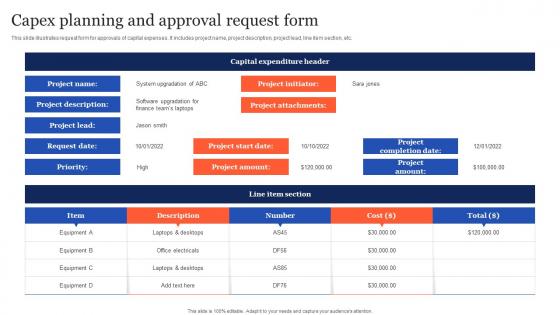
Capex Planning And Approval Request Form




Try Before you Buy Download Free Sample Product
 Impress Your
 Audience
 100%
100% Editable
 Save Hours
 of Time


This slide illustrates request form for approvals of capital expenses. It includes project name, project description, project lead, line item section, etc.
People who downloaded this PowerPoint presentation also viewed the following :
Capex Planning And Approval Request Form with all 6 slides:
Use our Capex Planning And Approval Request Form to effectively help you save your valuable time. They are readymade to fit into any presentation structure.





FAQs for Capex Planning And
Look, it's all about getting your ducks in a row with timing and priorities. Map out how your spending actually connects to what the business is trying to accomplish - sounds obvious but you'd be surprised. Get finance, ops, and the C-suite aligned early or you'll be fighting uphill battles later. Budget realistically based on your actual cash flow, not wishful thinking. Risk assessment is critical for big-ticket items, and honestly? Build in way more contingency than you think you need. I've watched so many solid plans crash because of one unexpected hiccup. Set up regular check-ins and a clear approval process from day one.
Honestly, just connect your spending directly to where you're trying to go business-wise. New markets? Buy the infrastructure that'll actually get you there. I've watched companies blow cash on flashy tech that does nothing for their goals - it's painful to see. Build a simple scoring system for ranking investments against your 3-5 year roadmap. Set up check-ins every quarter so you can change course when priorities shift (and they will). Look, every dollar should push you closer to what really matters for your company's future. Otherwise you're just burning money.
Look at your last 3 years of capex data first - the patterns that pop up will shock you. Analytics basically becomes your decision-making sidekick here. You can model different scenarios before dropping millions on anything, plus predict cash flows way better than gut instinct alone. The predictive stuff is honestly where it gets interesting - helps you figure out which investments actually pay off versus the ones that just sound impressive in meetings. Oh, and benchmarking against industry standards is clutch for timing purchases right. Historical spending analysis will show you trends you didn't even know existed.
Start with the numbers - NPV, IRR, payback period. Financial metrics don't lie. Most teams honestly just wing it without doing this basic math first. After that, check how each project fits your bigger strategy and what risks you're taking on. Resource constraints matter too, obviously. One thing people miss? Project dependencies. Sometimes you need to do the boring 12% ROI project before you can tackle the sexy 40% one later. Build a scoring system that weights everything based on what actually matters to your company. Then - and this is the hard part - stick to those scores when decision time comes.
Honestly, the biggest traps are underestimating costs and not planning for delays. Plus everyone forgets about maintenance expenses after everything's installed - learned that one the hard way. Get buy-in from finance and operations RIGHT from the start. Trust me, surprise objections halfway through will kill your project fast. Don't just recycle last year's budget either. Actually validate your assumptions with current market data and realistic timelines. Build in 15-20% contingency buffers now, and yeah, always have a backup plan for your most critical stuff.
Look, companies basically go all-in on big spending when times are good - new equipment, expansion, the works. But once things get rocky? They cut everything except what's absolutely necessary. Some industries are way more stable though. Healthcare and utilities keep spending since people always need those services. Manufacturing gets absolutely crushed during recessions - honestly it's brutal to watch. My advice? Plan for multiple scenarios and watch those economic indicators like a hawk. You never know when things might shift.
For capex forecasting, bottom-up works great if your department heads actually give you decent data on equipment needs. Historical patterns and growth rates are way easier but not as accurate - kinda lazy tbh. Rolling forecasts let you tweak things quarterly which is super helpful since stuff changes constantly. Trend analysis helps you see spending patterns from past years. Oh and regression modeling too if you're into that. Honestly I'd mix like 2 or 3 methods and see where they overlap - gives you better confidence in the numbers.
Honestly, just crunch the basic numbers first - NPV and IRR will tell you if it's actually worth doing once you factor in time value of money. Payback period's useful too for seeing how long you're tied up. The real trick though? Run different scenarios. Best case, worst case, realistic case. I've seen too many people get excited about flashy projects and fudge their projections. Keep your estimates honest, even if they're boring. Oh, and don't skip the stress testing part - that's where you'll catch the real problems before they bite you.
Honestly, just start with digitizing your approval process - that's where you'll see the biggest time savings right away. Technology handles all the annoying manual stuff like centralizing budget tracking and automating data collection. AI can actually predict when equipment needs replacing or maintenance, which beats the hell out of guessing with spreadsheets. Cloud platforms are great because everyone can work together in real-time, and your executives get instant updates on spending. Oh, and if you integrate with your ERP system, you won't have to enter everything twice anymore. That alone might save your sanity.
Don't make feedback an afterthought - bake those stakeholder sessions right into your timeline from day one. Map out who actually matters (ops, finance, IT, facilities) and hit them up at key points. I do initial sessions when setting priorities, then validation rounds before budgets get locked. Honestly, the hardest part is knowing when to stop collecting opinions - too many cooks and all that. Document what people say and show how you handled their concerns in your final pitch. Oh, and set hard deadlines for input or you'll be chasing people around forever. Trust me on that one.
Okay so you need both the money side and operational stuff to really see what's happening. ROI, NPV, payback period - classic financial metrics everyone expects. Then track if you're hitting deadlines and staying on budget. Quality and safety incidents matter too, plus how happy stakeholders are (honestly that last one can save or kill your project). Oh, and here's something people forget - track benefits after you launch because that's when you actually see if it worked. Monthly reviews with your team should do it, maybe throw together a basic dashboard so everyone can see the numbers.
Map out who needs what first - executives care about ROI and strategy stuff, but your ops teams just want timelines and resource hits. Board presentations are honestly where most of these plans get killed, so don't mess those up. Keep internal folks happy with dashboards showing budget progress. When you're talking to investors, focus on growth and competitive edge. Make simple visuals highlighting key projects and returns. Oh, and be upfront about your assumptions - people respect that more than you'd think. Build your whole communication plan backwards from what each group actually wants to hear.
Honestly, if you're just getting started, Excel works totally fine - don't let anyone tell you otherwise. Half the companies out there are still running everything on spreadsheets anyway. Adaptive Insights and Prophix are solid choices when you outgrow Excel though. Bigger organizations usually go with ERP stuff like SAP or Oracle since it connects your capex planning with procurement and accounting. Makes life easier. Smartsheet's pretty useful for tracking project timelines too, though that's more of a nice-to-have. My advice? Start with whatever you've got now. You can always upgrade later when things get messier and you need better ways for everyone to collaborate.
Ugh, regulatory stuff basically hijacks your whole budget whether you like it or not. Healthcare, finance, energy - doesn't matter the sector, you're gonna blow tons of cash on compliance before touching any fun growth projects. Map out those regulatory deadlines super early though, trust me on this. You can spread the costs instead of panicking later when you need emergency funds. Honestly the whole thing's annoying but you gotta bake it into your planning from the start. My old boss learned this the hard way and it wasn't pretty.
Honestly, just set up buckets for your investments - urgent stuff vs. strategic long-term projects. Fund the critical operations first (obviously), but here's the key: carve out a specific percentage for future-focused stuff and don't touch it. Like, ever. Treat it like rent money. Otherwise you'll constantly raid that fund when fires pop up, and trust me, there's always a fire somewhere. Maybe do quarterly check-ins to shuffle priorities around? Oh, and break those big projects into chunks across multiple budget cycles. That way you're not playing this awful either/or game between keeping the lights on and actually growing.
-
This visual representation is stunning and easy to understand. I like how organized it is and informative it is.
-
“Love it! I was able to grab an exciting proposal because of SlideTeam.”