


Sanction Authorization Matrix For Capex Approval




Try Before you Buy Download Free Sample Product
 Impress Your
 Audience
 100%
100% Editable
 Save Hours
 of Time


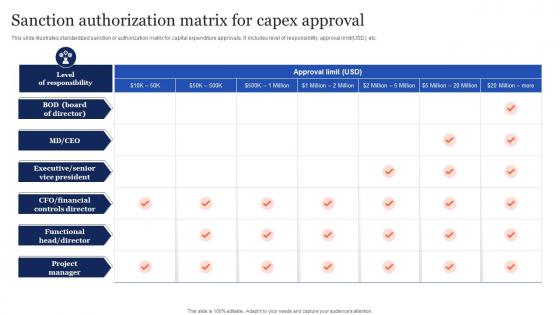
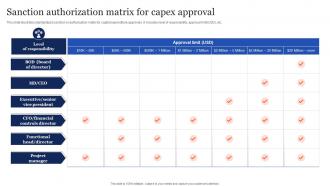
This slide illustrates standardized sanction or authorization matrix for capital expenditure approvals. It includes level of responsibility, approval limit USD, etc.
People who downloaded this PowerPoint presentation also viewed the following :
Sanction Authorization Matrix For Capex Approval with all 6 slides:
Use our Sanction Authorization Matrix For Capex Approval to effectively help you save your valuable time. They are readymade to fit into any presentation structure.





FAQs for Sanction Authorization Matrix
Oh that's just a fancy name for who can approve what spending at your company. So like, you might be able to sign off on stuff up to $5K, your boss does $25K, VP handles the big stuff over $100K - you get the idea. Honestly it's a lifesaver because you won't get stuck waiting forever for someone to approve your $50 office supply order. It covers pretty much everything - purchase orders, contract changes, budget stuff. Your finance team should have your limits somewhere (probably buried in some handbook). Definitely worth tracking down though.
So basically it's like creating a flowchart for who approves what transactions and how much money we're talking about. No more of that "uh, who handles the big stuff again?" chaos. Different dollar amounts get routed to different people automatically - kinda saves everyone's sanity honestly. Your compliance team gets clear rules to follow, which keeps regulators happy since they can see exactly who signed off on everything. I'd set it up with multiple levels based on how sketchy the transaction looks and the amount involved. Makes the whole process way smoother.
Set up clear dollar limits for who can approve what - that's your foundation. Map out the workflow so everyone knows the chain of command when sanctions hit. Honestly, the escalation piece is huge because you don't want someone panicking with a big decision. Build in deadlines for each step or things'll drag forever. Document everything (obvious but people forget). Oh, and throw in some review dates - maybe quarterly? - since your matrix will probably need tweaking as things change. Exception procedures too for those weird edge cases that always pop up.
Honestly, once your org starts getting bigger, authorization gets messy fast. Multiple business units, different countries, regulatory stuff - it all stacks up. A startup might get away with 3 approval levels, but big multinationals? We're talking 8-10 levels easy, with different dollar thresholds depending on region and department. You'll need way more specific rules about who can authorize sanctions and when. My advice? Start basic and add layers as you actually need them. I've seen too many companies build these crazy complex matrices from the start that nobody understands.
Honestly, leadership will be your biggest pain point - they always think approval processes slow things down. Setting dollar thresholds gets messy too because everyone thinks they deserve special treatment. The real nightmare though? Keeping it working once it's up. People just skip the whole thing when they're rushed, workflows crash when Bob from finance goes on vacation... it's annoying. Plus you're constantly tweaking it as the company grows or reorganizes. Oh, and start with maybe 3 approval levels max - don't overcomplicate it from day one.
Okay so basically a Sanction Authorization Matrix sets up clear rules for who can approve different levels of sanctions. Junior people can't accidentally approve major stuff without the right oversight - which honestly saves everyone's butt. Multiple people review big sanctions before they go through, so you catch problems early. Regulators actually love seeing a good audit trail too. Instead of every department doing their own thing, you get consistency across the board. Just make sure you review the matrix regularly since regulations change all the time (ugh). It really cuts down on compliance headaches.
So the Sanction Authorization Matrix is like your cheat sheet for who needs to approve what - saves you from those annoying "um, whose signature do I need?" situations. Maps out the whole process from compliance through legal to senior management. No more endless email threads where nobody knows what's happening next. Short sentences work better than long ones, honestly. Keep it nearby during meetings so you can actually point to specific approval levels when people start asking questions. Way better than winging it and hoping you remember the right chain of command.
Here's what I'd track if I were you: approval turnaround time, how often stuff gets escalated, and any compliance screw-ups. The turnaround time tells you whether your matrix actually works or just creates more red tape. Escalation frequency matters too - if everything's getting bumped upstairs, your thresholds are probably way too tight. Compliance incidents are obviously the big one since that's what can really hurt you. Oh, and definitely survey people quarterly about whether the matrix makes sense to them. A confusing system is basically worthless. Get baseline numbers first before changing anything though.
Look, annually is the bare minimum but don't just mark your calendar and call it done. Regulatory changes happen constantly - sanctions lists get updated way more often than once a year. Also kick off a review whenever you restructure or add new business lines. I've watched companies get completely blindsided because they treated it like some static document sitting in a drawer. Your compliance folks should be monitoring those sanctions updates throughout the year anyway. So yeah, get that yearly review scheduled, but honestly? Stay on your toes for anything that might need immediate attention between reviews.
Your Sanction Authorization Matrix basically runs on tech - it handles approvals automatically and keeps track of who can authorize what. Most companies ditch the spreadsheet nightmare for workflow systems or ERP modules. Way cleaner that way. Look for something with role-based permissions that plays nice with your financial software. The system should spit out compliance reports without you having to chase people down. When org changes happen, you can update authorization limits fast instead of sending a million emails. Just map out your current process first, then find a platform that matches those workflows while keeping duties properly separated.
So first thing - figure out what sanctions actually matter for your industry. Financial companies need way stricter thresholds and more approval layers than say, a manufacturing business focusing on supply chain stuff. Healthcare's got its own weird compliance nightmare to deal with. Map out your specific risks, then tweak the dollar amounts and who needs to sign off. Your compliance people should probably check what other companies are doing and what regulators expect. Don't make it so complicated that nobody can actually use it though - I've seen that happen before.
Dude, a crappy Sanction Authorization Matrix is basically asking for trouble. Regulators will absolutely destroy you with fines – I'm talking millions here. Your matrix starts letting bad transactions through or blocking legit ones? That's when things get ugly fast. You'll lose banking partnerships, face operational limits, maybe even criminal charges depending on how bad it gets. Those consent orders are the worst too – they can mess with your business for years. Honestly, just have your compliance and legal teams check it every quarter. Way easier than explaining to regulators why you screwed up.
Training is honestly a game-changer for your Sanction Authorization Matrix. People need to actually understand escalation procedures and approval thresholds - otherwise you'll get expensive mistakes when someone skips manager approval. Workshops help everyone stay on the same page with documentation requirements too. Your staff will get better at spotting red flags early and knowing when to hit pause for extra review. I'd do quarterly refreshers since these things change constantly. Plus it keeps people compliant, which your auditors will love. Trust me, the upfront time investment is worth avoiding those "oops, we should've caught that" moments later.
Track every single change with timestamps, who did it, and the reason behind it. Version control is your best friend here - auditors love digging into this stuff and you don't want to look like an idiot trying to explain random authority changes. Get proper sign-offs before rolling anything out. Business justification for each update is non-negotiable. Oh, and definitely keep old versions backed up somewhere. Communication to stakeholders needs to happen right away too. Honestly, the documentation might seem tedious but it'll save your butt later when people start asking questions.
So you'll want to map your authorization levels to match your compliance risk tiers - pretty straightforward stuff. Higher-risk sanctions need higher approvals, obviously. The trick is getting your matrix to talk to your existing AML and KYC systems so everything flows together automatically. I'd honestly start by looking at your current workflows first and figure out where sanction decisions already happen (or should happen). Make sure your approval thresholds actually match what your company can handle risk-wise. Oh, and don't forget the regulatory side - that's where things get messy if you're not careful.
-
It is my first time working with them and that too on a friend's recommendation. I would say, I am not expecting such a worldly service at this low price.
-
Placing an order on SlideTeam is very simple and convenient, saves you a lot of your time.