


Financial asset management powerpoint presentation slides




Try Before you Buy Download Free Sample Product
 Impress Your
 Audience
 100%
100% Editable
 Save Hours
 of Time


Financial Asset Management Powerpoint Presentation Slides is carved out of cutting-edge graphics and insightful content. This portfolio management PPT slideshow is brimming with stunning data visuals. Describe the objectives and purpose of investment management with appreciable ease through this investment management audience-friendly PowerPoint presentation. Showcase your investment approach to achieve client objectives like principal preservation, or equity diversification. Represent the current investment portfolio of your client. Highlight various financial instruments like hybrid funds, money market funds, and so on. This financial management PPT theme helps you in consolidating various types of assets available in the market. Display a comparative table of various assets like stocks, debt funds based on different criteria like risk, and tenure. Employ our wealth management PowerPoint templates deck to outline the top-performing funds. Download the financial planning PPT slides to elucidate allocation of funds by portfolio and convey the impact after investment. Our Financial Asset Management Powerpoint Presentation Slides are explicit and effective. They combine clarity and concise expression.
People who downloaded this PowerPoint presentation also viewed the following :
Content of this Powerpoint Presentation
Slide 1: This slide introduces Financial Asset Management. Mention your Company name and begin.
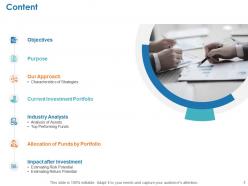
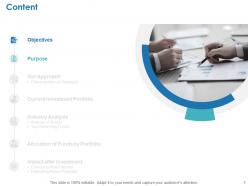
Slide 2: This slide displays Content of the presentation.
Slide 3: This slide shows Content of the presentation.
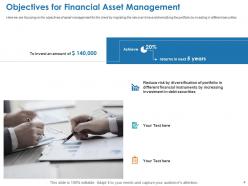
Slide 4: This slide covers Objectives for Financial Asset Management
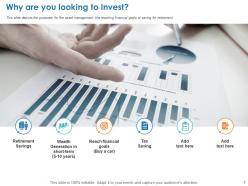
Slide 5: This slide depicts the purposes for the asset management like reaching financial goals or saving for retirement
Slide 6: This slide displays Content
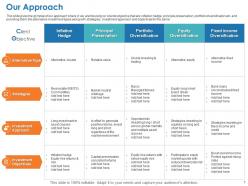
Slide 7: This slide gives the glimpse of our approach where in we are focusing on clients objective that are inflation hedge, principle preservation, portfolio diversification etc. and providing them the alternative investment types along with strategies, investment approach and objectives for the same
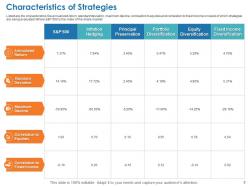
Slide 8: This slide shows characteristics like annualized return, standard deviation, maximum decline, correlation to equities and correlation to fixed income on basis of which strategies are being evaluated. Where S&P 500 is the Index of the share market
Slide 9: This slide displays Content of the presentation.
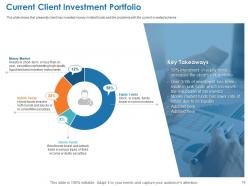
Slide 10: This slide shows that presently client has invested money in listed funds and the problems with the current invested scheme
Slide 11: This slide displays Content of the presentation.
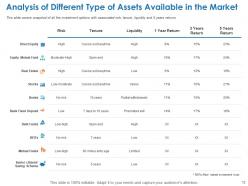
Slide 12: This slide covers snapshot of all the investment options with associated risk, tenure, liquidity and 5 years returns
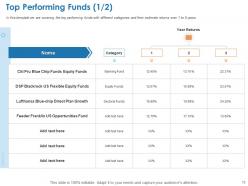
Slide 13: In this template we are covering the top performing funds with different categories and their estimate returns over 1 to 5 years
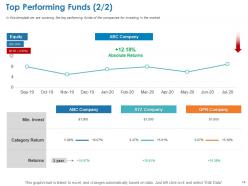
Slide 14: In this template we are covering the top performing funds of the companies for investing in the market
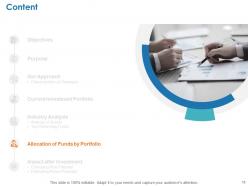
Slide 15: This slide displays Content of the presentation.
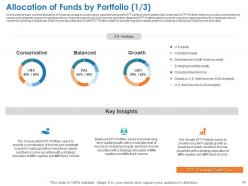
Slide 16: In this slide we have covered allocation of Funds according to conservative, balanced and growth ETF portfolio which states that Conservative ETF Portfolio seeks to provide a combination of income and moderate long-term capital growth by investing in equity and fixed income securities, etc.
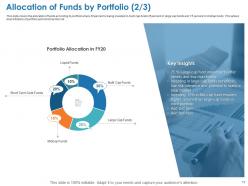
Slide 17: This slide covers the allocation of funds according to portfolio where 30 percent is being invested in multi cap funds 25 percent in large cap funds and 15 percent in midcap funds. This allows diversification of portfolio and minimize the risk.
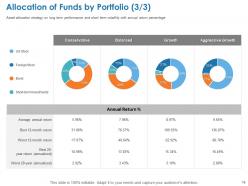
Slide 18: This slide shows Allocation of Funds by Portfolio.
Slide 19: This slide displays Content.
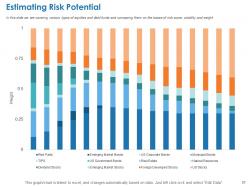
Slide 20: In this slide we are covering various types of equities and debt funds and comparing them on the bases of risk score, volatility and weight
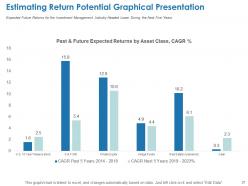
Slide 21: This slide provides information regarding Estimating Return Potential Graphical Presentation
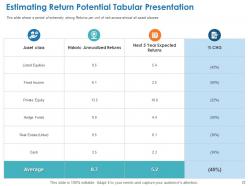
Slide 22: This slide shows a period of extremely strong Returns per unit of risk across almost all asset classes
Slide 23: This is Icons Slide for Financial Asset Management.
Slide 24: This slide is titled as Additional Slides for moving forward.
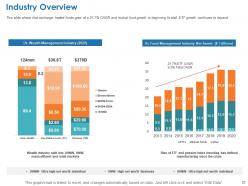
Slide 25: This slide shows that exchange traded funds grew at a 21.7% CAGR and mutual fund growth is beginning to stall, ETF growth continues to expand.
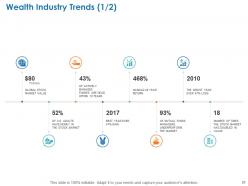
Slide 26: This slide depicts Wealth Industry Trends.
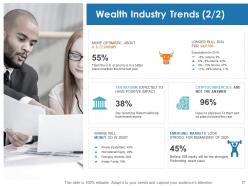
Slide 27: This slide covers Wealth Industry Trends.
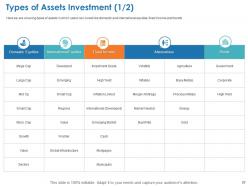
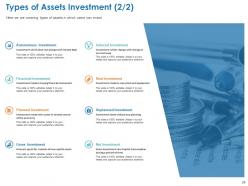
Slide 28: In this slide we are covering types of assets in which users can invest like domestic and international equities, fixed income and bonds
Slide 29: This slide covers the types of assets in which users can invest.
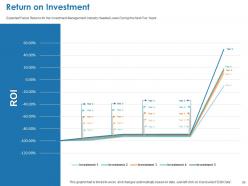
Slide 30: This slide shows Return on Investment.
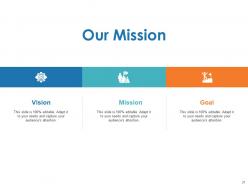
Slide 31: This slide displays Mission, Vision and Goals.
Slide 32: This is Our Team slide with Names and Designations.
Slide 33: This is About Us slide to showcase Company specifications.
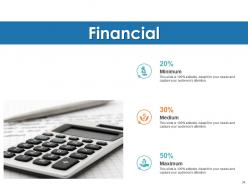
Slide 34: This is financial slide. Showcase Finance related stuff.
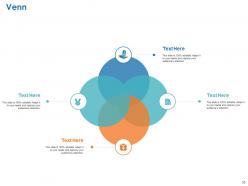
Slide 35: This is Venn slide.
Slide 36: This is Thank you slide with Contact details.
Financial asset management powerpoint presentation slides with all 36 slides:
Use our Financial Asset Management Powerpoint Presentation Slides to effectively help you save your valuable time. They are readymade to fit into any presentation structure.



FAQs for Financial asset management
Honestly, just spread your money around different stuff - stocks, bonds, whatever matches your timeline. Don't dump everything into one thing, obviously. I always set up automatic investing because trying to time the market is basically impossible (learned that the hard way). Check your portfolio maybe once a quarter, not every damn day when it's going crazy. Keep fees low too - they eat into your returns more than you'd think. Oh and stick to your plan even when everything feels like it's falling apart. Rebalance when things get too out of whack. Boring strategy wins.
So basically you want to spread your money around different types of investments. That way if one goes to shit, you're not completely screwed. I know it sounds boring but mixing stocks with bonds, different industries, maybe some international stuff - they don't all crash at the same time usually. Look at what you have now and see if it's all tech stocks or whatever. Then slowly add other things that move differently. Honestly the "don't put all eggs in one basket" thing is cliché but your portfolio will thank you when the market gets weird.
Your risk tolerance and investment goals basically decide everything else about how you invest. Young with decades ahead? Load up on stocks - you can ride out the bumps. Getting closer to retirement or just hate watching your portfolio swing around? Bonds and safer stuff make way more sense. I always think of it like picking a workout routine - gotta match what you can actually handle, not what sounds good on paper. And honestly, your situation's gonna change over time, so don't just set it and forget it.
Dude, you're probably doing so much manual work that could just run itself. Portfolio software tracks everything in real-time and handles rebalancing automatically - saves you literal hours on reports. AI analytics catch patterns you'd never spot (honestly better than most junior analysts I've worked with). Robo-advisors can babysit the basic client accounts while you tackle the complicated stuff. Just don't pick tools that'll mess up your current setup. Find something that actually fits with what you're already doing instead of forcing you to learn a whole new system.
ESG isn't optional anymore - it's just expected now. Passive funds keep crushing active management on fees, which honestly makes sense from a client perspective. AI is totally reshaping how portfolios get built and tracked. Robo-advisors are forcing the old-school firms to actually invest in decent tech or watch clients walk away. Regulators won't stop pushing for more transparency either. For next year? Focus on what makes your active strategies actually worth the premium, and figure out which tech upgrades will genuinely improve how clients feel about working with you. Everything's moving fast right now.
Ugh, regulatory changes are such a headache - they basically make you overhaul your whole portfolio strategy and compliance setup. New rules drop (capital requirements, ESG stuff, whatever) and suddenly you're scrambling to fix your asset allocation and risk models. But here's the thing - there's actually money to be made if you're smart about it. Like when banking regs get tighter, institutions start throwing cash at alternative investments instead. So if you're positioned right, you can actually benefit. The trick is getting ahead of this stuff before everyone else catches on.
Look at your total return first - that's gains plus any dividends or whatever. The Sharpe ratio is clutch for comparing different stuff since it factors in risk. Volatility shows you how wild the swings have been (spoiler: probably wilder than you think). Compare against benchmarks so you know if you're actually doing better than just buying an index fund. Maximum drawdown tells you the worst beating you took. Honestly, pick like 3 of these and check quarterly. Daily tracking will just stress you out for no reason.
Dude, behavioral finance is a game changer for spotting your own dumb money moves. We all do it - panic selling when markets tank or jumping on whatever stock is trending. Classic mistake. Once you understand stuff like loss aversion and overconfidence bias, you can actually fight back against your brain. Set up automatic rebalancing or decide your exit points ahead of time. Honestly, the hardest part is just admitting you'll make emotional decisions sometimes. But if you build those guardrails now, your future self won't sabotage your whole strategy.
Honestly, passive is way cheaper - like 0.03-0.20% fees versus 0.5-2% for active funds. You'll get solid market returns with broad diversification, but you're basically along for the ride whether markets tank or soar. Active managers try beating the market and can adapt when things get weird, but here's the kicker - most don't actually outperform once you factor in those hefty fees. The math just doesn't work out long-term for most of them. I'd go mostly passive for your core holdings. Then maybe throw in some active stuff if you want to spice things up with specific strategies.
Honestly, macro stuff controls everything about how you allocate assets. You're always tweaking based on inflation, GDP, interest rates - the usual suspects. Rising inflation? I'd probably rotate into real assets or TIPS. Rate hikes are brutal for bonds, so you might pivot to financials or shorter-duration stuff instead. Growth indicators help you pick between growth vs value stocks, plus domestic vs international plays. Oh, and employment data matters too - forgot about that one. Just build yourself a simple dashboard with the key metrics and check it weekly. Sounds nerdy but it'll save you from getting blindsided.
Keep 3-6 months of expenses in a high-yield savings account - that's your emergency fund. After that, maybe do a CD ladder or Treasury bills so you've always got something maturing. I'd put like 5-10% of your investment stuff in liquid things - ETFs or solid stocks you can dump quickly if needed. Honestly, I used to stress about this way too much lol. The main thing is not getting stuck selling your long-term investments at a bad time just because you need quick cash. Set up automatic transfers first to build that cushion - makes everything else so much simpler once it's there.
So there's a few ways to do this. Start with negative screening - just cut out stuff like tobacco or weapons companies. Way easier than it sounds. From there you can flip it and actively look for sustainable companies, or go thematic with clean energy investments. Honestly the data's still pretty wonky but getting better. MSCI and Sustainalytics have decent ESG scores you can use for portfolio weighting. Some people do the whole shareholder advocacy thing too - personally think that's more hassle than it's worth for most folks. Most firms are just baking ESG into their regular analysis now anyway.
Dude, don't panic sell when everything tanks - that's like investment suicide. Diversify your stuff across different stocks and sectors, not just tech or whatever's trendy. FOMO will wreck you faster than picking a bad stock, trust me. High fees are sneaky portfolio killers too. Oh and stop trying to time the market perfectly, literally nobody can do that consistently. I learned this the hard way lol. Just stick to your plan, rebalance every few months, and ignore the daily drama. Works way better than constantly messing with your holdings.
Dude, taxes will absolutely destroy your returns if you ignore them. Put index funds in your regular brokerage account since they're tax-efficient, but stick REITs and bonds in your 401k where they won't get hammered. Honestly, WHERE you put stuff matters as much as what you buy. Tax-loss harvesting helps offset gains too. Oh and hold investments over a year - short-term gains get taxed like regular income which sucks. I learned this the hard way when I was day trading like an idiot. Always check what you'll actually keep after taxes.
Honestly, client communication makes or breaks you in this field. Regular check-ins are huge - people's goals and risk tolerance change all the time. Life happens, you know? Without staying in touch, you're just guessing what they actually want. Market volatility is where this really shows. If you've explained your decisions well, clients won't freak out and make stupid emotional moves. I'd say quarterly reviews minimum, but always focus on explaining why you're doing something, not just what you're buying or selling. Trust me, the "why" is what keeps them calm.
-
The Designed Graphic are very professional and classic.
-
Designs have enough space to add content.
-
The content is very helpful from business point of view.