


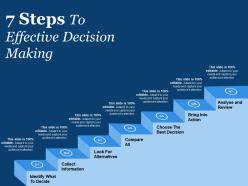
7 steps to effective decision making





Try Before you Buy Download Free Sample Product
 Impress Your
 Audience
 100%
100% Editable
 Save Hours
 of Time


Be clinical with our 7 Steps To Effective Decision Making. Give every aspect close attention.
People who downloaded this PowerPoint presentation also viewed the following :
7 steps to effective decision making with all 5 slides:
Our 7 Steps To Effective Decision Making will fill them with compassion. They will begin to feel charitable.
FAQs for 7 steps to
Get your data straight first - garbage in, garbage out, you know? Figure out your timeline and who really needs to weigh in (trust me, forgetting someone important will bite you later). Think through the risks vs upside for each option. Oh, and make sure whatever you pick actually fits with your bigger business goals. Here's what I always do - write down your decision criteria before you start looking at options. Keeps you from flip-flopping and second-guessing yourself down the road. Sounds basic but it works.
Here's the thing - cognitive bias turns smart teams into disaster machines. Groupthink kicks in and suddenly everyone's nodding along with whoever speaks first. Your team cherry-picks data that confirms what they already think, then gets stuck on that initial idea someone threw out. I've seen brilliant people make absolutely bonkers choices this way. What works? Force some friction into the process. Make someone argue the opposite side, even if they don't believe it. Use decision frameworks that slow things down. Sometimes the best thing you can do is just make it harder to agree too quickly.
So data analysis just cuts through all the BS and shows you what's actually happening with your business or whatever. You're not just guessing anymore - the numbers tell the real story. Honestly, I used to make decisions based on hunches and it backfired way too often. Now I can spot patterns, see what's coming next, and avoid those expensive mistakes that keep you up at night. Start simple though. Pick something you decide on regularly and throw some basic analysis at it first. You'll be surprised how wrong your gut instincts can be sometimes.
So decision-making frameworks are basically just ways to avoid those messy meetings where everyone's shouting different ideas. You get a structured process instead of pure chaos. SWOT analysis, decision trees - whatever works for your team. The nice thing is you'll catch stuff you might miss otherwise, plus you can actually document why you chose what you chose. Super helpful when things get complicated or risky. Honestly, the specific framework matters way less than just picking one and sticking with it. I've seen teams switch methods constantly and it's a total mess.
Honestly, gather more info but don't go crazy with it - analysis paralysis is real and I've totally been there. Figure out your main assumptions first, then test them with small experiments. Map out different scenarios and guess how likely each one is (doesn't have to be perfect). Get other people's opinions too since they'll spot stuff you're missing. Oh, and try that 10-10-10 thing - how will you feel about this choice in 10 minutes, 10 months, 10 years? Works better than you'd think. Just set yourself a deadline or you'll overthink it forever.
Honestly, it's all about reading the room before you make big calls. You can sense when your team is stressed or when there's weird tension nobody's talking about. That stuff matters way more than whatever spreadsheet says is "optimal." I've watched so many managers blow up their own plans because they ignored how people actually felt about changes. Quick gut check before deciding anything major: what's really going on here emotionally? How will this actually go over? Also - and this might sound obvious - don't make important decisions when you're pissed off or panicked. Takes practice but it's game-changing.
Oh man, this is such a real thing! Some of your teammates will want to talk everything to death and get everyone's blessing before deciding anything. Others expect the boss to just make the call. Risk tolerance is all over the place too - like some people need seventeen spreadsheets while others are fine winging it. And don't get me started on timing differences. Certain cultures rush decisions while others think being patient shows wisdom (which honestly can be frustrating when you're on a deadline). I'd figure out how each person operates first, then create processes that don't piss anyone off.
Honestly, visual stuff like charts and templates are game-changers for meetings. They make everyone look at the same info the same way instead of people just talking in circles forever. Decision matrices are pretty clutch for this - no more endless rambling about random points. You can actually see patterns and trade-offs that would totally get lost in a bunch of text. Templates save you prep time too, which is nice. I'd start basic with like a simple decision framework thing. Your team will be way more focused, I swear. It's weird how much structure actually helps discussions flow better.
Honestly, async communication is your best friend here - get everyone's thoughts in shared docs before you even hop on a call. When you do meet, have a real agenda, not those painful meandering sessions that go nowhere. Someone needs to own the final decision though, like actually own it and synthesize all the feedback. Voting tools help when you're stuck between options (decision matrices too if you're feeling fancy). The thing is, you can't just pop over to someone's desk anymore, so everything has to be way more deliberate. And yeah, always send written summaries afterward because people forget what they agreed to literally five minutes later.
Honestly, you need both but it depends on the situation. Your gut is basically your brain processing a million tiny details you're not even aware of - super helpful for reading people or creative stuff. Analysis works better when you're dealing with money decisions or something totally new where you don't have experience. I usually gather all the facts first to narrow things down, then trust my instincts for the final decision. Though sometimes I overthink it and should've just gone with my first reaction, you know?
Honestly, fake deadlines are a game changer - give yourself like 2 hours to research something then just pick. I use this 10-10-10 thing where you imagine how you'll feel about each choice in 10 minutes, 10 months, 10 years. Sounds cheesy but it actually helps. Most stuff isn't permanent anyway, so don't stress like it's life or death. Oh and try "good enough" instead of hunting for perfection - just grab the first option that hits your basic requirements. Practice on stupid small decisions first (what to eat, which route to take) then work up to bigger stuff. Builds confidence weirdly fast.
So you make a decision, then actually track what happens after. I know it sounds nerdy but hear me out - you compare the real outcome to what you thought would happen. Most people skip this part completely which is why they keep making the same mistakes. Write down a few key decisions and check back in a month or whatever timeframe makes sense. You'll start noticing patterns in where you mess up or get things right. Honestly it's kind of eye-opening once you get into it. Just pick something small to start with.
Okay so first things first - figure out who's gonna be affected by whatever you're deciding. Fairness matters, obviously, but also think about whether you're being transparent enough. Are you accidentally screwing anyone over? Check your biases too (we all have them, even when we think we don't). I always ask myself: can I defend this decision if someone calls me out publicly? Oh, and definitely run it by someone who won't just agree with you. They'll spot the blind spots you're missing. Make sure you've got solid info before pulling the trigger.
Honestly? Being rushed usually screws up your decisions. You end up taking the first thing that seems okay instead of actually thinking it through. Plus stress makes your brain go a bit fuzzy - at least mine does. Though some people weirdly work better with a deadline breathing down their neck. Go figure. If you can, try to give yourself extra time for the big stuff. Or at least figure out your deal-breakers ahead of time so you can cross things off your list faster when you're in crunch mode.
Honestly, just track whether your decisions actually worked out. Pick a few key things to measure - did you hit your timeline, stay on budget, achieve what you wanted? The real magic happens when you sit down with your team like 6 months later and brutally assess what went right and wrong. Don't forget to ask people how they felt about the actual decision-making process too. I've seen companies go overboard with fancy decision audits and stuff, but keeping it simple works way better. Start small - grab three decisions from last quarter and see where they ended up.
-
Awesome presentation, really professional and easy to edit.
-
Topic best represented with attractive design.