


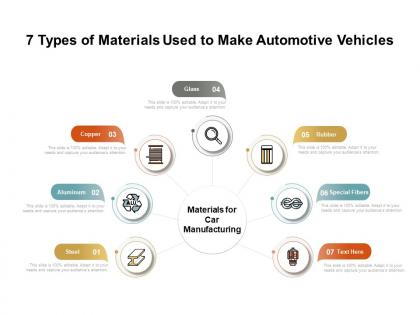
7 types of materials used to make automotive vehicles




Try Before you Buy Download Free Sample Product
 Impress Your
 Audience
 100%
100% Editable
 Save Hours
 of Time


Our 7 Types Of Materials Used To Make Automotive Vehicles have an emotive appeal. Generate feelings that inspire improvement.
People who downloaded this PowerPoint presentation also viewed the following :
7 types of materials used to make automotive vehicles with all 2 slides:
Help invalids with our 7 Types Of Materials Used To Make Automotive Vehicles. Get folks to care for disabled individuals.

FAQs for 7 types of materials used to
Look for stuff with good strength-to-weight ratio first - you don't want a tank that guzzles gas. Durability's obviously key since cars take a beating. Cost matters too unless you're building Ferraris lol. Corrosion resistance will save you headaches down the road, especially if you live somewhere with salt on the roads. Engine parts need to handle crazy heat while other components work fine in winter. Oh and make sure you can actually work with the material - some exotic stuff looks great on paper but is a nightmare to manufacture. It's all about finding that balance between performance and what you can afford.
Dude, cutting weight is seriously underrated - you can get 6-8% better fuel economy for every 10% you drop. Your engine just doesn't have to work as hard pushing less mass around, which means less gas and fewer emissions. Aluminum and carbon fiber are where it's at, though honestly carbon gets pricey fast. High-strength steel works too. Focus on parts that won't mess with safety and you'll actually notice the MPG difference. Oh, and your car handles way better as a bonus.
Dude, composites are gonna change everything in automotive. Way lighter than steel but just as strong - perfect for EVs where every pound kills your range. They don't rust either which is nice. Right now they're expensive and slow to make, but once production ramps up we'll see them in regular cars, not just the fancy stuff. Honestly I'd keep an eye on suppliers investing in automated composite manufacturing - that's where the money's gonna be. Body panels, structural parts, you name it. Tesla's already doing it and everyone else will follow.
Yeah so EVs have totally flipped what materials everyone wants now. Battery range is everything, so there's way more aluminum and carbon fiber instead of steel. The copper demand is absolutely nuts - like, seriously crazy amounts for all the wiring. Then you've got the battery packs needing lithium compounds and rare earth stuff for the motors. Heat management is huge too since batteries and motors get hot. Oh and if you're buying materials now? Good luck - lead times are longer and costs are higher for EV components compared to regular car parts.
Ugh, car recycling is such a mess. You've got this crazy mix of steel, aluminum, plastics, rubber, glass, and electronics all stuck together - separating that stuff is a total nightmare. Sometimes it actually costs more to recycle materials than just making new ones, which is honestly ridiculous but here we are. Different car companies use completely different materials too, so there's no standard way to break things down. Oh and the whole process becomes way more efficient if you design cars with recycling in mind from the start. That's really where you'll see the biggest wins if you're tackling this problem.
So nanotechnology is basically tweaking car materials at the molecular level - pretty crazy when you think about it. You get way lighter but stronger body panels, plus these self-healing paint jobs that actually fix small scratches on their own. The plastics resist UV damage way better too. Some of the coatings can make surfaces water-repelling or even kill bacteria, which is honestly kind of mind-blowing. Your car gets better fuel efficiency from the lighter nano-enhanced parts, and everything lasts longer. If you're picking materials for a project, definitely check out the nano options - they usually pay off performance-wise.
Dude, corrosion resistance is huge for cars. When metal starts rusting, you're basically looking at safety issues and your car turning into a money pit. I've seen perfectly good vehicles become total rust buckets in just a few years - it's honestly depressing. Structural parts weaken, repairs get crazy expensive, and your resale value tanks. That's why good manufacturers use galvanized steel and aluminum alloys now. Those protective coatings actually work. If you're checking out suppliers or specs, definitely look for proper corrosion testing. Trust me, it'll save you tons of headaches later.
So manufacturers have to deal with FMVSS and other regulatory stuff - basically they're doing crash tests, fire resistance checks, toxicity screening, all that. They work with suppliers to validate every material choice through tons of testing. There's usually multiple approval layers before anything gets approved for production. Honestly, the paperwork alone must be insane. They keep detailed records too so if something goes wrong, they can trace it back to the original material. I'd definitely check the latest compliance requirements for your specific part since regulations change all the time.
So EV batteries are totally different beasts - they use lithium-ion cells packed with lithium, cobalt, nickel, manganese. Nothing like regular steel and aluminum car parts. You'll need specialty thermal stuff and lightweight composites to deal with heat and weight. Honestly, the recycling situation is still pretty messy compared to traditional materials. Plus there's fire risk you don't get with normal parts. Supply chains are all over the place right now too - my buddy in procurement says lead times are crazy. Budget way more time and cash if you're sourcing this battery stuff.
Dude, 3D printing totally changes what materials you can use in cars. Traditional metals and plastics? Not your only options anymore. Advanced polymers, metal alloys, composites - even weird hybrid stuff that's impossible to make with normal manufacturing. Complex internal structures become doable, which is huge for weight vs strength optimization. Honestly, the best part might be prototyping with your actual production materials instead of substitutes. Cuts development time like crazy. Look at components where you need weight reduction or internal cooling channels - that's where you'll see the biggest wins first.
Dude, the car industry's going crazy with sustainable materials right now. Tesla and BMW are doing recycled plastics everywhere. Ford's using soybean foam in seats - which sounds weird but apparently works great. Hemp fiber composites are becoming huge, plus they're experimenting with mushroom-based materials (I know, right?). The whole circular economy thing means they're designing parts you can actually take apart and reuse later. Oh, and recycled carbon fiber is getting big too. If you're looking at suppliers, find ones already certified in bio-composites because regulations are gonna get stricter. It's honestly pretty impressive how creative they're getting.
So thermal properties are huge for engine materials - they decide whether your parts can handle heat without cracking or warping. Pistons and cylinder heads need high thermal conductivity to dump heat fast from the combustion chamber. Otherwise you get nasty hot spots. You also want low thermal expansion so parts don't grow/shrink too much when temps swing around. Cast iron vs aluminum both have their pros and cons here. Honestly, if you're doing any performance work, checking thermal specs first will save you major headaches down the road. Heat management separates the good builds from the expensive mistakes.
Honestly, the coolest stuff happening right now is these multi-layer composites - they're combining foam, fiber, and barrier films all in one piece instead of those heavy old mats. Way more efficient. Active noise cancellation materials are getting crazy good too, literally fighting sound waves as they hit. 3M and Autoneum have some insane new lightweight options that'll cut 30-40% of your weight while actually improving dampening. Oh, and there's all this bio-based foam made from soy now - not just for the green points, it actually performs well. You should definitely look into what those companies are releasing this year.
Weather-resistant materials are seriously a game changer for your car's exterior. They protect against UV rays, rust, and all that temperature cycling stuff that slowly destroys paint and metal. Look for cars with UV stabilizers in the paint system and galvanized steel - sounds fancy but it works. After 5-10 years? The difference is crazy obvious. My neighbor's cheap car looks like garbage while mine still looks decent. Polymer trim pieces won't crack like the old plastic stuff either. When you're shopping, ask about protective coatings. Trust me, it'll save you a fortune on rust repairs and paint jobs later.
Dude, regulatory changes will totally mess with your material game. New emissions rules? You're suddenly scrambling for aluminum or carbon fiber to hit those fuel targets. Safety requirements might force you into different steel grades or specific plastics for crash zones. Don't even get me started on the sustainability stuff - some places are straight-up banning materials or demanding recycled content percentages. It's honestly exhausting keeping up. Here's what I'd do though: get tight with your suppliers now. They usually know about regulatory shifts way before they hit, which saves you from those last-minute panic redesigns.
No Reviews