


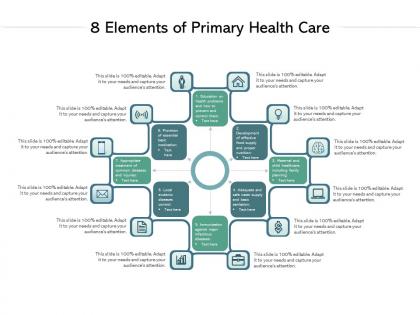
8 elements of primary health care




Try Before you Buy Download Free Sample Product
 Impress Your
 Audience
 100%
100% Editable
 Save Hours
 of Time


Douse feelings of anger with our 8 Elements Of Primary Health Care. Don't allow conditions to get inflammatory.
People who downloaded this PowerPoint presentation also viewed the following :
8 elements of primary health care with all 2 slides:
Don't allow conditions to get inflammatory with our 8 Elements Of Primary Health Care. Douse any feelings of anger.
FAQs for 8 elements of
So the main ones are equity, community participation, intersectoral collaboration, appropriate technology, and universal coverage. It's all about getting healthcare to everyone no matter where they live or how much money they have. Different places tackle this stuff differently - like rural Africa uses community health workers for the participation part, while other places do telemedicine for the tech side. Honestly, equity is the hardest one because you need actual policy changes and money behind it. If you're working on health projects, just map out which principles you're hitting - saves you from realizing gaps way too late.
So basically, primary health care fixes equity issues by actually going to where people live - mobile clinics, community centers, that kind of thing. Transportation and cost won't block you anymore. Honestly, it's way smarter than forcing everyone to figure out some massive hospital system. They focus on prevention and managing stuff like diabetes right in the neighborhood. The trick is letting communities run their own programs so they actually fit the culture there. Oh, and definitely partner with groups already working in your area - they'll know exactly what gaps need filling first.
So tech has completely changed how primary care works. EHRs give you instant patient histories, which is huge. Telemedicine became massive after COVID - honestly can't imagine going back to only in-person visits now. There's AI flagging drug interactions, wearables tracking patient data in real time, automated scheduling. Clinical decision support helps catch things you might overlook when you're swamped. It's made everything way more personalized and efficient. The trick is choosing stuff that actually fixes your specific problems instead of just grabbing whatever's trendy. Some practices go overboard with the bells and whistles though.
So basically, when patients feel understood they'll actually open up about symptoms and stick to treatment plans. Trust me, it makes a huge difference. Different cultures express pain differently or have specific family dynamics around medical decisions - miss that and you might miss the diagnosis entirely. Simple stuff like using interpreters correctly or just asking about their preferences goes so far. I've seen patients completely change their engagement when they feel heard. Oh, and definitely learn about whatever cultures are common in your area. Patients from diverse backgrounds often have totally different expectations about care, so cultural competency isn't just nice to have.
Ugh, rural primary care is rough. Patients drive forever just to reach you, and finding specialists? Forget about it. Staff turnover is insane because who wants to stick around for less pay in the middle of nowhere - honestly can't blame them. Equipment's usually ancient, internet sucks for telehealth, and half your patients put off care until they're practically dying because money's tight. Your best bet is teaming up with local organizations and pushing hard for better funding. Also, telehealth infrastructure needs serious work if it's gonna actually help.
Your family doctor can actually handle way more mental health stuff than people realize. They do screening, basic counseling, even prescribe antidepressants without you having to wait months for a psychiatrist. Honestly, it's pretty convenient since they already know your medical history and can tell when something physical might be anxiety-related. Training is key though - the whole primary care team needs to know basic mental health protocols. Plus they're usually better connected to local support groups and resources in your area. For common things like depression or anxiety, you really don't need to jump straight to specialists.
Think of it like this - instead of everyone working alone, you get doctors, nurses, and specialists actually talking to each other about your patients. Way better than the old system where you'd just refer someone and cross your fingers, right? Your patients do better because someone's tracking everything, not just whatever brought them in that day. Honestly saves you tons of stress too since you're not juggling everything solo. I'd start small - maybe find one or two people you could team up with for whatever you see most often.
Hey! So keeping healthcare sustainable basically comes down to three things. First, you need steady funding - and honestly, that's the hardest part because politicians change their minds every election cycle. Training local health workers is huge too, plus building systems that won't fall apart when things get crazy. Oh, and don't underestimate how much community buy-in matters. When people actually value the services, they're way more willing to pay taxes or insurance for it. I'd start by figuring out where your biggest gaps are right now, then tackle whatever's most urgent. The infrastructure stuff can be tricky but it's worth getting right.
Health policies control everything - funding, coverage rules, where clinics can even set up shop. When governments push universal coverage, patients get easier access and pay way less. Restrictive ones though? Total nightmare with crazy copays and tiny provider networks. I swear the paperwork alone could kill you sometimes. But honestly, these policy shifts hit fast and hard - your patients lose access overnight, or suddenly your practice has to jump through new hoops. Worth tracking what's happening locally because it'll mess with your day-to-day operations before you know it.
Preventive care is honestly where it's at - it's the whole foundation of primary care. Basically you're doing screenings, vaccines, health education, that kind of stuff to catch problems early instead of waiting until someone's really sick. Way cheaper than treating full-blown diseases later. The whole point is keeping people healthy rather than just fixing them when they show up broken, you know? It's like going from putting out fires to actually preventing them. Oh and you can work prevention into any visit - even when someone comes in with a cold or whatever, you can still squeeze in some health tips.
Honestly, the biggest game-changer is making patients actual partners instead of just telling them what to do. Break down the medical stuff into normal language - most people have no clue what doctors are really saying half the time. Patient portals work pretty well, plus those apps where they can track their own progress. Group classes are surprisingly effective too. The whole "doctor knows best" thing is kinda outdated. Let them set their own goals during appointments. Quick check-ins help tons. When people feel like they're driving their own care instead of being dragged along, they actually stick with treatment plans way better.
Yeah, it's pretty brutal how money affects healthcare access. Poor folks hit way more roadblocks - no insurance, can't cover copays, no car to get there. Then there's the whole losing wages thing if you take time off work. Lower-income neighborhoods barely have any doctors anyway, so you're screwed on multiple levels. Honestly the whole setup feels designed to keep people out. Transportation alone kills so many appointments - like, why don't we talk about that more? These aren't personal failures either, it's the system that's broken and needs fixing from the top down.
So basically, primary care docs are your best bet for managing chronic stuff because they actually get to know you over time. They can spot problems early instead of waiting for everything to fall apart. Way easier to get appointments too - I swear trying to see a specialist is like pulling teeth sometimes. The whole point is catching things before they become disasters, you know? Plus they can track how you're doing and tweak your meds without the whole crisis mode thing. Team approach works best though - not just one doctor doing everything.
Honestly, most places mess up the retention part badly. You'll want better training that actually prepares people for rural work - community programs work well. But here's the thing: competitive pay and loan forgiveness are non-negotiable. People won't stick around without decent money, sorry. Also focus on reasonable patient loads because burnout is real. Oh, and recruit locally when you can - those folks tend to stay put. Map your current gaps first though, then build targeted programs around that. Career advancement shouldn't mean abandoning primary care either.
So there's tons of variation in how countries handle primary care. The UK makes you see your GP before any specialist - total gatekeeper situation. Germany? You can go straight to specialists if you want. Nordic countries are absolutely killing it with their digital systems that actually work together (shocking, I know). Cuba does this crazy thing where family doctors literally live in the neighborhoods they serve. Denmark's chronic disease stuff is worth looking into if you need real data. Most successful places focus heavy on prevention and use nurse practitioners way more. Digital records that can talk to each other are huge too, though that shouldn't be revolutionary in 2024.
No Reviews