


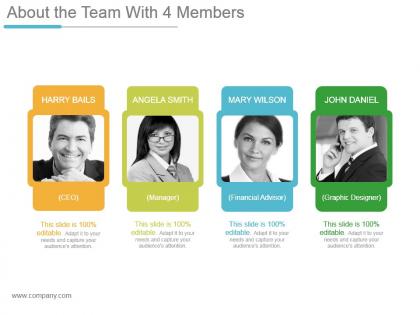
About the team with 4 members powerpoint presentation




Try Before you Buy Download Free Sample Product
 Impress Your
 Audience
 100%
100% Editable
 Save Hours
 of Time


Curiosity about your ideas begins to grow due to our About The Team With 4 Members Powerpoint Presentation. It will draw in the disinterested.
People who downloaded this PowerPoint presentation also viewed the following :
About the team with 4 members powerpoint presentation with all 5 slides:
Our About The Team With 4 Members Powerpoint Presentation contain grand designs. They generate a feeling of exuberance.



FAQs for About the team with 4
So you need clear roles for everyone - like who handles what exactly. Background stuff that makes them sound legit, plus whatever they're crushing right now or recently finished. How they work together is huge too, honestly people always want to know the team dynamic. Don't forget contact info! I see that missed constantly. Keep each person's bit short but memorable enough so people actually remember who to bug for different stuff. Maybe throw in how outsiders can jump in or what's coming next. The whole point is making it stupid easy for people to know who to hit up.
Dude, visuals are a game changer for team intros. Headshots with quirky facts work great, or throw in some role icons. I've seen teams do creative org charts that actually tell a story - way better than boring bullet points. Short video clips really bring out personalities too. Oh, and photos from team events or working sessions? Perfect for showing how you all vibe together. Just don't go overboard - you want the visuals supporting your story, not stealing the show. Try one visual per person and watch how much more alive your presentation feels.
Honestly, stories beat boring credentials every time. Your audience will forget "John has 10 years of experience" in like 2 seconds. But tell them how John saved a massive client crisis at 2am? That actually sticks. People connect with real moments, not resume bullets. Stories also show your team's personality and how they think under pressure - which is way more valuable than just listing skills. My approach is pretty simple: grab 1-2 good stories for each key person that highlight both their expertise and who they are. Then just work those into your intro naturally.
Show it with real stories, not just a list of where people are from. Like when my Japanese teammate taught us this amazing quality control trick that totally changed how we worked. Or how someone's bilingual skills actually helped close that big international deal. Stories stick way better than just saying "we're diverse" - people remember the impact. Include photos from team celebrations, talk about different problem-solving styles, show how various backgrounds bring skills that actually complement each other. Honestly, the concrete results matter more than demographics.
Start with something fun about each person - weird talents or random facts work great. Baby photos are surprisingly effective too, just saying. Keep each intro short but memorable, focusing on what makes them unique beyond their job title. Instead of just talking at people, ask the audience questions throughout. Props or visuals help showcase personalities. I've found that connecting their different skills at the end really ties it together nicely. Don't forget to leave time for questions - that's where the real conversation happens and people actually engage.
Honestly, you've gotta read the room and switch up your approach. Executives want the big picture stuff - revenue impact, strategic wins, how your team moves the needle. With technical folks or peers, get into the weedy details about tools and methods they actually care about. I learned this the hard way after watching way too many people check out during presentations lol. Clients need to hear about your wins in their specific industry. The trick is figuring out what each group values before you even start talking. Don't just tell them what sounds cool to you.
Okay so the biggest mistake? Making your team slide look like a bunch of boring resumes. Nobody wants to read someone's entire work history - honestly, skip that 2015 internship stuff. Instead, focus on what makes each person perfect for THIS project specifically. Show their relevant skills and maybe throw in one interesting personal detail so they're actually memorable. Keep the photos professional but not too stiff. Make sure everyone gets roughly equal space too, otherwise someone's gonna feel weird about it. The whole point is explaining why these exact people together will crush whatever you're building.
Definitely get your team to look at it first! They'll catch stuff you totally missed - like if you're being way too technical or forgot to mention someone's big win. Honestly, they know what they're actually proud of better than you do. Plus they can tell you if those project examples are getting stale (we've all been there). Your teammates will also flag when you're underselling people or the roles aren't clear enough. The best feedback I've gotten was teammates suggesting specific stories that really showed how we work together. Just send a draft around and ask them to be brutally honest about accuracy.
Honestly, start with the obvious stuff - feedback scores and whether people actually ask follow-up questions afterward. The real test though? See if they remember your team members' names in future meetings. I know it sounds basic, but trust me on this one. Watch for more collaboration requests coming your way, better project handoffs, other teams reaching out with opportunities. Oh and yeah, definitely note if anyone's nodding off during your talk - kind of embarrassing but super telling! The golden moment is when someone mentions your team's expertise weeks later without you having to remind them. Give it about 30 days to really see the impact.
Honestly, just let your team be themselves during the presentation - audiences eat that stuff up! Have people jump in naturally with their own takes, maybe show some friendly disagreement or banter. Way better than those awkward "now I'll pass it to Sarah" moments. Share a quick story about solving problems together or throw in an inside joke if it fits. Oh, and definitely prep different team members to handle specific questions - makes the whole thing feel less rehearsed. People can spot fake team chemistry from a mile away, so don't overthink it.
Honestly, go with Canva or Figma for team stuff. Canva's amazing if design isn't your thing - their templates are actually decent and everyone can jump in without getting confused. Figma's better if someone on your team knows design, gives you way more control. PowerPoint works but it's kinda meh for collaboration. Oh and Google Slides too I guess, but same deal. The main thing is making sure everyone can access it easily. I'd just try Canva's free version first - worst case you switch later, no big deal.
Honestly, I'd start with something personal about each team member - like their hobbies or what gets them excited outside work. Makes them seem human, you know? Then weave in their actual skills and accomplishments. I love doing stuff like "Mike collects vintage keyboards AND builds killer mobile apps" - sounds weird but people remember it. Your audience needs to see your team as both competent professionals and actual people they'd want to work with. Oh, and definitely end with what problems you guys solve and how to contact you. That part's crucial.
Honestly, just stick with clean headshots and maybe a quick video if you want. Don't get crazy with animations - I've watched way too many presentations where spinning graphics made me dizzy instead of focusing on the actual team! Behind-the-scenes photos work great, or show some work samples. Oh, and test everything beforehand because there's nothing worse than tech failing mid-presentation. Make sure it loads fast on phones too since people view stuff everywhere now. You're trying to highlight your people, not prove you're a design wizard. Have a backup ready just in case!
Start with super specific job descriptions - none of that vague "manages projects" nonsense. Say exactly what each person does, like "approves budgets over $5K and tracks milestones." Bullet points or charts work way better than paragraphs because honestly, nobody reads walls of text anymore. Decision-making authority is huge - that's where teams crash and burn when roles get blurry. Throw in everyone's contact info and how they like to communicate. I learned this the hard way, but keeping it updated as things change saves so much drama later.
Start with your "why" right off the bat - what actually drives your team. Then weave those values into each main point naturally. Like if innovation matters, show how your recent projects reflect that instead of just saying it. Don't dump a boring values slide at the end (honestly, everyone sees right through that). Share real stories - maybe a client win that showcases your principles, or how your mission influenced a tough call you had to make. The key is letting those values guide your whole story flow rather than treating them like a checklist. Way more authentic that way.
-
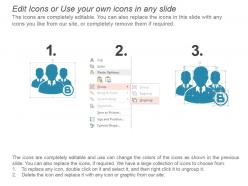
Enough space for editing and adding your own content.
-
Use of different colors is good. It's simple and attractive.