


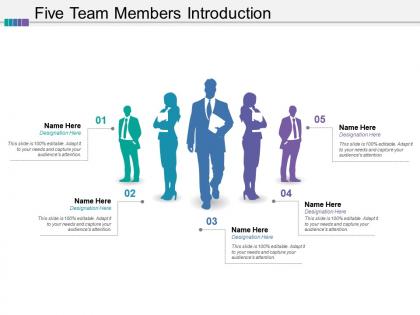
Five team members introduction





Try Before you Buy Download Free Sample Product
 Impress Your
 Audience
 100%
100% Editable
 Save Hours
 of Time


Inform the assembly with our Five Team Members Introduction. Brief folks about the events of the day.
People who downloaded this PowerPoint presentation also viewed the following :
Five team members introduction with all 5 slides:
Display a level head with our Five Team Members Introduction. Come up with balanced assessments.
FAQs for Five
So Sarah's basically our data genius - she makes sense of the messiest spreadsheets you've ever seen. Jake's got the backend stuff locked down. Maria's the client whisperer (seriously, she could probably sell ice to penguins). We're all decent at project management too, which is clutch when everything hits the fan at once. Oh, and everyone's pretty quick to respond on Slack - way better than email, honestly. Just hit up whoever fits what you need most.
Honestly, having different backgrounds is like having built-in quality control. Sarah jumps in with finance questions that nobody else thinks of, Marcus brings his nonprofit angle to user research - those weird combo moments always spark our best work. Someone's constantly going "wait, but what if..." from their corner of experience. Short version: it catches blind spots before they become actual problems. The trick is actually listening to those different voices during brainstorms instead of just going with whoever talks loudest. Which, let's be real, happens more than it should.
Okay so honestly, you need three people minimum. Someone has to be the decision-maker - like the person who actually calls the shots when things get messy. Technical people are obvious, right? They're the ones who know what they're doing. But here's what most teams miss - you desperately need someone who can talk to clients and higher-ups without making everyone sound like idiots. I've seen brilliant projects crash because nobody could explain why they mattered. The trick is making sure these people actually trust each other and don't step on each other's toes. Look at your current team and figure out who fits where.
Make people feel safe to throw out weird ideas first - nobody speaks up if they think you'll shut them down. Give your team actual time for passion projects, even stuff that might totally flop. Mix up who's in your brainstorming sessions too, fresh eyes help tons. Here's what really works though - celebrate the epic fails when someone tries something cool that doesn't pan out. Your actions matter way more than what you say about wanting creativity. Oh, and try opening your next meeting with "what's one insane idea we haven't thought of?" People will surprise you.
Honestly, weekly check-ins are a game changer - plus those quick Slack updates between meetings. Don't assume people know what you're thinking! I've totally burned myself being vague about deadlines before. Better to overcommunicate than have someone sitting there confused. Oh, and write stuff down where everyone can actually find it later (not buried in some random email thread). The biggest thing though? Make sure people aren't scared to speak up when something's off. Nobody wants to be that person raising red flags, but catching issues early saves everyone's sanity.
Honestly, the mix of backgrounds is super helpful when we're stuck on something. Our designer will catch UX problems that totally fly over my head as a developer. Meanwhile, our data person spots patterns none of us would notice. We push everyone to speak up even if it's not "their thing" - sometimes the best insights come from someone asking a basic question that makes specialists go "oh wait, actually..." Don't just stick to your lane during brainstorming sessions. Ask about stuff you don't know. The coolest solutions happen when we mash everyone's ideas together instead of staying siloed.
Oh man, so we're all over Slack basically - that's where the real conversations happen. Notion's got our docs and project stuff, though sometimes it's a mess lol. Video calls are usually Zoom or Meet, whatever the client wants. GitHub is crucial for code stuff, you'll live in there. Figma for design work and Trello tracks milestones. Honestly the hardest part is getting everyone to stick with the same tools instead of going rogue. Jump in our main Slack channels first to see how we talk, then bug your project lead about which boards you need access to.
So they track stuff through numbers and feedback - pretty standard. Your goals get measured against quarterly OKRs (yeah, I know, corporate speak but whatever). Team metrics include project timelines and how happy clients are. Peer reviews happen too, plus regular one-on-ones for the softer skills that spreadsheets can't capture. The good news? No surprise bomb drops during reviews since you'll always know where you stand. Honestly, I'd set up monthly check-ins with your manager just to stay ahead of things. It's way better than guessing.
Oh man, we literally just dealt with this last quarter! Had this huge integration deadline but our API team was buried in some other project. Total nightmare. So we got creative - split the team in half. Some people dove into the API docs while others built mock endpoints we could test against. Honestly thought it might be a waste of time, but when the real APIs finally dropped? We already knew them backwards and forwards. My advice: don't just sit there waiting for things to magically fix themselves. Find ways to keep moving forward, even if it feels weird at first.
Honestly, you've gotta be super intentional from the start. Give everyone equal time to talk during intros - and actually listen, don't just sit there planning what you're having for lunch lol. Ask follow-up questions about their background or whatever they mentioned. Using people's names throughout really helps too. Keep an eye out for the quiet people who might need a little nudge to speak up. The whole point is making everyone feel safe to contribute right away. Oh, and try giving them small group tasks during the intro session - people connect way more naturally when they're actually doing something together instead of just going through the usual spiel.
Honestly, just nail three basics and you're golden. Get them one-on-ones with key people in week one - seriously saves your sanity later. Give them a written rundown of current projects and what's expected of them specifically. Oh, and assign a buddy who's not their boss (trust me on this one). Check in at weeks 2 and 4 to see how they're doing. The trick is prepping their intro plan before day one hits. Makes everything way smoother. I learned this the hard way after a few messy onboardings that could've been avoided.
Okay so first thing - tackle it fast before things get super awkward. Pull them aside privately because calling people out in front of everyone is just brutal. Let everyone actually explain their side without cutting them off, and stick to the real problem instead of getting into personality stuff. Honestly, like 90% of workplace drama is just people talking past each other or having different priorities. Can't work it out? Loop in your manager sooner rather than later. Nobody wins when this stuff drags on forever. Just stay neutral and focus on actually fixing it.
Honestly, regular one-on-ones are huge - just don't turn them into interrogations. I always celebrate the small wins too because people need that validation. Monthly team lunches work great (we ban work talk completely). What really matters is figuring out what actually motivates each person instead of guessing. Some want promotions, others just want interesting projects. Check in often but give them space to breathe. Oh, and rotating who runs meetings gives everyone face time with leadership. Start simple though - just ask your team what gets them excited about work. You'd be surprised how rarely anyone bothers to ask that question.
Honestly, we're kinda feedback obsessed here. Weekly retrospectives where people actually say what's broken - not just the fake "everything's great" stuff. Plus monthly one-on-ones if something's really bugging you. Sometimes I think we talk things to death, but whatever, at least problems don't fester. There's a
-
Much better than the original! Thanks for the quick turnaround.
-
Great designs, Easily Editable.