


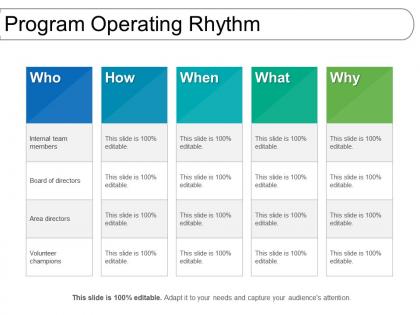
Program operating rhythm




Try Before you Buy Download Free Sample Product
 Impress Your
 Audience
 100%
100% Editable
 Save Hours
 of Time


Introduce forthcoming events with our Program Operating Rhythm. Get journalists interested in covering it.
People who downloaded this PowerPoint presentation also viewed the following :
Program operating rhythm with all 5 slides:
Our Program Operating Rhythm ensure your coaching is beneficial. They help deliver empowering advice.


FAQs for
Honestly, you need three main things to get this right. First - regular meetings with actual structure. Weekly for tactical stuff, monthly for bigger picture reviews, quarterly for planning. Don't just wing the reporting either (I've watched so many teams crash and burn doing that). Everyone should know which metrics actually matter and when you're looking at them. Also set up clear ways to escalate problems - otherwise issues just sit there forever while people argue about whose job it is. Oh, and map out whatever meetings you're already doing first. You'll probably find some obvious gaps pretty quickly.
Think of your team's operating rhythm like the beat that keeps everyone in sync. Without it? Total chaos. People miss deadlines, duplicate work, and nobody knows what's happening next. But when you nail down consistent meetings and predictable check-ins, magic happens - your team stops wasting mental energy on logistics and actually gets stuff done. Honestly, I've seen teams fall apart just because they couldn't figure out a basic meeting schedule. Map out what you're currently doing first, then spot where you need more regular touchpoints. It's like... once everyone knows the beat, they can improvise better.
Look, I get that nobody wants *more* meetings, but hear me out. Weekly check-ins are honestly what keep teams from falling apart. They catch problems early instead of letting stuff snowball into disasters later. Plus they create this rhythm where everyone knows what's expected - no more guessing games about priorities or deadlines. The trick is keeping them tight and focused, not those painful status update marathons we've all sat through. Start simple with weekly team syncs and maybe monthly bigger picture reviews. You can always tweak the timing once you see what's actually working for your group.
Dude, get some good dashboards and project management tools - they'll save you so much time chasing down status updates. You can automate the boring stuff and actually see what's happening in real time. No more "let me circle back on those numbers" nonsense that kills every meeting. AI's pretty solid for spotting problems before they blow up too. Oh and don't force your team to totally flip their workflow - just find tools that mesh with how you already operate. Trust me, nothing's worse than spending months getting everyone to adopt something that doesn't actually fit.
Just watch how your team actually operates and match that vibe. Collaborative places need more cross-team check-ins, while hierarchical orgs want clear escalation paths and exec briefings. Startups usually do better with weekly sprints - established companies? Monthly works fine since they're slower to decide anyway. I'd honestly just look at your current meeting patterns first. See how fast decisions actually get made around there. Then build a rhythm that works WITH what you've got going instead of trying to force some perfect system that'll just annoy everyone.
Honestly, I'd focus on three main areas. First is meeting efficiency - are people showing up, starting on time, actually making decisions? Then track whether you're hitting your goals and milestones consistently. The third thing is engagement quality - like whether people follow through on action items and teams are actually collaborating. Oh, and definitely measure how long it takes to go from "we decided this" to "we did this" - that gap tells you everything. Ask participants for feedback too because if they're dreading these meetings, you've got bigger problems. Start simple with maybe 2-3 things you can easily track. Perfect data isn't the point; you just want to see if your rhythm is driving real results or burning everyone's time.
Honestly, the best part is when your personal goals actually match what your team's trying to do. Makes everything flow better. You're not constantly fighting yourself over priorities or feeling pulled in different directions. I mean, who wants to fake caring about team metrics? When there's real alignment, you genuinely want to hit those numbers because they help you grow too. Daily decisions become way easier. Everyone's moving the same direction without all the drama. Look for spots where your career goals overlap with what your team needs right now - that's where you'll find the momentum that actually sticks.
Honestly, the worst part is when people just stop showing up or zone out completely. Meetings become this boring routine nobody cares about. New leadership always screws things up too - they walk in wanting to change everything for no reason. Content gets stale really fast if you're not careful. Action items? Good luck getting anyone to follow through. That kills momentum instantly. Teams can't stay on the same page when everyone's juggling different priorities. My advice: take a hard look at what meetings you actually need. Cut the useless ones and make the rest worth people's time.
Build this stuff right into your regular meetings - don't just hope it'll happen naturally. Weekly standups, monthly retros, quarterly reviews, whatever rhythm works. I'm a big fan of those "start/stop/continue" formats since they're simple but actually useful. Pulse surveys work too if you feed the results into leadership meetings. Here's the thing though - you've gotta close the loop. Show people how their feedback changed something, even if it's small. Otherwise they'll stop giving you honest input pretty fast. Make it systematic and people will actually participate.
You've gotta model it first - people watch what you do way more than what you say. Start meetings on time, come prepared, don't cancel unless someone's literally bleeding. I've watched so many rhythms die because leaders bailed when things got hectic (honestly the worst habit). Track who shows up and follows through. Short sentences work. Also keep explaining why this matters, not just the boring process stuff. Each cycle, remind everyone what you expect and celebrate teams that actually stick to it. Makes a huge difference.
Honestly, having a solid operating rhythm is huge for keeping your team happy and motivated. People need predictability - regular meetings, clear decision-making processes, that kind of stuff. It's weirdly like having a workout schedule; the routine actually gives you energy instead of boxing you in. Without it? Total chaos. Your team gets frustrated when they can't figure out what's going on or when decisions will actually get made. Priorities become a mess and morale tanks pretty quickly. My advice - start with regular check-ins and actually stick to them. Don't be that manager who cancels every other meeting.
Honestly, you gotta ramp up meetings way more than feels comfortable - like weekly instead of monthly, sometimes daily if things are really hitting the fan. The hardest part? Making calls without having all the info you want. Most teams hate that, but waiting for perfect data will kill you during big changes. Cut out communication layers too - info needs to flow fast both ways. Oh, and figure out your most critical numbers first, then check them way more often than usual. It feels excessive but that's how you catch problems before they snowball.
Think of it like this - your team needs a steady beat for making decisions. Weekly check-ins, monthly planning, quarterly reviews... whatever works for you. But here's the thing: without that rhythm, stuff just sits around forever while everyone's like "we should talk about this sometime." Super frustrating. Quick decisions get rushed, important ones never happen. I'd honestly map out what needs deciding and when, then just build your meetings around those moments. Otherwise you'll keep having the same conversations over and over.
So the thing with cross-functional teams is you really need that regular rhythm going. When marketing, engineering, and sales know exactly when they'll sync up, nobody's scrambling or stepping on toes. Creates these natural checkpoints too - way better than catching fires later. Your team starts predicting what others need instead of just reacting to urgent stuff all the time. Honestly, even something simple like bi-weekly check-ins makes a massive difference. I'd start by looking at your current touchpoints first, see where you're missing those regular coordination moments. Sounds boring but it actually prevents so much chaos down the line.
First thing - explain WHY you're changing the rhythm so people don't think you're just being random. I'd map out your main meetings and deadlines first since those are your fixed points. The beginning will be chaotic, no way around it. Don't stress about getting everything perfect right away. Just stay consistent with whatever you decide. Oh, and definitely schedule some check-ins during the switch so you can fix stuff that's clearly not working. Your team needs time to figure out how this affects their own stuff too. After maybe 6-8 weeks, sit down and honestly evaluate what's actually helping vs what you should ditch.
-
Good research work and creative work done on every template.
-
Content of slide is easy to understand and edit.