


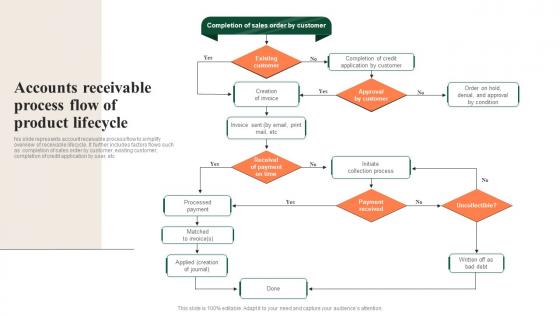
Accounts Receivable Process Flow Of Product Lifecycle




Try Before you Buy Download Free Sample Product
 Impress Your
 Audience
 100%
100% Editable
 Save Hours
 of Time


his slide represents account receivable process flow to simplify overview of receivable lifecycle. It further includes factors flows such as completion of sales order by customer, existing customer, completion of credit application by user, etc.
People who downloaded this PowerPoint presentation also viewed the following :
Accounts Receivable Process Flow Of Product Lifecycle with all 9 slides:
Use our Accounts Receivable Process Flow Of Product Lifecycle to effectively help you save your valuable time. They are readymade to fit into any presentation structure.








FAQs for Accounts Receivable Process Flow
Track your DSO first - that's days sales outstanding, basically how long it takes to get paid. Lower numbers = good. Your aging report will show what's overdue by 30, 60, 90+ days (honestly pretty scary the first time you run one lol). Also keep an eye on bad debt percentage and collection effectiveness index. I'd pull these monthly instead of just random snapshots. Trends matter more than one-off numbers. Oh and turnover ratio helps too if you want to see if things are getting worse over time. Start with DSO though if you're feeling overwhelmed.
Honestly? Just get way more aggressive about collecting what people already owe you - that's where the real impact is. Invoice the second you deliver anything. Then do weekly follow-ups on overdue stuff, even though chasing money feels super awkward. Try offering early payment discounts too - like 2% off if they pay within 10 days instead of 30. And definitely start running credit checks before you give payment terms to new customers. I learned that one the hard way lol. Being pickier upfront saves so much headache later.
Honestly, AR tech is such a lifesaver. It handles all the boring invoicing stuff automatically and tracks payments as they come in. Plus it'll flag accounts that are getting sketchy before things get messy. You can set up those automated reminder emails (which customers hate but whatever), process payments way faster, and actually see your cash flow in real time. The analytics part is where it gets interesting though - you'll start noticing which customers always pay late or which ones might bail. Takes all the manual busy work off your plate so you can actually talk to your important clients. I'd start with automating the most annoying repetitive stuff first.
Be upfront about payment terms right from the start - no wiggle room that'll bite you later. Frame your credit policies as protecting everyone, not just you (even though yeah, it's totally about covering yourself too). When payment drama hits, work with them instead of just being the money police. Payment plans help. Regular check-ins work too. Honestly, most clients respect clear boundaries way more than businesses that bend over backwards for everyone. Oh, and treat the whole thing like customer service, not some scary collections thing. Makes a huge difference in how people respond.
Oh man, currency swings will mess with your margins big time. Payment delays are brutal too since their banking systems work totally different than ours. Then you've got all these local regulations and tax stuff to figure out - it's honestly a nightmare. Credit checks? Good luck getting reliable data on international customers. Collection calls get weird when there's language barriers, and don't even get me started on how different cultures view "on time" payments. I'd set super clear terms upfront and maybe find some international collection agencies. Currency hedging might be worth it for your bigger accounts.
So basically you can sell your unpaid invoices to get cash right now instead of waiting months for customers to pay. A factoring company will give you like 80-90% upfront, then they deal with collecting from your customer. Pretty sweet deal honestly. Yeah the fees are higher than regular loans, but when you need cash flow it's worth it. Oh and make sure your customers aren't total flakes because the factoring company will check their credit too. I'd shop around and get quotes from a few different companies first.
Honestly, most businesses are way too nice about this stuff. Get your payment terms crystal clear upfront, then actually stick to a follow-up schedule - invoice immediately, then bug them at 15, 30, and 45 days. Early payment discounts work surprisingly well for getting people to pay faster. And seriously, pick up the phone for bigger amounts instead of just sending emails that'll sit in someone's inbox forever. Oh, and if you've got customers who are always late? Start asking for deposits or cut their payment window down. Being pushy feels weird at first, but it's better than chasing money constantly.
Dude, you absolutely have to check credit risk first - I can't stress this enough. Look at payment history, financial stability, credit scores, the whole deal. My buddy's company got completely screwed because they rushed into sales without doing this homework. Yeah, you don't want to scare off decent customers with too much red tape, but find that balance. Set up some standard criteria so you're not winging it every time. And honestly? Don't hesitate to ask sketchy accounts for deposits or shorter payment terms upfront.
Late payments will absolutely wreck your cash flow - that's the real killer here. You end up scrambling to cover payroll and bills from wherever you can find money. Your accounts receivable gets bloated too, which makes your books look terrible to banks (learned this one the hard way). The worst part? Those overdue invoices turn into bad debt way more often than you'd think. Honestly, I'd get stricter with payment terms and start hounding people the second they're late. Every day you wait just makes it worse.
Looking at your old payment data is where you'll find gold - seasonal patterns, who always pays late, average collection times. Once you've got enough history, ML models can actually predict cash flow pretty accurately using invoice aging and customer behavior. Pull your AR aging reports first, that's your starting point. Track DSO and do cohort analyses to catch changes early. Honestly, I was surprised how well this stuff works once you feed it enough data points. External factors like industry trends help too, but customer payment history is really the main driver.
Honestly, three things will save you tons of drama. Get your credit approval process locked down first - can't tell you how much grief this prevents down the road. Payment terms need to be crystal clear and consistent across all customers, no exceptions. Set up a follow-up system for late payments too. Something like 30-60-90 day check-ins with escalating consequences works well. Oh, and give your team some decision-making power for payment plans so they're not running to you constantly. Track your DSO every month though - that's where you'll really see if things are working.
Yeah so basically when things get tight economically, your AR takes a hit in a few ways. Customers start dragging their feet on payments to hold onto cash longer. DSO goes up, obviously. Plus they'll nitpick invoices more and ask for extended terms - honestly, can't blame them but it sucks for you. During slow seasons it's the same thing but worse. Smart thing to do? Tighten your credit rules before you know rough months are coming. Early payment discounts work pretty well too if you need to keep money moving.
Send your invoices right after delivery - don't wait around. Make payment terms super clear from the start, like annoyingly clear. Break down every charge so they can't claim confusion later. Here's what nobody tells you though: follow up BEFORE the due date, not after you're already pissed off about late payment. I learned this the hard way. Keep your follow-ups professional but not robotic. If you've got decent margins, maybe throw in a small discount for early payment. The whole thing falls apart if you get weird about asking for your own money.
So I'd definitely start with automating invoice generation or payment reminders - those are usually the biggest time sucks. You can set up workflows that automatically send payment notices, apply incoming payments, and flag overdue accounts. No more manual data entry mistakes either, which is honestly such a relief. The dashboards are pretty sweet too - real-time aging reports and cash flow predictions right there. My friend Sarah saved like 10 hours a week doing this. Just pick your most annoying repetitive task first and automate that, then work your way down the list.
Honestly, early payment discounts are a game-changer for cash flow. You get paid way faster, and customers actually love saving money - win-win situation. I've seen businesses cut their collection headaches in half just by offering something like 2% off if they pay within 10 days instead of the usual 30. Way less time spent chasing people down for late payments. The only thing is you gotta crunch the numbers first to make sure that discount won't kill your margins. But seriously, most of the time it's totally worth it for the peace of mind alone.
-
I’ve been your client for a few years now. Couldn’t be more than happy after using your templates. Thank you!
-
The pricing page of this website is very sorted. I felt no pain while buying the PPTs.