

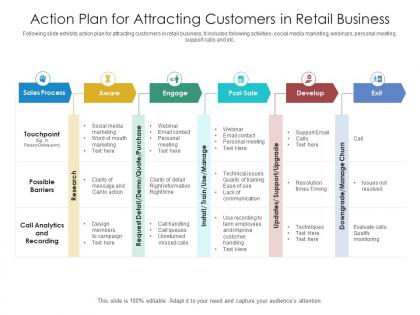
Action plan for attracting customers in retail business




Try Before you Buy Download Free Sample Product
 Impress Your
 Audience
 100%
100% Editable
 Save Hours
 of Time


Following slide exhibits action plan for attracting customers in retail business. It includes following activities- social media marketing, webinars, personal meeting, support calls and etc.
People who downloaded this PowerPoint presentation also viewed the following :
Action plan for attracting customers in retail business with all 2 slides:
Use our Action Plan For Attracting Customers In Retail Business to effectively help you save your valuable time. They are readymade to fit into any presentation structure.
FAQs for Action plan for attracting customers
Honestly, it starts with knowing who you're actually talking to. Pick 2-3 channels max where those people spend time - could be LinkedIn, Google, whatever. Don't do the spray-and-pray thing with Facebook ads (learned that one the hard way lol). Your messaging has to hit their actual problems, not what you think they need. Track everything but focus on quality leads over volume - sounds obvious but most people mess this up. Test stuff systematically and double down on what works. Oh, and nail those first few channels before you get distracted by shiny new platforms.
Honestly, data analytics is a game changer - it stops you from just guessing who might buy your stuff. Look at your best customers first and figure out what they all have in common. Same age range? Similar buying habits? That's your blueprint right there. Then you can find more people who match that profile. Plus you'll see which marketing channels actually work instead of throwing money at Facebook ads that go nowhere (been there). I'd start simple - just pull up info on your top 20% of customers and look for patterns. That's where the magic happens.
Think of content marketing like being the helpful friend who actually knows stuff - you share useful content that solves real problems your customers have. Blog posts, videos, whatever format works. People find you through Google or social media when they're searching for answers (way better than annoying them with ads, honestly). Once they see you consistently dropping valuable info, you become their trusted go-to person. Then when they're ready to buy, guess who they think of first? Start simple: figure out the three questions your ideal customers always ask you, then create content around those. It's honestly that straightforward.
Honestly, social media totally changed the game for getting customers. Your target audience is already scrolling there for hours anyway - might as well meet them where they are. What's cool is you can get super targeted with who sees your stuff based on age, interests, all that. But here's the thing that really works: build trust first before trying to sell anything. Comment on posts, share helpful content, actually engage with people. Way better than randomly messaging strangers. Oh and don't spread yourself thin - just pick 1 or 2 platforms where your ideal customers actually spend time. Focus there.
Okay so track your cost per acquisition and customer lifetime value first - that's your bread and butter for knowing if you're not hemorrhaging money. Conversion rates at each stage matter too. ROAS is obviously huge. Then there's the quality stuff like retention rates because honestly, who cares if you're getting customers for cheap if they all bail after a week? Time to conversion tells you a lot about your funnel too. I'd throw together a simple dashboard (nothing fancy) and check it weekly. That way you catch problems before they wreck your budget. Trust me on this one.
Honestly, personalization is a game-changer because people can instantly tell when you actually understand their world. Generic outreach gets deleted faster than spam - we've all been there with those "Dear Sir/Madam" disasters. But when you mention their specific industry challenges or role? Response rates jump 2-3x higher than basic templates. I usually tell people to start small though - pick maybe 2-3 ways to segment your audience and write different messages for each group. The results are pretty obvious once you try it. Way better than blasting the same thing to everyone.
Dude, referral programs are such a smart move for getting new customers. Your current customers basically become your sales team, and people trust recommendations from friends way more than random ads. The conversion rates are insane compared to cold outreach. You only pay when someone actually signs up, so it's pretty cheap too. Oh and those referred customers? They usually stick around longer and spend more over time. I'd probably start with something simple like "give $10, get $10" and see how it goes from there.
Dude, you HAVE to do market research first. I'm serious - I completely bombed a campaign once because I thought I knew my audience but was totally wrong. It's like the whole foundation of everything. Research shows you which channels actually work and what messaging hits different with people. Without it you're basically throwing money at random audiences hoping something sticks. Super expensive mistake. Start with basic demo stuff and behaviors, then figure out where these people actually spend time online. Oh and what keeps them awake at 2am worrying - that's gold for messaging.
So the classic mistakes I see everywhere - casting way too wide a net with targeting, which just burns through your budget on people who'll never convert. Companies also bail way too fast before the algorithm even has a chance to learn anything useful. Honestly, the worst offender is chasing vanity metrics like raw lead volume instead of actually good leads. Recipe for disaster there. Don't put everything into one channel either since Facebook could wake up tomorrow and tank your costs. My advice? Nail down who your perfect customer actually is first, then set up tracking that doesn't suck from the start.
Look for businesses targeting your same customers but not competing directly - like SaaS companies teaming up with marketing agencies. Cross-promote through each other's email lists or co-host webinars together. Joint content works great too. The trick is making sure both audiences actually benefit from whatever you're promoting. Nobody wants to feel like they're just being sold to, you know? I'd probably start with just one solid partnership first. Test what clicks with people before you go crazy and partner with everyone. Oh, and make sure you actually like working with them - these things can get messy if personalities don't mesh.
Dude, reviews are pure gold for getting new customers. People literally won't buy anything without checking what others say first - I do it too, even for like a $10 phone case. Put them everywhere: your website, emails, sales pitches, whatever. The trick is they have to look real, not like you just grabbed the best ones. Short ones work great, actually. Start asking customers for feedback right after they buy, and honestly? Even mediocre reviews help because they seem more legit. Social proof is everything these days.
So basically, B2B takes forever because you're dealing with committees and bigger budgets - think months of relationship building, LinkedIn posts, boring whitepapers. B2C is the opposite. People see something, want it, buy it. Done. B2B folks want to be educated and trust you first, so you're nurturing leads with helpful content. Consumer marketing is more about catching attention fast - Instagram ads, influencers, that instant gratification stuff. Honestly, B2B can be exhausting with all the stakeholders involved, but the deals are usually worth way more. Just match your approach to how people actually make decisions in each space.
Honestly, AI is completely changing the customer game right now. Predictive analytics can spot your best prospects before they even realize they want what you're selling. Chatbots are handling those first conversations around the clock, which is pretty sweet. Everything gets personalized now too - every interaction feels tailored specifically for each person. Voice search is weird though - people talk to Alexa totally different than how they'd type into Google, so SEO's getting flipped upside down. AR and VR create these crazy immersive experiences that actually stick in people's heads way better than regular ads. I'd just pick one spot in your current setup where AI could boost conversions and start there.
Honestly, start with one really good lead magnet - maybe a free guide or discount that your people actually want. Don't jump straight into selling when someone subscribes, that's annoying as hell. Set up a welcome sequence that gives value first. I'd segment your list too based on what people are interested in, makes your emails way more relevant. The whole thing works better when you're genuinely helpful - share tips, industry stuff, whatever's useful. Then you can slip in promotions naturally without being pushy. Master one lead magnet before you go crazy adding more.
Honestly, just don't be shady about it. Be upfront with pricing and what your product actually does - nobody likes feeling tricked. Get real consent before collecting people's data, and when they say stop emailing them, actually stop. Don't go after vulnerable groups with sketchy tactics either. I've seen way too many companies use those dark pattern tricks to get signups, but it always bites them later. Would you want someone marketing to you that way? Probably not. Stick to honest approaches and you'll get customers who actually stick around instead of ones who feel burned.
-
Great designs, really helpful.
-
Nice and innovative design.