


Advantages And Disadvantages Of Transactional Model Of Communication




Try Before you Buy Download Free Sample Product
 Impress Your
 Audience
 100%
100% Editable
 Save Hours
 of Time


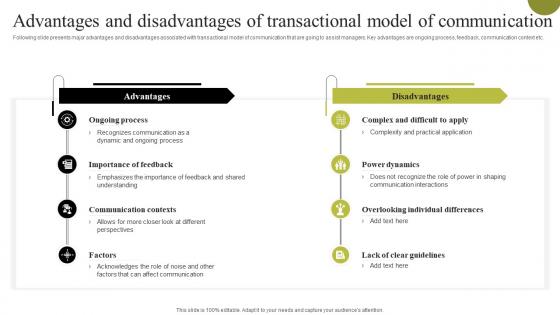
Following slide presents major advantages and disadvantages associated with transactional model of communication that are going to assist managers. Key advantages are ongoing process, feedback, communication context etc.
People who downloaded this PowerPoint presentation also viewed the following :
Advantages And Disadvantages Of Transactional Model Of Communication with all 6 slides:
Use our Advantages And Disadvantages Of Transactional Model Of Communication to effectively help you save your valuable time. They are readymade to fit into any presentation structure.





FAQs for Advantages And Disadvantages Of Transactional
So basically you've got sender, receiver, message, channel, noise, and feedback - pretty standard stuff. But here's what's cool about this model: you're doing both jobs at once. Like, you're sending AND receiving constantly. The channel's whatever you're using (text, talking, etc.), noise is anything screwing up the message. What makes it different though? It's not just A talks then B talks. You're both encoding and decoding simultaneously, reading each other's reactions and switching up your approach mid-conversation. Super dynamic. Oh, and the feedback never stops - you're constantly adjusting based on their facial expressions or whatever.
Okay so basically the transactional model is way more realistic - it shows that we're all sending AND receiving messages at the same time. You know how when someone's talking, you're already nodding or making faces or whatever? That's what I mean. The old linear models were like "person A talks, person B listens" which is kinda dumb when you think about it. Interactive models tried to fix this by adding feedback loops, but they still made it seem like people take turns. Real communication is messier than that. Like when you're texting and already typing back before they finish their thought - that's transactional communication right there.
So the transactional model is perfect when you need that back-and-forth communication happening in real time. Like team meetings or negotiations where everyone's constantly responding to each other. I've noticed it works crazy well for brainstorming sessions too. Unlike those situations where people just take turns talking, everyone's sending AND receiving messages at the same time. Context keeps shifting based on what people say. Customer service calls are another good example - oh, and conflict resolution. Next time you're running a meeting, pay attention to how much that constant feedback loop actually changes where the conversation goes. It's pretty wild how much it impacts everything.
So basically, in the transactional model you're constantly getting feedback while you talk - not just waiting till the end like those weird linear models from textbooks. You'll notice your coworker's confused face and immediately switch up what you're saying. It happens both ways too, since you're also giving off signals they're reading. I swear this stuff becomes so obvious once you start paying attention to it. Try watching for it next time you're in a meeting - you'll catch yourself adjusting based on people's reactions without even thinking about it.
Dude, context is HUGE when you're trying to communicate with people. Where you are matters - like talking in someone's office vs grabbing them in the hallway. Cultural stuff plays into it too. Your relationship with the person changes everything. I swear, the same exact words can land completely different depending on the situation. You could nail your message but if you ignore the context? Total miss. So before you say anything, just think about what's going on around you and how that might affect how they hear it.
So basically, non-verbal stuff is constantly changing how conversations go. Your face, body language, tone - all of that immediately affects how someone interprets what you're saying. Then they react back (verbally AND non-verbally), which changes how you'll respond next. It's honestly like this weird dance that never stops. I swear even something tiny like an eye roll can derail an entire discussion. You should try watching for this feedback loop thing in your next meeting - you'll notice how everyone's just constantly adjusting based on each other's reactions. Pretty wild when you actually pay attention to it.
Oh man, cultural stuff totally throws off communication because everyone encodes and decodes messages differently based on their background. Like, some cultures are super direct while others hint around things. Plus nonverbal cues mean completely different things - I learned that the hard way once! Some people expect quick responses, others are cool with silence. Feedback styles vary too, which messes with that back-and-forth flow. Honestly, the trick is just don't assume your message landed how you meant it. Ask follow-up questions and adjust your style when you're talking to someone from a different culture.
Honestly, noise in communication is way more than just loud sounds - though that construction crew outside doesn't help either. It's basically anything screwing with your message. You've got the obvious stuff like background noise, but then there's psychological junk (like when you're stressed or already decided what someone's gonna say) and semantic problems - think jargon or cultural miscommunications. Here's the thing that makes it tricky: in real conversations, you're both sending and receiving constantly. So noise hits from all angles and creates this weird chain reaction where you're both adjusting based on messed-up feedback. Best approach? Figure out what type you're dealing with instead of just repeating yourself louder.
So the transactional model is pretty cool because it actually gets that power dynamics mess with every part of communication, not just obvious stuff. Your social status or expertise changes how you word things, what platforms you can even use, and whether people actually listen to your feedback. Like, I write totally different emails to my manager than to coworkers - that's power shaping everything. Linear models basically pretend this doesn't exist, which is wild. The whole point is recognizing these imbalances so you can try to level the playing field when you communicate.
Honestly, tech is a double-edged sword for communication. Video calls are great because you can actually see someone's face and catch their tone - way better than guessing what someone means over text. But then you've got all the annoying stuff too, like when your video freezes mid-sentence or someone totally misreads your message. I swear texting causes more drama than it prevents sometimes. The trick is picking the right tool - sometimes one quick phone call saves you from like 20 confusing texts back and forth. Just depends on what you're trying to say.
Honestly, it's all about making sure everyone actually talks AND listens - not just waiting for their turn to speak (which happens way too often, ugh). Ask follow-up questions when someone shares something. Create space where people can give real feedback without feeling awkward about it. Regular check-ins help a ton. Watch body language too - sometimes that tells you more than words do. Oh, and use tools where everyone can jump in and contribute ideas. The biggest thing though? You've got to model it yourself. Be curious about what others think and don't pretend you understand when you don't.
Oh totally! Your emotions mess with everything - how you say stuff AND how you hear it. Like when I'm stressed I talk way too fast and probably sound snippy. The other person picks up on that vibe even if I don't mean it. Plus if they're already in a weird mood, they'll read into everything you say differently. I swear I've sent so many texts that sounded fine in my head but came across totally wrong. It's like this whole feedback loop that just gets worse. Before big conversations I try to check - am I being crazy right now? What headspace are they probably in?
Honestly, the biggest thing that screws up communication is just noise - like actual background noise but also mental clutter. People come at conversations with totally different perspectives and baggage. Plus everyone's so busy thinking about what they're gonna say next instead of actually listening, which drives me crazy. Cultural stuff and jargon make it worse too. When people are stressed or defensive? Forget it - they either shut down or twist what you're saying. Oh, and preconceived ideas are brutal. Best fix is always double-checking that you're both on the same page and making space for real back-and-forth conversation.
Honestly, just focus on actually listening instead of planning what you'll say next - that's like 80% of it right there. Watch body language too, yours and theirs. I'm still working on this myself tbh. Try to match how you talk to whoever you're with instead of using the same approach every time. Oh and don't just talk AT people - give them space to respond and actually engage with what they say back. Maybe start small? Pick one conversation today where you'll really listen first, then respond. The feedback loop thing makes such a difference once you get it.
Honestly, it's all about power balance and making sure nobody feels pressured. Like, check yourself - are you using your position or knowledge to steamroll the conversation? Both people should feel free to actually participate without any weird coercion vibes. Since communication goes both ways, you're both responsible for how it turns out, which is kinda intense when you think about it. Pay attention to body language too. Someone might say they're fine but look super uncomfortable. Don't just focus on getting your point across - actually create space for real back-and-forth dialogue.
-
My team has been relying on SlideTeam’s professional PPT designs for a while now. It has greatly sped up quality work at my organization. So thanks!
-
Much better than the original! Thanks for the quick turnaround.