


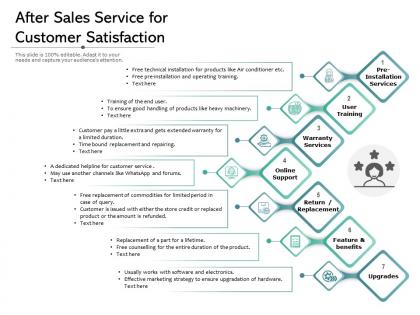
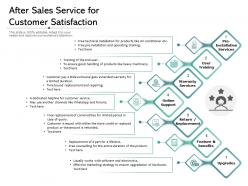
After sales service for customer satisfaction




Try Before you Buy Download Free Sample Product
 Impress Your
 Audience
 100%
100% Editable
 Save Hours
 of Time


Our After Sales Service For Customer Satisfaction are topically designed to provide an attractive backdrop to any subject. Use them to look like a presentation pro.
People who downloaded this PowerPoint presentation also viewed the following :
After sales service for customer satisfaction with all 2 slides:
Use our After Sales Service For Customer Satisfaction to effectively help you save your valuable time. They are readymade to fit into any presentation structure.
FAQs for After sales service
Honestly, after-sales support is where you really win customers over. Most companies just disappear once they get paid - super annoying. But if you actually help people with problems and stay in touch? Game changer. Customers remember that stuff. They'll keep buying from you and tell their friends too. I mean, we've all been burned by terrible customer service, so when someone actually cares it stands out big time. Just be quick to respond and actually try to help instead of giving people the runaround.
Dude, after-sales service is basically like staying friends after a hookup - it's what separates the good companies from the sketchy ones. People forget your ads, but they'll never forget how you handled their broken product or annoying issue. Quick problem-solving makes customers actually trust you, not just buy from you once. Plus they'll tell their friends about you, which is honestly better than any marketing. My advice? Look at how you currently help customers and figure out where you can be more personal about it. Way more effective than just hoping they come back.
Look, it's all about having your customers' backs after they buy. Chat, email, phone support - the basics covered. Good warranty and return policies that don't make people jump through hoops. Training your support team properly is huge, and they need access to purchase history so customers aren't repeating themselves constantly. Follow up proactively on orders and any issues that pop up. Here's what I've noticed - the brands people actually tell their friends about? They make fixing problems way less painful than the original frustration. Oh, and definitely collect feedback so you're not just guessing what sucks.
So it really depends on who you're selling to, honestly. Tech companies are all about remote help and pushing software updates. Car companies? They focus on having parts ready and certified mechanics everywhere. Luxury brands will practically hold your hand through everything - super fancy concierge treatment. But if you're selling basic stuff, you'll probably just need decent warranties and phone support. Healthcare gear is crazy important since people's lives are on the line, so they need 24/7 help. Consumer electronics... eh, most people just ask Reddit or check forums these days. Figure out what actually bugs your customers after they buy, then fix those specific things.
Honestly, start with CSAT and response time - those two will tell you tons right off the bat. NPS is solid too, plus first-call resolution rates. Response time's probably the biggest pain point for customers, nobody wants to sit around waiting. I'd also watch repeat contact rates and how often cases get escalated. Oh, and definitely track customer retention after service calls - that's where you see if people actually stick around or bail. Don't go crazy tracking every possible metric though. Pick like 3-4 that actually move the needle for your specific business.
Dude, tech can seriously change your whole after-sales situation. Chatbots handle customer questions 24/7, which is clutch. CRM systems track everything so you're not scrambling for service history. My buddy's company uses predictive analytics to spot problems before customers even call - pretty smart move. People actually prefer self-service these days, so mobile apps where they can book repairs or check warranties work great. AI helps your team diagnose stuff faster too. Oh, and it suggests solutions based on what they bought before. Just start with whatever's driving you crazy right now though.
Response times are probably gonna be your biggest headache, plus keeping service quality consistent across your team. Staff shortages hit hard when complex issues pile up - honestly feels like you're constantly putting out fires. Poor communication between departments creates those annoying handoffs that make customers wait forever. Oh, and don't get me started on outdated systems with limited resources. Training your support people properly makes a huge difference though. Set clear timeframes upfront so customers know what to expect. It's messy but manageable once you get the basics down.
Honestly, after-sales support can totally save your online reputation. Good customer service turns angry reviewers into fans - I've watched companies flip their whole review game just by being faster with responses. But mess up someone's support experience? They'll absolutely roast you online for it. People are way more likely to write reviews when they're pissed off or really impressed, so decent follow-up keeps things balanced. The smart move is checking in with customers after they buy stuff. Most won't bother reviewing unless you really wow them or completely screw something up.
Start with product training - they've gotta know everything inside and out, common problems, fixes, the whole deal. Communication stuff is massive though because let's be real, nobody's happy when they're calling support. Teach them active listening and how to calm people down without sounding robotic. Problem-solving training helps too so they don't have to escalate every little thing. Oh and conflict resolution - that's probably the hardest part honestly. Layer the soft skills on after you've got the technical foundation down. Trust me, angry customers can smell inexperience from miles away.
Basically, dig into your customer data and actually use it. Look at what they bought, how they like to be contacted, any problems they've had before. Then tailor everything - their name, specific product details, the whole thing. Most companies are honestly garbage at this simple stuff. Send follow-ups that make sense for what they purchased. Maybe suggest accessories that actually fit. Use their preferred contact method instead of blasting everyone with emails. Oh, and try to spot issues before they blow up. The goal is making them feel like you're not just some random support bot, you know? It's really about showing you remember who they are.
Honestly, you need a good triage system - it'll save you so much time. I'd start by sorting emails into urgent vs. non-urgent, then make templates for stuff you answer constantly (because writing "have you tried restarting it" 100 times gets ridiculous). Get a CRM or ticketing thing so nothing gets lost. Your team should know when to escalate tricky problems up the chain. Oh, and always shoot back a quick "got it, looking into this" within a day even if you can't fix it yet. People just want to know you're not ignoring them. Look at what's eating up most of your time right now and fix that first.
Honestly, start with tracking your most common tickets and response times - that'll show you exactly where to focus. Data analytics can spot patterns in complaints and help you catch trends before they blow up into bigger issues. Like if one product batch is suddenly generating tons of service calls, you'll see it early. Pretty useful stuff. You can also predict when customers might need help based on how they use your product or their purchase history. Response times become way more trackable too. The personalization aspect is neat - you can tailor support based on someone's previous interactions with your team.
Honestly, after-sales service is what separates the good businesses from the "buy once and ghost you" ones. Your customers remember how you treat them after they've already paid - that's when you really show your true colors. Good support turns random buyers into people who'll come back and actually recommend you to others. Anyone can make a sale, but dealing with problems later? That's the real test. I've seen companies totally blow it here and lose customers for life. Make sure your post-purchase experience doesn't suck - fix issues fast, stay helpful, and don't disappear once you've got their money.
Honestly, I'd start with a chatbot and self-service portal - those two will save you so much headache. Customers can handle basic troubleshooting themselves, and your team gets freed up for the actually tricky stuff. Predictive maintenance is worth exploring too since you can catch problems before customers even know they exist. AR support through phone cameras is pretty slick but maybe overkill unless you're in like, heavy machinery or something. Oh, and subscription models with proactive outreach based on usage patterns are becoming standard. The chatbot/portal combo gives you the best ROI to start.
Start by picking whichever platform your customers actually hang out on most - no point being amazing on Instagram if everyone's complaining on Twitter, you know? Set up dedicated support accounts there and monitor mentions constantly. Don't just wait around for tags either; actively hunt for people talking about your brand. Quick responses are everything. Facebook Messenger and Twitter DMs work really well for handling stuff privately when things get messy. Once you've nailed one platform, branch out to others. Oh, and being proactive beats reactive every single time.
No Reviews