


Agile software development methodology scrum sdlc agile model it




Try Before you Buy Download Free Sample Product
 Impress Your
 Audience
 100%
100% Editable
 Save Hours
 of Time


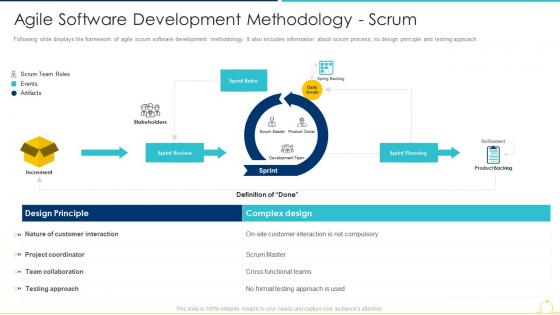
Following slide displays the framework of agile scrum software development methodology. It also includes information about scrum process, its design principle and testing approach.
People who downloaded this PowerPoint presentation also viewed the following :
Agile software development methodology scrum sdlc agile model it with all 6 slides:
Use our Agile Software Development Methodology Scrum SDLC Agile Model It to effectively help you save your valuable time. They are readymade to fit into any presentation structure.





FAQs for Agile software development methodology scrum sdlc
Okay so Scrum has three core things: transparency, inspection, and adaptation. Basically everyone can see what's going on, you're constantly checking in (daily standups, sprint reviews, that stuff), and you pivot when something's not working. The whole point is working in short sprints instead of trying to plan everything from day one like we used to. Honestly, embracing change is way better than fighting it - learned that the hard way. I'd say pick a sprint length and stick with it for a few rounds so you can actually see how fast your team works.
Scrum really does help teams work better together. Daily standups get everyone talking about progress and roadblocks. Sprint planning makes the whole team commit to shared goals. Retrospectives are where you can actually say what's broken without it being weird. The boards and visual stuff means no one's working in secret anymore - which honestly saves so much drama. Sprint reviews keep stakeholders in the loop too. It basically creates conversations that teams usually avoid having. Pro tip though: don't let standups become boring status updates. Ask "how can we help each other?" Way more useful.
So there are basically three roles you need to know about. The Product Owner decides what gets built and ranks everything by importance - they're like the business voice. Then you've got the Scrum Master who keeps things moving and clears roadblocks (honestly, good ones are worth their weight in gold). Development Team does the actual building and figures out how to organize themselves. It's pretty collaborative overall since everyone's constantly talking to each other. Just make sure you know which role you'll be in so you don't step on anyone's toes!
Your Scrum Master's basically the team's bodyguard and problem-solver. They hunt down blockers, keep meetings from going off the rails, and shield you from random interruptions. Not your boss or anything - more like a coach who helps everyone get better at Scrum. Honestly, they should be spotting issues before they even hit your radar. We had one SM who was useless at this and it made everything so much harder. If yours isn't being proactive about clearing roadblocks, definitely worth having that awkward conversation about what you need from them.
So there are three main Scrum artifacts you need to know about. Your Product Backlog is like a prioritized wishlist that's always changing. Sprint Backlog? That's what your team actually commits to finishing this sprint - way more focused. Then you've got the Product Increment, which is the working software you ship each time. These things are honestly pretty brilliant because they keep everyone on the same page about what matters most. You're forced to chunk big ideas down into stuff you can actually deliver. Oh, and treat them like living docs - they should guide what you do every day, not just sit there looking pretty.
So sprints are just chunks of work - usually 1-4 weeks where your team picks specific features to finish. Start with planning, work through stuff daily, then do a review and retrospective at the end. They're like mini-deadlines that actually work because once you start, no one can add random new requirements (thank god). The rhythm is what matters most - you'll start predicting delivery times way better. Pick whatever sprint length fits your project's complexity and don't keep changing it. Consistency builds momentum, plus your team won't hate the constant switching around.
So there's four ceremonies in Scrum that'll keep your team on track. Sprint Planning kicks things off - you figure out what to work on next. Then you've got Daily Standups for quick check-ins, though honestly these can turn into mini-meetings if people ramble. Sprint Review is where you show off finished work to stakeholders. Finally there's Sprint Retrospective - basically where everyone vents about what sucked and celebrates wins. Planning gives direction, standups catch problems early, reviews get feedback from the business side. Retros help you actually improve instead of repeating mistakes. I'd focus on getting standups right first since they're daily.
Honestly, just pick 2-3 metrics that match whatever your team's struggling with right now. Sprint velocity trends are solid, plus how often you're actually hitting sprint goals. Cycle time matters too - nobody wants stories dragging on forever. Here's the thing though: if your retrospectives keep surfacing the same problems sprint after sprint, something's broken. Team satisfaction is huge because miserable devs write terrible code, velocity be damned. But real talk? The only metric that truly counts is shipping stuff users give a damn about. Track consistently for a few sprints and you'll see patterns emerge.
So basically, Scrum's built for changes - that's the whole point. Work happens in these short 1-4 week chunks called sprints. New stuff gets added to your backlog and prioritized for the next sprint instead of messing up what you're currently doing. Those sprint reviews are clutch because stakeholders actually see working software and realize "oh wait, this isn't what I thought I wanted" (happens literally every time). Your product owner keeps shuffling priorities based on feedback. Main thing though - don't let changes creep into your current sprint or you'll never finish anything. Save the new requests for next time around.
Honestly, most teams crash into the same three walls. Stakeholders hate the shorter cycles and keep trying to change stuff mid-sprint - basically chaos. Daily standups? They turn into boring status reports instead of actual teamwork. Story estimation is where teams really mess up though - they're way too optimistic and blow past deadlines constantly. My advice? Start with crazy short sprints, like 1-2 weeks max. You'll screw up faster but learn quicker. Oh, and train your Product Owner first - that role makes or breaks everything. The team chemistry stuff comes after.
So the Agile Manifesto is basically what Scrum built itself on. Those four values? They show up everywhere in how Scrum actually works. Like prioritizing people over rigid processes - that's why you've got daily standups and retros. Working software beats endless docs, so teams demo real features every sprint. Customer collaboration trumps contracts (your product owner's there for a reason). And honestly, responding to change instead of sticking to some unchangeable plan just makes sense. I mean, who hasn't had requirements shift mid-project? When you're planning sprints, focus on flexibility and putting your team first rather than just chasing dates.
Jira's honestly your best bet - it's made for agile stuff and plays nice with everything else. If you're already using Microsoft tools, Azure DevOps makes sense. Trello's perfect for smaller teams who don't want complexity, just drag-and-drop simplicity. Monday.com and ClickUp are getting popular too, though I haven't used them much personally. Here's the thing though - the best tool is whatever your team will actually stick with. Don't overthink it. Look at what they're comfortable with and your current setup, then go with something that won't become a headache.
Yeah, Scrum totally works remote! Just move everything to video calls - standups, planning, retros, the whole thing. Good screen sharing is key. The hardest part? Honestly, keeping that team energy alive when people are in different time zones. That's where tools like Miro or Jira become lifesavers for your boards. One thing though - beef up your Definition of Done with way more documentation since you can't just walk over and ask questions anymore. Oh, and start with shorter sprints at first. Helps everyone stay in sync while you're figuring out the remote flow. You can always stretch them out later once it clicks.
So basically it's your team's checklist for what "done" actually means. You know how devs always think they're finished but then QA finds bugs and nothing's documented? Yeah, that's why you need this. It stops all the back-and-forth about whether something's really complete. Should include stuff like code reviews, testing, docs - whatever matters to your team. Oh and make sure everyone helps write it, not just one person deciding for everyone else. Update it when your process changes too.
So here's the thing about Scrum - it basically forces you to get better through those retrospectives after each sprint. Your team sits down and honestly talks about what sucked and what worked. The 2-4 week cycles are clutch because you're not waiting forever to fix things. Daily standups catch problems early too. I've seen teams stuck in terrible processes for months, but Scrum won't let that happen. My advice? Make those retros brutally honest and only pick 1-2 things to actually change each time. Don't try fixing everything at once - you'll just burn out.
-
Appreciate the research and its presentable format.
-
Understandable and informative presentation.