

Amazon Business Model Powerpoint PPT Template Bundles BMC





Try Before you Buy Download Free Sample Product
 Impress Your
 Audience
 100%
100% Editable
 Save Hours
 of Time


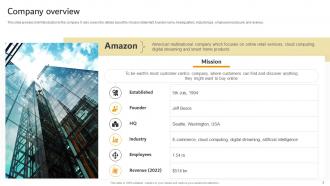
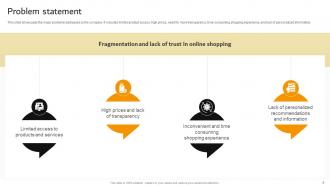
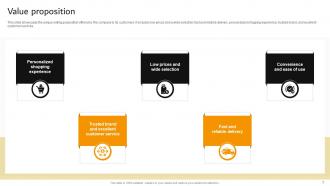
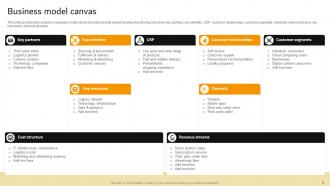
Explore the business dynamics of Amazon through our comprehensive Business Model PowerPoint presentation. Gain insights into the Company Overview, identifying the Problem Statement and the innovative Solutions employed. Delve into Customer Segments and discover the compelling Value Proposition. The Business Model Canvas provides a visual journey, while Key Channels and Customer Relationships showcase strategic outreach. Uncover the Revenue Model and Pricing Strategy that powers Amazons success. Understand the Key Resources, Activities, and Partnerships that drive operational excellence. Navigate the Cost Structure and delve into Financial Projections for a holistic view. Elevate your understanding of Amazons thriving business with our insightful presentation. Download now to embark on a strategic learning experience.
People who downloaded this PowerPoint presentation also viewed the following :
Amazon Business Model Powerpoint PPT Template Bundles BMC with all 32 slides:
Use our Amazon Business Model Powerpoint PPT Template Bundles BMC to effectively help you save your valuable time. They are readymade to fit into any presentation structure.






















FAQs for Amazon Business Model Powerpoint PPT
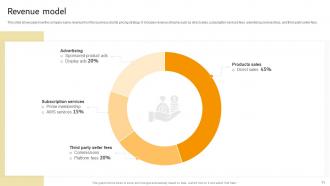
Amazon's key revenue streams include product sales, Amazon Web Services (AWS), Prime memberships, advertising services, third-party seller fees, and subscription services. These diversified streams work together by leveraging Amazon's vast customer base and infrastructure, with many enterprises finding that AWS and advertising deliver the highest profit margins, ultimately enabling Amazon's competitive pricing while maintaining strong overall profitability.
Amazon utilizes data analytics through personalized recommendations, predictive inventory management, dynamic pricing algorithms, customer behavior tracking, and supply chain optimization. These technologies streamline shopping experiences by anticipating customer needs, reducing delivery times, and optimizing product availability, with many retailers finding that similar data-driven approaches ultimately deliver competitive advantages and significantly enhanced customer satisfaction.
Amazon Prime significantly enhances customer loyalty through exclusive benefits like free shipping, streaming services, faster delivery, and member-only deals, creating strong switching costs for subscribers. This membership model drives increased purchase frequency and higher basket values, with Prime members typically spending twice as much annually compared to non-members, ultimately delivering sustained revenue growth and competitive market advantage.
Amazon's marketplace model supports third-party sellers by providing global reach, integrated logistics through Fulfillment by Amazon, payment processing, and customer service infrastructure. Through this comprehensive platform, sellers access millions of customers, streamline operations, and reduce overhead costs, while Amazon handles storage, shipping, and returns, ultimately enabling small businesses to compete with larger retailers and scale internationally.
AWS significantly enhances Amazon's overall profitability by generating higher profit margins than retail operations, diversifying revenue streams, and providing scalable cloud infrastructure services. This strategic division delivers substantial operating income that offsets lower-margin retail activities, with many analysts finding that AWS's profitability increasingly drives Amazon's financial performance and competitive positioning.
Amazon's supply chain strategy delivers competitive advantage through advanced logistics networks, predictive analytics, automated fulfillment centers, and strategic supplier partnerships. These capabilities enable faster delivery times, reduced operational costs, and enhanced customer experiences, with many retailers finding that Amazon's ability to streamline inventory management and offer same-day delivery ultimately creates significant barriers for traditional competitors.
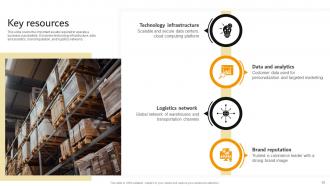
Technology serves as Amazon's operational backbone, powering automated warehouses, predictive analytics, AI-driven recommendations, cloud computing infrastructure, and drone delivery systems. These innovations streamline inventory management, optimize supply chains, and enhance customer experiences, with Amazon's AWS platform and machine learning algorithms enabling faster deliveries, personalized shopping, and operational efficiency that maintains their competitive advantage in global commerce.
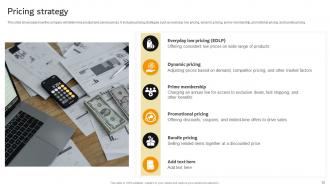
Amazon balances low prices and profitability through economies of scale, diversified revenue streams, and strategic reinvestment of profits into growth initiatives. The company leverages its massive volume to negotiate better supplier terms, cross-subsidizes retail losses with high-margin AWS cloud services, and focuses on long-term market dominance over short-term profits, ultimately delivering sustainable competitive advantage.
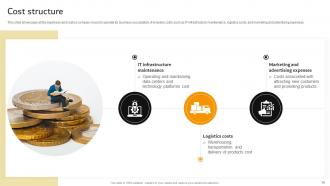
Amazon faces challenges including intensifying competition from specialized retailers, regulatory scrutiny over market practices, rising operational costs, supply chain disruptions, and evolving consumer expectations. While these present significant hurdles, many analysts find that Amazon's diversified revenue streams, technological infrastructure, and strategic investments in logistics enable continuous adaptation, ultimately delivering sustained competitive advantage in an increasingly dynamic marketplace.
Amazon's sustainability commitment reshapes its business model through renewable energy investments, carbon-neutral delivery initiatives, sustainable packaging solutions, and circular economy programs. These environmental strategies drive operational efficiency, reduce long-term costs, attract environmentally conscious consumers and partners, while positioning Amazon competitively in an increasingly sustainability-focused marketplace where stakeholders prioritize environmental responsibility.
Amazon has adapted through expanded marketplace ecosystems, subscription-based services like Prime, cloud computing ventures, voice-activated shopping, and same-day delivery options. These strategic pivots enable the company to capture evolving digital behaviors, streamline customer experiences, and deliver personalized services, with many retailers finding that Amazon's diversification ultimately creates multiple revenue streams while maintaining competitive advantage.
Amazon's approach to product innovation drives growth by leveraging customer data insights, rapid experimentation, and cross-platform integration to identify emerging market needs and develop solutions quickly. Through continuous testing across retail, cloud services, and logistics, Amazon creates interconnected ecosystems that enhance customer experiences, reduce operational costs, and establish competitive moats, ultimately delivering sustained revenue expansion and market dominance.
Amazon employs localization strategies, strategic partnerships with local companies, phased market entry, competitive pricing models, and targeted acquisition of established regional players. Through these approaches, Amazon adapts its offerings to local preferences and regulations, with many international expansions finding that combining global infrastructure with local expertise ultimately delivers market penetration and sustainable competitive advantage.
Amazon leverages customer feedback through reviews, ratings, Q&A sections, and direct surveys to identify product gaps, feature requests, and quality issues. This data drives decisions for Amazon's private-label products, marketplace enhancements, and new service offerings, with customer insights directly influencing everything from product specifications to delivery innovations, ultimately delivering solutions that match real market demands.
Amazon's ethical considerations include labor conditions, market competition practices, data privacy policies, environmental impact, and tax optimization strategies. While these practices present both challenges and opportunities for regulatory compliance, many organizations find that addressing worker welfare, supporting fair competition, and enhancing environmental sustainability ultimately delivers stronger stakeholder relationships and competitive advantage in an increasingly scrutinized marketplace.
-
“Thank you to the SlideTeam. Your presentations look really skillful and have made my life so much easier.”
-
“Love it! I was able to grab an exciting proposal because of SlideTeam.”