


Amazon investor funding elevator pitch deck ppt template




Try Before you Buy Download Free Sample Product
 Impress Your
 Audience
 100%
100% Editable
 Save Hours
 of Time


A professionally designed pitch deck on Amazon Investor Funding highlights the critical elements required to generate funds. The following deck initially highlights the essential services provided by Amazon, such as E-commerce, cloud computing etc., along with significant points of considerations. Once the benefits have been highlighted, the marketing plan for amazon is displayed. Defining the organization targeting strategy plays a crucial role in the marketing activity of any organization. The deck describes various strategies of how Amazon targets its customers. These strategies are lifestyle targeting, market targeting, contextual marketing, and re marketing to old customers. Defining and understanding the target audience plays a crucial role in identifying the marketing activities that are to be performed by the organization. Once the target audience is defined, analyzing the result of the campaign plays a crucial role. Various KPIs or key performance indicators are used to analyze the product performance. Understanding the customers demographics play a vital role in defining the buyers ideal persona of the buyer, thus in the following deck, we have highlighted various parameters for it. Get access and download the pitch deck now.
People who downloaded this PowerPoint presentation also viewed the following :
Content of this Powerpoint Presentation
Amazon is a giant company that has entered every segment - e-commerce, IT, AI, and many more. The company has developed various technologies, such as Alexa, Web Services, Lambda, etc, and is known for innovation.
Several people want to enter Amazon's dynamic ecosystem but fail miserably. Therefore, how do you prepare the pitch that can help you get funding from this giant company? Well, worry not! SlideTeam has the solution for this! We have prepared exemplary PowerPoint slides that can help you prepare an elevator pitch for Amazon.
Raise funding from convertible notes through our PowerPoint framework.
The Actual Power of an Elevator Pitch
An elevator pitch can ignite an investor's interest in your idea and motivate them to invest. However, clarity of thought is required to prepare investors for your business idea. Therefore, you should use our complete PowerPoint deck to solve this problem and win the funding.
Are you looking for ways to improve your Amazon marketing strategy to have better customer outreach? Click here to know more!
Improving Pitches with SlideTeam's PowerPoint Templates
SlideTeam has been a name in the industry for a long time! We provide a PowerPoint deck that is full of customization. This means you can mold the slides according to your requirements - make changes in the color palette, theme, logo, branding, content, images, etc. You will have the tool through which you can show the content in the easiest format.
Let’s start!
Template 1: About Our Services
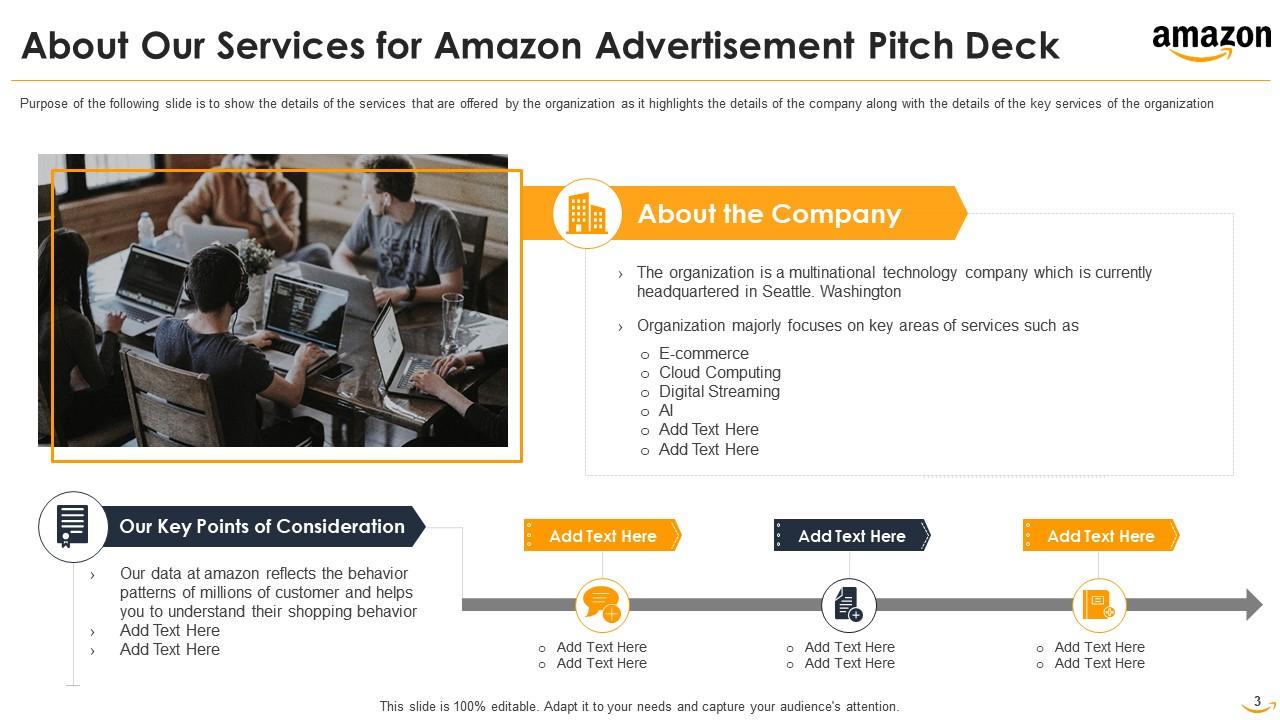
This PowerPoint template is for businesses wanting to make a strong impact with their Amazon advertisement pitches. It has an "about the company" section, in which you can provide detailed information, such as the major areas in which the company works, strengths, and weaknesses. Furthermore, there is a separate section to note down key points, which you can share with your audience. Additionally, add more text as per your business requirements.
Template 2: How We Deliver the Relevant Advertisement to the Right Audience
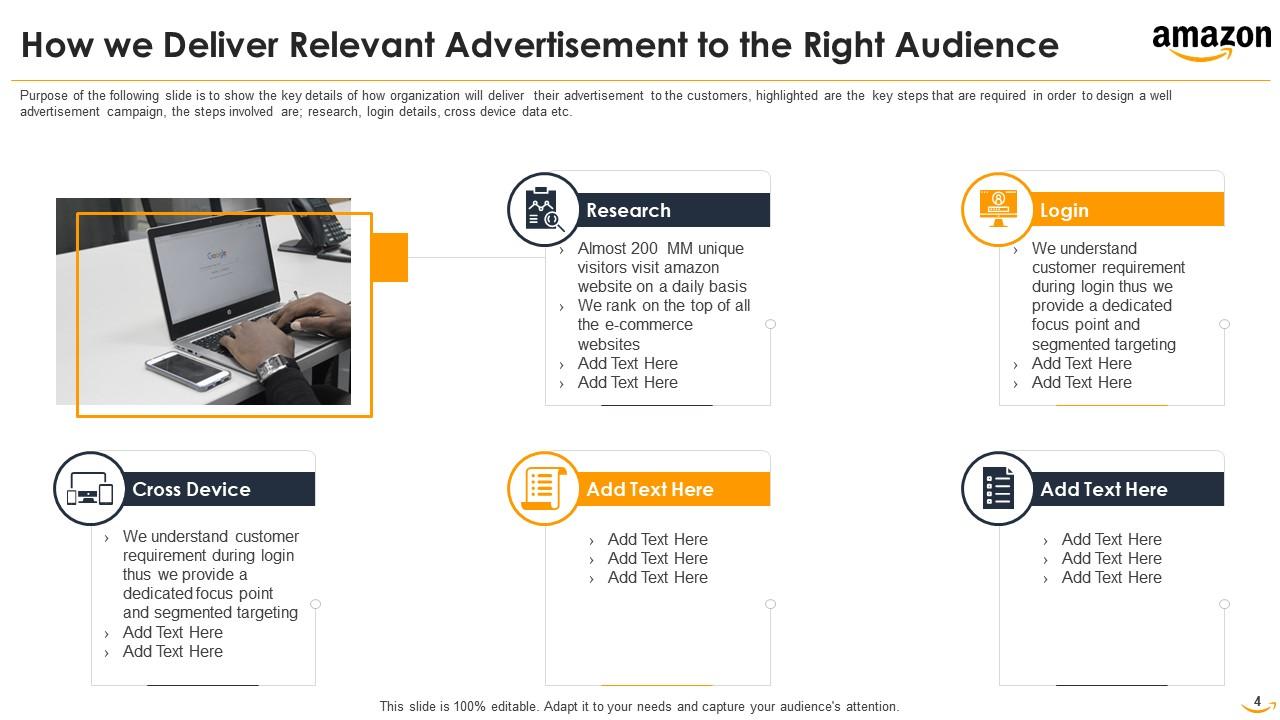
Our PowerPoint Framework can show how businesses deliver targeted advertising to the right audience on platforms like Amazon. You can show different strategies in this presentation, such as cross-device, research, login, and more. Furthermore, under each strategy, you will have ample space to mention the main points as per your requirements.
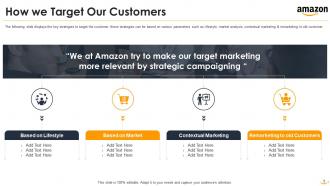
Template 3: How We Target Our Customers
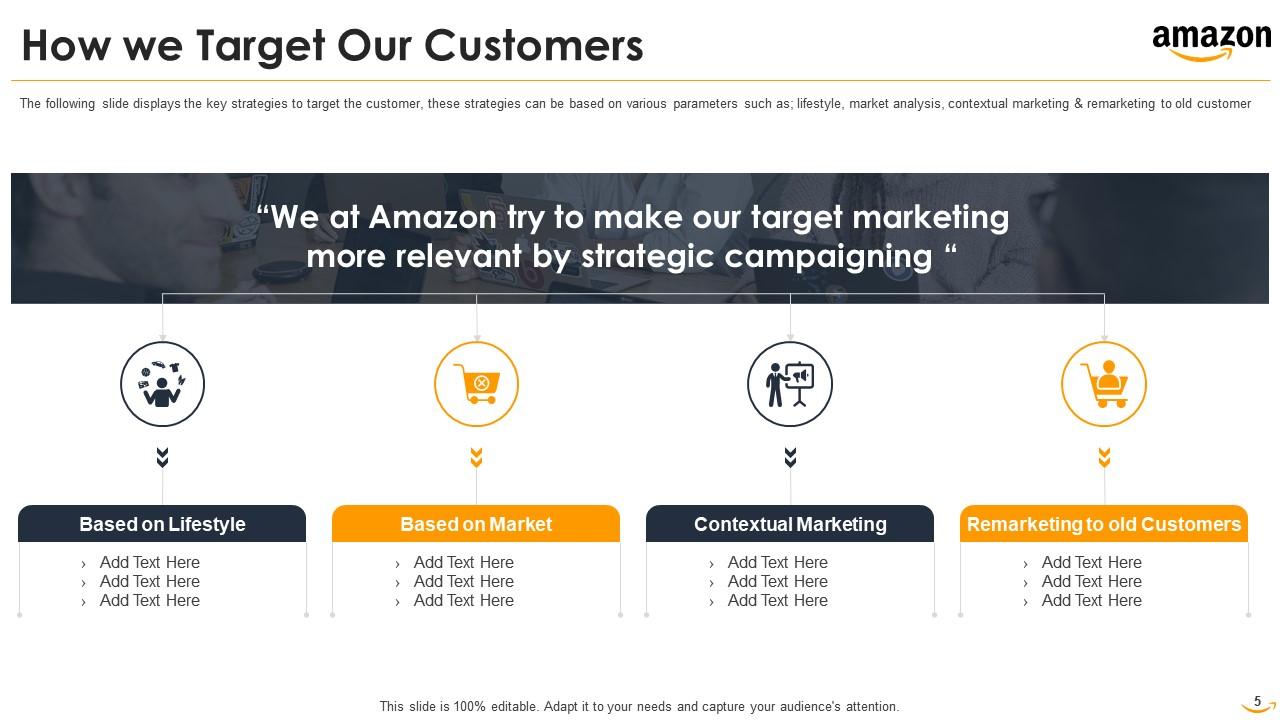
Target your audience better with our PowerPoint Layout. It will help you to improve your marketing strategies by segmenting your customer base based on lifestyle choices, market demands, or past interactions. It also features contextual marketing and remarketing, which will help you deliver professional campaigns to your audience. Furthermore, it provides the important points under each marketing strategy.
Template 4: Various Types of Targeting for Our Customers
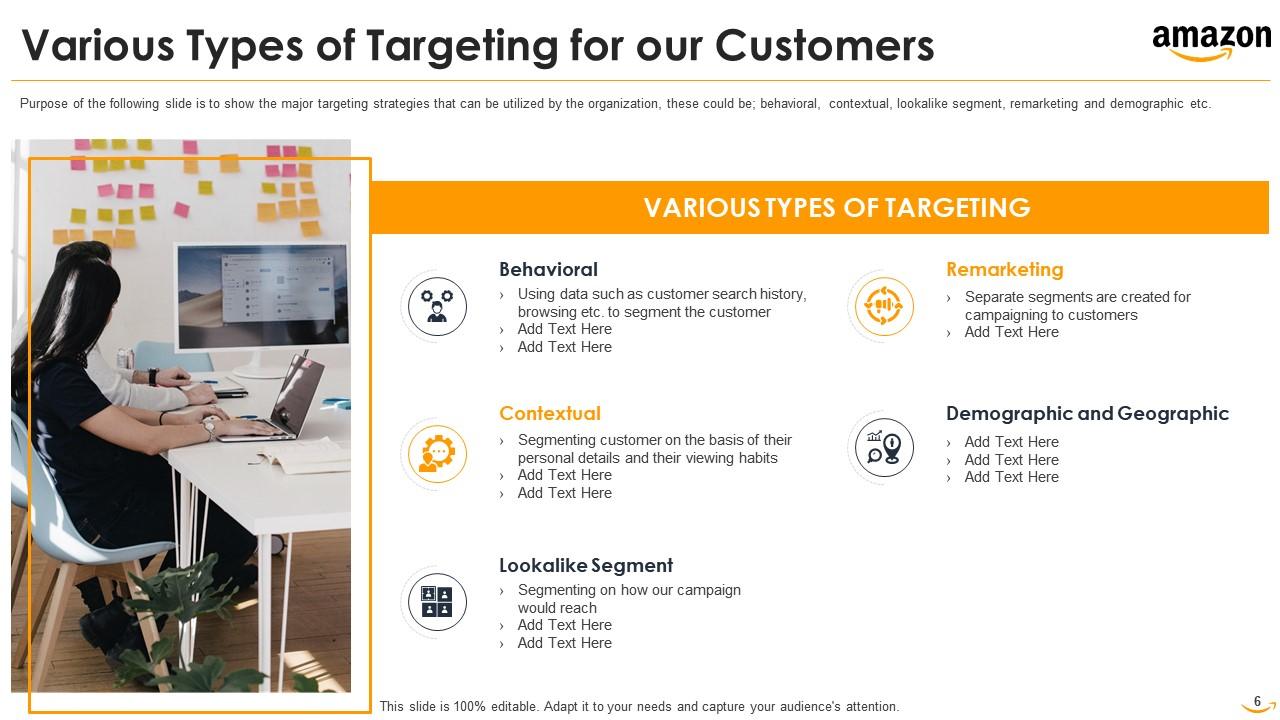
Our PowerPoint Layout is the actual tool through which you can show various types of targeting for our customers. This presentation helps you display important targeting strategies such as behavioral, contextual, lookalike segments, remarketing, demographic, and geographic targeting. Furthermore, you can convey your message to the team and get optimum results.
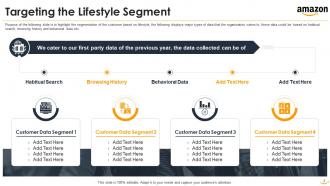
Template 5: Targeting the Lifestyle Segment
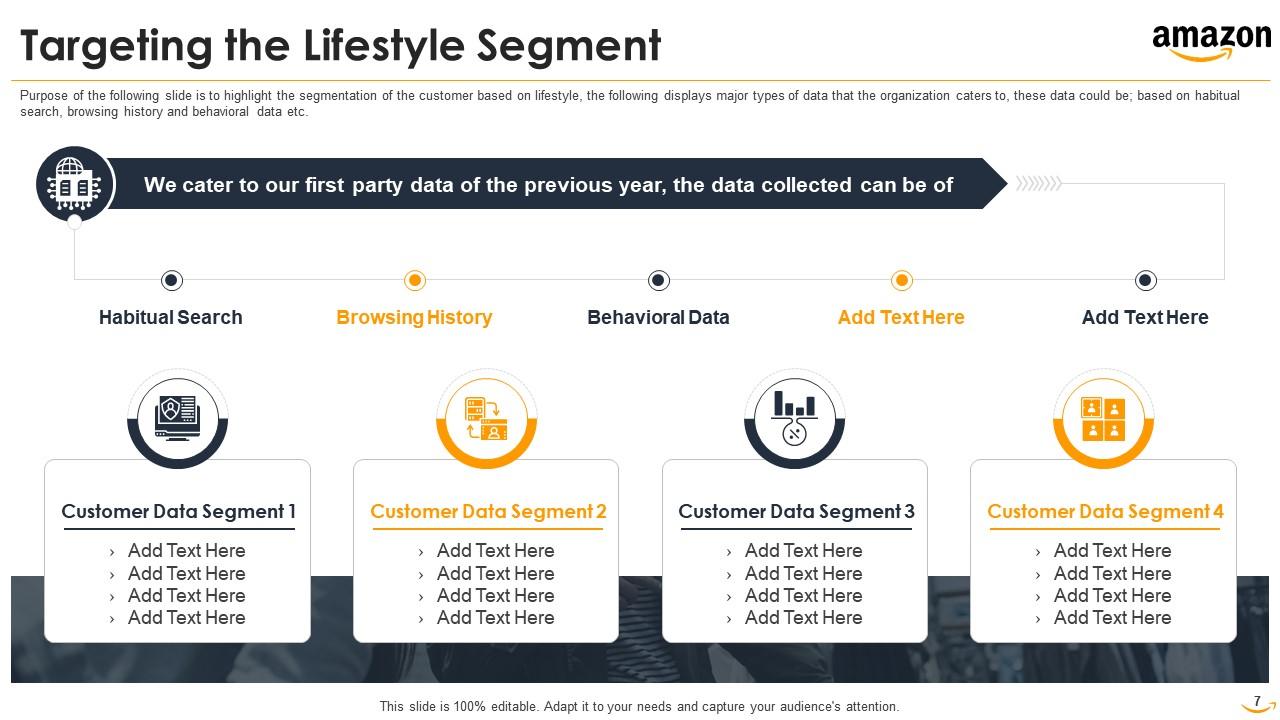
Our PowerPoint Framework will help you segment your audience based on their lifestyle. It will streamline your behavioral data, habitual searches, and browsing history information. You can prepare various marketing strategies based on these attributes. Furthermore, you can add your message in bullet points so the concerned party can understand it thoroughly.
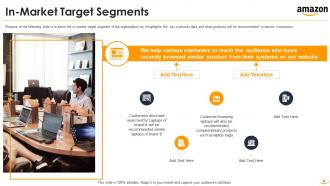
Template 6: In-Market Target Segments
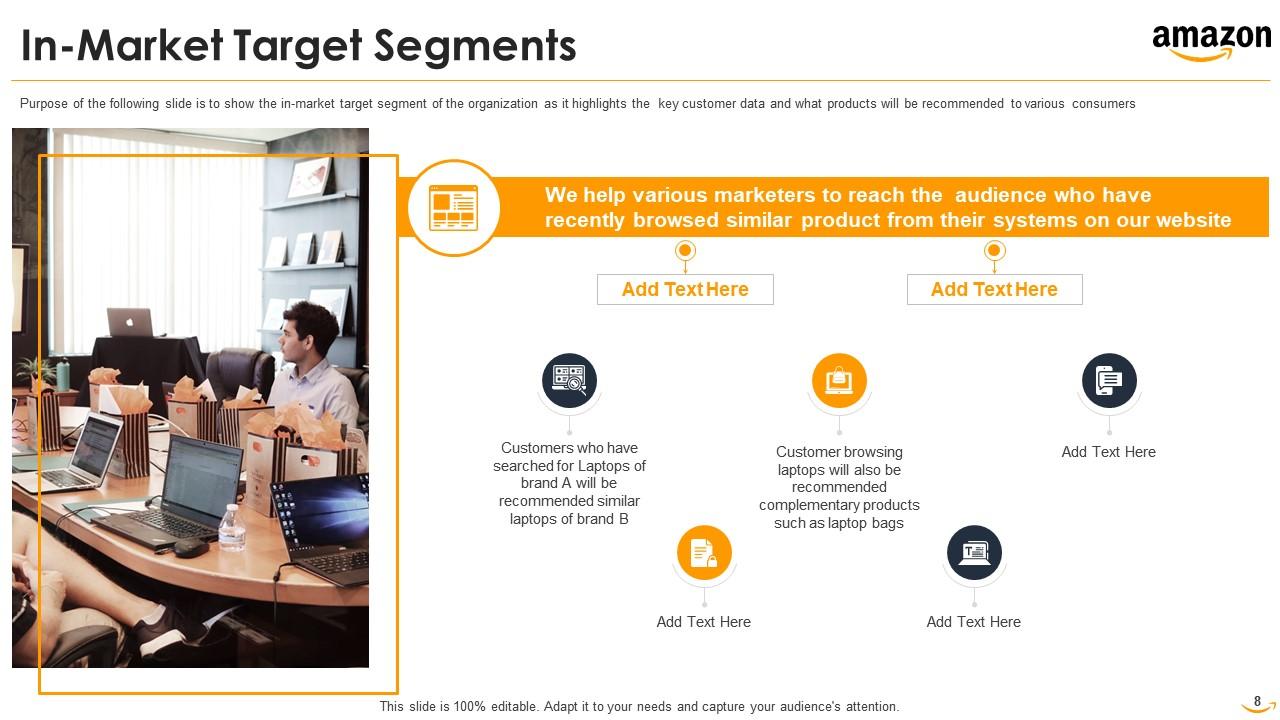
This PowerPoint template showcases in-market target segments for organizations that want to display customer data. Furthermore, it will recommend products for various consumer demographics. This presentation is divided into sections that draw attention to different areas, such as potential customers' browsing behavior and search patterns. Our PowerPoint slide is the best tool to help marketers target consumers more effectively.
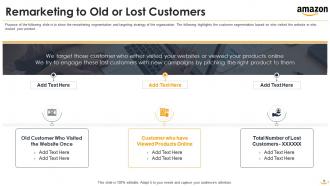
Template 7: Remarketing to Old or Lost Customers
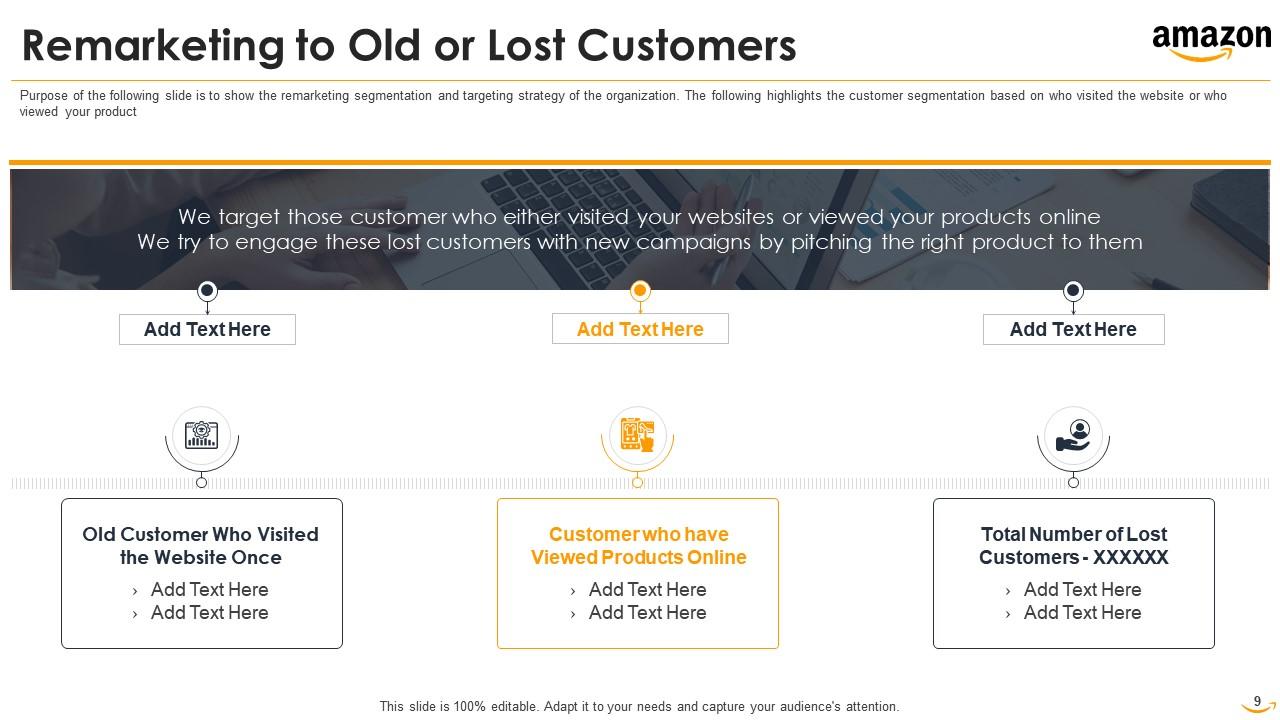
Bring back your old customers with our PowerPoint Layout. It will mainly focus on the needs of marketers targeting three key segments: old customers who have previously visited your website, viewers who have explored your products online, and the total number of customers who haven’t converted yet. You can add text to each segment, making it more appealing to your team.
Template 8: Who are the Key Advertisement Audience
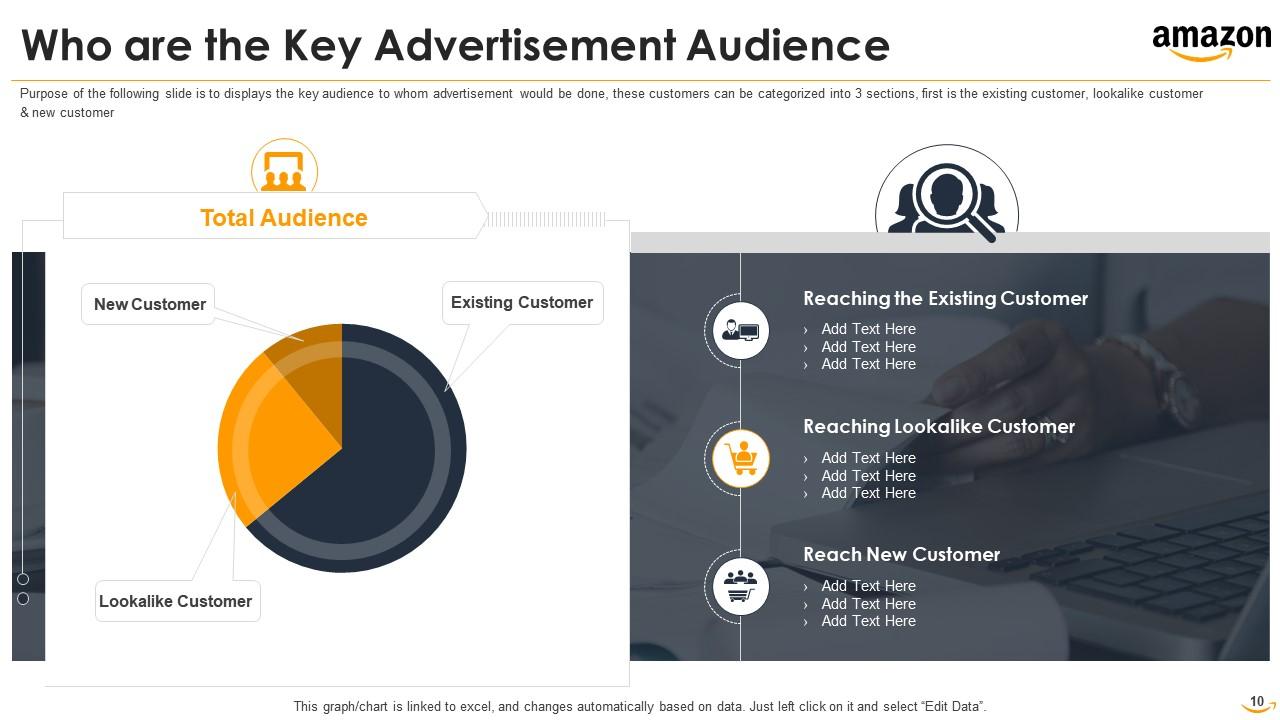
Companies who want to show their advertisement audience can use our PowerPoint Framework. It's better to identify and target the right audience segment, which our presentation can do. It organizes your data into three important categories: new customers, existing customers, and lookalike customers. Furthermore, there is a separate section on the slide in which you can add points for each category.
Template 9: Key Result of Our Campaign

Show the progression of your marketing campaign with our PowerPoint Template. It will help you map the journey from awareness through consideration to purchase. Furthermore, there are two tables under which you can show the results with bullet points your team can understand and work on. It's an optimum tool for the marketing team to have.
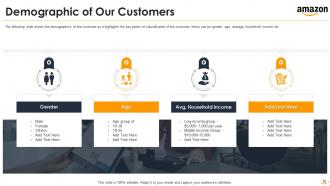
Template 10: Demographic of Our Customers
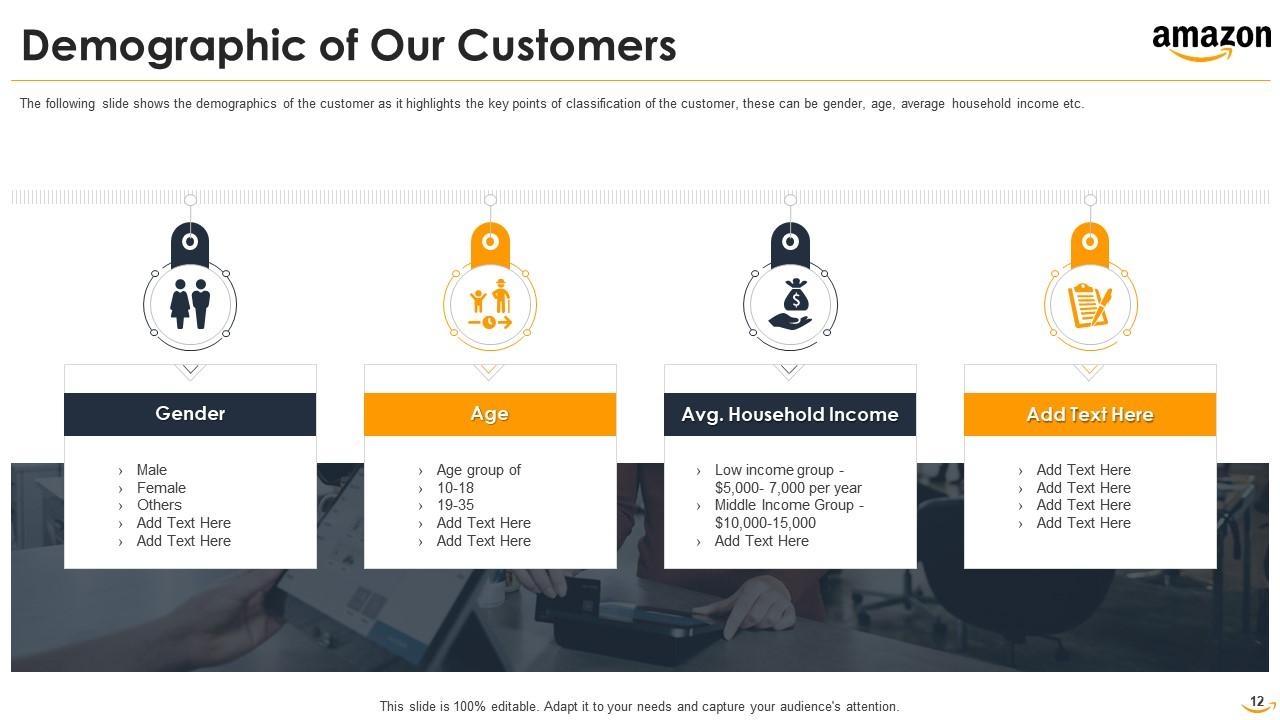
It's better to segment your target audience based on key demographic factors using our PowerPoint Layout. You can divide your audience based on gender, age, and average household income data. Furthermore, if you prepare your marketing strategies while keeping in mind these demographics, you can achieve better results. Moreover, you can add bullet points under each demographic head.
Secure Funding with our Templates
In conclusion, our complete PowerPoint deck for the Amazon elevator pitch can grasp investors' attention. These templates help you convey your message in the right direction that what is in your mind, the same thoughts are developing in the investor's mind. You can show information in the easiest format with the best visuals.
Amazon investor funding elevator pitch deck ppt template with all 33 slides:
Use our Amazon Investor Funding Elevator Pitch Deck Ppt Template to effectively help you save your valuable time. They are readymade to fit into any presentation structure.























FAQs for Amazon investor funding elevator pitch
So Amazon basically just dumps money back into everything instead of caring about quick profits. Bezos was smart - he got investors used to this from the start. They look at free cash flow and figure out which markets they can totally take over. Right now they're betting big on logistics, AI, and going international. Honestly it's kind of crazy how they just reinvest everything into infrastructure and AWS expansion. But it works I guess? Just watch what sectors they're pouring money into - that's where they think the future is.
So Amazon dumps tons of money into logistics stuff - warehouses, trucks, those drone things they keep promising but never deliver (pun intended lol). They're constantly building fulfillment centers closer to people and buying more delivery trucks. Plus they're going crazy with automation to make everything faster and cheaper per package. Honestly, the drone project feels like a publicity stunt at this point. But here's what's interesting - watch how much they spend on actual buildings versus tech. That split shows you where they think they'll beat competitors. It's all about getting stuff to your door faster while spending less doing it.
So Amazon's funding game has totally changed. Back in the early 2010s they were constantly raising debt and burning through cash for growth - you know, typical startup mentality but at massive scale. Now? They're basically printing money. AWS alone generates insane cash flow, so they don't really need outside investors anymore. Instead they just funnel that internal cash into acquisitions and wild projects (hello, space rockets). Honestly if you're trying to understand their strategy now, forget about where they're getting money from. Focus on how they're spending the pile of cash they already have.
Amazon's way past the VC stage now - they're huge and public, so they just do stock offerings and reinvest their profits. Back in '96 though, Kleiner Perkins gave them early funding that was pretty critical. These days VCs are more tangentially involved, like funding random startups that sell stuff on Amazon or try to compete with AWS (good luck with that lol). If you're studying them as an investment case, definitely look at those early VC relationships instead of trying to figure out current ones.
Amazon's funding situation? They're doing fine honestly. Global uncertainty isn't hitting them like it is smaller companies - investors still see them as pretty solid. Their cash flow from AWS and retail is huge, so they're not desperately hunting for money like startups. Sure, investors are pickier now, but that actually works in Amazon's favor since they've got revenue coming from all different places. I mean, when things get sketchy, people want the "boring" stable picks. If you're thinking investment-wise, I'd watch their cloud numbers more than whatever drama is happening in the broader markets.
Honestly, investors obsessing over Amazon deals care way more about your unit economics than flashy revenue numbers. Your customer lifetime value needs to crush acquisition costs - that's like the golden rule. Strong retention rates are huge too. But here's the thing - they're really digging into whether you've actually nailed product-market fit or if you're just hoping. Conversion rates and repeat purchases tell the real story. Oh, and your path to profitability better make sense! Don't get caught up in vanity metrics that look pretty but don't mean much. Prove your unit economics work and scale - that's what separates the real deals from pipe dreams.
Yeah so Amazon's basically swimming in cash these days from AWS and retail, so they don't really need outside money like they used to. Remember when they were always fundraising? Now they just dump everything back into warehouses and tech stuff instead of paying shareholders. Honestly their free cash flow numbers are way more telling than regular profit margins if you're trying to figure out what they're actually doing. They'll only go external for huge acquisitions or when they want to keep their cash reserves intact for whatever reason.
So Amazon basically reinvests everything instead of paying dividends - which is crazy when you think about how patient their investors are. They can lose money for years in new areas because they're not focused on quarterly profits like most companies. That's how they ended up dominating cloud computing and logistics. Pretty smart strategy tbh. When you're looking at other companies, check how they balance growth spending vs immediate returns. It tells you tons about where they're headed. Most companies can't pull off Amazon's approach though - their investors would freak out.
So Amazon's whole thing is reinvesting profits instead of paying dividends - total Bezos strategy that Joshi kept going. They're betting on long-term growth over quick wins. Honestly, it's pretty smart if you think about it. Patient investors love this because they know Amazon's focused on expanding and innovating rather than just handing out quarterly checks. If you're looking at them for funding decisions, you gotta match their timeline. Short-term thinking won't work here. Their equity structure basically rewards people who can wait for that compound growth to kick in.
Yeah so Amazon's pretty focused on logistics, AI, healthcare stuff, and climate tech through their various funds - like the Alexa Fund and Industrial Innovation Fund. Robotics and autonomous vehicles are huge for them too. Honestly makes sense since they want tech that either makes their own stuff better or gives them a heads up on what might shake up retail and AWS. They do some fintech and enterprise software investments but not as much. Oh and definitely look at their Climate Pledge Fund investments - that'll show you what they're prioritizing right now.
So basically, Amazon follows the money - wherever consumers are heading, that's where they dump their cash. Like when everyone went crazy for eco-friendly stuff, boom - electric delivery vans everywhere. COVID hit and suddenly we all needed groceries delivered? They were already there waiting. Honestly, their timing is pretty impressive. Investors love this because Amazon's usually ahead of trends instead of scrambling to catch up. Pro tip: listen to their earnings calls if you want to know what they're betting on next. They're terrible at keeping secrets about their spending plans.
Look, Amazon's whole thing is reinvesting profits instead of paying dividends, so don't expect quick money. Your cash could sit there for years before you see real gains. They dump everything into new projects - some work great, others flop hard (Fire Phone, anyone?). This creates wild stock swings that'll stress you out. If one of their big bets fails, you're looking at serious losses. Honestly? Only put in money you won't need for a long time. The volatility isn't for everyone.
So Amazon's super weird compared to other tech companies - they literally reinvest everything instead of sitting on cash like Apple does. Google and Meta dump tons into R&D, but Amazon spreads it around: warehouses, logistics, AWS servers, you name it. They hate showing profits lol. Makes them grow crazy fast but their stock bounces around more than others. Oh and if you're looking at their numbers, revenue growth and free cash flow matter way more than profit margins. That's the key difference honestly.
So Amazon basically throws money at wild ideas without stressing about quick profits. They pump earnings back into R&D instead of just making shareholders happy. That's how we got AWS - it literally started as their own IT setup that they realized others might want. Bezos had this whole "Day 1" thing where you stay scrappy even when you're huge. Pretty smart honestly. They fail all the time but it doesn't matter because they're not obsessing over quarterly numbers like most companies. Patient money = room for actual innovation.
Yeah regulatory stuff can mess with Amazon's funding, but tbh they're so huge and spread out across different businesses that they usually bounce back pretty quick. New privacy laws or antitrust things might spook investors for a bit - especially with AWS and their ad business. But Amazon's gotten really good at rolling with the punches. The real threat? If regulators actually start chopping up big tech companies. That's when things get interesting for investors. I'd watch the major antitrust cases more than the smaller rule changes - those are what really shift how people feel about putting money in.
-
Editable templates with innovative design and color combination.