


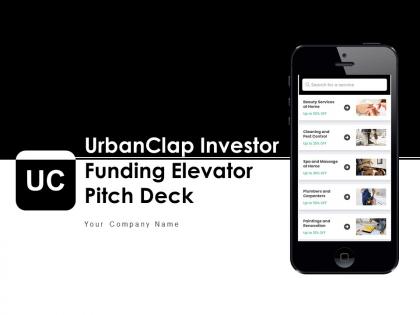
Urbanclap investor funding elevator pitch deck ppt template




Try Before you Buy Download Free Sample Product
 Impress Your
 Audience
 100%
100% Editable
 Save Hours
 of Time


This is the UrbanClap Investor Funding Elevator Pitch Deck PowerPoint presentation which includes the complete details of the UrbanClap company. It covers elements like the year it was founded, its status, no of employees working, latest deal type and the amount, and the no. of investors. The given PowerPoint deck also incorporates slides that talk about the UrbanClap company, its aims, and how it got its name as UrbanClap. Further, this presentation includes some interesting facts related to the company and how it got established. It also covers the problems faced by businesses and customers. Furthermore, it highlights the brand statement and the suggestions offered by the UrbanClap company to overcome the issues. Additionally, this PPT includes the Companys Strategy to Offer Multiple Types of Services at Home and illustrates the working of urban company based on two different models standardized blue collared services and white collared benefits. It also covers the product guide for the company website and incorporates templates for urban company Competitor Analysis. This deck also includes a Business Model, Customer Segmentation and Relation plans, Value Proposition for vendors, and customers slides utilizing which you can present yourself in the best light. Lastly, it includes templates like Key Resources and cost structure that will provide you with an in depth knowledge of the firms pricing structure. Download this PowerPoint presentation now.
People who downloaded this PowerPoint presentation also viewed the following :
Content of this Powerpoint Presentation
Slide 1: This slide introduces UrbanClap Investor Funding Elevator Pitch Deck. State Your Company Name and begin.
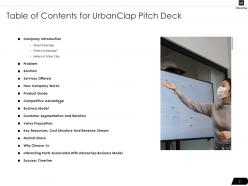
Slide 2: This slide shows Table of Content for the presentation.
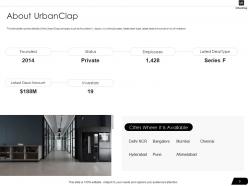
Slide 3: This template covers details of the UrbanClap company.
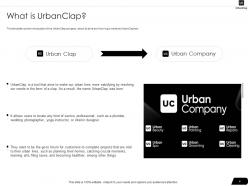
Slide 4: This template presents introduction of the UrbanClap company, about its aims and how it got name as UrbanClap etc.
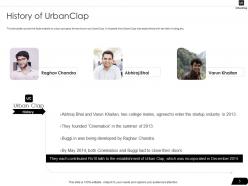
Slide 5: This template covers the facts related to urban company former known as UrbanClap.
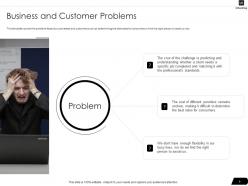
Slide 6: This slide displays Business and Customer Problems.
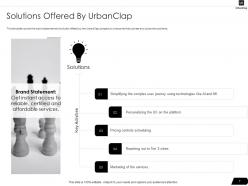
Slide 7: This slide shows Solutions Offered By UrbanClap.
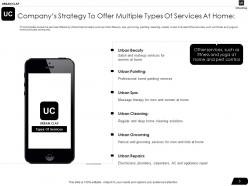
Slide 8: This slide represents Company’s Strategy To Offer Multiple Types Of Services At Home.
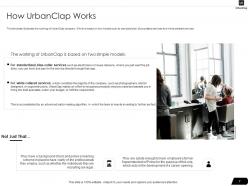
Slide 9: This template illustrates the working of UrbanClap company.
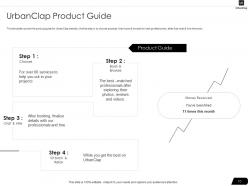
Slide 10: This template presents the product guide for UrbanClap website.
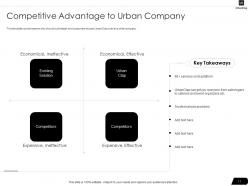
Slide 11: This slide displays Competitive Advantage to Urban Company.
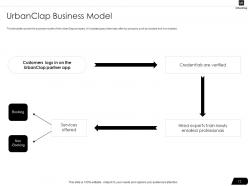
Slide 12: This template covers the business model of the UrbanClap company.
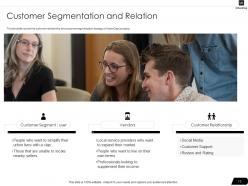
Slide 13: This template displays the customer relationship and customer segmentation strategy of UrbanClap company.
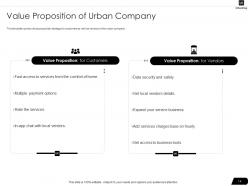
Slide 14: This template covers value proposition strategy for customers as well as vendors of the urban company.
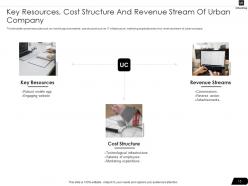
Slide 15: This template presents resources such as mobile app and website.
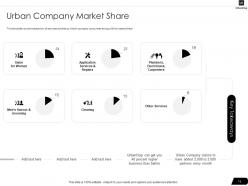
Slide 16: This template covers breakdown of services availed by Urban company consumers along with its market share.
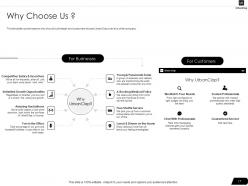
Slide 17: This template displays reasons why should businesses and customers choose UrbanClap over any other company.
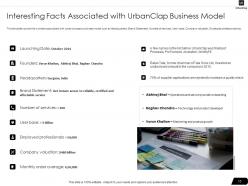
Slide 18: This template covers the numbers associated with urban company business model.
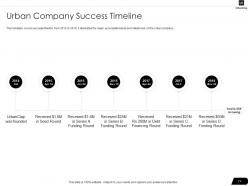
Slide 19: This slide shows Urban Company Success Timeline.
Slide 20: This slide presents UrbanClap Pitch Deck Icons.
Slide 21: This slide is titled as Additional Slides for moving forward.
Slide 22: This is About Us slide to show company specifications etc.
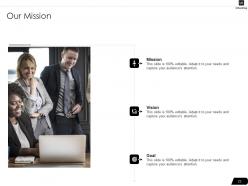
Slide 23: This is Our Mission slide with related imagery and text.
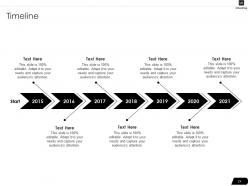
Slide 24: This is a Timeline slide. Show data related to time intervals here.
Slide 25: This is Our Target slide. State your targets here.
Slide 26: This slide shows Puzzle with related icons and text.
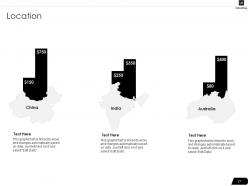
Slide 27: This is a Location slide with maps to show data related with different locations.
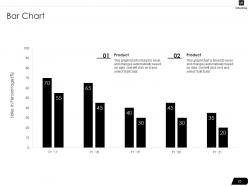
Slide 28: This slide displays Bar Chart with two products comparison.
Slide 29: This slide shows Post It Notes. Post your important notes here.
Slide 30: This slide displays Roadmap with text boxes.
Slide 31: This slide represents Venn diagram with text boxes.
Slide 32: This slide shows 30 60 90 Days Plan with text boxes.
Slide 33: This is Our Goal slide. State your firm's goals here.
Slide 34: This is an Idea Generation slide to state a new idea or highlight information, specifications etc.
Slide 35: This is a Thank You slide with address, contact numbers and email address.
Slide 36: This is a Thank You slide with Urban Clap imagery.
Urbanclap investor funding elevator pitch deck ppt template with all 36 slides:
Use our UrbanClap Investor Funding Elevator Pitch Deck Ppt Template to effectively help you save your valuable time. They are readymade to fit into any presentation structure.

FAQs for Urbanclap investor funding elevator pitch
UrbanClap crushed it because they picked the right market - India's home services were basically broken and huge. Their numbers actually made sense too, which half these startups can't even figure out. The platform connected service guys with customers pretty smoothly, and they had real traction to back it up. Growing users, growing transactions, all that good stuff. Plus the whole on-demand thing was having a moment back then, so perfect timing. For your deck? Show people actually want what you're building and that the market's big enough to matter. Features are whatever - demand is everything.
So UrbanClap's whole thing is being a "managed marketplace" - they don't just connect you with service providers, they actually vet them hard and take responsibility for the experience. Smart move honestly, because who wants some random guy fixing their AC? Their pitch deck really hammers home this quality control angle vs competitors who just throw anyone on their platform. They've got this proprietary rating system and use data to match customers properly. The asset-light model is solid too - no overhead but still maintain control. If you're doing your own pitch, definitely steal that quality-as-a-moat approach.
So UrbanClap was smart about this - they really hammered home their retention rates and how often people booked again. Users kept coming back multiple times monthly for different stuff, which looked great. GMV growth was solid too, consistent increases across all the big cities. They also pushed their supply metrics hard - how fast they got new service providers onboard and the ratings stayed high. Oh and their market size projections were honestly kind of crazy, positioning home services as this massive opportunity that nobody had really tapped in urban India yet. Definitely check out their unit economics slide though, that's where they made the strongest case for actually making money per transaction.
UrbanClap basically showed investors their customers weren't one-and-done users. Sure, getting people initially cost them decent money, but those same customers kept booking different services - cleaning, repairs, whatever. That repeat business made the math work way better. Smart approach honestly, since most marketplace startups totally bomb on this part. They also pointed out how referrals were picking up steam as they grew, which meant less relying on expensive ads. Definitely worth looking at your own repeat customer rates vs what you're spending to acquire them.
Market research is what makes UrbanClap's pitch actually work - they're not just throwing ideas at the wall. They use real data to show investors there's this huge, underserved market worth billions. Plus they've got specific stats on why customers hate dealing with home services and how fragmented the whole supplier side is. Smart move honestly, because just saying "trust me, this'll work" gets you nowhere with investors. The numbers prove traditional home services are genuinely broken. When you're pitching your own stuff, start with data that makes the problem impossible to ignore. Makes everything else way more convincing.
So UrbanClap breaks down their commission structure super clearly - they show different rates for each service category and take a cut from every transaction. Pretty smart move honestly. They also throw in other revenue streams like subscription plans for providers, which is clutch because you don't want to rely on just one income source. The deck shows current revenue plus projected growth based on user trends. Oh and they include unit economics to prove each transaction actually makes money - definitely something to copy if you're pitching a marketplace idea.
UrbanClap's deck is actually really solid - they nail the clean, data-driven approach without overdoing it. Their growth charts are honestly satisfying to look at, especially those hockey stick revenue jumps. What I love is how they use those concentric circles for the market size breakdown (TAM/SAM/SOM) - way cleaner than most decks I've seen. The before/after customer journey maps hit different too, really shows the pain they're solving. Oh and they keep everything super minimal, which investors seem to love these days. Numbers do the talking instead of fancy graphics. Definitely worth copying that approach for your deck.
UrbanClap did something really smart with testimonials in their pitch deck. They used actual customer reviews and ratings on dedicated slides instead of just talking about how great they are. Real proof beats empty claims every time. They also threw in specific case studies - like showing how they fixed someone's ongoing plumbing nightmare. What I found clever was how they picked testimonials that directly answered the doubts investors probably had about market demand and service quality. Honestly, if you're putting together your own deck, totally copy this strategy. Make your testimonials work harder by having them tackle investor objections head-on.
So UrbanClap's deck was pretty smart actually - they went hard on expanding to new Indian cities while building up their service provider network. Their tech focus was all about better matching algorithms. They didn't stop at home services either, branching into beauty and wellness stuff. What caught my attention was how obsessed they were with quality control and ratings to build trust. That's honestly the hardest part - most platforms mess up that balance between getting enough service providers and keeping customers happy. You can't really fake that supply-demand thing, it takes time.
UrbanClap's whole thing is being asset-light - they don't own the service providers, just connect them with customers. Smart move tbh. Their tech does the matching, payments, all that stuff, and it gets cheaper per transaction as they grow. Adding new services? Barely costs them anything since the infrastructure's already there. Customer acquisition gets way cheaper in new cities while people stick around longer. Oh and their unit economics actually improve with scale, which is pretty rare. If you're doing something similar, just show how your costs per user drop as you get bigger - that's what investors want to see.
UrbanClap projected crazy growth - like $500K to $50M+ between 2015-2018. Classic hockey stick curve that looked super optimistic, but hey, that's startups for you. They showed unit economics with positive margins per service, plus all the usual suspects: monthly users, order values, take rates. Market size data helped back up their customer acquisition assumptions too. My advice? Don't just focus on revenue projections when you're putting yours together. Investors really care about unit economics - they'll tear apart those fundamentals way more than your top-line numbers. Show them the math actually works on a per-customer basis.
So UrbanClap basically wants to be the Uber of home services - you know, that "one-stop shop" for literally anything you need done at home. The whole thing is built around fixing trust issues. Like, remember trying to find a decent plumber? Half the time they don't show up, or they do and completely overcharge you. They've positioned themselves as the reliable middleman who actually vets people and backs up the work. Smart move, honestly. If you're working on your own pitch, just copy their playbook - find the pain point first, then make yourself the obvious fix.
Three things really stood out about UrbanClap's pitch. First, they led with huge market size and solid problem validation - classic but effective. Their unit economics were rock solid from day one, which honestly is rare for most startups I've seen. Instead of throwing around random user numbers, they focused on actual scalable growth metrics that mattered. The whole deck was packed with data, and VCs eat that stuff up. But here's the thing - timing was everything. They positioned themselves perfectly in the on-demand economy wave when it was just hitting its stride. Don't just pitch what you're building. Show why right now is the exact moment your solution needs to exist.
So UrbanClap deals with market risk by showing investors they're spread across different services and cities - not just betting on one thing. Their pitch deck highlights how they use data to figure out what works where, plus they've got the numbers to back up profitability. Pretty sure they also mention times they've had to pivot when services flopped (which honestly happens to every startup). The asset-light model is smart too since there's less to lose if things go sideways. Bottom line: they're selling themselves as flexible rather than stubborn, and investors actually dig that approach these days.
So UrbanClap basically does that classic problem-solution thing really well. They open with how awful it is trying to find decent home services, then boom - they're the solution. Smart move using actual customer quotes and real numbers instead of just generic fluff. The before/after comparison is clutch too - showing the old messy booking process vs their clean platform. Honestly, it's pretty standard startup storytelling but they nail the execution. Oh, and definitely steal their trick of hitting people with the pain points first. Don't jump straight into your solution - that's like telling the punchline before the setup.
-
Very unique, user-friendly presentation interface.
-
It saves your time and decrease your efforts in half.
-
Informative presentations that are easily editable.
-
Content of slide is easy to understand and edit.