Venture capital funding elevator pitch deck ppt template
Try Before you Buy Download Free Sample Product
Audience
Editable
of Time
Venture capital fund pitch decks are prepared to present the company to prospective angel or venture capital investors. Here is a professionally designed Venture Capital Fund pitch deck that showcases the company vision. knowledgeable, dominant, and excellence. We have focused on the funding structure, venture capital strategy, funding platform of the company, which is essential for startup fundraising. This PowerPoint template outlines the organizations development stages, target market, accelerator program, deal screening roadmap, etc. We have also covered the venture capital management committee, team structure, how we are different from others, and the venture capital performance of our firm. Such presentations are helpful to engage the present investors by telling them the compelling story of the business. Customize this 100 percent editable pitch deck based on your business requirements. Download it now.
People who downloaded this PowerPoint presentation also viewed the following :
Content of this Powerpoint Presentation
Slide 1: This slide introduces Venture Capital Pitch Deck. State Your Company Name and begin.
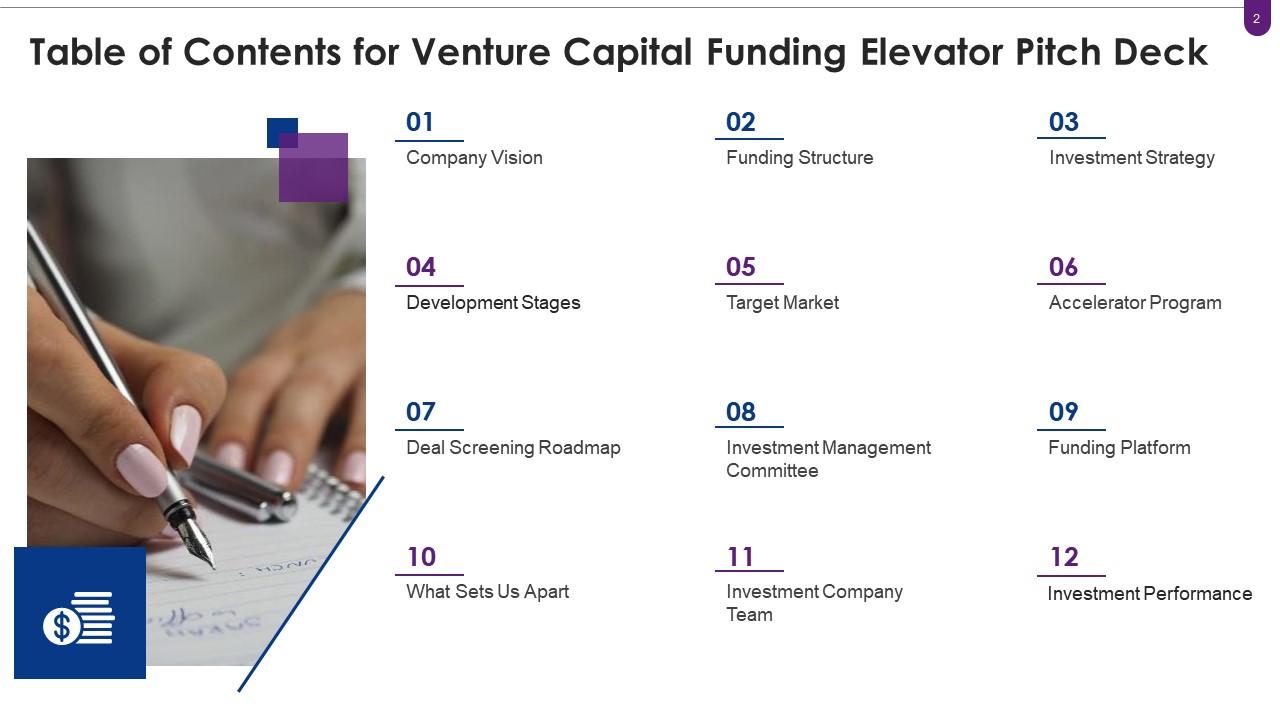
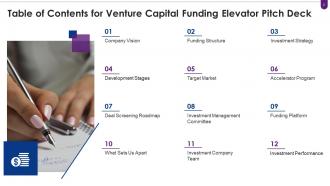
Slide 2: This slide shows Table of Contents for Venture Capital Pitch Deck.
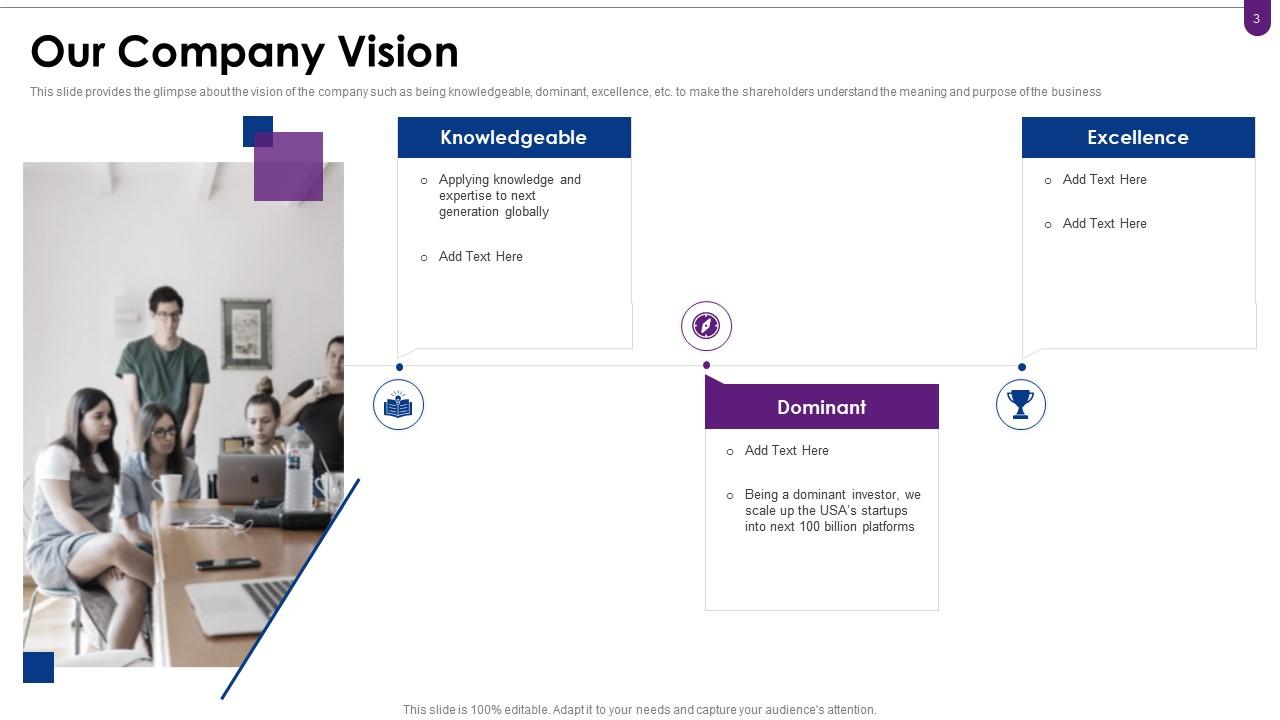
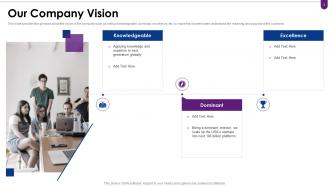
Slide 3: This slide presents vision of the company such as being knowledgeable, dominant, excellence, etc.
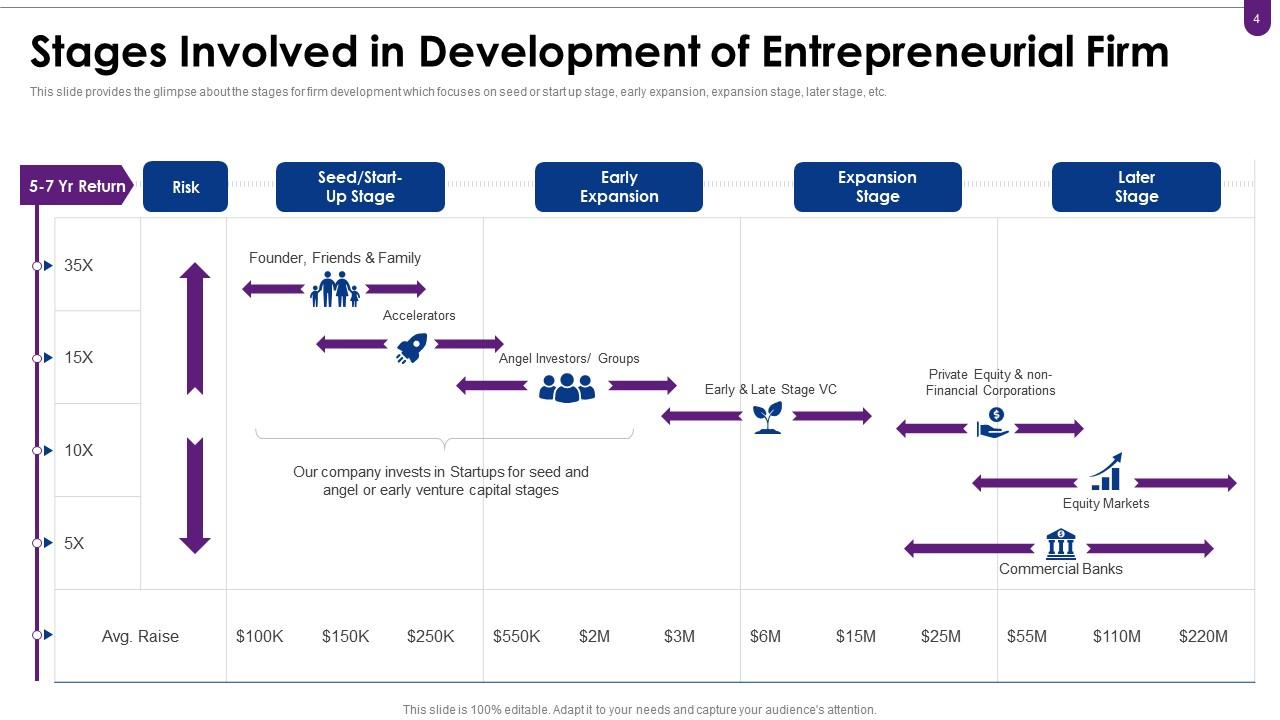
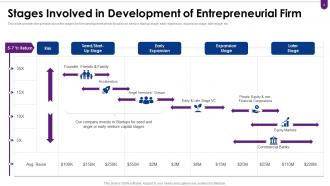
Slide 4: This slide displays Stages Involved in Development of Entrepreneurial Firm.
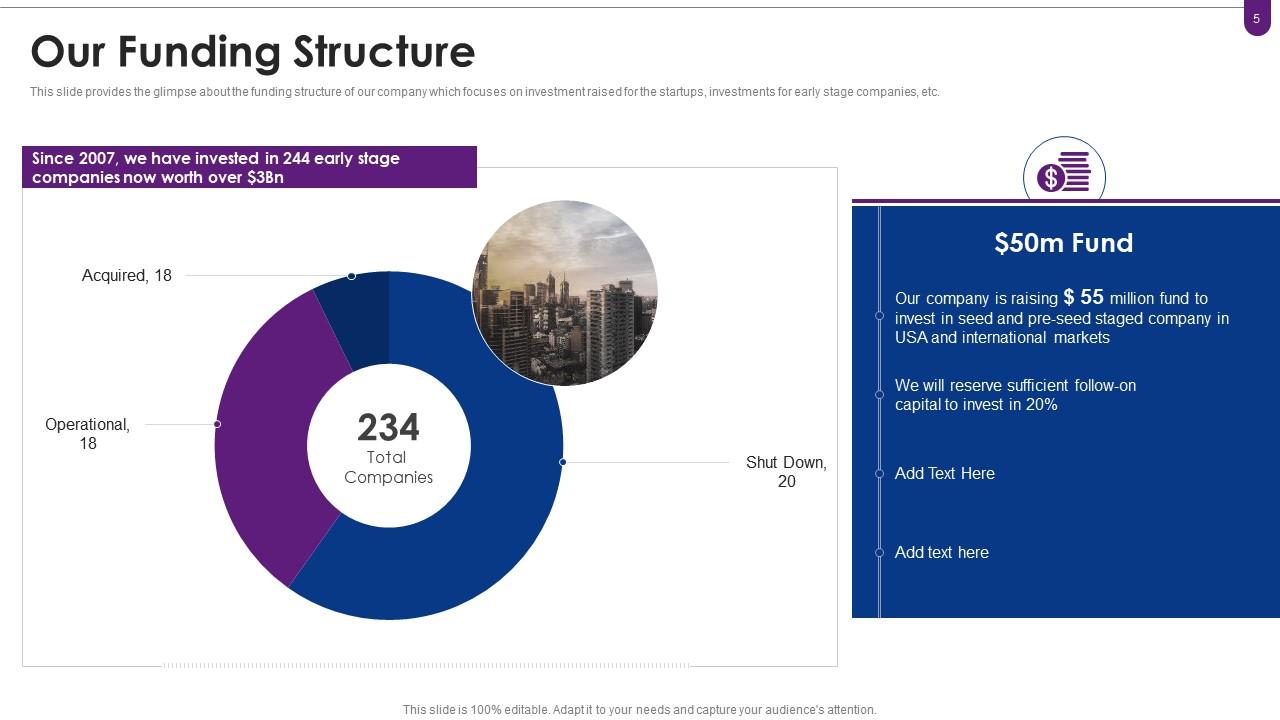
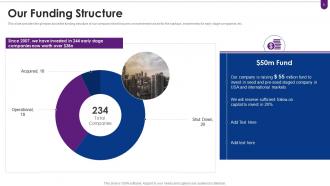
Slide 5: This slide represents funding structure of our company which focuses on investment raised.
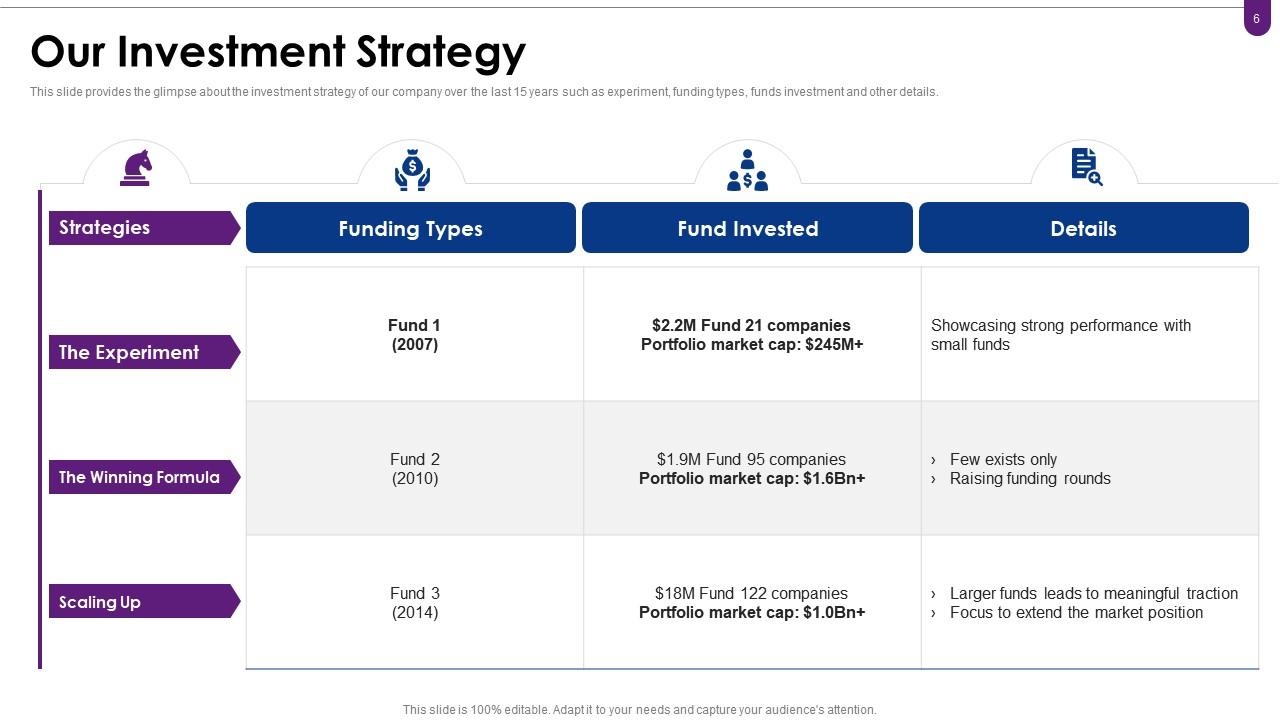
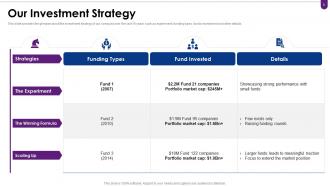
Slide 6: This slide showcases investment strategy of our company over the last 15 years.
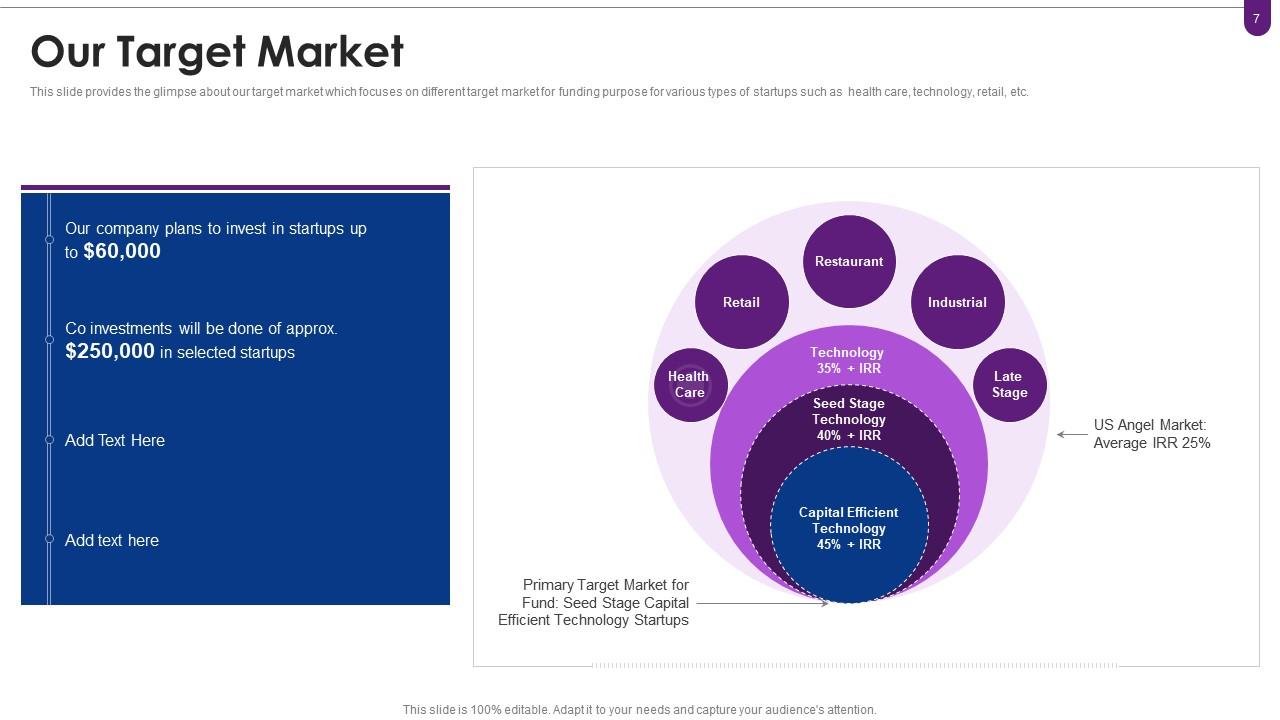
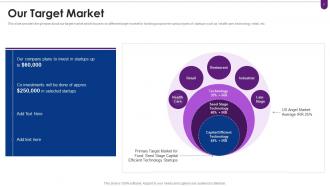
Slide 7: This slide shows our target market which focuses on different target market for funding purpose.
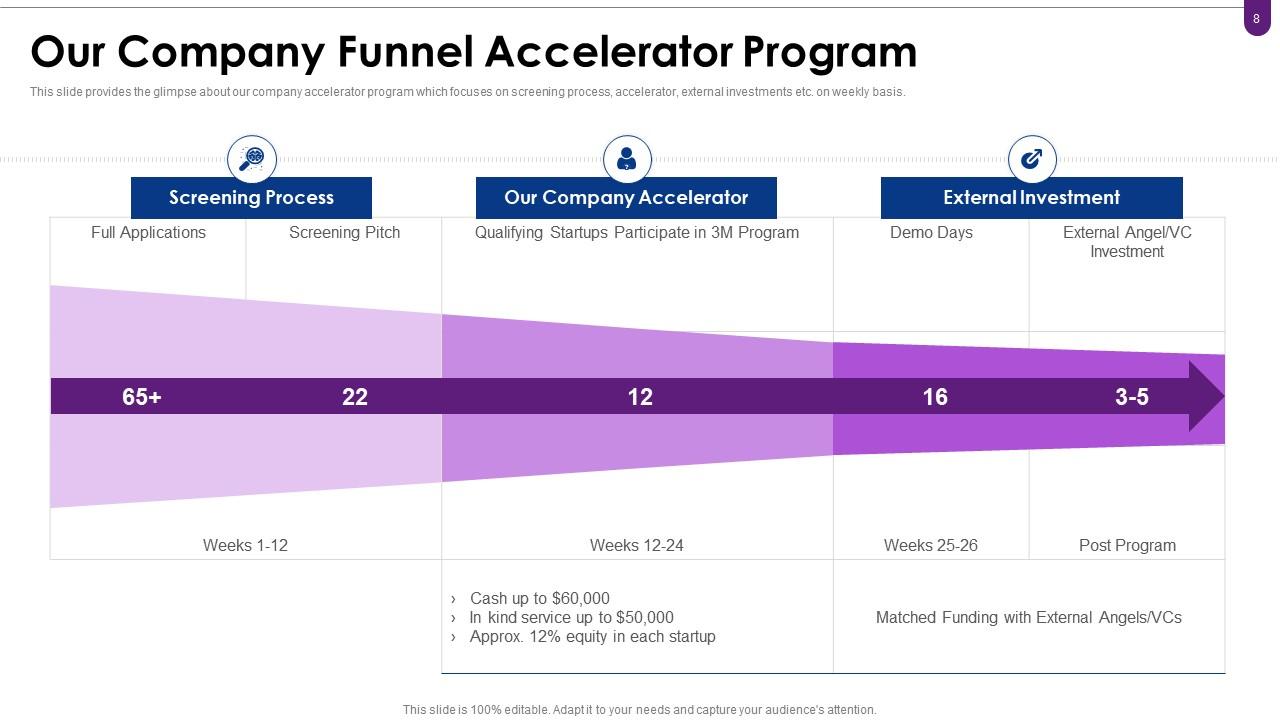
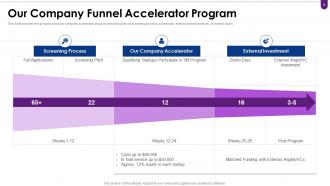
Slide 8: This slide presents our company accelerator program which focuses on screening process, accelerator, external investments etc.
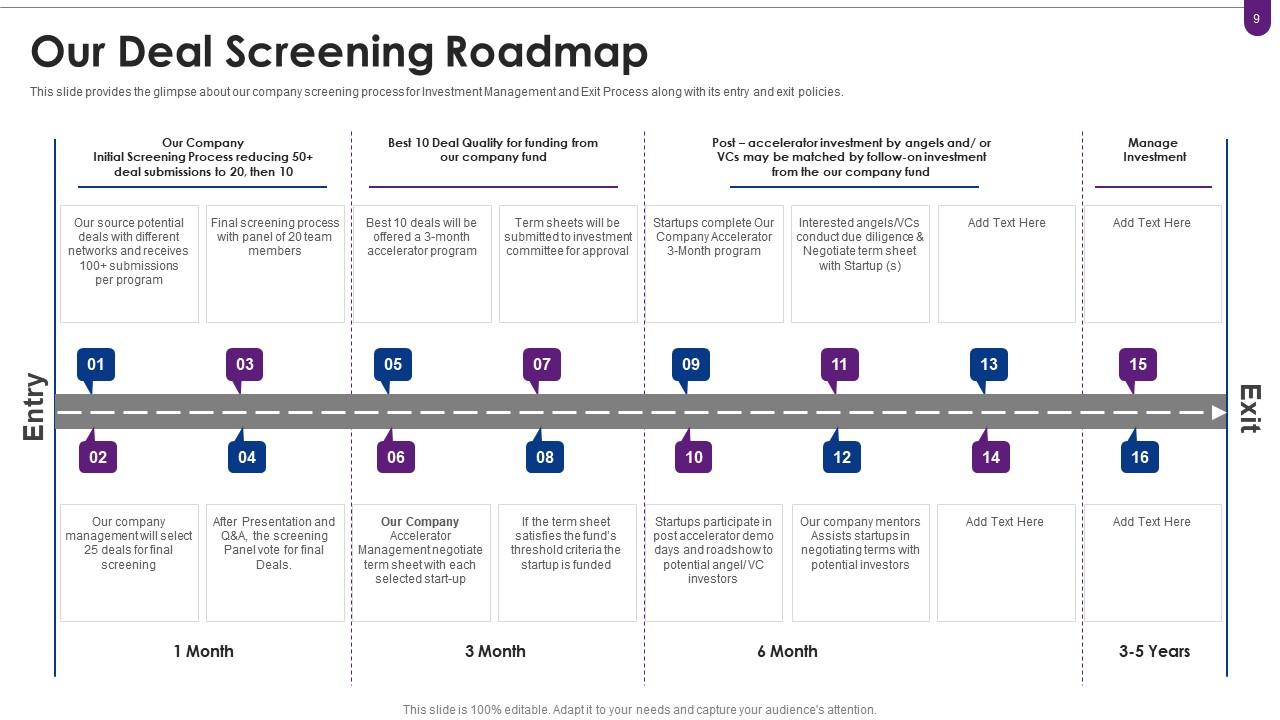
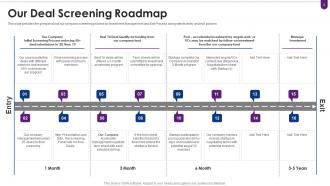
Slide 9: This slide displays screening process for Investment Management and Exit Process.
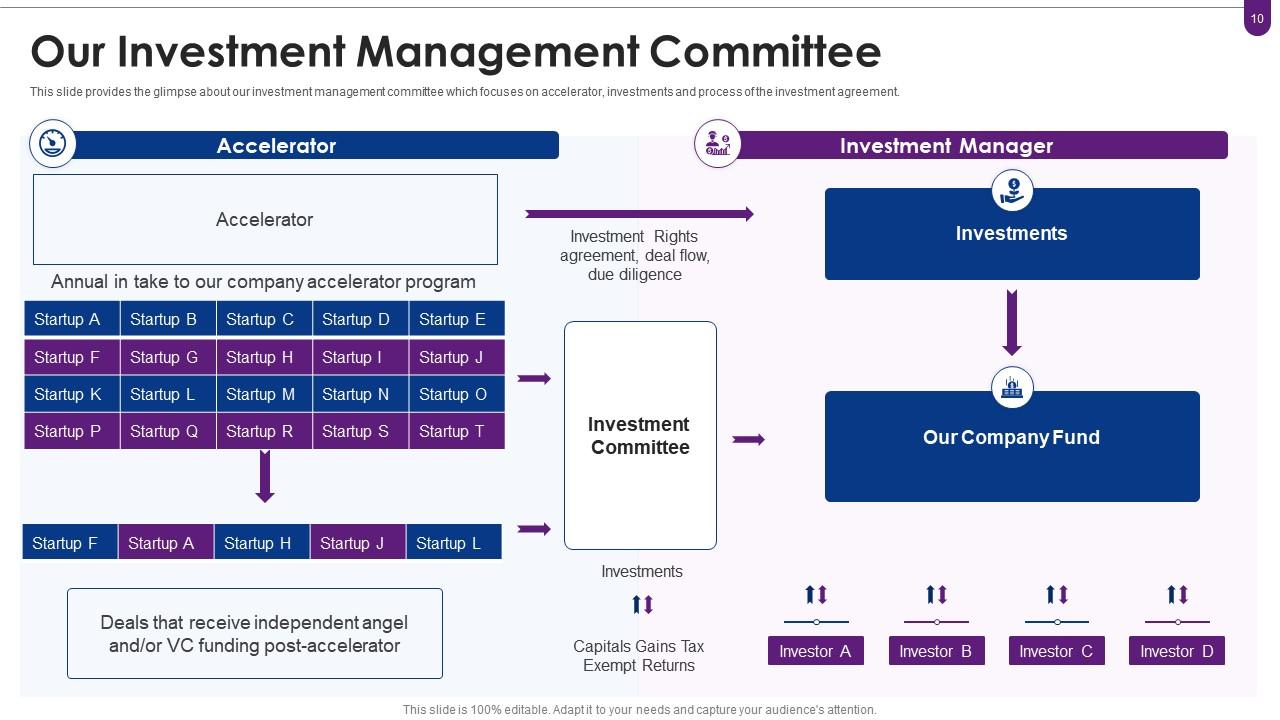
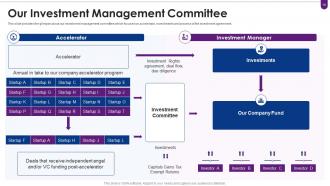
Slide 10: This slide represents investment management committee which focuses on accelerator, investments and process of the investment agreement.
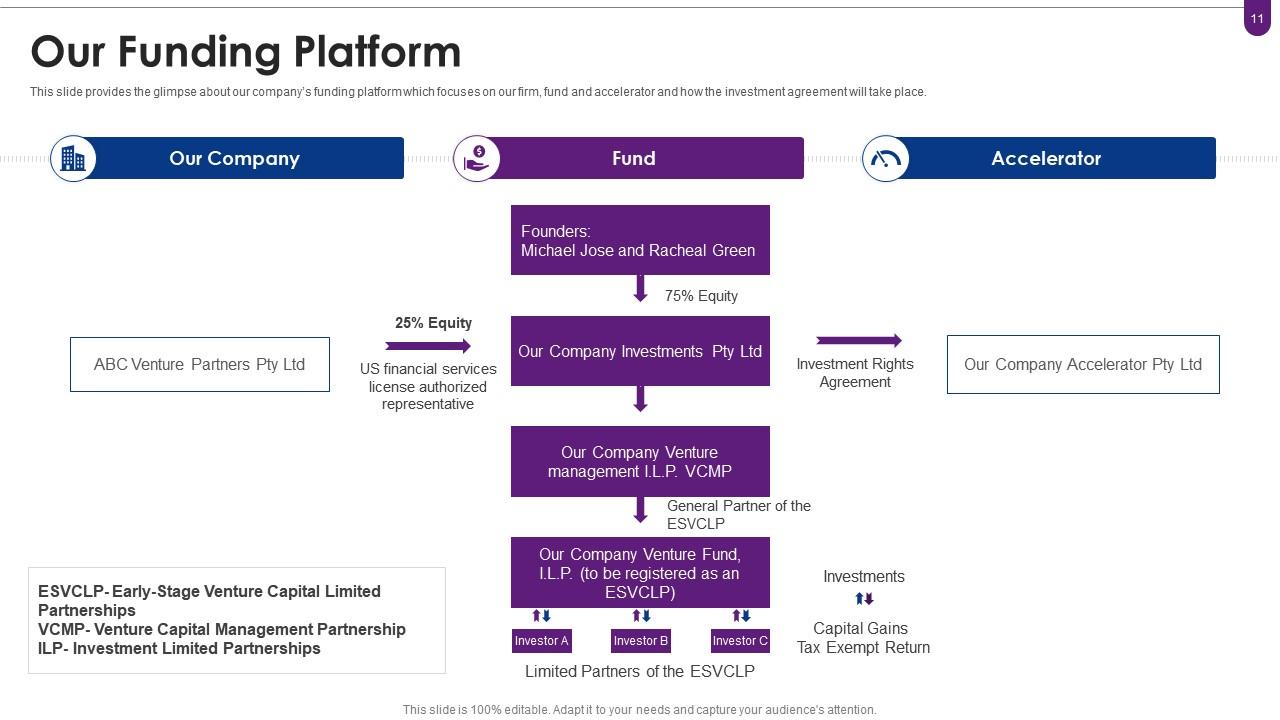
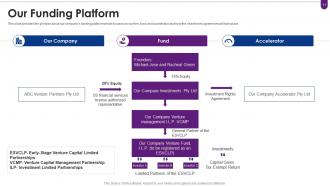
Slide 11: This slide showcases funding platform which focuses on our firm, fund and accelerator.
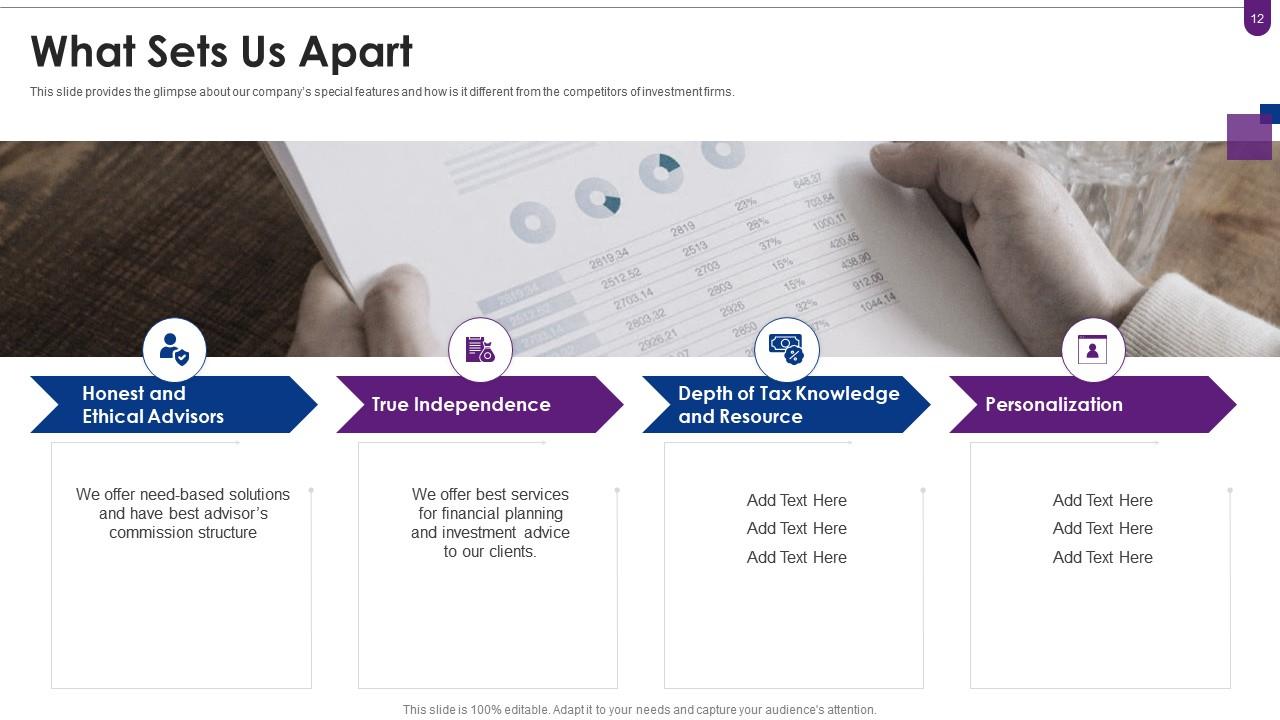
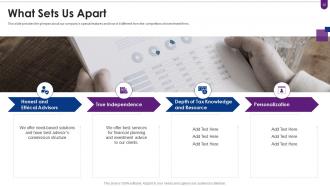
Slide 12: This slide shows company’s special features and how is it different from the competitors.
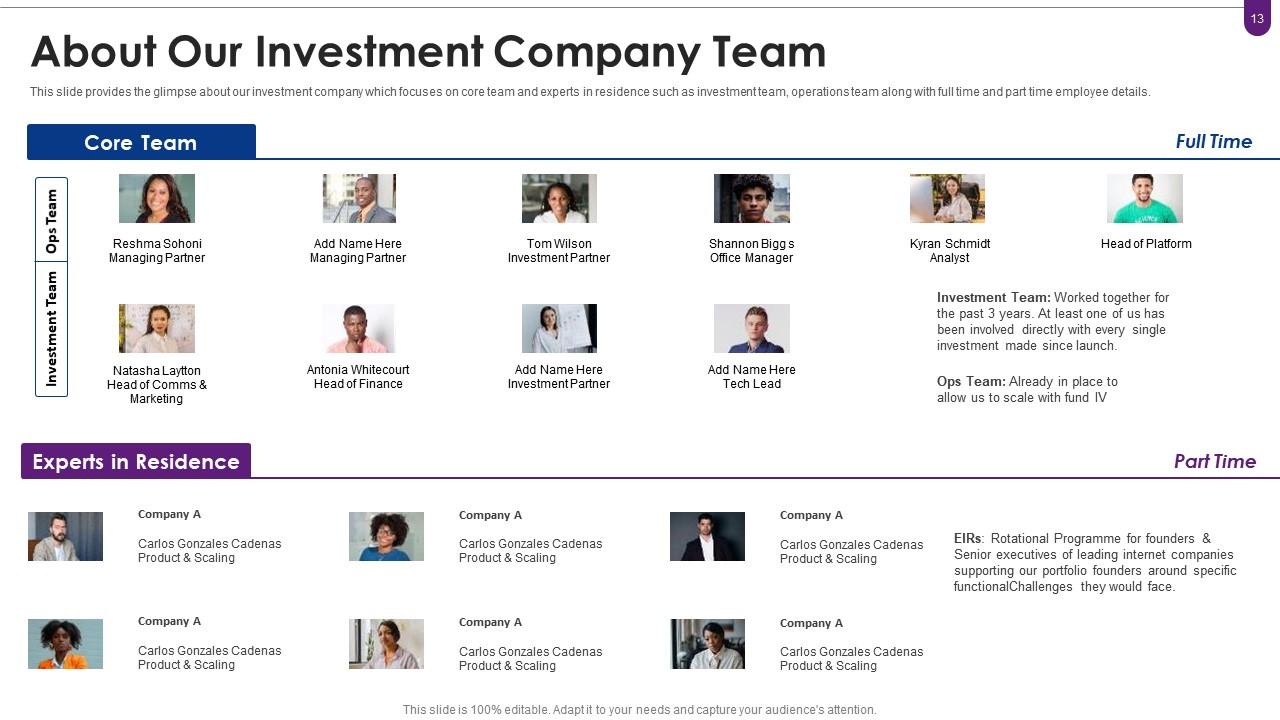
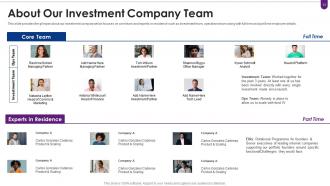
Slide 13: This slide presents investment company which focuses on core team and experts.
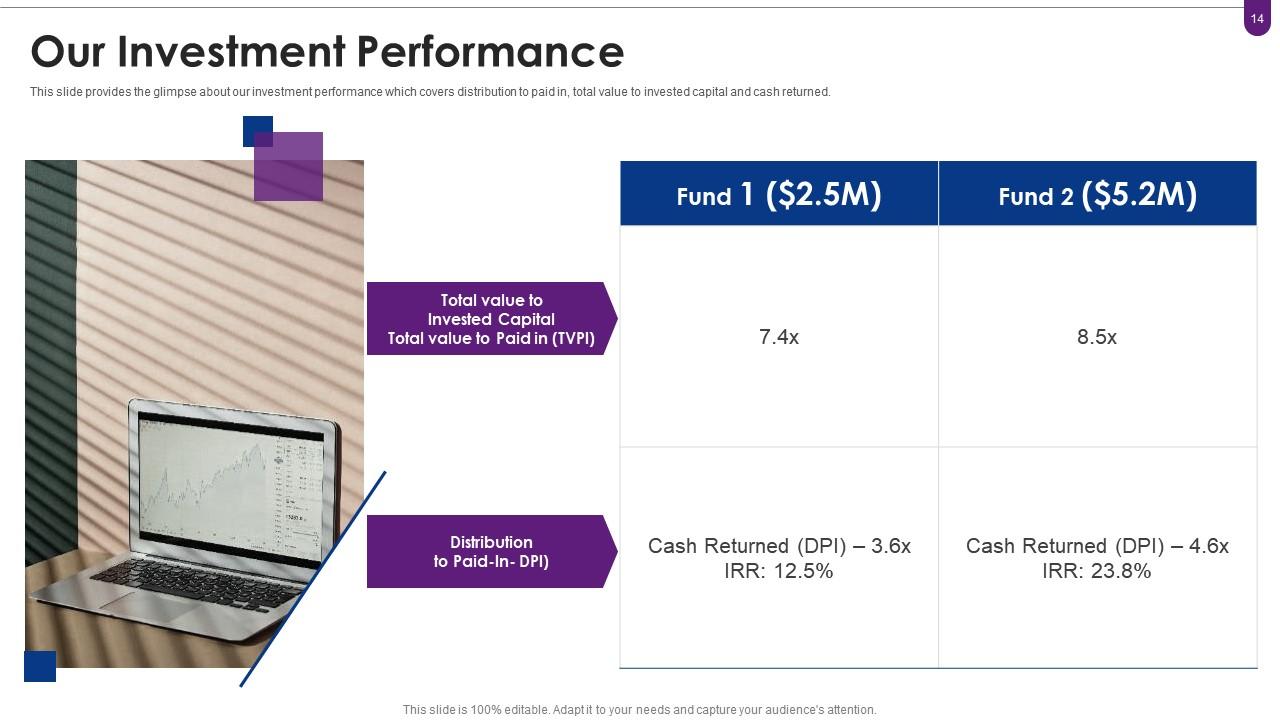
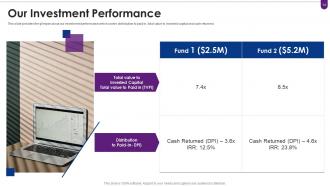
Slide 14: This slide displays our investment performance which covers distribution to paid in, total value to invested capital.
Slide 15: This slide represents Icons for Venture Capital Pitch Deck.
Slide 16: This slide is titled as Additional Slides for moving forward.
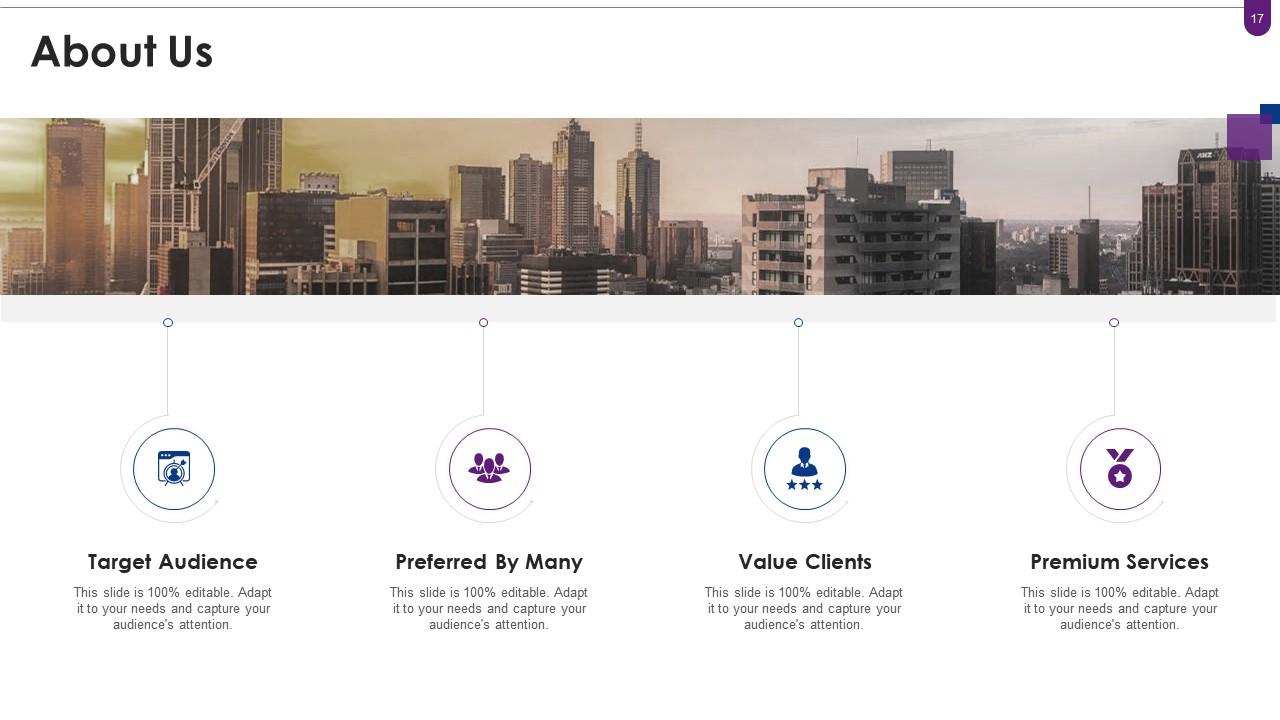
Slide 17: This is About Us slide to show company specifications etc.
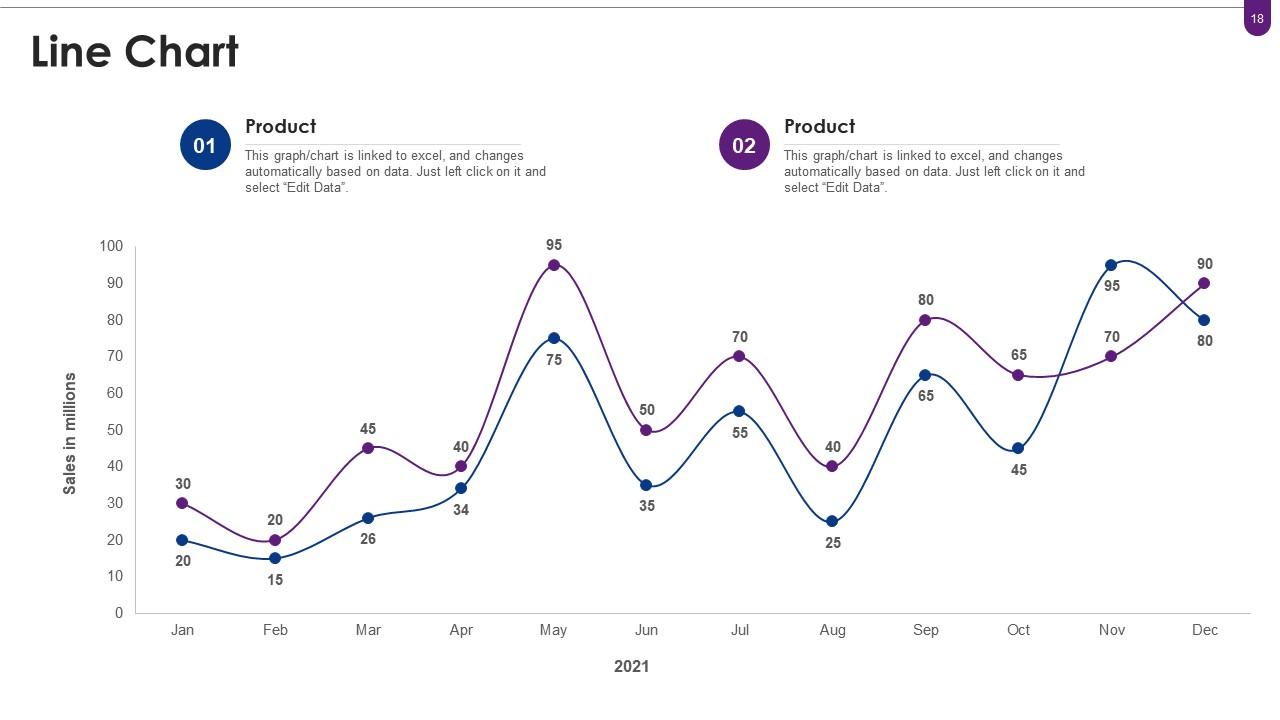
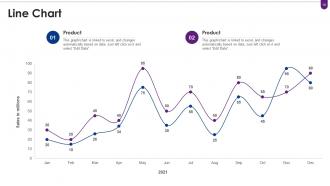
Slide 18: This slide describes Line chart with two products comparison.
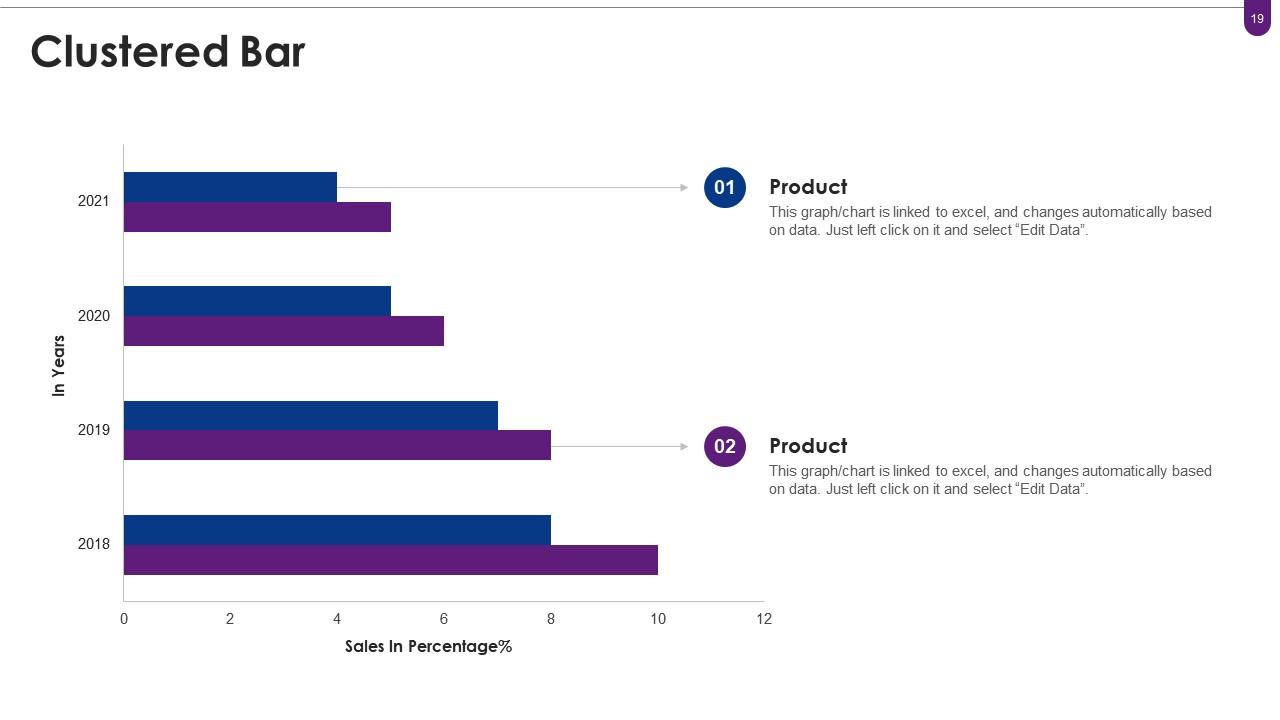
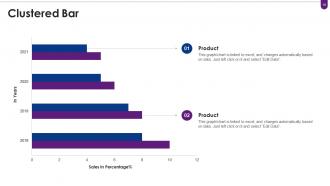
Slide 19: This slide presents Clustered Bar chart with two products comparison.
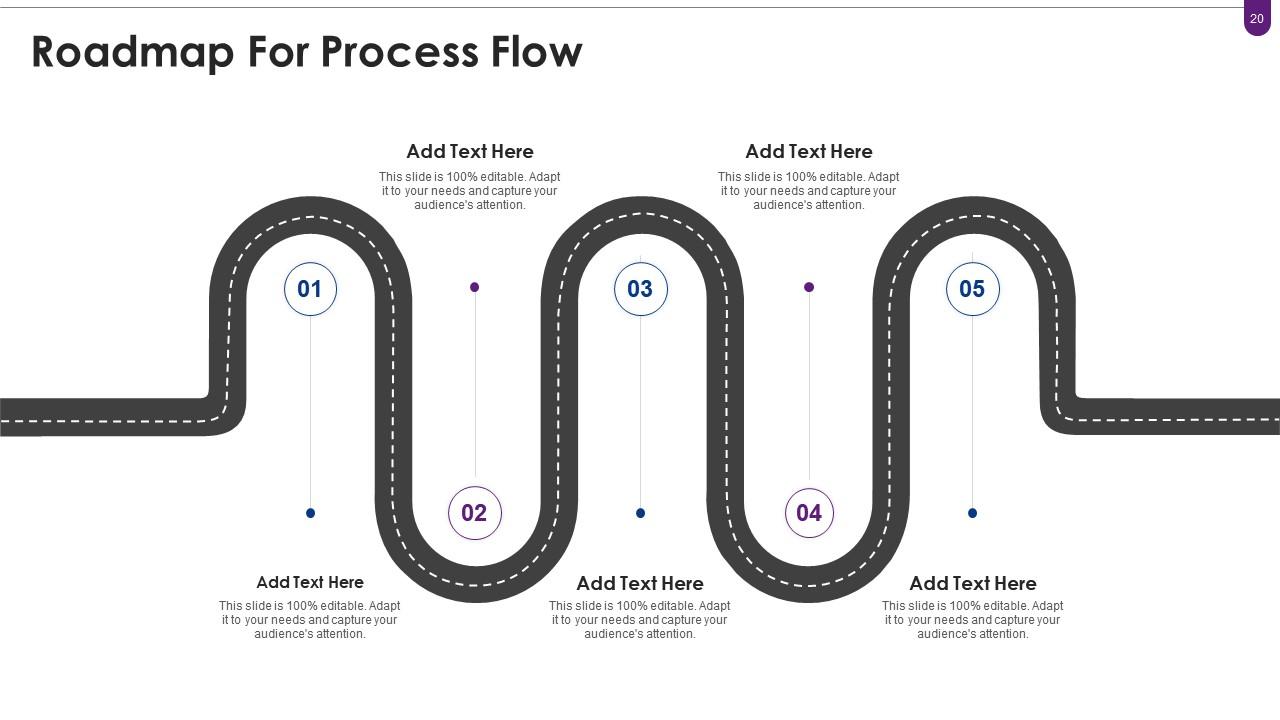
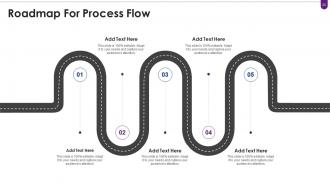
Slide 20: This slide shows Roadmap For Process Flow.
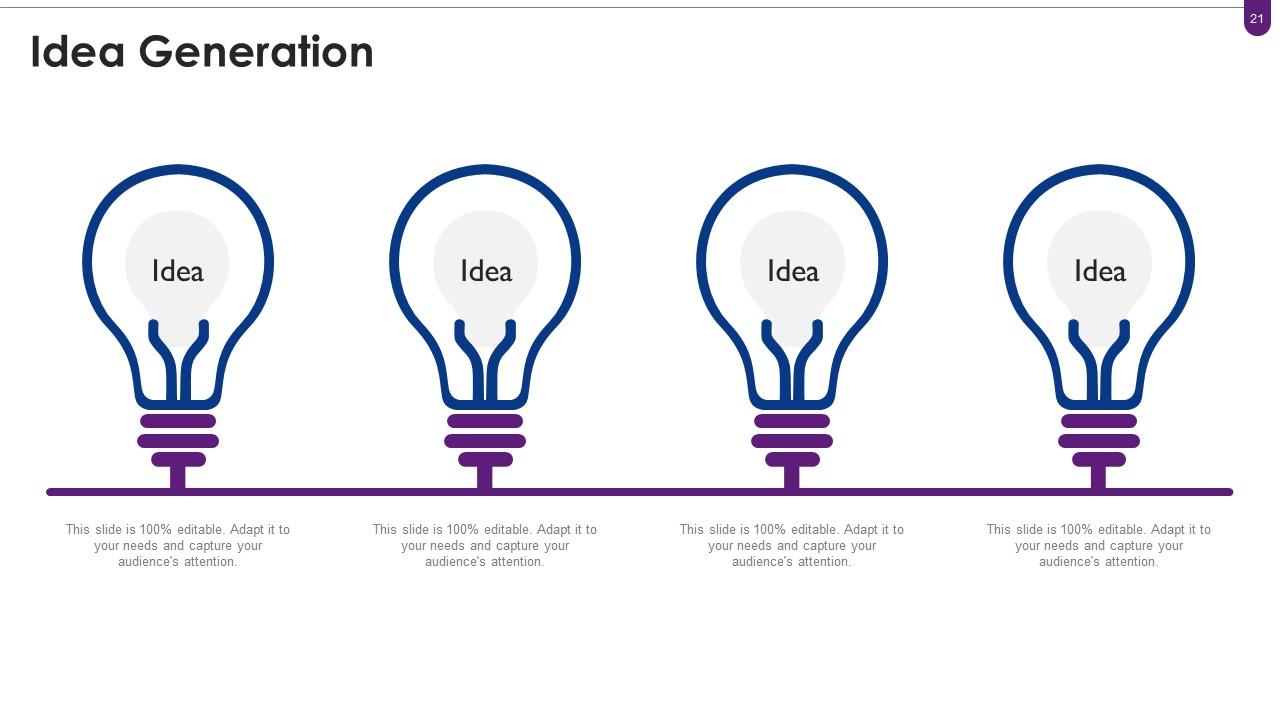
Slide 21: This is an Idea Generation slide to state a new idea or highlight information, specifications etc.
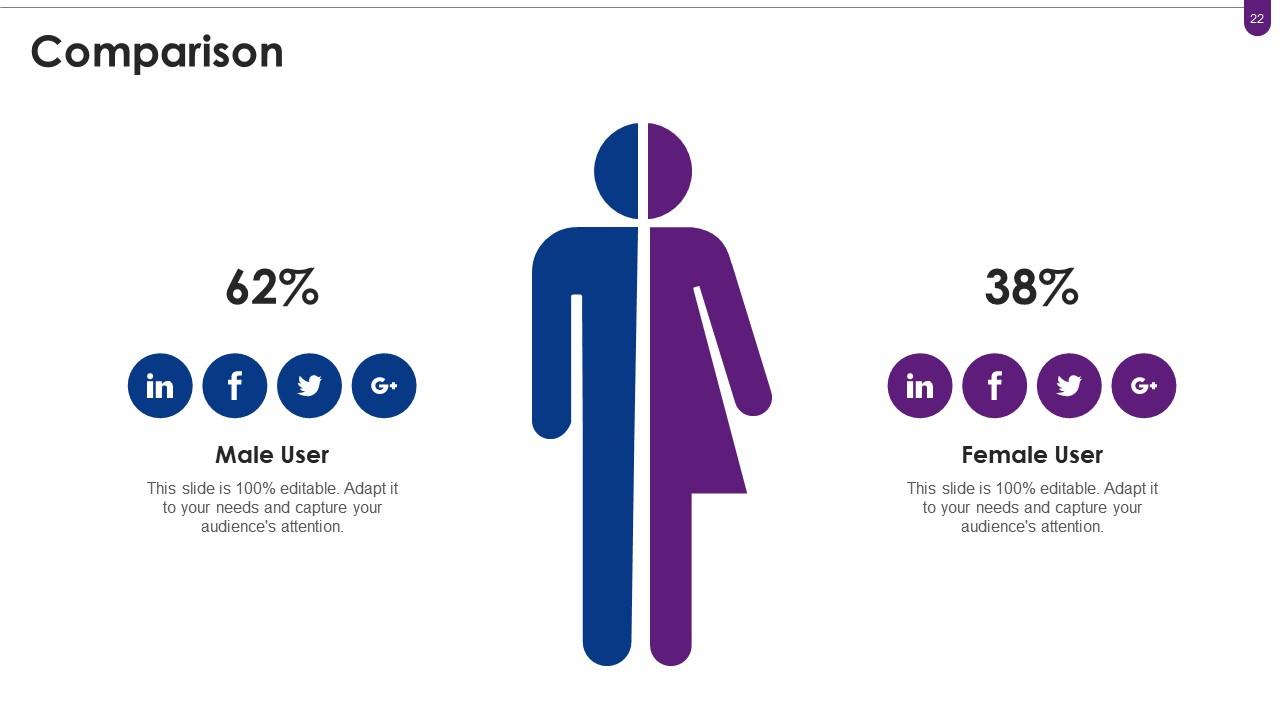
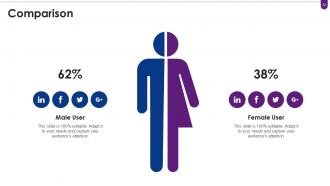
Slide 22: This is a Comparison slide to state comparison between commodities, entities etc.
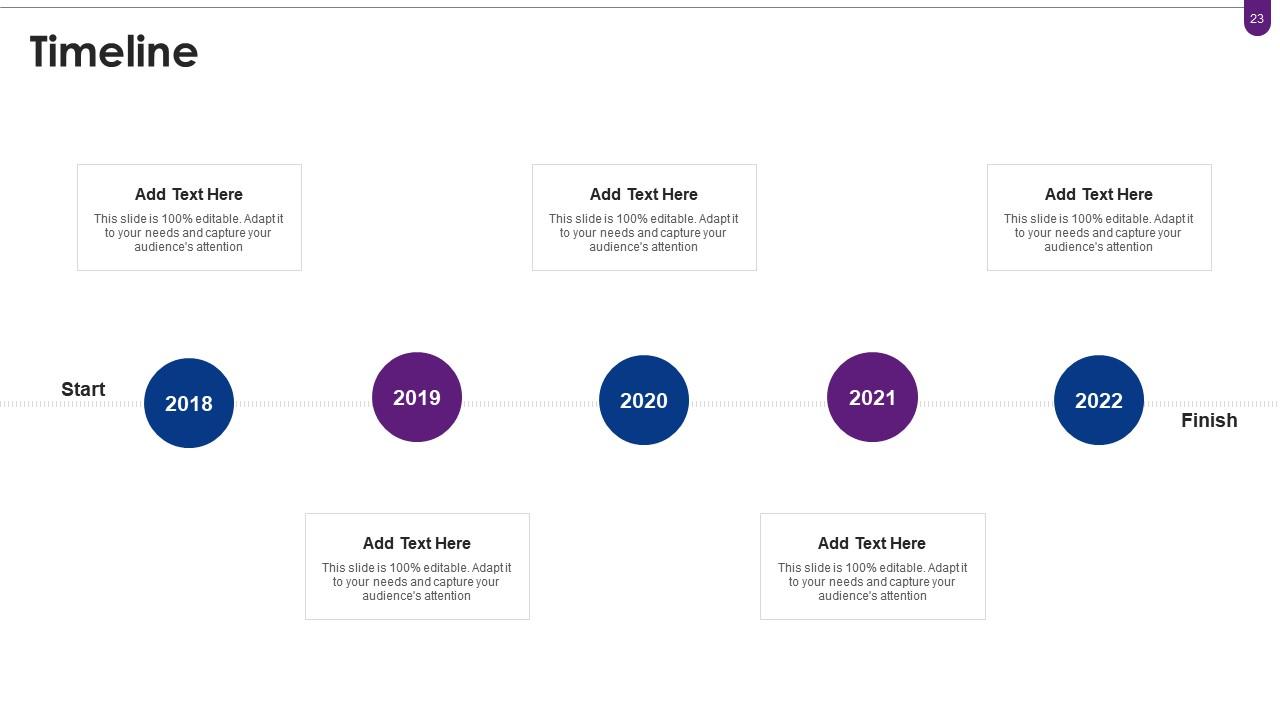
Slide 23: This is a Timeline slide. Show data related to time intervals here.
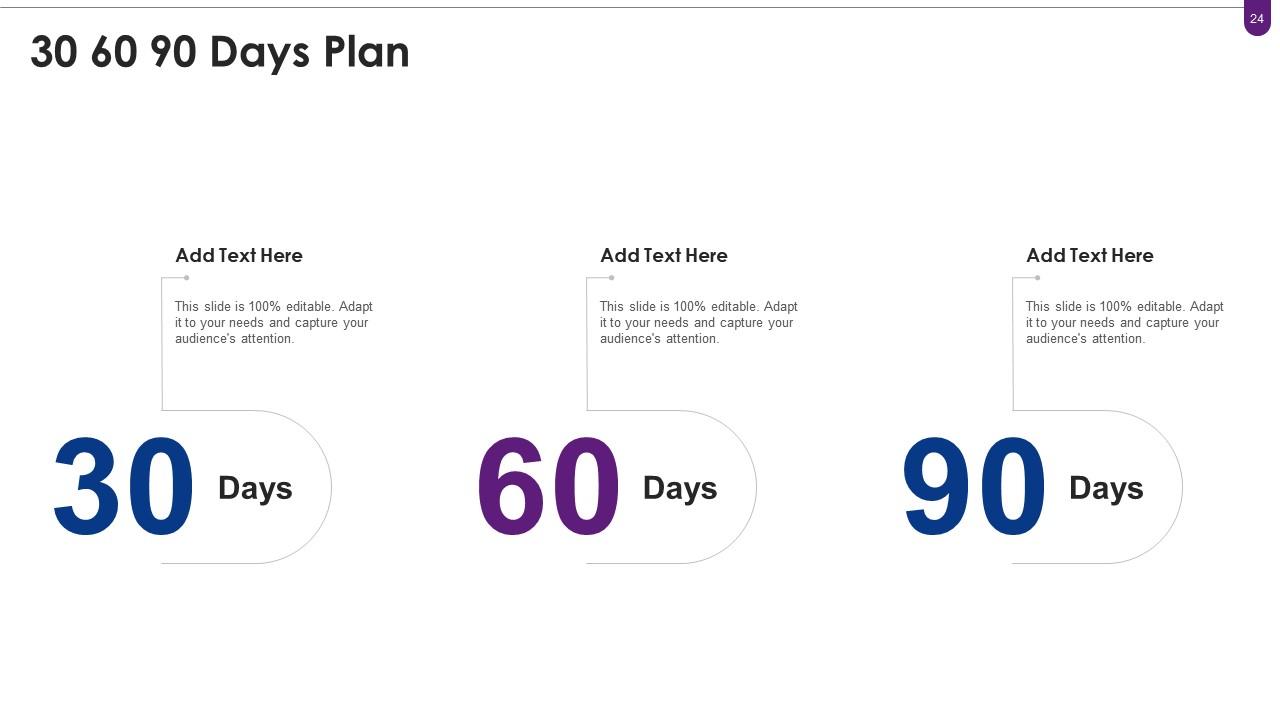
Slide 24: This slide provides 30 60 90 Days Plan with text boxes.
Slide 25: This is a Thank You slide with address, contact numbers and email address.
Venture capital funding elevator pitch deck ppt template with all 30 slides:
Use our Venture Capital Funding Elevator Pitch Deck Ppt Template to effectively help you save your valuable time. They are readymade to fit into any presentation structure.
FAQs for Venture capital funding elevator pitch
Ok so your pitch deck - hit the basics first: problem/solution, market size, business model, traction, team, competition, financials, and how much you need. Lead with a problem people actually care about. Traction slide is honestly make-or-break territory, so put that early. Don't say you have zero competitors (major red flag). Your team section should be tight - relevant experience only. Oh and be super clear about funding - exactly how much and what you'll spend it on. Keep it 10-12 slides tops. Practice until you could do it in your sleep without looking at slides.
Dude, charts and visuals are everything for pitch decks. Investors look at so many boring text-heavy presentations that anything visual immediately stands out. Clean graphs showing your growth, product mockups, simple infographics breaking down market stuff - that's what works. I'd focus on your three biggest wins first and turn those into killer visuals. Keep the design consistent throughout because it shows you actually care about details. Oh, and make sure every image actually tells part of your story instead of just filling space. Trust me, a good visual will stick in their heads way longer than paragraphs of text.
Dude, biggest thing is cramming way too much text on slides - investors will literally tune out if they're squinting at tiny fonts. Your story needs to flow logically from problem to solution or you'll lose them. Don't get obsessed with long product demos either. VCs honestly care way more about market size and actual traction than your cool features. Skip those boring generic market research slides - focus on YOUR specific opportunity instead. And seriously, know your numbers inside out before you even walk in there. I'd practice out loud like 5+ times minimum.
Dude, you absolutely need a solid story in your pitch deck. VCs are drowning in presentations every week - like seriously, dozens of them. Data shows what you're building, but story makes them actually give a shit about it. Your narrative has to connect the dots between problem, solution, and where you're headed. Each slide should build on the last one. Don't just dump facts on them. Weave everything into this cohesive arc about why this opportunity matters and how you got here. Honestly, figure out your story first, then worry about the slides.
Show them the numbers that actually matter - revenue growth month-over-month is pure gold. Customer acquisition cost vs lifetime value, engagement rates, retention stuff. VCs scroll through tons of these pitches, so clean growth numbers will stop them in their tracks. Market size and your slice of it matters too. Skip the fluff metrics like total signups (nobody cares). They want paying customers and proof your unit economics work. Pick maybe 4-6 key ones that tell your story. Oh and be ready to explain what's driving those trends - they'll definitely ask.
Dude, don't jump straight into your features - I see founders do this constantly and it's brutal to watch. Start with the actual problem first. Like "SMBs are literally burning 40 hours a month on manual invoicing" or whatever pain point hits hardest. Then your solution becomes obvious. Your unique angle needs to be super clear in one sentence: "We're the only platform that automates invoicing AND plays nice with existing accounting software." Back it up with customer quotes if you've got them. Oh, and test your pitch on people outside your industry first - they'll tell you if it actually makes sense or if you're still speaking startup gibberish.
Dude, you absolutely need solid market research - it's what stops your pitch from looking like total BS. VCs are so tired of seeing "trillion dollar market" slides that they basically ignore them now. Do actual customer interviews, build your market size from the bottom up, and really dig into your competitors. Show you know exactly how you're different. The research proves you're not just guessing about huge numbers (which honestly happens way too often). Make your data specific and back it up with real sources. Without it, you're just hoping instead of actually proving there's an opportunity worth investing in.
Look, VCs know your projections will be totally off anyway - they just want to see you're not completely clueless about the business. Do 3-5 years max with revenue, main expenses, and burn rate. Unit economics are what they really care about, plus your path to profitability. Don't go crazy with like 50 line items (I've seen people do this). Your assumptions matter way more than perfect spreadsheets. The story behind the numbers needs to make sense with your market size and growth plans. Keep it simple and be ready to explain why you think what you think.
Bring your financial model for sure - they'll want to see the actual numbers behind your projections. A product demo helps tons, whether it's live or just screenshots. I always tell people to have a one-pager ready since some investors scan that first before diving into the full deck. Oh and create an appendix with extra slides covering technical stuff or market research that didn't fit in the main presentation. Honestly, the biggest thing is being ready for follow-up questions. They'll definitely have them, so think through what you might get asked beforehand.
Lead with impact, not tech specs. What's the business result? Then quickly explain how you make it happen. Dump all the nerdy details in your appendix - some investors will want that stuff later anyway. Use comparisons people actually get. Instead of "machine learning algorithm," try "learns what customers want like Netflix figures out your terrible taste in rom-coms." Test it on someone's non-tech friend first. My neighbor's wife is brutal but honest feedback. If she nods along, you're good to go. Short sentences work. Don't overcomplicate it.
Honestly? Stick to 10-12 slides max. VCs look at tons of these daily and will zone out if you ramble. Hit the basics: problem, solution, market size, business model, traction, team, competition, financials, funding ask. I've seen founders stuff 20+ slides thinking more = better, but it backfires every time. Each slide needs one main point - that's it. Save the deep dive stuff for when they actually want a second meeting (which is the goal anyway). Time it for 10-15 minutes tops when you practice.
Show them your best numbers in a clean visual way - charts that clearly show growth over time. Month-over-month is way better than those meaningless vanity metrics everyone uses. Pick your strongest stuff: revenue jumps, user growth, solid partnerships, whatever's working. Here's the thing though - don't just throw data at them. Connect each milestone to what you actually learned or how you adjusted course. VCs need proof you can execute, not just talk. Keep it tight but make sure you're linking current wins to future potential. Honestly, boring data dumps kill momentum faster than anything.
Definitely dig into what each VC actually invests in first. B2B SaaS investors? Hit them hard with your enterprise metrics and how you'll scale. Healthcare VCs want to hear about regulatory stuff and patient impact right upfront. Honestly, the best founders I know literally swap out entire slides - different case studies, different traction metrics - depending on who they're pitching. It's more work but it pays off. Also tweak your market sizing to focus on segments they actually care about. Oh, and if you can mention their portfolio companies when talking partnerships or competitive positioning, do it. You want them thinking "this is exactly our wheelhouse" not "generic pitch
-
Great experience, I would definitely use your services further.
-
Nice and innovative design.
-
Topic best represented with attractive design.
-
Really like the color and design of the presentation.