


Anti Fraud Playbook Powerpoint Presentation Slides




Try Before you Buy Download Free Sample Product
 Impress Your
 Audience
 100%
100% Editable
 Save Hours
 of Time


A single fraud event can completely devastate a companys reputation and public trust. Because of a fraudulent event, businesses lose 7 percent of their annual revenue. Businesses follow an anti fraud playbook to effectively investigate and respond to a risk event. Check out our competently designed Anti Fraud Playbook template that includes risk governance structures, controls, and processes to safeguard resources and assets. Our anti fraud playbook will assist businesses in addressing scalable fraud risk assessment methodologies and four phased approaches to effectively track and tackle any risk event. At first, organizations can use slides on corporate fraud overview, why fraud risk governance is essential to educate their employees about various types of fraud, their impact, and their importance for a business. Post educating the employees companies can use sections addressing anti fraud programs to address the key stakeholders about their four phased approaches to identifying, assessing, preventing, and correcting fraud events. Lastly, businesses can use a use case slide to manage information about a specific fraud risk profile having details about fraud events, risk factors, likelihood and impact, and preventive measures. Get access now.
People who downloaded this PowerPoint presentation also viewed the following :
Content of this Powerpoint Presentation
Slide 1: This slide introduces Anti Fraud Playbook. State Your Company Name and begin.
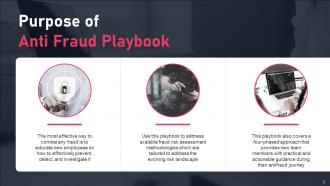
Slide 2: This slide shows Purpose of Anti Fraud Playbook.
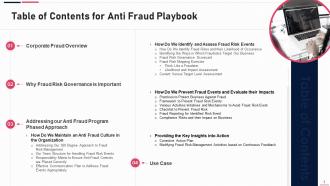
Slide 3: This slide presents Table of Content for the presentation.
Slide 4: This slide highlights title for topics that are to be covered next in the template.
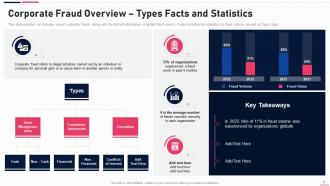
Slide 5: This slide provides an overview about corporate frauds along with the factual information of global fraud events.
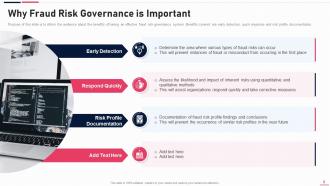
Slide 6: Purpose of this slide is to inform the audience about the benefits of having an effective fraud risk governance.
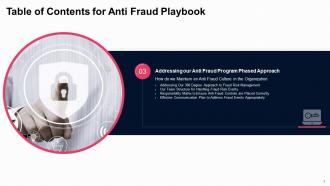
Slide 7: This slide highlights title for topics that are to be covered next in the template.
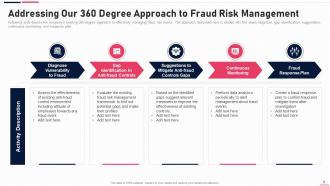
Slide 8: This slide presents Addressing Our 360 Degree Approach to Fraud Risk Management.
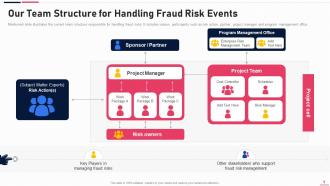
Slide 9: This slide displays Our Team Structure for Handling Fraud Risk Events.
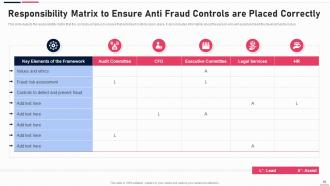
Slide 10: This slide depicts the responsibility matrix that the company employs to ensure that anti-fraud controls.
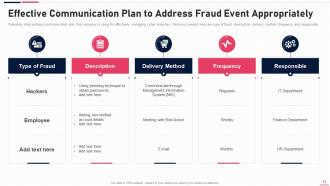
Slide 11: This slide represents Effective Communication Plan to Address Fraud Event Appropriately.
Slide 12: This slide highlights title for topics that are to be covered next in the template.
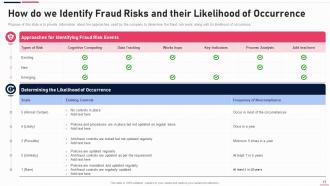
Slide 13: This slide showcases How do we Identify Fraud Risks and their Likelihood of Occurrence.
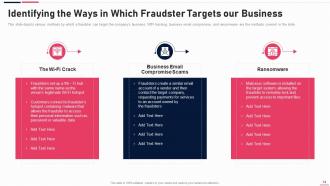
Slide 14: This slide shows Identifying the Ways in Which Fraudster Targets our Business.
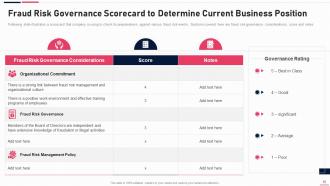
Slide 15: This slide presents Fraud Risk Governance Scorecard to Determine Current Business Position.
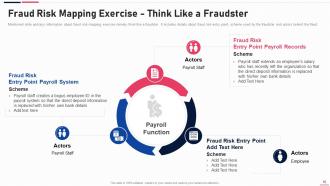
Slide 16: This slide displays Fraud Risk Mapping Exercise - Think Like a Fraudster.
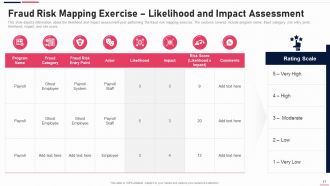
Slide 17: This slide depicts information about the likelihood and impact assessment post performing the fraud risk.
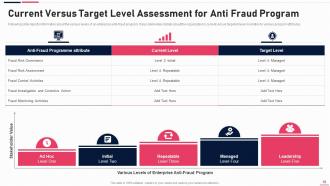
Slide 18: This slide represents Current Versus Target Level Assessment for Anti Fraud Program.
Slide 19: This slide highlights title for topics that are to be covered next in the template.
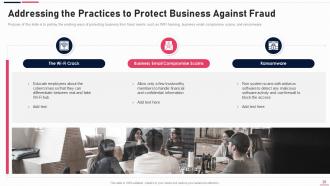
Slide 20: This slide showcases Addressing the Practices to Protect Business Against Fraud.
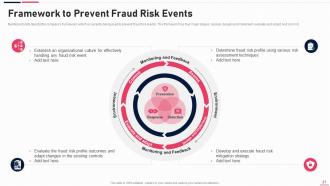
Slide 21: This slide shows Framework to Prevent Fraud Risk Events.
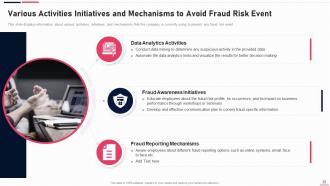
Slide 22: This slide presents Various Activities Initiatives and Mechanisms to Avoid Fraud Risk Event.
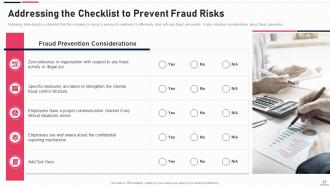
Slide 23: This slide displays Addressing the Checklist to Prevent Fraud Risks.
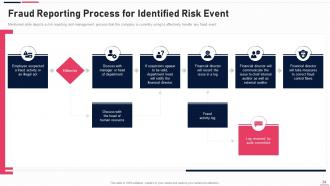
Slide 24: This slide represents Fraud Reporting Process for Identified Risk Event.
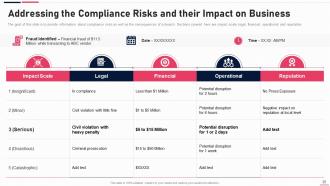
Slide 25: This slide showcases Addressing the Compliance Risks and their Impact on Business.
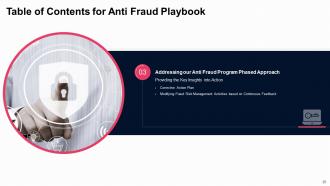
Slide 26: This slide highlights title for topics that are to be covered next in the template.
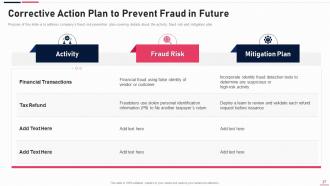
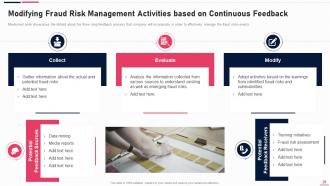
Slide 27: This slide shows Corrective Action Plan to Prevent Fraud in Future.
Slide 28: This slide presents Gather information about the actual and potential fraud risks.
Slide 29: This slide highlights title for topics that are to be covered next in the template.
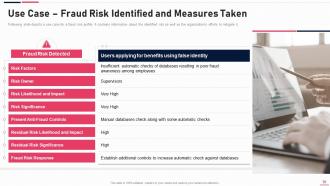
Slide 30: Following slide depicts a use case for a fraud risk profile.
Slide 31: This slide displays Icons for Anti Fraud Playbook.
Slide 32: This slide is titled as Additional Slides for moving forward.
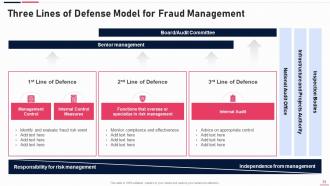
Slide 33: This slide represents Three Lines of Defense Model for Fraud Management.
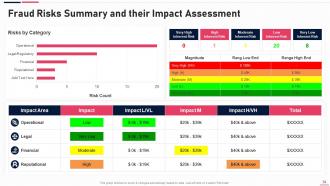
Slide 34: This slide showcases Fraud Risks Summary and their Impact Assessment.
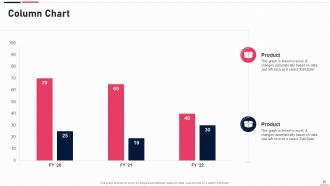
Slide 35: This slide displays Column chart with two products comparison.
Slide 36: This is About Us slide to show company specifications etc.
Slide 37: This slide shows Post It Notes. Post your important notes here.
Slide 38: This slide displays Mind Map with related imagery.
Slide 39: This slide contains Puzzle with related icons and text.
Slide 40: This is Our Mission slide with related imagery and text.
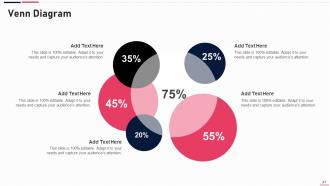
Slide 41: This slide depicts Venn diagram with text boxes.
Slide 42: This is a Timeline slide. Show data related to time intervals here.
Slide 43: This is a Thank You slide with address, contact numbers and email address.
Anti Fraud Playbook Powerpoint Presentation Slides with all 48 slides:
Use our Anti Fraud Playbook Powerpoint Presentation Slides to effectively help you save your valuable time. They are readymade to fit into any presentation structure.





FAQs for Anti Fraud Playbook
Honestly, start with prevention stuff - transaction limits, verification steps, the basics. Detection comes next: set up automated monitoring and anomaly alerts. Your investigation workflow is huge though - when fraud happens, people panic and forget everything, so write out exactly what to do step by step. Don't skip the response protocols either - how you talk to customers, when to call the cops, all that. Recovery procedures wrap it up (getting money back, damage control). I'd focus extra time on that investigation section since that's where teams usually mess up under pressure.
Start with mapping out where you're actually vulnerable - financial processes, who can access what data, vendor stuff, employee permissions. Money and sensitive info basically. Honestly, don't sleep on the mundane things like expense reports and petty cash. Fraudsters absolutely love that boring stuff everyone ignores. Figure out your current detection methods and be real about where your internal controls suck. I know it's tempting to think everything's running smoothly, but you've got to be brutally honest about the gaps. That's literally the only way this works.
Dude, training your employees is literally the best thing you can do to stop fraud. Teach them to spot weird stuff - like sketchy vendor emails or someone pressuring them to skip procedures. Fraudsters are getting scary good at this stuff, honestly. Make the training actually relevant to what each person does, not some boring generic slideshow everyone ignores. Cover both outside scams like phishing and internal threats too. Oh, and make sure they know exactly who to call when something feels wrong. Interactive sessions work way better than just lecturing at people.
Honestly, just watch for weird patterns - transaction spikes, odd frequencies, anything that feels off when you're digging through the data. Sometimes your gut catches stuff the systems miss. I learned this the hard way, but even legitimate cases can look sketchy at first glance! Document everything suspicious though, even small red flags. Quick reporting beats perfect paperwork every time - once you spot something, move fast. Oh and make sure you've got clear escalation paths set up beforehand. Nothing worse than finding fraud and not knowing who to call.
Honestly, machine learning is your best friend here - it catches patterns and weird stuff in real-time that you'd totally miss, especially with tons of transactions flying through. AI does the heavy lifting on risk scoring and flags sketchy activity right away. Predictive analytics are clutch too since you can get ahead of new fraud tricks instead of always playing catch-up. The tech moves crazy fast though (sometimes I feel like I'm always behind lol). Start with some basic automated monitoring tools and build from there - don't try to do everything at once.
Yeah, every industry gets hit differently. Healthcare sees tons of fake billing and procedure upcoding. Financial companies deal with account takeovers and synthetic identities all the time. Retail's biggest headache? Return fraud and card testing - some of these return scams are honestly pretty impressive lol. E-commerce battles friendly fraud chargebacks and triangulation schemes. Insurance gets the staged accidents and inflated claims. I'd focus on learning your industry's specific red flags rather than general stuff. Way more effective than casting a wide net.
Dude, fraud confirmation = panic mode but stay organized. Freeze everything first - accounts, access, whatever stops more damage. Call your legal team ASAP and maybe cops depending on how bad it is. Document literally everything because you'll hate yourself later if you don't have the details. Figure out what got hit, how much you lost, who else might be screwed. Oh and check if you need to do those breach notifications - that's always fun timing wise. Your incident response plan should have owners for each step. Don't try to handle it all yourself.
Track your detection rate and false positives first - those are the big ones. Time to detection matters too since catching stuff fast saves you headaches later. Then look at the money side: prevented losses versus what you're spending on investigations. Customer satisfaction is huge because angry customers will switch banks over declined transactions, trust me. Oh, and measure how much your team catches manually versus what the system picks up automatically. Case resolution time helps you spot bottlenecks. Start with these basics - you can always get fancier with metrics once you've got the foundation down.
Honestly, culture stuff matters way more than people think when it comes to fraud. If your company's all about hitting numbers no matter what, that's trouble right there. Employees mirror what they see from leadership - and if the bosses are sketchy, everyone else follows suit. People who feel undervalued or ignored? They'll justify stealing pretty easily. The whole "speak up" thing only works if people actually trust they won't get fired for it. I'd start by looking at whether your leaders are hypocrites, then figure out how to make reporting stuff less scary for everyone.
Definitely bake GDPR and CCPA compliance right into your playbook from the start. If you're dealing with SOX or PCI-DSS, those apply too. Privacy rules are stricter than people think - you can't just grab and store investigation data however you want. Employment law gets tricky with internal fraud cases since you might face wrongful termination claims later. Documentation requirements change depending on where you are, so check what your legal team actually needs for prosecution. Oh, and definitely run the draft by your lawyers first - I've seen too many companies get burned on compliance stuff they thought was fine.
Look, integrity can't be some poster on the wall that nobody cares about. Your leaders have to actually live it - if they're being sketchy, everyone else will be too. Set up ways people can report problems without getting fired for it (and actually do something when they do). Training's good but make it real scenarios, not boring compliance stuff. Oh and this is huge - reward people who do the right thing even when it costs them. That works way better than just punishing the bad guys. You want it to feel normal, not like extra work.
Honestly, you gotta hit this from all angles. Do mandatory training sessions first - way more effective than some dry policy nobody reads. People actually retain stuff when they can ask questions. Then keep hammering it home with email reminders showing real fraud examples, throw up some office signs, work it into team meetings. Repetition is everything here. But here's the thing - don't just explain what fraud looks like generally. Show them the specific red flags for their actual job and make reporting dead simple. Clear escalation process is clutch.
Honestly, your fraud prevention program is dead in the water without real leadership backing. I've watched so many good initiatives crash because executives just pay lip service instead of actually caring. You need C-suite people who'll put money behind it and hold everyone accountable - not treat it like some boring compliance thing they have to check off. Short version? Don't even bother starting without clear executive sponsorship. When leaders actually promote ethical behavior and give you proper resources, employees follow suit. But if they're just going through the motions, your whole program becomes a joke pretty fast.
DataVisor and Feedzai are your best bets for ML platforms - they catch patterns you'd never see. Fraud.net or SEON work great for real-time stuff, especially payments. Get Tableau or similar for visualization because you need to actually see what's going on. Device fingerprinting and IP checks are boring but they work - sometimes better than the expensive fancy tools tbh. Figure out your budget first, then pick maybe 2-3 tools tops. Too many alerts will drive you crazy. Oh and don't overthink it - start simple and build up from there.
So basically, you analyze past transactions and real-time stuff to catch weird patterns before they become a problem. Machine learning models are great for this - they'll flag odd spending habits, sketchy login attempts, anything that doesn't match how users normally behave. The models actually get better over time too, which is pretty neat. Build predictive scoring that works in real-time so you can shut down suspicious transactions instantly. Way better than finding out about fraud weeks later when you're doing reconciliation. Trust me, catching it early saves so much headache.
-
Great product with effective design. Helped a lot in our corporate presentations. Easy to edit and stunning visuals.
-
“There is so much choice. At first, it seems like there isn't but you have to just keep looking, there are endless amounts to explore.”