


Artificial intelligence pitch deck ppt template




Try Before you Buy Download Free Sample Product
 Impress Your
 Audience
 100%
100% Editable
 Save Hours
 of Time


Our Artificial Intelligence Pitch Deck Ppt Template are topically designed to provide an attractive backdrop to any subject. Use them to look like a presentation pro.
People who downloaded this PowerPoint presentation also viewed the following :
Content of this Powerpoint Presentation
Slide 1: This slide introduces Artificial Intelligence Pitch Deck. State Your Company Name and begin.
Slide 2: This slide shows Table of Contents for Artificial Intelligence Pitch Deck.
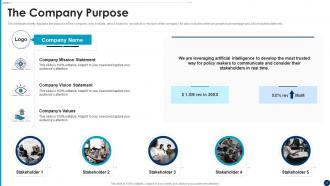
Slide 3: This template briefly explains the purpose of the company, why it exists, who it exists for and what is mission of the company.
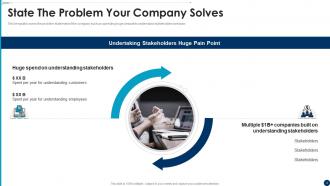
Slide 4: This template presents the problem statement of the company such as spending huge amount to understand stakeholders behavior.
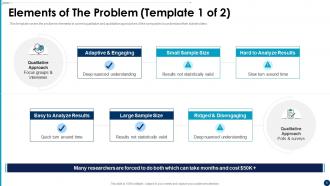
Slide 5: This template covers the problems elements in current qualitative and qualitative approaches of the companies.
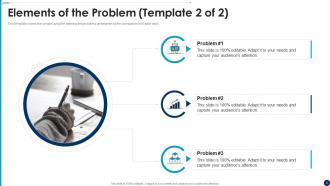
Slide 6: This template displays the simple layout for defining the problems undertaken by the companies in AI pitch deck.
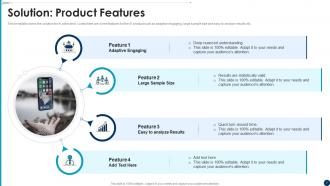
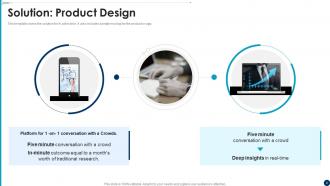
Slide 7: This template represents the solution for AI pitch deck.
Slide 8: This is another slide showing the solution for AI pitch deck.
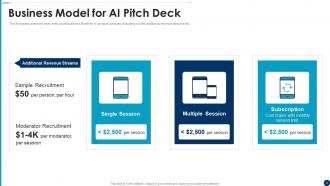
Slide 9: This template presents the easy entry point Business Model for AI product company including cost for additional revenue streams etc.
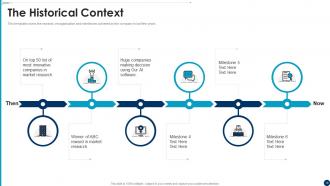
Slide 10: This template covers the rewards, reorganization and milestones achieved by the company in last few years.
Slide 11: This template displays the product market fit in market research.
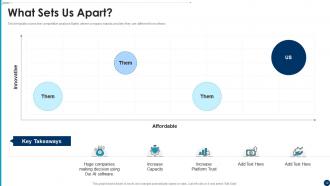
Slide 12: This template represents the competitive analysis Matrix where company stands and why they are different from others.
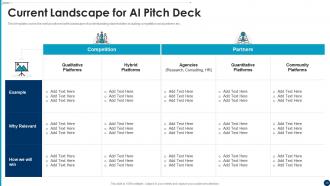
Slide 13: This template covers the well positioned with landscape of understanding stakeholders including competition and partners etc.
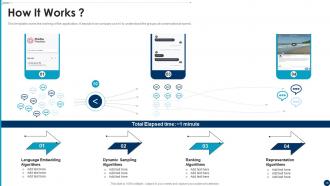
Slide 14: This slide presents how company use AI to understand the groups at conversational speed.
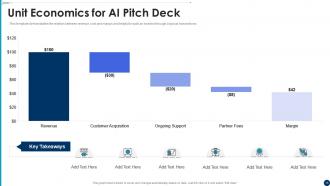
Slide 15: This template demonstrates the relation between revenue, cost and margin and helpful to walk an investor through typical transactions.
Slide 16: This template displays the future vision for AI company to walk inverters through future plans as market research solution.
Slide 17: This template represents revenue estimation in the first 18 months after launch of the AI application.
Slide 18: This template covers strong team in AI, operations, market research, and sales etc.
Slide 19: This template presents the contact us page for AI pitch deck company including name, title, position and company etc.
Slide 20: This slide shows Icons for Artificial Intelligence Pitch Deck.
Slide 21: This slide is titled as Additional Slides for moving forward.
Slide 22: This is About Us slide to show company specifications etc.
Slide 23: This is Our Target slide. State your targets here.
Slide 24: This slide presents Puzzle with related icons and text.
Slide 25: This slide shows 30 60 90 Days Plan with text boxes.
Slide 26: This slide displays Venn diagram with text boxes.
Slide 27: This is a Financial slide. Show your finance related stuff here.
Slide 28: This slide shows Post It Notes. Post your important notes here.
Slide 29: This is a Comparison slide to state comparison between commodities, entities etc.
Slide 30: This slide shows Roadmap with additional textboxes.
Slide 31: This slide displays Magnifying Glass to highlight information, specifications etc
Slide 32: This is a Timeline slide. Show data related to time intervals here.
Slide 33: This is a Thank You slide with address, contact numbers and email address.
Artificial intelligence pitch deck ppt template with all 33 slides:
Use our Artificial Intelligence Pitch Deck Ppt Template to effectively help you save your valuable time. They are readymade to fit into any presentation structure.
-
Artificial Intelligence Pitch Deck
-
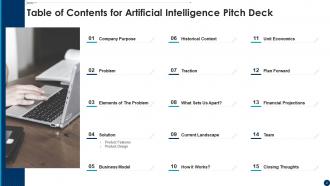
Table of Contents for Artificial Intelligence Pitch Deck
-
The Company Purpose
-
State The Problem Your Company Solves
-
Elements of The Problem Template 1 of 2
-
Elements of the Problem Template 2 of 2
-
Solution Product Features
-
Solution Product Design
-
Business Model for AI Pitch Deck
-
The Historical Context
-
Traction Market Sizing AI Pitch Deck
-
What Sets Us Apart
-
Current Landscape for AI Pitch Deck
-
How It Works
-
Unit Economics for AI Pitch Deck
-
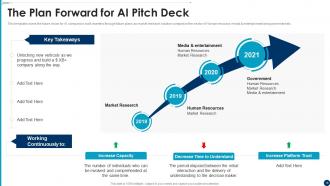
The Plan Forward for AI Pitch Deck
-
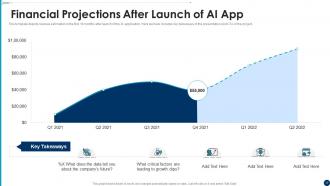
Financial Projections After Launch of AI App
-
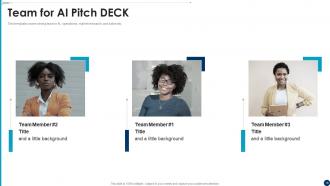
Team for AI Pitch DECK
-
Closing Thoughts
-
Icons Slide for Artificial Intelligence Pitch Deck
-

Additional Slides
-
About Us
-
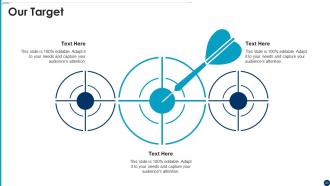
Our Target
-
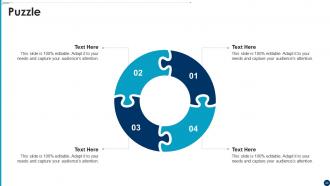
Puzzle
-
30 60 90 Days Plan
-
Venn
-
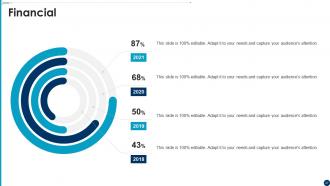
Financial
-
Post it Notes
-
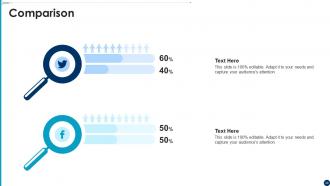
Comparison
-
Roadmap
-
Magnifying Glass
-
Timeline
-
Thank You
FAQs for Artificial intelligence pitch
Dude, patient consent and data privacy are absolutely critical - can't mess around there. Your AI needs to be super transparent about decision-making because doctors and patients will want to know the reasoning behind recommendations. Bias is scary stuff since bad training data can actually hurt certain groups of people. Liability gets tricky too when things inevitably go sideways. Human oversight is a must, plus you need bulletproof data security. Oh and definitely build ethical reviews into the process from the start - trying to add them later is like putting a band-aid on a broken leg.
Honestly, just document everything - where your data came from, why you made certain model choices, the whole training mess. Use interpretable models when you can, or slap explanation layers on the complex stuff. I get it, sounds tedious but it'll save your butt later. Test for bias regularly, especially with hiring or loan decisions - that stuff gets messy fast. You'll need clear policies about who takes the heat when things break. Oh, and don't try to fix everything at once. Pick one algorithm and walk through every step with your team first.
Honestly, it all comes down to your data situation. With supervised learning, you've got labeled examples - like showing a model tons of cat photos that are already tagged as "cat." Way more straightforward. Unsupervised learning is trickier since you're working blind, just looking for hidden patterns in messy data. Then there's reinforcement learning, which is kinda like... remember learning to parallel park? The algorithm basically fails a bunch until it figures out what works. I'd probably start with supervised learning if you're new to this - it's less of a headache when you're getting your feet wet.
Honestly, AI can totally transform your online store. Start with chatbots for customer support - they're available 24/7 which is huge. Personalized product recommendations work really well too, showing customers stuff based on what they've already looked at. Dynamic pricing is smart since it adjusts based on demand. There's also this cool visual search thing where people can take photos to find similar products (my friend's store saw great results with that). Oh, and AI helps predict inventory so you don't run out of popular items. I'd say pick one feature first, see how customers respond, then add more from there.
Honestly, AI's pretty solid for digging through your old data and figuring out what's coming next. Sales forecasting, predicting when customers might bail, inventory stuff - you know the drill. Machine learning catches patterns we'd totally miss, plus it handles way more data than your team could ever crunch manually. Gets better over time too as you dump more info into it. Oh, and it's great for running "what if" scenarios before you blow your budget on something stupid. I'd start with something simple like scoring your leads, then build from there once you get the hang of it.
Honestly, AI's gonna flip everything upside down. Tons of jobs will disappear - and I'm not just talking factory work, but lawyers, accountants, you name it. The rich will get richer unless we figure this out fast. But here's the thing - maybe we'll finally get to do work that actually matters instead of mindless tasks? I keep wondering if my cousin's accounting degree will be useless in five years. Governments better start planning retraining programs or universal basic income. Think about what makes you irreplaceable as a human.
So AI is pretty amazing at catching cyber threats - it can churn through tons of network data and spot sketchy patterns way faster than we ever could. Sometimes it even flags attacks before they actually happen, which is wild. But honestly? It's not foolproof. You'll get false alarms that'll drive your team crazy, and hackers are getting smarter about tricking these systems. The whole thing only works as well as the data you feed it too. I'd say use it as backup for your security team, not instead of them. Human judgment still matters a lot here.
So NLP is what makes computers understand normal human speech instead of forcing us to learn their robot language. Your phone's autocomplete, Siri, ChatGPT - that's all NLP doing the heavy lifting. It figures out context and what you actually mean, even when you're being super vague about stuff. Honestly, it's wild how much better voice commands have gotten lately. Without it, we'd still be stuck typing out specific commands or hunting through a million menus just to get anything done. Way better than the old days.
Pick one area that won't break everything if it goes sideways - test there first. Train your people early though, because once they see how much grunt work disappears, they'll actually want to use it. Before adding any AI, map what you're doing now. Look for the boring repetitive stuff that eats up everyone's day. Don't let AI make the big calls - that's still human territory. Data policies matter too since garbage in equals garbage out. Oh, and seriously stick with one tool until you've got it down. I've seen too many companies grab five different AI things and master none of them.
Oh man, bias is literally baked into most AI systems because the training data reflects all our historical messiness - like those hiring algorithms that kept picking men since that's who got hired before. Super frustrating but fixable. Check your datasets first (garbage in, garbage out, right?). Test how your model performs across different groups. Having diverse people on your team helps catch stuff you'd miss. Oh, and don't wait until the end to test for bias - build it into your whole process. It's way easier to fix early than after everything's deployed.
Honestly, healthcare and finance are where AI's gonna make the biggest splash. Medical diagnostics are already getting scary accurate - like, better than some doctors accurate. Manufacturing's right behind them with supply chain stuff and predicting when machines break. Banking will crush fraud detection, and retail's obvious with all the personalization nonsense. Oh, and self-driving cars are finally happening for real. If you're thinking career moves, target companies actually using this tech, not the ones just hyping it up. Transportation's solid too but might take longer than people think.
So AI is like the big umbrella term for anything that acts smart like humans do. Machine learning sits under that - it's when systems learn from data instead of you programming every single thing they should do. Honestly, ML is where all the cool stuff is happening right now. They work differently too. AI handles automation and decision-making across tons of industries. ML does the personalization you see everywhere, plus predictive analytics and spotting patterns. But here's the thing - don't pick the tech first. Figure out what problem you're actually trying to solve, then worry about which one fits.
So the biggest headache is needing tons of data for AI to actually work, but that data's packed with personal info. It's like trying to balance on a tightrope honestly. GDPR compliance makes things even messier. Plus AI models can be weirdly good at "remembering" training data and accidentally spitting out private details later - which is legitimately terrifying if you ask me. Start by anonymizing everything you can. Then lock down who can access what with strict controls. Oh, and maybe test your model to see what it might accidentally leak before going live.
Honestly, AI's pretty solid for climate stuff. It can optimize energy use in buildings and predict when equipment's about to fail before it starts wasting power. The pattern recognition thing is crazy - it spots trends in climate data that would take us ages to find. Solar panels and EV batteries are already getting better because of machine learning algorithms. Oh, and it processes massive environmental datasets way faster than we could. You should check out AI energy management systems for your place. Even small tweaks can cut your carbon footprint more than you'd think. It's one of those things that actually feels like the future working for us.
Honestly, it's kinda crazy how fast things are moving right now. Basic stuff like data entry and simple analysis will probably get automated first - maybe even some creative work too. But here's the thing - new jobs always pop up when old ones disappear. Think AI trainers or ethics people. My advice? Don't try to compete with AI, work alongside it instead. Focus on things like emotional intelligence and creative problem-solving since those are way harder for machines to nail down. Oh, and definitely keep learning new skills - staying flexible is huge right now.
-
Topic best represented with attractive design.
-
Excellent template with unique design.
-
Great product with highly impressive and engaging designs.
-
Graphics are very appealing to eyes.