


Künstliche Intelligenz Pitch Deck PPT-Vorlage




Try Before you Buy Download Free Sample Product
 Impress Your
 Audience
 100%
100% Editable
 Save Hours
 of Time


Unsere Präsentationsvorlage für künstliche Intelligenz ist thematisch gestaltet, um einen attraktiven Hintergrund für jedes Thema zu bieten. Verwenden Sie sie, um wie ein Präsentationsprofi auszusehen.
People who downloaded this PowerPoint presentation also viewed the following :
Inhalt dieser Powerpoint-Präsentation
Folie 1: Diese Folie führt in die Künstliche Intelligenz Pitch Deck ein. Nennen Sie Ihren Firmennamen und beginnen Sie.
Folie 2: Diese Folie zeigt das Inhaltsverzeichnis für die Künstliche Intelligenz Pitch Deck.
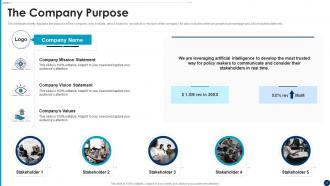
Folie 3: Diese Vorlage erklärt kurz den Zweck des Unternehmens, warum es existiert, für wen es existiert und was die Mission des Unternehmens ist.
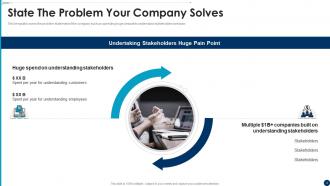
Folie 4: Diese Vorlage präsentiert die Problemstellung des Unternehmens, wie z.B. die Ausgabe enormer Summen, um das Verhalten der Stakeholder zu verstehen.
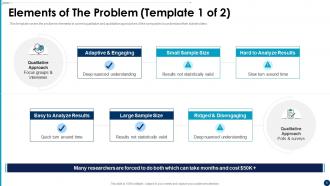
Folie 5: Diese Vorlage behandelt die Probleme der aktuellen qualitativen und quantitativen Ansätze der Unternehmen.
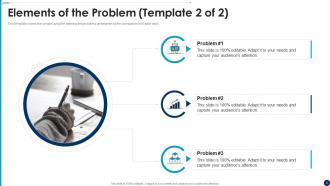
Folie 6: Diese Vorlage zeigt ein einfaches Layout zur Definition der von den Unternehmen in der KI-Pitch Deck behandelten Probleme.
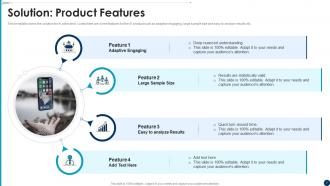
Folie 7: Diese Vorlage stellt die Lösung für die KI-Pitch Deck dar.
Folie 8: Dies ist eine weitere Folie, die die Lösung für die KI-Pitch Deck zeigt.
Folie 9: Diese Vorlage präsentiert das einfache Einstiegsmodell für KI-Produktunternehmen, einschließlich der Kosten für zusätzliche Einnahmequellen usw.
Folie 10: Diese Vorlage behandelt die Belohnungen, Reorganisationen und Meilensteine, die das Unternehmen in den letzten Jahren erreicht hat.
Folie 11: Diese Vorlage zeigt die Produktmarktpassung in der Marktforschung.
Folie 12: Diese Vorlage stellt die Wettbewerbsanalyse-Matrix dar, wo das Unternehmen steht und warum es sich von anderen unterscheidet.
Folie 13: Diese Vorlage behandelt die gut positionierte Landschaft des Verständnisses der Stakeholder, einschließlich Wettbewerb und Partner usw.
Folie 14: Diese Folie zeigt, wie das Unternehmen KI nutzt, um Gruppen in Gesprächsgeschwindigkeit zu verstehen.
Folie 15: Diese Vorlage veranschaulicht den Zusammenhang zwischen Umsatz, Kosten und Marge und hilft dabei, einen Investor durch typische Transaktionen zu führen.
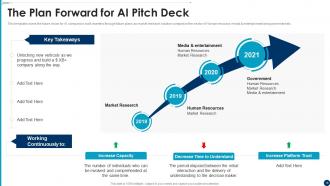
Folie 16: Diese Vorlage zeigt die Zukunftsvision für das KI-Unternehmen, um Investoren durch zukünftige Pläne als Marktforschungslösung zu führen.
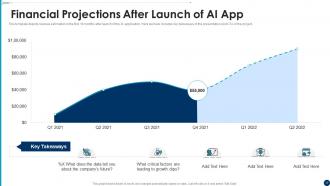
Folie 17: Diese Vorlage stellt die Umsatzschätzung für die ersten 18 Monate nach der Einführung der KI-Anwendung dar.
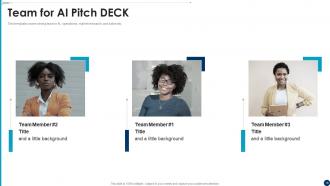
Folie 18: Diese Vorlage behandelt ein starkes Team in den Bereichen KI, Betrieb, Marktforschung und Vertrieb usw.
Folie 19: Diese Vorlage präsentiert die Kontaktseite für das KI-Pitch Deck-Unternehmen, einschließlich Name, Titel, Position und Unternehmen usw.
Folie 20: Diese Folie zeigt Symbole für die Künstliche Intelligenz Pitch Deck.
Folie 21: Diese Folie trägt den Titel Zusätzliche Folien für den Fortschritt.
Folie 22: Dies ist die Über uns-Folie, um Unternehmensangaben usw. zu zeigen.
Folie 23: Dies ist die Folie Unsere Ziele. Geben Sie hier Ihre Ziele an.
Folie 24: Diese Folie präsentiert ein Puzzle mit zugehörigen Symbolen und Text.
Folie 25: Diese Folie zeigt einen 30-60-90-Tage-Plan mit Textfeldern.
Folie 26: Diese Folie zeigt ein Venn-Diagramm mit Textfeldern.
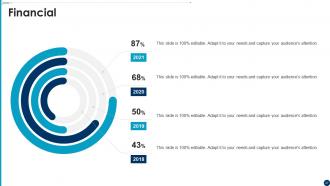
Folie 27: Dies ist eine Finanzfolie. Zeigen Sie hier Ihre finanzrelevanten Informationen.
Folie 28: Diese Folie zeigt Post-It-Notizen. Posten Sie hier Ihre wichtigen Notizen.
Folie 29: Dies ist eine Vergleichsfolie, um Vergleiche zwischen Waren, Einheiten usw. anzugeben.
Folie 30: Diese Folie zeigt eine Roadmap mit zusätzlichen Textfeldern.
Folie 31: Diese Folie zeigt eine Lupe, um Informationen, Spezifikationen usw. hervorzuheben.
Folie 32: Dies ist eine Zeitachse. Zeigen Sie hier zeitintervallbezogene Daten an.
Folie 33: Dies ist eine Dankesfolie mit Adresse, Telefonnummern und E-Mail-Adresse.
Künstliche Intelligenz Pitch Deck PPT-Vorlage mit allen 33 Folien:
Unser Künstliche Intelligenz Pitch Deck Ppt Vorlage nutzen, um Ihre wertvolle Zeit effektiv zu sparen. Sie sind fertig erstellt, um in jede Präsentationsstruktur zu passen.
-
Artificial Intelligence Pitch Deck
-
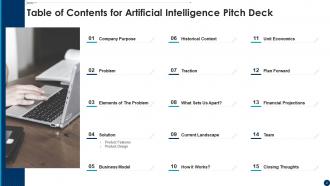
Table of Contents for Artificial Intelligence Pitch Deck
-
The Company Purpose
-
State The Problem Your Company Solves
-
Elements of The Problem Template 1 of 2
-
Elements of the Problem Template 2 of 2
-
Solution Product Features
-
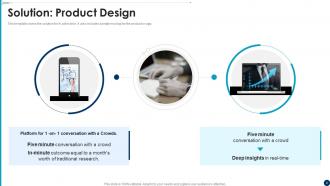
Solution Product Design
-
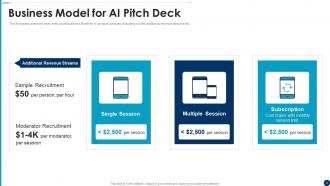
Business Model for AI Pitch Deck
-
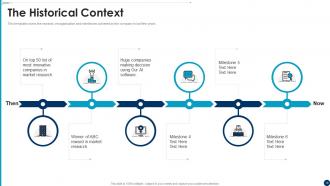
The Historical Context
-
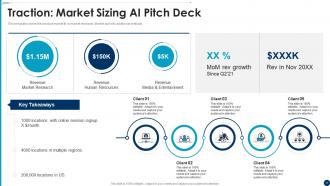
Traction Market Sizing AI Pitch Deck
-
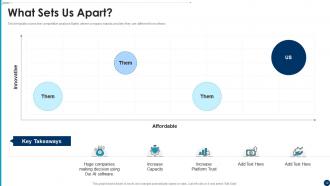
What Sets Us Apart
-
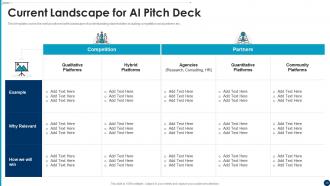
Current Landscape for AI Pitch Deck
-
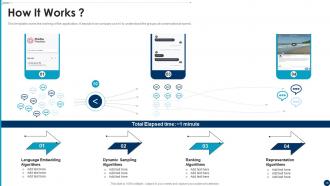
How It Works
-
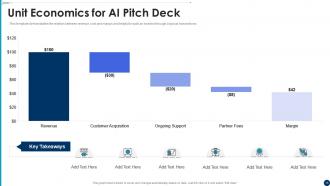
Unit Economics for AI Pitch Deck
-
The Plan Forward for AI Pitch Deck
-
Financial Projections After Launch of AI App
-
Team for AI Pitch DECK
-
Closing Thoughts
-
Icons Slide for Artificial Intelligence Pitch Deck
-

Additional Slides
-
About Us
-
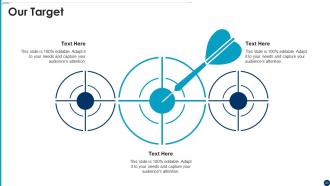
Our Target
-
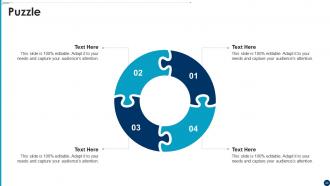
Puzzle
-
30 60 90 Days Plan
-
Venn
-
Financial
-
Post it Notes
-
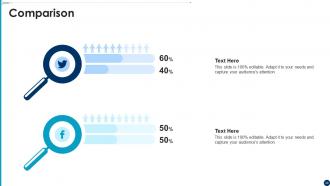
Comparison
-
Roadmap
-
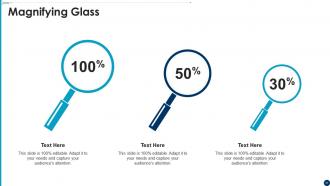
Magnifying Glass
-
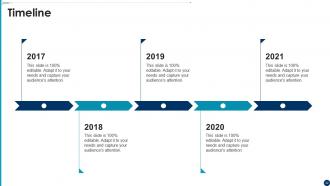
Timeline
-

Thank You
FAQs for Artificial intelligence pitch
Dude, patient consent and data privacy are absolutely critical - can't mess around there. Your AI needs to be super transparent about decision-making because doctors and patients will want to know the reasoning behind recommendations. Bias is scary stuff since bad training data can actually hurt certain groups of people. Liability gets tricky too when things inevitably go sideways. Human oversight is a must, plus you need bulletproof data security. Oh and definitely build ethical reviews into the process from the start - trying to add them later is like putting a band-aid on a broken leg.
Honestly, just document everything - where your data came from, why you made certain model choices, the whole training mess. Use interpretable models when you can, or slap explanation layers on the complex stuff. I get it, sounds tedious but it'll save your butt later. Test for bias regularly, especially with hiring or loan decisions - that stuff gets messy fast. You'll need clear policies about who takes the heat when things break. Oh, and don't try to fix everything at once. Pick one algorithm and walk through every step with your team first.
Honestly, it all comes down to your data situation. With supervised learning, you've got labeled examples - like showing a model tons of cat photos that are already tagged as "cat." Way more straightforward. Unsupervised learning is trickier since you're working blind, just looking for hidden patterns in messy data. Then there's reinforcement learning, which is kinda like... remember learning to parallel park? The algorithm basically fails a bunch until it figures out what works. I'd probably start with supervised learning if you're new to this - it's less of a headache when you're getting your feet wet.
Honestly, AI can totally transform your online store. Start with chatbots for customer support - they're available 24/7 which is huge. Personalized product recommendations work really well too, showing customers stuff based on what they've already looked at. Dynamic pricing is smart since it adjusts based on demand. There's also this cool visual search thing where people can take photos to find similar products (my friend's store saw great results with that). Oh, and AI helps predict inventory so you don't run out of popular items. I'd say pick one feature first, see how customers respond, then add more from there.
Honestly, AI's pretty solid for digging through your old data and figuring out what's coming next. Sales forecasting, predicting when customers might bail, inventory stuff - you know the drill. Machine learning catches patterns we'd totally miss, plus it handles way more data than your team could ever crunch manually. Gets better over time too as you dump more info into it. Oh, and it's great for running "what if" scenarios before you blow your budget on something stupid. I'd start with something simple like scoring your leads, then build from there once you get the hang of it.
Honestly, AI's gonna flip everything upside down. Tons of jobs will disappear - and I'm not just talking factory work, but lawyers, accountants, you name it. The rich will get richer unless we figure this out fast. But here's the thing - maybe we'll finally get to do work that actually matters instead of mindless tasks? I keep wondering if my cousin's accounting degree will be useless in five years. Governments better start planning retraining programs or universal basic income. Think about what makes you irreplaceable as a human.
So AI is pretty amazing at catching cyber threats - it can churn through tons of network data and spot sketchy patterns way faster than we ever could. Sometimes it even flags attacks before they actually happen, which is wild. But honestly? It's not foolproof. You'll get false alarms that'll drive your team crazy, and hackers are getting smarter about tricking these systems. The whole thing only works as well as the data you feed it too. I'd say use it as backup for your security team, not instead of them. Human judgment still matters a lot here.
So NLP is what makes computers understand normal human speech instead of forcing us to learn their robot language. Your phone's autocomplete, Siri, ChatGPT - that's all NLP doing the heavy lifting. It figures out context and what you actually mean, even when you're being super vague about stuff. Honestly, it's wild how much better voice commands have gotten lately. Without it, we'd still be stuck typing out specific commands or hunting through a million menus just to get anything done. Way better than the old days.
Pick one area that won't break everything if it goes sideways - test there first. Train your people early though, because once they see how much grunt work disappears, they'll actually want to use it. Before adding any AI, map what you're doing now. Look for the boring repetitive stuff that eats up everyone's day. Don't let AI make the big calls - that's still human territory. Data policies matter too since garbage in equals garbage out. Oh, and seriously stick with one tool until you've got it down. I've seen too many companies grab five different AI things and master none of them.
Oh man, bias is literally baked into most AI systems because the training data reflects all our historical messiness - like those hiring algorithms that kept picking men since that's who got hired before. Super frustrating but fixable. Check your datasets first (garbage in, garbage out, right?). Test how your model performs across different groups. Having diverse people on your team helps catch stuff you'd miss. Oh, and don't wait until the end to test for bias - build it into your whole process. It's way easier to fix early than after everything's deployed.
Honestly, healthcare and finance are where AI's gonna make the biggest splash. Medical diagnostics are already getting scary accurate - like, better than some doctors accurate. Manufacturing's right behind them with supply chain stuff and predicting when machines break. Banking will crush fraud detection, and retail's obvious with all the personalization nonsense. Oh, and self-driving cars are finally happening for real. If you're thinking career moves, target companies actually using this tech, not the ones just hyping it up. Transportation's solid too but might take longer than people think.
So AI is like the big umbrella term for anything that acts smart like humans do. Machine learning sits under that - it's when systems learn from data instead of you programming every single thing they should do. Honestly, ML is where all the cool stuff is happening right now. They work differently too. AI handles automation and decision-making across tons of industries. ML does the personalization you see everywhere, plus predictive analytics and spotting patterns. But here's the thing - don't pick the tech first. Figure out what problem you're actually trying to solve, then worry about which one fits.
So the biggest headache is needing tons of data for AI to actually work, but that data's packed with personal info. It's like trying to balance on a tightrope honestly. GDPR compliance makes things even messier. Plus AI models can be weirdly good at "remembering" training data and accidentally spitting out private details later - which is legitimately terrifying if you ask me. Start by anonymizing everything you can. Then lock down who can access what with strict controls. Oh, and maybe test your model to see what it might accidentally leak before going live.
Honestly, AI's pretty solid for climate stuff. It can optimize energy use in buildings and predict when equipment's about to fail before it starts wasting power. The pattern recognition thing is crazy - it spots trends in climate data that would take us ages to find. Solar panels and EV batteries are already getting better because of machine learning algorithms. Oh, and it processes massive environmental datasets way faster than we could. You should check out AI energy management systems for your place. Even small tweaks can cut your carbon footprint more than you'd think. It's one of those things that actually feels like the future working for us.
Honestly, it's kinda crazy how fast things are moving right now. Basic stuff like data entry and simple analysis will probably get automated first - maybe even some creative work too. But here's the thing - new jobs always pop up when old ones disappear. Think AI trainers or ethics people. My advice? Don't try to compete with AI, work alongside it instead. Focus on things like emotional intelligence and creative problem-solving since those are way harder for machines to nail down. Oh, and definitely keep learning new skills - staying flexible is huge right now.
-
Topic best represented with attractive design.
-
Excellent template with unique design.
-
Great product with highly impressive and engaging designs.
-
Graphics are very appealing to eyes.